Categories
ducks other fowl

How to Introduce New Ducks

Maybe you have some ducks and are thinking about getting more. You might be asking yourself whether it’s anything like introducing new chickens. Then this post will help you know how to introduce new ducks to an existing flock.

And the best part of familiarizing your new ducks with the established ones is that ducks, for the most part, are not as adamant in their pecking order as chickens are. It would even appear as if ducks didn’t have one. Unless you’re watching closely.

older duckling in pond

How to introduce new ducks to each other

So, how do you introduce new ducks? What’s the best way, with minimal stress on both the new ducks and established ducks?

  • First of all, the best time of year to introduce new ducks is in the fall. Their mating season, however, happens to be when most people want to introduce new ducks: spring and summer. That is also when hatcheries sell ducklings.

The reason mating season isn’t a great time to bring in new ducks and ducklings is because the drake, or male duck, tends to be more aggressive during this time. Female ducks can also get more assertive, but it isn’t to the same degree as males.

  • Wait to introduce new ducks until the ducklings are at least 7 weeks old. And as with chickens, don’t only introduce one at a time. Also, if you have a drake, I recommend waiting until the ducklings are bigger in order to protect themselves.

With that being said, not all drakes will be murderous. However, it does happen. Though, sometimes it just depends on the breed of duck you have. But, if you just have an all female duck population, or only introduce female ducks, this is the best situation.

  • Most people introduce new ducks on public ground, away from the coop. This is so territorial behavior won’t occur. Or at least will be less likely.

Watch for aggressive behavior. Or signs that your birds are getting stressed. Either are unmistakable. If you have a bird that’s being aggressive or one that’s getting stressed, don’t get discouraged. It might take a few ‘re-introductions’ until everyone is on the same page and ok with the new set-up. You definitely don’t want to rush things.

With our first set adult ducks and then ducklings, we had tried to re-introduce our ducks and ducklings several times. But then we waited for mating season to end, because Kirishima was so out of control. However he never stopped being that way. In the end, we chose the majority over the one.
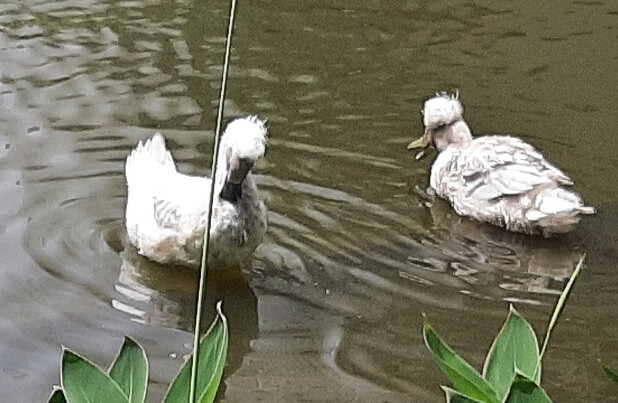
2 crested ducks in a pond

Sharing a home

After you’ve successfully introduced the new ducks to your existing flock, it’s time to bring the newbies to their new home. You can do this one of two ways. Either let them join the established members in the coop, just as it is. Or you can make a partition in the coop, or run, where they’ll be separated for a few days. Just make sure it’s predator proof and resistant to the elements.

Ducks prefer sleeping outside, in the big wide open, next to a body of water. Even if no one is picking on them. After all, it is their natural habitat. However, if you take care of waterfowl, make sure they go into the coop at night. Because there are predators who will eat them as well as chickens.

Integration

A few nights in a row should be all it takes to get everyone used to each other. After that, let all your ducks out to free range together. But preferably when you’ll be available to watch their interactions. If after about 15 minutes, and all looks as it should, and everyone is doing good, then let them be.

Mixed flock of ducks

Do you notice any feathers?

The only thing people seem to be concerned about is whether or not there is feather loss. Or feather pulling. And if so, they attribute it to bullying. Though, if you observe your ducks, you’ll know whether you have a bully.

I already mentioned that, during mating season, female ducks can be more ‘assertive’. They won’t let the newer ducks around the watering hole, or the wet ground, where everyone else wants to dig for bugs. But the main thing is, that female duck has her eyes set on the drake she prefers.

We have 2 established female ducks. And when we introduced our new ducks and adolescent ducklings to the group, Aizawa, the female Mallard, didn’t care one bit. She still doesn’t. But Bakugo was the one keeping the new ducks away from her water, her bugs, and I suppose, her drake. Aka, the rooster.

Mallard duckling and mixed flock of chicks outside

This year we have 3 new ducklings, and two of them favor Aizawa, the Mallard. But the third ones still seems to be developing; I wonder if it’s a drake. And so far there have been absolutely no issues. Squirt could care less about the ducklings, and therefore Bakugo could care less. So it made me wonder, are the ducks influenced by the drake’s reaction? Thus far I haven’t been able to discover anything on the subject. However it certainly is an interesting question.

crested duck in a pond

A word about drakes

Drakes can be aggressive both to females and ducklings. So if you have any, as with chickens and roosters, you need to have a proper ratio of 3 or 4 ducks to every drake. Because, if you don’t, it will cause drakes to be even more violent.

Some will even attack and kill their own young. You might not have any issues once you’ve introduced the new ducks to your established flock. But if you do, and you have a drake who is murderous or infanticidal, you’ll have to make a decision of whether you’ll re-home him or let nature take its course.

Quarantine adult birds

If instead you have adult ducks to introduce to your established flock, the main thing you’ll want to add to this list is to quarantine the newcomers first. And that’s to make sure the new ducks are free from diseases and parasites. Quarantine can last anywhere from 7 days to a month. Though, the longer it is, the more time you’ll have to fully know what’s going on with the birds you’ll be introducing.

I hope this helps answer any questions you might have regarding introducing ducks to an existing flock.
Categories
Extras recipes

Banana Pineapple Cream Cheese Dessert

When I was very young, I remember my mom made this banana pineapple cream cheese dessert.  But I don’t recall exactly where she got the recipe, except it was through a friend of hers. I also know that I loved it.  And then I started making it when I was old enough. 

Furthermore, there are several ways to make this recipe, as well as different fillings. And it’s a deceptively rich dessert with all of the layers: bananas, pineapple cream cheese, and chocolate, topped with whipped cream.  So, if you have a sweet tooth, this is a very satisfying dessert.

Ingredients for Banana Pineapple Cream Cheese Dessert:

  • 1 box of Nilla wafers
  • 1/2 stick of melted butter
  • 3-4 bananas
  • 8 oz package of cream cheese, room temperature
  • 1 stick of butter (1/2 cup), room temperature
  • 1/4 c white sugar; 4 TBSP white sugar
  • 1 can crushed pineapple (drained), reserving 1/3 of the can
  • ~5.9 oz package (or family size) of instant chocolate pudding
  • 2 c whipping cream
  • 1/2 c chopped pecans or almonds
  • 1 small jar maraschino cherries, drained
layer of bananas on a Nilla wafer crust

Instructions for crust:

  • First, crush Nilla wafers and combine with 1/2 stick melted butter
  • Then press wafer mixture firmly in bottom of 9X13 pan and chill in refrigerator for 10-15 mins

Instructions for banana layer:

  • Slice bananas and add to crust layer
  • Then refrigerate pan with crust and bananas while preparing fillings
cream cheese and pineapple blended in a mixing bowl with a spatula
This is the pineapple layer with drained crushed pineapple, cream cheese, butter, and sugar or Truvia.

Instructions for pineapple cream cheese layer:

  • First, mix cream cheese, remaining 1/2 c of butter, and remainder of sugar together with blender
  • Next, add drained, crushed pineapple, and blend in thoroughly
  • And then spread onto banana layer and refrigerate

Instructions for pudding layer:

  • Prepare instant chocolate pudding according to directions
  • Moreover, when it’s set-up, spread it onto pineapple layer and refrigerate
chocolate pudding layered in 9x13 glass pan
The next level is the chocolate pudding.

Instructions for final layer of banana pineapple dessert:

  • With mixer, beat whipping cream and 4 TBSP white sugar until stiff peaks form
  • Next, spread liberally onto chocolate pudding layer
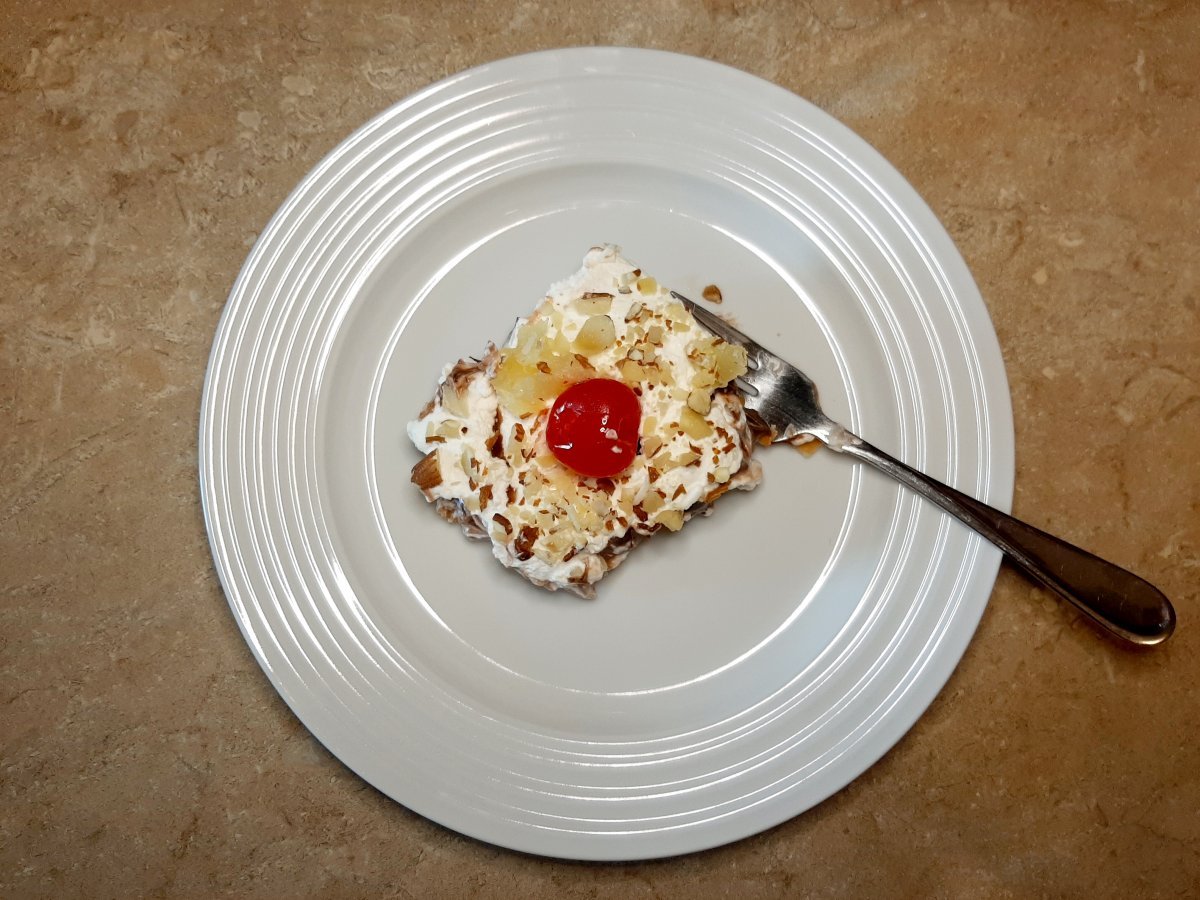
  • Then, top with chopped nuts, maraschino cherries, and remaining crushed pineapple
  • And refrigerate 8 hours or overnight before serving
  • Finally, serve and enjoy!
banana pineapple cream cheese dessert with layers of whipping cream, cherries, pineapple, chopped nuts

Have you ever made this dessert or one of its variations? What do you think of it? Your comments are appreciated.

If you enjoyed this post, please like, share, and please don’t forget to follow!

Categories
Chicks Hens raising happy, healthy chickens

Hens Adopting Chicks

Today I’m going to talk about hens adopting chicks. But not just about broody hens, though that will be brought up too. I’ll also discuss when there’s a broody hen that hatched chicks and another hen decides to co-parent with that hen.

Will Broody Hens Adopt Chicks that are Not Their Own

The first question we’re going to try to answer is Will broody hens adopt chicks that are not their own? Technically speaking, none of the eggs a setting hen is on are really her own eggs. Not long ago I covered the topic of broody hens. But when the eggs hatch, the broody hen then becomes the new generation’s mother, in effect.

However, some people have tried fooling a broody hen by placing chicks from elsewhere under her. And they’ve succeeded in getting the hen to adopt the chicks. I can also verify that it works.

Broody hen with chick
This is Davis with her chick that survived the snake attack.

2019 was our first year we had success with broody-hen chicks hatching. But only a couple of days later a chicken snake got one of the chicks. And it devastated Davis, our broody hen. She was scared, and her remaining chick was lonely without its sibling.

So we went to the feed store and found one that looked the most like the chick we lost. We weren’t sure what Davis would do. We reasoned that it would be a 50/50 shot either way. She would love it or hate it.

We brought it straight out to her, in daylight, prepared to rescue it at any moment if she rejected it. Davis sniffed the store bought chick and walked away. She knew it wasn’t her baby. But at least she didn’t kill it. Her remaining chick, on the other hand, immediately gravitated toward the bigger, store bought chick. They became inseparable. And over time Davis started treating the imposter chick like her own.

It is best to make sure your hen is broody before attempting to fool her. And it’s recommended to introduce a chick or chicks to the broody hen at night in the coop. Although, we didn’t and it still turned out ok. However, the hen we tried to fool is one of the sweetest hens we have. I doubt I would try this during the day on a hen that doesn’t have as nice a disposition. Read this for more information on introducing chicks to a broody hen, if you’re interested.

2 hens, 1 broody, 1 non-broody with chicks
Davis with her adopted spotted chick, and the hen in front of her is the co-parent, Soundwave.

Will a Non Broody Hen Adopt Chicks?

So what about non-broody hens adopting chicks? Strictly speaking, no, they don’t. Though, some people believe that you can encourage a hen to go broody. But whether that’s true or not, I don’t know. My birds do not have problems going broody. In any case, the hen would no longer be non-broody if you made conditions favorable to broodiness. And the result was that she turned broody.

co-parenting hens w/chicks
Our newest broody hen, standing on the right, with Plo, the co-parent, and their chick is on top of Plo.

Co-parenting

What do I even mean by the word co-parenting? Well, the dictionary basically describes co-parenting as the sharing of parental responsibility. This is actually in reference to human children. However, it can certainly apply to chickens as well. Because, when there’s a co-parenting hen, that is exactly what she does. She helps the hen, who did the work of incubating and hatching the eggs, raise and take care of the chicks.

But I bring up co-parenting in a blog about hens adopting chicks, since that is essentially what the co-parent is doing. The co-parenting hen adopts the chicks as her own. She did not labor for them, and yet she treats them as her own.

The first time I saw this behavior, it was in Soundwave, Megatron’s hatchery-mate. When she first came to us, she was the tiniest hen we had. Although, she was one of the meanest hens and took every opportunity she could to abuse the hen on the bottom of the pecking order. So, naturally I was surprised when this mean hen started displaying maternal instincts.

At first I thought, maybe she’s going to kill the chicks that Davis hatched. However, over the course of a few days, she’d cuddle with Davis and allow the chicks to sleep with her. And soon Soundwave was spending her days with Davis and the chicks, trying to teach the babies how to forage for food.

I’d never heard of chickens doing this before: Assisting broody hens raise chicks. My mother-in-law, who’s had chickens for at least twice as long as me, has never had a hen co-parent. She never heard of it either until I brought it up to her 2 years ago.

hen w/ chick and 1 adopted chick
Davis and her two chicks. Her adopted chick is on the right.

Since our first experience with co-parenting hens, we’ve witnessed it happen two more times. And one hen is a repeat co-parent. She helped raise a chick last year. And this year she assisted one of our Easter Eggers with a clutch of 3 chicks.

Plo, the hen who’s co-parented twice, actually starts out broody first, before she co-parents. And throughout her co-parenting, she acts broody, though she isn’t mean like the hen who did all of the work. But when Soundwave co-parented, she never acted broody at all. She was just slowly drawn toward the chicks and Davis, until she was helping Davis out.

There isn’t a lot of information out there about this phenomenon. But I think it’s amazing that these birds, which normally aren’t close like this, would raise chicks together.

If you have backyard birds, have you ever witnessed this behavior yourself? I would love to hear your stories!

Categories
Hens Protecting Your Backyard Birds raising happy, healthy chickens

Why is My Chicken Losing Feathers on Her Back

Chickens can, and do, lose feathers from time to time. And most of the time it’s nothing to worry about. However, it’s always a good idea to inspect your flock to determine where the feather loss is coming from. Are all of the birds affected? Is it general feather loss? Or is it only in one spot on a few birds? We’ll cover all of these questions why chickens are losing feathers.

Chickens Losing Feathers Due to Molting

juvenile chickens missing feathers due to molting

In another post I covered the topic of molting in detail. But I’ll go over some quick points. If your backyard flock is molting, it typically affects all of the birds. It also can affect any part of their bodies. Some chickens completely lose all of their feathers, while others might only lose the ones around their faces and tails.

Also, molting usually occurs in late fall and lasts about 3 months. There are some breeds that can molt in the spring as well. However, it isn’t as drastic as the fall molt. So, if your birds are losing feathers at some other time, chances are good that it isn’t molting causing the feather loss.

If your backyard birds are molting, the most important things you can do for them are

  • to feed them a higher protein feed with 20% protein.
  • don’t handle them much, because they are sensitive due to feather loss and new growth.
  • keep the stress low and don’t add new birds during this time.
  • and be sure to have plenty of clean, fresh water daily and proper air ventilation in the coop.

Feather Loss on a Chicken Because of a Broody Hen

broody hens with chicks

Another common reason for feather loss is when you have a broody hen or hens. A broody hen is a hen that stops laying eggs, and instead stays on a nest of eggs all day, several days to weeks long until she hatches some chicks.

With a broody hen you will not see a lot of feathers all over your yard. Because it’s restricted only to that one hen. Or hens, if you have more than one broody hen. The feather loss will also be confined to the coop, since the broody hen won’t leave her eggs. And the feathers will usually be missing from the hen’s chest, where she plucked them out herself, to make a proper nest for her clutch.

If you have a broody hen, and don’t want to break the broodiness, the most important things you can do are to

  • separate her from the rest of the flock by putting a partition wall made of chicken wire in the nesting box she has chosen.
  • provide fresh, clean water and food daily.
  • and give her access to frequent bathroom breaks.

If you don’t want your hen to be broody, then you can break it by completely separating her from the flock. You don’t want her to be able to see them, or vice versa. And try to keep her in a room or area that is well lit.

Chickens Losing Feathers Because of Parasites, like Mites or Lice

red insect on green leaf
Photo by Egor Kamelev on Pexels.com

Another cause of feather loss in chickens is from external parasites like mites or lice. Usually it presents on the bird’s back where they have been over-preening and plucking in order to get relief. There will be other symptoms if mites or lice is the cause of feather loss, like reduction in egg production. And the birds will also have pale combs and wattles.

If you suspect that external parasites are the culprit, you can check the bird’s vent area for scabs or signs of inflammation. Many people claim that you can’t see mites. However, that’s not entirely true. Sometimes you can see them on the feather shafts or on the undersides of where your birds roost at night.

Lice also can typically be seen on feather shafts. However, they also migrate toward the vent area as well. If you pull back your bird’s feathers from her vent, often lice will be seen, trying to hide.

If you have verified that you have a bird with lice or mites, then the most important things you can do are to

  • treat your whole flock immediately or as soon as possible with Ivermectin. (0.2 – 0.4 mg per kg topically at their shoulders where they can’t reach and once more in 2 weeks.)
  • you can also use petroleum jelly on your birds’ legs to smother leg mites and prevent eggs from hatching. However, this will need to be done a few times to make sure the parasites are all gone.
  • finally, you can prevent external parasites by keeping the coop and run clean and by providing your birds areas where they can dust bathe. We also add food grade diatomaceous earth to the coop and dust bathing spots.

Predator Attacks that are Causing Feather Loss

feather loss on a bird's back due to a predator attack

Sometimes predator attacks will leave no evidence of the crime. And others will leave behind feathers. At times that might be all you see. In one of my other posts I described how one of our Ameraucana hens was attacked by a hawk. More often the hawk doesn’t leave behind its prey. Although, in this particular case, the hawk dropped our hen.

Another time our neighbor’s dog got one of our broilers. We didn’t have feathers in our yard; they were scattered all over his. If you suspect an animal attack, first inspect your birds for missing feathers on their backs or tails. They will act scared and could be in their coop hiding, if there was a predator attack. Also, check for any injuries and open wounds.

Once you’ve determined that your bird was attacked by a predator, and it’s still alive, the most important things you can do are to

  • separate her from the rest of the flock in a safe and comfortable environment with fresh, clean water and food.
  • keep stress to a minimum, because she is scared or even possibly in shock.
  • clean the wound by flushing with warm sterile salt water or 0.05% chlorhexidine.
  • and, if your bird was bitten by a predator, call a veterinarian to get an antibiotic.

Feather Loss Due to Over-mating, or an Aggressive Rooster

feather loss and injury on a hen due to a rooster

The final cause of chickens losing feathers is due to aggressive, or over mating, by a rooster. Thus, you will not see feather loss in roosters if indeed mating is the cause. Because only the roosters get on the hens in order to mate.

Sometimes this type of feather loss can start out in a small patch near the tail feathers. However, if left untreated, the spot will only grow. It can get so bad that the rooster pulls the hen’s skin, and then the hen is in danger of infection.

Most of the time, when I’ve considered this type of feather loss in our flock, it has usually been the hens on the bottom of the pecking order. Not always, but most of the time. And then there are the times when the roosters will have a favorite hen. And consequently, she will get entirely too much notice.

You can determine if over breeding is the reason for the feather loss just by whether or not you have any roosters. And if you do, then observe your backyard flock. Or, more specifically, your rooster. Watch how he interacts with the hens. Does he have a favorite? Is he rough? Does it always seem like one hen is getting way more physical attention than the rest?

If you have a hen with feather loss on her back caused by over mating, the most important things you can do are to

  • examine your hen for broken skin. And, if there isn’t any, you can invest in saddles for your hens or make some yourself.
  • if your hen has broken skin, clean the area with warm sterile, salt water, and add either Battles Gentian Violet spray or Blu-Kote to the wound. Both treatments look similar when applied.
  • assuming the wound is large and in danger of infection, rather than using Blu-Kote or Battles Gentian Violet spray, you need something stronger. Povidone-iodine is an over the counter, broad spectrum anti-microbial that’s recommended in these cases. Which you can find at WalMart or on Amazon.
  • in case you have to treat your hen for a wound that requires an anti-microbial due to broken skin, you need to keep the rooster away from that hen. You can accomplish this by keeping her in a separate spot, not entirely isolated from the flock. But possibly where you keep your broody hens. This way she can heal without continually getting re-injured.
  • monitor her progress and call a vet if she doesn’t show signs of improvement.
  • to prevent feather loss on your chicken’s back due to over-mating, make sure you have the proper hen to rooster ratio. Most people agree that no less than 10 hens per rooster should be the absolute minimum.
  • and, safely trim or file your rooster’s claws.
chicken saddle on a chicken to prevent chicken from losing feathers on her back
Hen with a saddle on.

Sometimes you will have the proper ratio of hens to roosters, and still one of your hens might get feather loss on her back. We currently have 27 hens with 2 adult roosters. And 7 juvenile chickens with 3 juvenile roos, which are not mating yet, thankfully.

Our second rooster has now chosen a couple of senior Ameraucana hens and a couple of Easter Eggers as his favorites. And the EEs backs are torn up. Thus, we’ve locked him in chicken jail so the girls’ backs can heal.

I hope you enjoyed this post. Please feel free to comment or ask questions!

Categories
Crazy Cute Pictures Extras

Cool Wild Animal Pictures

If you read my blog, you know I live in Oklahoma. And because I don’t live in a city, we are on one acre in a neighborhood of 1-5 acre lots. So we do get wild animals. Though, maybe not the ones you might tend to think of when you hear or read the word ‘wild’. This post of Cute Animals is actually going to be about cool wild animal pictures.

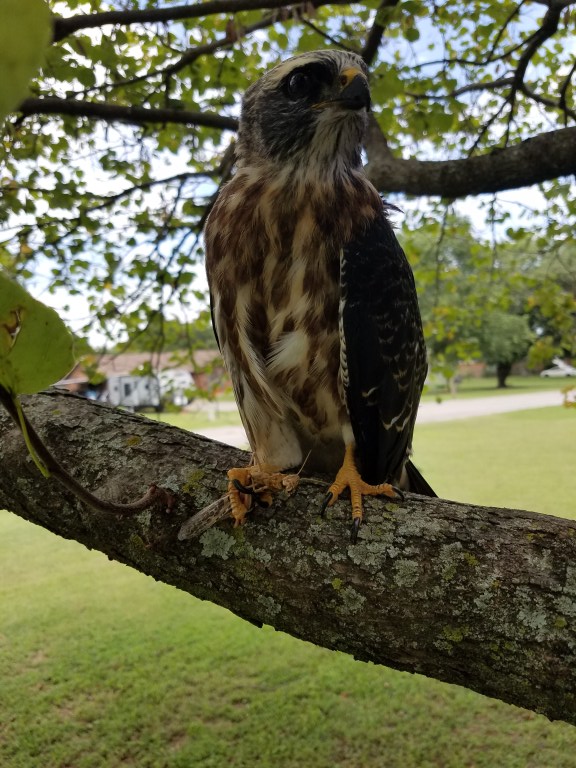
wild, juvenile Mississippi Kite in tree

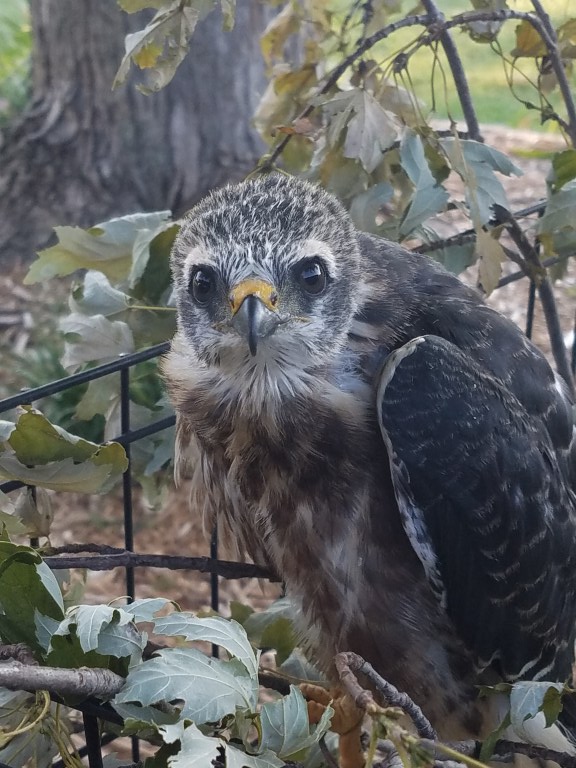
Also, for today’s post, I’m only going to focus on one animal. Which means that the pictures I’m posting are all of the same bird, a juvenile Mississippi Kite.

wild baby Mississippi Kite

The Kite had its home in one of the trees on our property. But we found it one day outside, under our Silver Leaf Maple tree.

juvenile Mississippi Kite under tree

We thought that was strange, that it was just standing under the tree. So we went to check it out.

young Mississippi Kite under a tree on top of a pot

And, as we approached, the Kite got alarmed. Because, being a wild animal, it wasn’t used to being around humans.

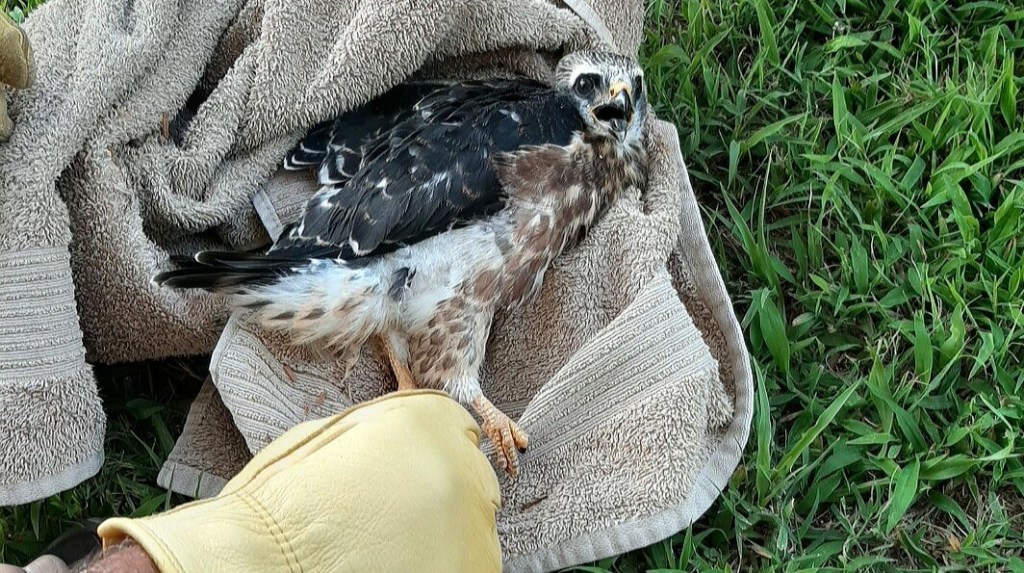
person holding juvenile Mississippi Kite

Therefore, after getting gloves on and a towel, my husband was able to pick it up. Yet, the Kite was still scared, and started screaming.

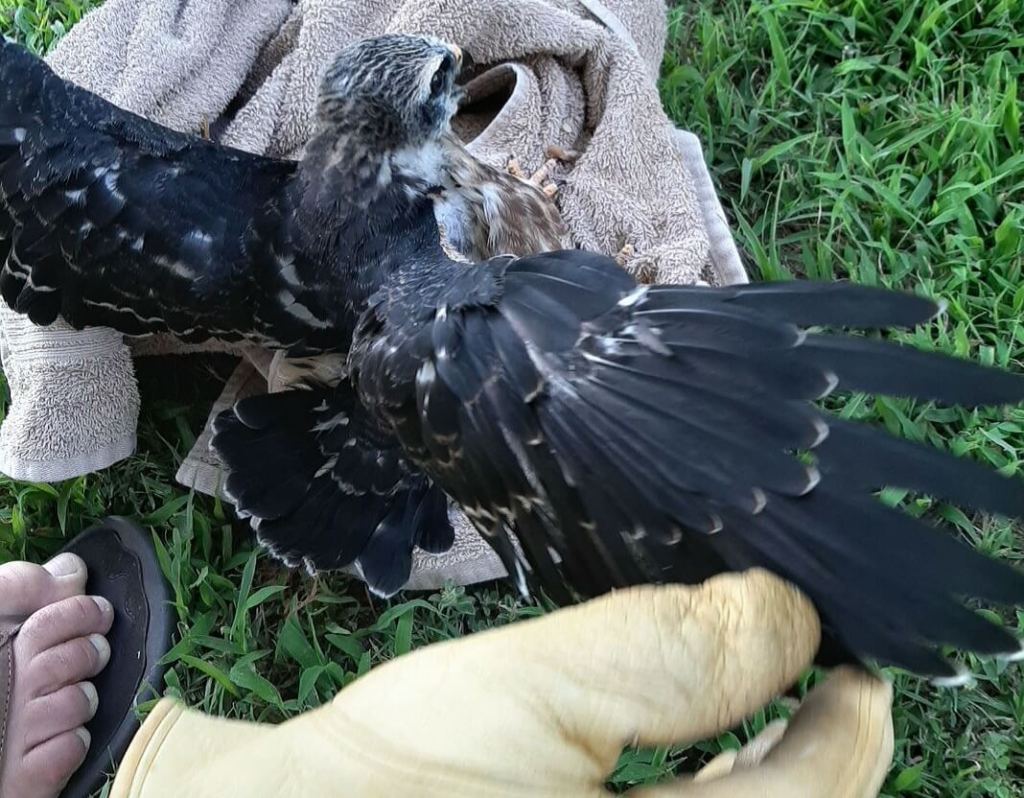
juvenile Mississippi kite with wings outstretched

Though we couldn’t see any outward injuries after inspecting the bird. So we surmised that, perhaps it fell out of its nest, because it was too young to fly.

juvenile Mississippi kite with wings in mid-air

It was understandably scared, however, within a couple of weeks, it either got attacked by a cat, a dog, or its parents tried helping it. And it ended up getting a serious wing injury which further prevented it from flying.

juvenile Mississippi Kite in tree

My husband nursed it back to health, both by catching and buying insects for it. Thus, we learned a lot about Mississippi Kites from this juvenile wild bird.

cool picture of teaching a Mississippi Kite how to fly

My husband eventually taught it how to fly. Or helped it learn. But its parents were never far away. We even got video footage of one of the parents bringing food to its offspring.

man holds wild young Mississippi Kite

It finally left when all of the other Mississippi Kites left, migrating to South America for the Winter last year.

Have you ever had an encounter where you’ve helped a wild animal? Hopefully not one where a wild animal was trying to hurt one of your pets or livestock. Your comments are appreciated.

Categories
Chicks Hens Protecting Your Backyard Birds raising happy, healthy chickens Roosters

Pecking Order Behavior In Chickens

What is typical pecking order behavior in chickens? And how do you know if your birds have a successful social order? If you have a backyard flock or are even fairly new to this, then you most likely have seen this behavior. Where the birds will chest bump each other, flap their wings, puff themselves up in order to look bigger, and often times pull feathers out as they peck one or several birds.

If you’ve observed this in your birds, where they seemingly pick on each other for no cause, they aren’t necessarily being mean. Because they aren’t like us. They don’t understand between good and evil, right and wrong. But the chances are high that they are displaying what is called the pecking order.

2 roosters fighting for dominance

SO WHAT IS THE PECKING ORDER IN CHICKENS?

The earliest use of pecking order referred to chickens displaying their supremacy over each other. It includes pecking and was used in the 1920s by a Norwegian zoologist to describe their behavior.

Pecking is just one aspect of it. However, it does certainly capture the essence of the phrase. Because, the birds in charge, or ahead in the hierarchy, will peck the ones lower down the totem pole to keep everyone in line.

The behavior isn’t just limited to pecking though. Or to adults. If you have an established flock, you might not see a lot of aggression. At least not any more. Because they’ve settled their class structure for the time being. But if you add new members, or get chicks, then you tend to see more activity that we would consider ‘mean‘ but are perfectly acceptable to chickens.

As I mentioned earlier, they can puff themselves out and chest thump each other. Typically this occurs with birds of similar rank and size. An adolescent rooster, who just got introduced to the flock, won’t necessarily challenge the established rooster for dominance of the flock. He doesn’t even have his spurs yet. No, he will wait submissively until he’s bigger and thinks he has a chance against the bigger roo.

The same goes for hens. The more accepted, older hens will put the younger, newer ones in their places quickly. And those hens will, likewise, work out the hierarchy between themselves. Depending upon the breeds you have can determine if they will ascend to top dog position; some birds aspire to rule, it seems, while nobody wants to be on the bottom.

dominant hen in social order
The hen eating is more dominant than the others waiting around.

WHY IS THE CHICKEN PECKING ORDER IMPORTANT?

The purpose of the pecking order for chickens is simply to keep order. If they didn’t have a class system, it would be chaotic in the backyard. So, if you only have one chicken, you aren’t going to have a pecking order. Or see much pecking order activity. Although, once you get more birds, they will quickly establish their social order. And normally it’s the most socially dominant hen in charge, unless you have a rooster.

If there is just one rooster, he’s in charge. And then the most socially dominant hens, working out their own class system between themselves. Though, if you have two roosters, it’s usually the most aggressive one who’s boss, unless one of them is young. And then the young rooster is somewhere in the mix; he can be just below the boss rooster or even under the oldest hens. We still only have two roosters, and they are still the ones in charge. But, after them, it’s the most dominant hen or hens.

When Cass, our first real rooster, died, and Megatron became the boss, he was very eager to do his duty. Although, our two boss hens, Fives and Echo, had a thing or two they wanted to teach him before they would allow him to take over.

They were never mean to him before; they never had a reason to prior to this. However, when he assumed a new position, and a very important one at that, I can well imagine that the two sisters had some very momentous things they wanted Megatron to understand. He was maybe only a year old, and they were old hands at this, raising chicks and wayward roosters. They were better suited to protect the flock than the last rooster, and they knew it. So they weren’t about to let some upstart waltz in their flock, acting like he knew what he was doing, when he didn’t.

It was actually quite interesting to watch how they interacted with him. I’m not kidding you, those two old hens tackled my 1 year old rooster. And at first, he fought back, but then, I think he began to understand that he was not the boss . . . yet. It was a demonstration in front of the whole flock. After a while their abuse ceased. And over the next few days the girls eased up on him, possibly giving him instructions on how to take care of his harem, before they too submitted themselves to him.

chickens in established pecking order
A harmonious flock where every member knows their place in the social order.

WHAT HAPPENS IN THE CHICKEN PECKING ORDER?

I’ve already mentioned that there will be pecking in a backyard flock. And for an established flock, it’s limited to mostly pecking. In a new or young flock, or one where new members are being added, you will see more serious attacks between members. Although, that isn’t all that it’s about. The pecking order determines when the birds eat, drink, lay eggs, dust bathe, and where they sleep. And in the case of roosters, when they can crow and mate. So the birds at the top of the hierarchy get first and best dibs, while those on the bottom get the leftovers.

If a chicken steps out of line, metaphorically, and eats before they’re supposed to, or is laying an egg when the boss hen wants to, then the boss hen, (or the hen who’s in a better position on the social ladder), will peck the hen who usurped her place and the hen with the lower social standing will get in trouble. I have seen hens drag other hens away from the feed dish or nesting box. They are that serious about their pecking order. And the hen who got pecked usually doesn’t retaliate even if she’s ten times bigger and could crush the other bird.

Currently we only have our rooster as the boss. And since Echo and Fives died, no other hens have risen to the challenge to take their places in guiding the flock. I shouldn’t be surprised, since most of our birds are docile. They’re content with their positions, so long as they’re not on the bottom. You can read about them here.

You know your backyard flock has a successful social order when the boss maintains the peace. Usually that position is reserved mostly for roosters, however a good hen can do this as well. Sometimes a hen or a rooster will step out of line and disturb the homeostasis for only a moment. In which case, the boss will soon take care of it.

If there are 2 roosters, and the younger one upsets that balance, he might end up challenging the boss rooster. That’s what happened in the picture below. Since Megatron still has his spurs and was much bigger, Baby Nay lost the fight. Normally Baby Nay would run from confrontations with his dad. But not that day. For whatever reason, he decided it was time to take the risk.

2 roosters establish pecking order

HOW TO TELL IF IT’S NORMAL PECKING ORDER BEHAVIOR INSTEAD BULLYING

How can you know if your birds are displaying normal social order activity? I mean, it sort of looks like they’re all bullies, right? I admit, for a long time it bothered me how my backyard flock treated each other. But especially how the adults would treat the younger birds.

When we have adolescent chickens, and Megatron gets around them, he makes a special point of pecking them. And it appears really hard. But that might be due to his larger beak.

It wasn’t until quite recently that I realized he’s most likely using his authority as the boss to teach and keep the youngsters in line. And not really being mean and wanting to eat his kids.

When you introduce new members to your existing flock, it will inevitably look like abuse. But especially if you do it too fast, only introduce one new member, or one of the chickens gets an injury or has an abnormality. Make no mistake, the chickens will abuse that bird. And it won’t be just one mean hen. In general, even your sweetest hens will join in the abuse. And you will have absolutely no doubts.

flock of hens on green field
Photo by Alexas Fotos on Pexels.com

WHAT TO DO IF A BIRD GETS TOO BULLIED

It does happen with the backyard flock; you will inevitably get a chicken who will be the bully. Or you will get a hen who will be the one who gets bullied. We have had both kinds of birds, and both can be frustrating. I want all of our birds to get along. However, that’s not how they are built. They are built to eat, drink, sleep, have chicks, and survive. If there’s a member of the flock who is weaker, they automatically pick on that one. Maybe they’re trying to beat the weakness out of that particular member, but I don’t really think so.

They certainly don’t have human emotions; our complex emotions like feeling sorry or sorrow for something that is weaker, hurt, or sick. They want it far from them. It could be instinctual, because they’re preventing the spread of disease. The time we had Kix, the Wyandotte mixed hen we incubated, (who had a leg that didn’t develop completely), the flock abused her. Though, she learned to hide from the rest of the birds. And eventually the abuse stopped, perhaps because they figured she knew her place.

The times when we’ve had a relentlessly abusive hen, we’ve separated her from the flock. Because the birds like to stay together. And they have their social order established, so if you separate them, totally away from each other, even for a day, sometimes they have to start all over. Which means the offending bird will stop behaving badly, at least for a time.

Another option, which we’ve tried, is Pinless Peepers or Blinders, by attaching them to the hen’s nostrils. They make it difficult for the disagreeable hen to see very much, so that she can’t abuse anymore. Pinless Peepers are also a good preventative for egg-eating and cannibalism. The hens don’t like them obviously, and they can be difficult to put on. Although, once they’re on, they help a ton.

For more information on the chicken pecking order, click here.

Categories
Crazy Cute Pictures Extras

Cutest Cat Pictures Ever

For the past 3 weeks I’ve been running a blog on cute animals. It’s featured backyard birds, like ducks and chickens, goats, and dogs. But this week we’ll pay tribute to cats with some of the cutest cat pictures ever.

Cake in a Toy Stable

cutest picture of gray cat in toy stable

Cake is our Russian Blue cat, and she loves getting into things. Boxes, toys shaped like boxes, or hiding spots, she’ll take a seat and stay a while. I love this picture and think it’s one of the cutest, because it captures Cake in one of those spots.

Calico kitten

cutest calico kitten

I had to include a picture of a kitten. I mean, who doesn’t think kittens aren’t some of the cutest creatures on earth?

Pie sleeping

The next two adorable pictures are of Pie, a dumpster cat. She was found by her humans and was the runt of the litter. Hence, she still looks like a kitten.

cutest picture of cat sleeping
cutest picture of cat

Meow Meow Kitty Kitty looking out the window

This is our other cat Meow Meow. She usually stays hidden most of the day under my bed. She has 2 interests: Eating and sleeping. And not necessarily in that order. But sometimes she’ll snuggle up next to me if I take a nap.

adorable picture of tortoiseshell cat by window

Gypsy, our neighbor’s cat

Gypsy is a really cute and friendly cat. She likes to come into our yard every morning and evening. And one interesting fact about her is that she doesn’t have a tail.

cute picture of gray and white kitten

Our cat, Cake, lounging on a chair

cutest picture of gray cat lounging on chair

This is another really cute picture of our cat, Cake. She likes to fall asleep virtually anywhere. But this time she was snoozing on a chair.

Itty Bitty, when she was itty bitty

The next 2 pictures are of Itty when she was first brought to us. A found her in the middle of the road. She was too young to be away from her mother. So we bought some milk replacement and started giving it to her.

cutest calico kitten
cutest cat picture of kitten drinking milk from a bottle

Smokey

This is a cute picture of Smokey. He’s no longer with his humans. But when he was, he was a huge people person cat. And he had a Labrador for a best friend.

cutest cat picture of cat leaning over a couch

Do you like cats? Which picture was your favorite? Your comments are appreciated.

Categories
Extras recipes

Chicken Tortilla Soup

I started making this recipe many years ago when we lived in Dallas. This chicken tortilla soup is very easy to make. And I usually prepare it with chicken quesadillas after the chicken is cooked and shredded. But you can have it either way, because it’s delicious.

Ingredients:

  • 1 1/2 -2 lbs Chicken Breasts
  • 2 cans Cream of Chicken Soup
  • 3 cans Water
  • 1/2 can Rotel, drained (I use Mild, but you can use whichever you want)
  • 1/4 tsp each Salt, Garlic Powder, and Cumin
  • 1/8 tsp Pepper
  • 1 pkg of Tri-color Tortilla Strips
  • 1 Avocado
  • and 1 cup Mexican Blend Shredded Cheese

Instructions:

  • First, put the first 6 ingredients in a pot over medium-hi, and heat till the liquid starts to boil.
  • Next, once boiling, put burner on low, cover, and simmer till chicken is cooked.
  • Then, shred chicken and put back into the pot.
  • And serve over sliced avocado, tortilla strips, and shredded cheese.

If you want to make chicken quesadillas, you’ll need flour tortillas and shredded Mexican blend cheese. I usually use soft taco size tortillas. However, you can use whatever you prefer.

Place one tortilla on a plate, add some shredded chicken, and sprinkle with plenty of shredded cheese. And finally you’ll top it with another tortilla before placing the quesadilla in a pan on low heat. Heat through, till bottom is browned. Then flip over with a spatula, heating that side till it is browned as well.

chicken quesadillas

If you made this recipe, what did you think of it? Do you have your own for chicken tortilla soup or quesadillas? Your comments are appreciated.

Categories
Crazy Cute Pictures Extras

Very Cute Dog Pictures

Last week’s blog was of cute baby bird pictures. Today I’m posting very cute dog pictures. Whatever your preference for pet, these photos of man’s best friend will warm your heart.

very cute picture of lab mix dog

Charlee

This is Charlee. She’s a cute lab mix, who’s full of personality and high energy. And she likes to chase bunnies, frogs, and to dig. Things her owners swore they would disown her for. But they can’t, because they are crazy about her.

2 very cute, big dogs lying on top of each other

Bentley and Nikki

Nikki is the shepherd mix on the left, while Bentley is the lab mix on the right. She’s the boss in their relationship. However, when it comes to their owner, they’re both very attentive and faithful.

very cute picture of dog licking face

Samson

This is Samson, otherwise known as Courage the Cowardly Dog by his parents. Because, even though he’s almost 7 years old in human years, he’s still just a puppy at heart. That’s since he’s afraid of every little thing. But still we think he’s really cute!

picture of very cute pit bull mix dog

Oz

Ozma or Oz is a really cute half pit, half lab who loves to carry her own leash when out on walks. And she also loves to cuddle.

very cute pic of Sheltie driving

Moses

This is a really cute picture of our late dog Moses, in the driver’s seat. He loved to run around outside, and he was a great pet. We miss him very much!

really cute picture of labradoodle

Tessa

Tessa is a sweet labradoodle. She loves everyone and thinks a stranger she meets is her new best friend.

really cute pug

Maddie

This is a picture of Maddie, an absolutely sweet pug, who also is no longer with her family. But when she was, she would wait for her human to get home before she would eat her food. And she loved to get as close to her human as was physically possible.

cute dog with its tongue out

London

This is a very cute picture of London, who likes to lick faces. However, she knows she’s not supposed to. So, when her face is near her human’s face, she licks her own face, religiously.

cute labrador

Minti

Minti is another cute lab. And when her human is sitting down, she takes small steps, one at a time, to get closer till her head is in her human’s lap.

Categories
Hens raising happy, healthy chickens

What Are The Signs of a Broody Hen?

Perhaps you’ve seen a broody hen or had one in your yard. If you’re a new chicken owner or currently only have chicks, then this post will help explain the signs of a broody hen.

What does it mean if you have a few hens that stop laying eggs simultaneously? Does it mean they’re sick? Or are they all broody? Either is possible. But having multiple hens that aren’t laying eggs is pretty excessive. Unless they are sick, stressed, or molting. However, there are other reasons hens won’t lay eggs.

In another post I covered various illnesses and problems that, if afflicting the backyard flock, could cause hens to stop laying eggs. Although, in this article, I’m going to go over signs of a broody hen or hens.

broody hen
Our most recent broody hen.

The Broody Hen

What is a broody hen? The dictionary describes ‘broody’ (as in this case) as disposed to sit on eggs to hatch them. This is a really great definition, because that is exactly what a broody hen does. She sits on eggs, usually none of which are her own, all in order to have babies.

Her metaphorical, biological clock is ticking. And that hen wants some chicks. So instinctually she no longer will lay any eggs herself. Instead she will lay on any and all eggs. Typically there are one or two favorite nesting boxes in the coop. And the broody hen will remain on the eggs faithfully, waiting until a chick will hatch.

Throughout the day or days, the other hens will lay their eggs, which will greatly upset this mother-to-be when she gets uprooted. However, nature calls, so it can’t be avoided. But it increases her chances of having more chicks. Because she will even steal other eggs from nearby nests if she can.

How do You Know if You have a Broody Hen

  • The first indication that you have a broody hen is she’s always on the eggs:

Morning, noon, and night. She doesn’t leave the coop, that’s rule number one. She will barely eat and drink, she’s that dedicated to her task of having some chicks.

  • The second sign of a broody hen is more of a guideline than a rule:

She’s nasty if you check on her. I mention that as more of a guideline, because some hens are just mean when they’re laying their eggs. It doesn’t necessarily indicate they’re broody.

  • Most broody hens will also make screeching noises and fluff themselves out to twice their size if you try to touch them or their eggs.

But again, I have hens that have never been broody display this behavior. However, if you have a hen fluffing herself out and staying on the eggs all day, chances are high that she’s broody.

black broody hen w/chicks

Other Things to Consider

Most hens get maternal in the spring or summer. Though, that doesn’t mean a hen can’t go broody at some other time. All of our hens have gone broody spring or summer, like clockwork. Also, when the hen is preparing her nest, she pulls out feathers from her chest. And if you put an egg in front of her, she will immediately take it and put it under her.

Some breeds are more prone to broodiness than others. Silkies and Cochins are two of the best egg-setter breeds around. Go here for a more detailed list. But since broody hens don’t produce as many eggs as non-broody hens, most hatcheries breed the broodiness out of their chickens, for the most part.

2 of our broody hens last year were incubated and raised by us, while 1 hen was hatched and raised by one of our broody hens from the year before; and only 1 broody hen was from a hatchery. This year we’ve had 2 hens go broody so far.

broody Easter Egger hen with chicks

What to do with a Broody Hen

If you have a rooster and want more chickens, then having a broody hen is the easiest way I know of to accomplish that. Hens are better suited, most of them anyway, for doing the work of incubating chicken eggs. They also make sure the chicks are taken care of properly, unless you want a lot of chicks.

It’s generally not a good idea to put a lot of eggs under a broody hen if they aren’t going to hatch the same day. Because, once the chicks start moving around, the mother will leave behind the eggs. And the rest of her brood will die. For the most part I have put only 2-3 eggs under each of my broody hens.

How to Care for a Broody Hen

If you have a broody hen and want the chicks, then put her in a place by herself, or at least closed off, from the rest of the flock. This is so that they can’t steal anyone’s eggs. In this way you will know her eggs from everyone else’s. Although, you will have to make special bathroom breaks for her and set aside food and fresh, clean water daily, especially for her in this spot.

A word of caution: If you completely remove your broody hen from the flock, it is possible you will break her broodiness. We have observed this from trial and error first-hand with several broody hens. They don’t like to leave the flock. And they would rather keep their place in the pecking order than have chicks.

We tried doing this twice, removing the broody hens. The first time we separated the hen from the flock, we ended up accidentally breaking her brood. It was sad, because the chicks were so close to being hatched.

Ameraucana hen with 2 chicks

The only hen we had who managed to go broody and raise chicks until they were old enough to be on their own was Davis, one of our Ameraucana hens. She wasn’t mean when we’d go check on her, and once her 2 chicks hatched, she even let us pick them up. She was my favorite hen.

But when Davis went broody, we decided to leave her in the coop after several attempts to move her, all unsuccessfully. She left her eggs when she needed food, water, and to use the bathroom. And we solved the problem of whose eggs were whose by dating hers with a Sharpie. No one crushed her eggs, and in three weeks, her chicks hatched.

My husband finally ended up making something to enclose the setting hens inside the coop, so that none of the other birds would disturb them. It took some experimentation, but we finally have something that works for our broody hens. However, I can honestly say that I was relieved when they stopped wanting to have babies last year, because it was a lot of work.

two broody hens w/chicks

Can You get Multiple Broody Hens

Now all of that is fine, however is it possible to have multiple broody hens? Absolutely, let me tell you! Since Davis, we have had several hens go broody, annually. All at the same time, many get baby fever. And one or two will go broody a second time shortly after raising their chicks. I couldn’t understand it. Why were they all going broody at the same time? And how could I stop it?

Well, I learned that sometimes being broody is contagious. Some hens will copy this behavior and yet, not really want chicks. And still others will end up going through the process and wind up new mommas. We’ve had hens that wanted babies before. But never like it’s been since Davis. I believe the increase in broody hens is likely due to it being bred into their genes. For example, Davis had been broody; maybe only once, but still. We incubated some of her eggs. Now they’re mixed in the gene pool.

How to Break Broodiness

There are several suggestions out there about how to break broodiness. Although the one proven and effective method that most people agree on is what is called the broody box. There are several ideas on how to make it. However it doesn’t need to be special. The main thing is to separate the hen from the rest of the flock. For instance, if you have a pet carrier or a pet crate, with adequate space, that will work. Again, separating the hen from the rest of the flock will fully motivate her to give up the idea of wanting to have chicks.

When we separated our broody hens from the flock, we just put them in a big Rubbermaid box. (This was at different times.) And then placed the box in the garage. They had straw for bedding, food, and water. In fact, we weren’t trying to break their broodiness. Though, it happened anyway. Because the birds have their pecking order established. And the hen who leaves doesn’t want to have to start all over again at the bottom.

I hope you enjoyed this post. If you have anything to say, don’t hesitate to leave a comment. Thank you!