Providing helpful information regarding our feathered, feline, and canine friends while also sharing fun stories. And locally we provide pet sitting services.
Author:KS
I breed Black Ameraucana chickens and Easter Eggers that are Black Ameraucana mixed with either Cuckoo Maran or Barred Rock. And I donate eggs to people or organizations in need. Further, I've started chicken and other pet sitting in my area. Details are on my About page.
When my husband worked as a fireman, he came up with this easy sheet pan chicken nachos recipe for his shift, which he then shared with me. I make it frequently, because it’s tasty and very simple. Especially for nights when I don’t really want to cook or time is an issue. It combines canned chicken meat, refried beans, tortilla chips, seasoning, and some garnishes for a yummy snack or meal, whatever one prefers.
Ingredients for Easy Sheet Pan Chicken Nachos:
1 Tbsp Olive Oil
12.5 oz Can of Drained Chicken Breast
15 oz Can of Refried Beans
1/2 oz Guacamole Seasoning Packet
16 oz Bag of Tortilla Chips
Shredded Mexican Blend Cheese
Instructions for Sheet Pan Chicken Nachos:
First, grease jellyroll pan with cooking spray and set aside.
Next, put 1 Tbsp olive oil in medium to large pan.
Then, drain canned chicken breast and put chicken in pan over medium to medium high heat.
Add refried beans and 1/2 oz of guacamole seasoning; stir till well combined and warmed through. Remove from heat.
Next, spread tortilla chips on greased jellyroll pan.
Then drop chicken/bean mix by spoonfuls onto chips, careful to get the dip on most of the chips.
Add desired amount of shredded Mexican blend cheese to nachos when finished adding chicken/bean mix.
And broil for 2-3 minutes or until cheese is melted.
Finally, serve immediately.
I hope you and yours enjoy this as much as we do. Let me know what you think!
I didn’t have my regularly scheduled post up last week, because I had to travel out of town, back to Dallas for the memorial service for my dad. My mom asked me to write the eulogy or similar for the pastor to read, so I did, thinking about not only his life with my mom (they were married 53 years), but about the memories I had of him, growing up and even my interactions with him recently.
My mom and dad with my two youngest daughters.
Even now as I sit here writing this, my eyes are tearing up, thinking about the fact that I won’t get to see his face or hear his voice again, at least not for a while if I live a long life.
My dad was diagnosed with non Hodgkin’s lymphoma almost a decade ago, however with his treatment and prayers, he made a full recovery. It was around that same time, either before or after, that he had to have a double bypass, but again he pulled through. Shortly afterward he had some growths on his scalp and face that were related to lymphoma called follicular lymphoma, although they are typically slow growing cancers. My dad chose to go through radiation, because he didn’t want surgery, however he didn’t have to have chemo.
In the intervening years, my dad’s oncologist would do scans to make sure he was doing well, though one thing I’ve learned through this process with my dad is that lymphoma doesn’t go away; it’s always there, waiting to strike again.
My dad, center, with my youngest sister on the right, and I’m on the left.
It was in March of last year when the Pandemic had shut everything down that my dad started having pain in his leg, similar to sciatic pain, running all the way down to his toes, however because everything was shut down, he could only have virtual visits. He was prescribed medication, although it didn’t help. He had at least two more virtual visits, all in the middle of the shutdown, to no avail. He was at the point where he couldn’t walk. He was told to get a massage, but that made him hurt more.
In June, when Dallas opened back up, my dad was sent to a specialist, who paid particular attention to his past cancer and asked questions about his scans. My mom texted me, when they got the results the morning after his MRI, ‘It’s cancer.’ I was in shock. And scared. My dad had health issues in the past, although it was this most recent one, where he was at the point where he couldn’t walk, that concerned me the most. My younger sister and I weren’t sure if that was his death sentence.
My dad closest to the center, my mom across from him, my oldest sister next to her, and my brother in law on the other side of my mom.
From that moment on I did all I could to be available to both of my parents and to visit as much as I could. There were countless doctor appointments my mom had to take my dad too, not to mention several ER visits that we couldn’t help her with, not with COVID dictating everything and the care people are receiving.
I watched my dad waste away as his illness weakened him, though he hardly complained. I wanted to rage at the doctors, his oncologist, the inept hospital staff that kept insisting he had COVID when he couldn’t breath, and the powers that be to help my dad, to let me see him, and to give him dignity in his final moments. And I think I still feel all of those things, that rage, that hurt that my dad had to go through everything he went through. I feel robbed by COVID and the restrictions being placed on hospitals when a person doesn’t have it. We have masks, we have thermometers, we even have tests. No one should be left to die without their family, and no one should miss the opportunity to say goodbye.
Collage of my dad with his kids or grandkids.
I know what I’m experiencing is fresh; I certainly haven’t completely processed that my dad is gone. When I was at my mom’s house, there were a lot of other people around, so there were distractions, and I could also pretend he was at work. Next time I don’t know how many diversions there will be, or if I’ll be able to imagine he’s just working.
I want to say something witty, to bring this all together with my blog, however I can’t, not right now, because I’m too sad to do that, although I wanted to share what I was going through. Maybe in time I can, but not right now.
All of the family–my mom, brother and sisters, and grandkids after the memorial service for my dad.
Have you ever seen a stressed out chicken? Stress comes in many forms. To animals and humans alike. No one, it seems, is immune from stress. The first form of stress in chickens I’m going to cover will be risks of extreme temperature.
Risks of Extreme Temperatures
Extreme temperatures are something else, other than predators, that can hurt or kill members of our backyard flock. And this is, of course, dependent upon where you live and the breeds of chickens you have. I live in Oklahoma, and on occasion we’ve experienced triple digit summers. But at the same time, this is the coldest Winter we’ve had in a long time since we moved here (2010). I actually can’t remember how many times it’s snowed now this season But at the time that I’m writing this post, it’s 16 degrees outside. Chickens that do well in summers that are hot don’t do so great where it gets cold. Their ventilation system is in their wattles and combs. So the larger the combs and wattles are, it’s great in the summer months. However, it’s to their detriment if the conditions are brutally cold in the winter months.
We have different breeds in our flock, have always had different breeds, so we have some with large wattles and combs. But most of our birds have small or very small wattles and combs. This means we have to be diligent all year round to make sure everyone is doing OK in regards to the weather. Since we’ve moved in our house, we’ve added more trees for shade in the summer months for the birds to keep cool beneath. I added a kiddie pool once, however they wouldn’t go near it. In 2020 I tried getting a misting system, but Lowe’s and Home Depot didn’t have what I needed. I’m not sure if that’s because of Covid19 problems or not.
Many people want to add heaters to their coops in winter to protect their flock, although that isn’t a great idea. Your birds can’t acclimatize to the cold if their coop is heated and then go outside in the cold; it can actually make them sick or possibly kill them. Having a heat source in the coop is also a fire risk. We’ve known of a few people whose chicken coops burned down this way.
Heat Exhaustion: Symptoms and How to Prevent it
The risks of extreme temperatures are heat exhaustion and death for the summer months and frostbite and death in the winter months; these are the worst possible things that can happen. Signs of heat stress in chickens to look out for are
panting
increased water intake
lethargy and weakness
reduced egg production
reduced food intake
diarrhea
and outstretched wings and legs
To prevent heat stress make sure there is
plenty of fresh, clean water daily
a lot of shade
ventilation in the coop
and provide frozen treats
In the summer I regularly freeze bananas. And on particularly hot days, I make my birds ‘ice cream’ by mixing the frozen bananas, that I slice into plain Greek yogurt with frozen blueberries. They absolutely love it. Chickens who suffer from cold stress will appear cold with ruffled feathers, huddled, and not moving around a lot.
Frostbite
Depending on the conditions and the bird, cold stress can lead to frostbite. Birds with large combs and wattles are at more risk of getting frostbite. And it can range from mild to severe. Indications of frostbite are
blackening edges of comb and/or wattles
reddening of toes
blackened areas of claws
and swelling of comb, wattles, and/or toes
Preventing frostbite is the best option by winterizing the coop with insulation, keeping the bedding dry, and keepingproper ventilation. It’s important to examine your birds for evidence of frostbite if it’s been particularly cold.
Casanova, our first rooster, got frostbite in late 2017. He usually was very good at staying in the coop in inclement weather. Well, the first couple of days he remained inside like a smart roo. However the third day he left; I suppose he was lonely. When we went to lock them up, we saw that he was lethargic. We brought him to the garage and gave him water and put food in front of him, yet he wouldn’t eat. It wasn’t until the next day that we noticed he had frostbite on his leg. Unfortunately by the time we treated him it was too late, and infection is what most likely did him in.
I mention this because it’s been very cold, and we have two roosters now. Megatron is very suited to this weather, whereas Baby Nay isn’t as much. They don’t have a very good relationship, father and son. Baby Nay gets into trouble with his dad all the time, and he gets kicked out of the coop; when our below freezing weather started last week he was kicked out and was seen lying down in the snow. I was at work, but Paul rescued him, and put him in chicken jail for his safety after examining him for frostbite. And because of Megatron’s behavior, I didn’t let the birds out the following day. I fed and watered them but left them inside their coop.
They have all been sequestered in the coop and run for a week or more now. Normally they don’t like that, however they have all been huddling together, including the ducks, because they need the body heat. We’ve regularly added extra straw to the bedding for insulation as well, and each time Paul has gone outside to feed and water them, he checks them over for frostbite.
How to Treat Frostbite
To treat frostbite, the bird needs to be brought inside, and if the feet are affected, the feet should be placed in warm, not hot, water for about 20-25 minutes, slowly, to bring the tissue back up to temperature. Do NOT apply direct heat, and only soak the bird’s feet in warm water if you’re not going to immediately put it back outside, as this will only cause further damage. Don’t rub on the affected areas and don’t remove any tissue. However keep the area clean with chlorhexadine 2% solution spray 2-3 times a day until healed. Give the bird water and electrolytes with water.
Monitor for signs of infection: oozing, redness, swelling, etc. If you live somewhere with access to a poultry vet, call them, because this requires immediate attention depending on the location and size of frostbite. And they would be able to call in prescriptions and give you more guidance.
Causes of Chicken Stress Other than Extreme Temperatures
This next part is about stress in chickens not caused by the weather. There’s no medicine to treat this problem or vaccine to prevent it from happening. Though it can disrupt the lives of your birds just as easily as any body ravaging illness can.
What Does Chicken Stress Look Like?
If your birds aren’t laying eggs, and they’re normally happy to see you, but now are withdrawn, chances are you have a stressed out bird. In the event your birds don’t seem to be getting along, or there’s more pecking going on than normal; if they’re starting to look sick or have mites or other bugs, chances are high that your birds are stressed.
Usually the first sign that the flock is stressed or a bird is stressed is a decrease in egg production. After that, it’s a good idea to examine them and their coop for causes.
Adding Too Many Birds at Once
If you’ve ever added birds to an existing flock, you know that it takes time for everyone to learn their place in the pecking order. But sometimes the established birds can’t take any more additions. That’s it, they say, they’ve had it!
In a previous post, you can read here, I mentioned how in 2017 our flock was experiencing a lot of changes all at once: 5 adolescent chickens plus 4 adult chickens added to the flock, and a rooster who crowed all night long for several weeks. It was a lot for the flock to take on all at once. And it started presenting in their decreased egg laying. Because they were stressed out.
Abuse or Mishandling
Disease, parasites, malnutrition, predators, overcrowded conditions, abusive roosters or too many roosters, handling the chickens or being rough with them, especially when they’re molting, lack of clean water, poor ventilation in the coop, and extreme temperatures–any of these situations can stress the girls out and cause their egg production to drop. But some of these things can even cause disease.
Another time my hens stopped laying eggs was January 2019. It was just after their molt, (so they weren’t laying eggs already). And I noticed that the chickens stopped treating me like I was their god; I’m the one who gives them all good things in life and they usually flock to me. But they were actually afraid of me. Hence, it made me very suspicious. Even my rooster was afraid of me.
I soon found out that my youngest (she’s now 10) and her friends had been chasing the birds. And 2 of her friends threw some of them in the air. Thus the odd behavior. This wasn’t an isolated incident. They had been chasing my birds for some time, and gradually the flock stopped coming out to meet me for treats, which was a big clue something was wrong. They were stressed, so they didn’t lay eggs for 6 or more months extra and didn’t trust me for almost a year!
The brown eggs are Maran eggs.
Too Many or Unruly Roosters
If you have a rooster, be sure to have 8-10 hens for him at the very minimum. And do NOT get another rooster unless you have enough hens for the second rooster. 2 roosters will be entirely too much and the hens will be abused.
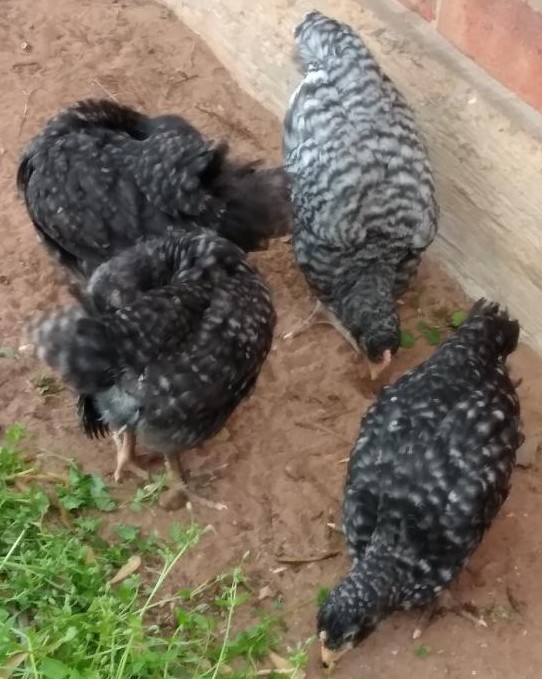
Two and a half years ago my daughters brought home 4 Cuckoo Maran chicks. I wanted that breed for a couple of reasons: I heard that they laid well in the winter months, and their eggs are a rich chocolate brown, which I thought would complement the blues of my Ameraucanas. One of those chicks developed into a rooster, and he had quite the urges. But Megatron is definitely not like his predecessor; he does not like to share. At all. He would chase Springer off his girls a hundred times a day. Eventually Springer was looking ragged; his tail feathers were not coming in like they should. This went on for weeks, months, what started to feel like forever. Why didn’t Megatron just finish Springer off? Clearly he was wearing both of them out, not to mention the girls.
Four Cuckoo Marans; Springer is the lighter one.
Springer’s behavior started to get worse with the hens, more violent, I suppose because he was desperate. No one wanted to be around him, not one of the hens. Everyone avoided him like the plague. One time he tried getting Soundwave, Megatron’s other hatchery-mate, as she was sneaking back under the fence. He trapped her there-she was pinned under the fence until one of us went out to rescue her from her attacker.
Springer was then labeled a violent sex offender, and he had to go. He was starting to cause unnecessary stress to the flock, and though Megatron had drawn blood on him, he was unable to put him down. We needed to do this humanely and quickly before any of the hens were killed or injured.
After Springer was gone there was complete peace in the backyard; it was like the whole flock could breathe a sigh of relief. If Megatron could speak words other than crow, he would’ve thanked us.
The causes of stress to a bird are not that different than stress to a person, although the effects can be divergent. Whenever you notice atypical behavior in your birds, it’s time to start doing some research.
Do you have any stories of chickens stressed? Have you ever noticed your flock stressed before? I would love to hear your stories and your solutions.
If you have a backyard flock, you might be one of the lucky ones whose birds haven’t experienced any chicken illnesses. Yet. I say yet, because just like people, chickens can and do get ill. In this post I’ll cover the most common chicken diseases. And I’ll go over preventative measures, and if contracted, how to treat the bird.
The Chicken Disease Fowl Pox
The first chicken illness is Fowl Pox. And it’s usually transmitted by biting mosquitoes or new birds who are carriers of the disease. There are also 2 forms of this disease: Wet pox and dry pox. Wet pox is deadlier than dry pox, because wet pox causes throat and respiratory spots that may develop into large growths. These growths may make it difficult to eat, drink, and breathe. With dry pox, there are white spots on the combs, feet, and waddles. It can look like your bird has been pecked mercilessly. At first, you might just think that’s what it is; that your birds were pecked. However, if you have more than a couple of birds like that, and their egg production is down, you just might have birds with fowl pox.
It was a couple of years ago that one of our Black Sex-Link hens died suddenly, out of the blue. Naturally that had us concerned. My husband did a semi-exam on her, but he’s not a vet. We couldn’t say for certain her cause of death. She did, however, have bumps in her mouth, which was strange. Previously we never noticed any odd behavior from her — it was so abrupt. So, we started examining the rest of our flock and discovered some white spots on the combs of a few of our birds.
We separated the 3 hens from the rest of the flock, not knowing at the time what the issue was. Maybe a day or two later, the separated hens started developing sores around their beaks. And in time we realized the hens with the white spots on their combs had fowl pox. Chicken pox for chickens, as I call it; it is not contagious to humans.
Initially we were advised to euthanize our flock. That’s the preferred method most people take with birds, because there aren’t a lot of poultry vets. And illnesses spread so quickly. Plus, if you look at the literature out there, everything says they’ll die. It’s very dismal, but we were very adamant against doing that.
Perhaps your birds are your pets. Like us. Or maybe they are a small source of income. I’m willing to bet you get some joy out of your backyard flock. Some reward. It’s not easy putting an animal down. Especially if you aren’t sure it’s really necessary.
Treating Fowl Pox
The lesions of fowl pox heal in about 2 weeks, so they need to be separated from the others. Next,
Inspect the rest of your birds to look for any spots.
Or order the vaccine and administer it to the rest of your flock. Just in case.
In the event that you need the vaccine, you may wonder if the eggs are safe. With de-wormers you’re supposed to go 2 weeks each de-worming, collecting and disposing the eggs.
We kept our three hens separated for the requisite time period. We prayed for the rest of the flock. In the meanwhile, I ordered the vaccine for my remaining birds.
Once a bird has fowl pox, if they live, immunity is supposedly life-long. Further, it’s a slow-spreading disease, which is the main reason why I ordered a vaccine; I didn’t want to wait and see what happened to the rest of my birds. I know now that the Black Sex-link must’ve had the wet pox, while the other three had the dry pox. I’m thankful none of the other birds contracted the illness, because quarantine is a long time away from the flock. And I’m happy to report that the other 3 hens recovered.
The Chicken Illness Coccidiosis
Another common chicken disease is coccidiosis. It’s a parasitic illness caused by coccidian protozoa, primarily affecting birds when they are younger. This is generally why medicated feed is offered, at least here in Oklahoma. Adult chickens can also get coccidiosis. Although, they are more resistant due to earlier exposure to infection, according to Merck Manual. Signs of infection are
decreased growth rate
severe diarrhea
death
and if adults, decreased egg production
Treating Coccidiosis
I already mentioned medicated feed for chicks, but if you have an adult bird with coccidiosis, there’s Amprolium. It’s the same treatment in medicated chick starter, which blocks the parasite’s ability to uptake and multiply. However, if your bird has been vaccinated, don’t give them medicated feed, because both taken together will nullify the effects. Other measures to treat coccidiosis include
Keeping brooder and coop clean and dry
Making sure waterers are clean
And don’t overcrowd the coop
Also, don’t throw feed and treats on the ground
Practice good biosecurity
And if you have waterfowl with chickens, make sure the coop is clean and dry. And change the water often.
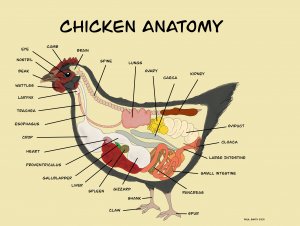
Anatomy of a Chicken Courtesy of Paul Smith
Egg Binding, a Common Chicken Ailment
Egg binding is another common issue that can affect hens. Symptoms may include
Loss of appetite
Disinterest in drinking
Decreased activity
Shaky wings
Walking like a penguin
Abdominal straining
Uncharacteristic sitting
Passing wet droppings or none at all
Droopy, depressed, or pale comb and wattles
And presence of an egg in the oviduct upon an examination.
Being egg-bound simply means a hen has an egg stuck inside of her that she cannot pass. Or the hen is having difficulty laying the egg. There are different reasons this happens:
Lack of calcium, which is what puts the shell on the egg and helps the hen’s muscles contract and push the egg out
Obesity- a chicken that is obese can have a difficult time laying an egg, because her muscles are weaker and can’t contract as strongly as they should
Infection- sometimes a chicken will have an infection in their reproductive tract. They may have no symptoms at all, but it can still cause all kinds of issues, including muscle weakness
Malformed eggs- eggs that are very big or misshaped can be problematic for the hen as well
Stress- stressors such as a new coop or flock can cause problems for a hen
Premature laying- sometimes a hen that starts laying eggs too soon might get egg-bound, because they are too young
Treating an Egg-Bound Hen
How do you treat an egg-bound hen?
First, make certain there’s an egg by inserting a gloved finger (coated w/Vaseline) into the suspected hen’s vent to a depth of 2 inches. If you can’t find an egg, there isn’t one.
However, if there is one, fill a tub with warm water, and add 1/2 cup of Epsom salt to every 1/2 gallon of water.
Then immerse the hen gently into the water till her abdomen and vent area are soaking. You must be careful, because you don’t want the egg to break; that would be another issue entirely.
And keep the hen in the tub for 20 minutes at least before removing her and drying her off.
Keep her separated from the other birds to hopefully encourage laying the egg; you can also lubricate her vent with Vaseline to help the egg slip out. If after her first bath she hasn’t laid the egg in a couple of hours, repeat the bath. In the event you still no have no success after 3 or 4 baths, you might need to contact your veterinarian. If you can feel the egg, you might be able to remove it in pieces, although it’s not generally recommended, because it can lead to injury and infection.
You can try to prevent egg binding by managing your flock’s diet, giving them the appropriate feed. A chicken feed with 16% protein should contain all that your flock needs, including calcium. However oyster shell should also be available. Controlling worms is another prevention method, as is making sure you have enough nesting boxes. Reduce stress by eliminating or minimizing changes in coops or flock mates. Decrease premature laying caused by added lights to the chicken coop, by monitoring light exposure until pullets reach maturity around 20 weeks.
There isn’t a whole lot to be done about large and misshapen eggs. Sometimes it’s just a one-time thing. Though, if it becomes habitual that the hen routinely lays large eggs, she needs to be monitored for vent prolapse, which will need to be treated quickly.
Rhode Island Red hen we thought had gapeworm
The Bird Parasite Gapeworm
Gapeworm is another problem your birds might come into contact with. It causes respiratory problems in chickens. But what is gapeworm? It’s a parasitic nematode that infects the tracheas of domestic and wild birds worldwide. If your chicken is infected with gapeworm, they will gape. Or they will stretch their necks out to adjust their crops and shake their heads. They also cough, all in an attempt to dislodge the parasites.
Treating Gapeworm
I have read where you could swab your birds throat to know if they have gapeworm. The worms will appear as thin red strings. If your bird is infected with gapeworm, they need a de-wormer like Ivermectin. Although, you can prevent gapeworm by keeping the environment clean and dust-free. You also need to till the soil in the run at the end of the growing season, which is supposed to reduce residual infection. And keep up with the worming schedule.
If your birds are stretching their necks, it doesn’t necessarily mean anything. Chickens will stretch their necks out to adjust their crops; I’ve seen my birds adjust theirs after they’ve been eating a lot of food. Are they coughing and gasping? Has their egg production decreased?
Sketch of a Chicken Mite Courtesy of Paul Smith
Mites, Lice, Ticks and Other Worms
Your birds might get infested with either mites, lice, or worms. Or other critters not specifically mentioned. Anything parasitic is bothersome to chickens and could even be deadly. And the treatments and preventions are different.
If your flock has a problem with mites or lice, generally
They won’t lay as many eggs
Their combs and wattles will be pale
And they can get anemic
Additionally, the problem can even cause feather loss, mostly on the back. That’s since the hen will over-preen and possibly pluck her own feathers just to get relief.
Mites and lice can be treated and prevented pretty much the same way, although ticks need a different method. Our birds have had mites, and the natural method is diatomaceous earth, which is supposed to be a cure-all for everything for poultry. But we haven’t had great success with it. I think the first time our chickens were free of mites was when we applied Ivermectin one spring. It is recommended to treat the birds topically for lice and mites. But for ticks, the recommendation is to treat their coop and surrounding area.
De-wormers as a Treatment for Worms
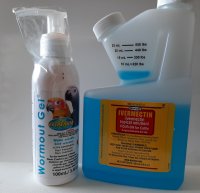
There are mixed reviews for natural de-wormers out there. A lot of people recommend using apple cider vinegar and garlic. There are probably more natural ingredients than those that could be used. And I’ve used apple cider vinegar and garlic since having chickens. However, one spring our birds all got the yucky anyway (not gapeworm). We had to administer Ivermectin after I ordered Wormout gel from Australia. It was going to take several weeks to arrive, and I was impatient to treat my birds. With Ivermectin you just apply the treatment topically, while Wormout gel is added to their water. (Though I didn’t dose my chickens with the other when it arrived.)
I have read many reviews and spoken to fellow chicken owners who have tried the natural methods as well. Birds, just like any other animal, just like you and me, will still get ill no matter our efforts. Sometimes we have to take the stronger stuff. I continue to put ACV in their water once a month; (1 TBSP per 1 gallon each day for 1 week X once a month. Since we have ducks, I add Brewer’s yeast, which has the garlic in it. So I don’t have to add any extra.
Either Ivermectin applied topically (0.2 – 0.4 mg per kg topically at their shoulders where they can’t reach, and once more in 2 weeks,) or Wormout gel added to their water (2 pumps of the gel per 1 1/3 cup of water) are the best options if there is an infestation; remember you shouldn’t eat or sell any of the eggs from your flock till the treatment is ended. Ivermectin dosing is 2 times in one month, so you can’t eat the eggs for 2 weeks each dosage. And since Wormout gel dosage is just once in their water, you only go 2 weeks refraining from eating and selling the eggs. After that, start a monthly preventative of 1 TBSP ACV per 1 gallon of water daily for 1 week with garlic sprinkled in their food.
Our boss hen Fives, the Silver-Laced Wyandotte, close to the front.
Bird Flu, A Common Backyard Menace
Avian flu, or more commonly bird flu, is a chicken illness that is often heard of at least yearly. Symptoms include
A general decrease in roaming and activity
Cyanosis or blueness in the head area
They won’t eat as much
In addition, there will be excessive flock huddling and ruffled feathers
They might have fluid in their combs and wattles
Also, there will also be a decrease in egg production and coughing
And their legs may bleed underneath the skin; and they may die suddenly.
How to Treat Bird Flu
You might not completely prevent your birds from getting bird flu. However, there are things you can do to protect them. Don’t encourage wild birds from stopping by your yard by feeding them, and keep your feeders and waterers clean. Bird flu, just like other bird illnesses, can spread by wild birds.
Clean out the coop on a regular basis.
Have dedicated clothing and footwear you use when handling your birds.
Make sure not to wear this when anywhere else but around your own birds, especially when around other chickens. Bird flu can live on clothes that have been contaminated by an unhealthy flock for up to two months.
Pick up feed spillages to avoid attracting wild birds.
Also, don’t borrow or use equipment from other people who own chickens.
And clean your own equipment with which you used to transport your birds or clean out their coops.
Monitor your flock’s behavior, appearance, and appetite.
Avian flu is highly contagious and deadly to birds and humans. Although, there are vaccines for people. Failing that, if bird flu is still contracted, antivirals can be administered within 2 days. The only recommendations there are for birds who catch this disease are euthanizing the whole flock, appropriate disposal of the carcasses, and sanitizing the coop.
This is a sketch of Marek’s Disease.
Marek’s Disease, Another Common Chicken Illness
Another illness in backyard birds is Marek’s disease. Symptoms of this are paralysis of legs, wings, and neck, loss of weight, grey iris or irregular pupil, and vision impairment. It is one of the most common illnesses in small flocks and not treatable once the clinical signs have started. However, it is preventable.
Marek’s is caused by a chicken herpes virus, but it won’t make people sick. Once an animal becomes infected, it will remain infected. Though, not all animals will become sick if infected. Birds become infected by inhaling virus-laden dander. And while the virus is easily killed in its pure form, the virus itself can live for years in the dander. That means that once the disease enters a coop, it can live for a very long time, years, even if the birds are all gone. The only way to prevent this disease is to vaccinate day-old chicks before they’re exposed to the virus.
Unfortunately not all hatcheries will vaccinate their chicks; the vaccine itself is tricky and has to be used within very specified conditions for it to be effective.
Our trio of Black Ameraucana’s. Shockwave is the one closest to the front.
Vitamin Deficiency
Vitamin deficiency is something to note here, because it can mimic Marek’s disease. A few years ago, we think Megatron, our boss rooster, injured one of his hatchery-mates. He decided he wanted some ‘lovin’, and he was not very coordinated when it came to mating when he first started out. Thus, he injured his hatchery-mate, Shockwave. We noticed she stopped using one of her wings. Eventually she stopped competing for food; I think because she was afraid of getting hurt further by the other birds. She’d hang back until there was less competition.
At the time we didn’t realize what was going on. We knew she was hurt, and we surmised it was due to Megs. But we didn’t realize she was waiting on food, because she was always there when food was being dished out. Over the course of a couple of weeks she started to get weaker, until she was no longer walking.
This is a sketch of our hen Shockwave with vitamin deficiency, but I’ve seen many more photos of birds that look a lot worse.
We thought it was Marek’s due to the paralysis; Hannah, then 18 years old, was convinced. But I’d remind her that Shockwave was injured originally. Marek’s didn’t make sense or fit. Something was missing. So I continued researching the matter until I came across vitamin deficiencies that mimic Marek’s. I purchased Poly-Vi-Sol infant liquid multivitamin and immediately started administering it to Shockwave. Unfortunately it was too little too late; she died the following day.
I felt horrible, because I thought I knew what was going on in my flock, and yet, she died. I felt it was completely preventable. My point in sharing this story with you is that Newcastle Disease and Marek’s Disease mimic vitamin deficiency in the presentation of paralysis. Therefore, it’s vitally important to look at all of the signs. If we had acted sooner we could have saved our hen.
Newcastle disease
Newcastle Disease is another respiratory illness in chickens which causes breathing problems, discharge from nares (nostrils on a chicken). If your bird is infected with Newcastle disease, their eyes will look murky, egg laying will begin to wane, and wings can become paralyzed as well as their necks becoming twisted.
This disease is also carried by wild birds. And just like bird flu, it can remain on your clothing and be passed to your flock. Although most older birds will recover, younger birds are at an increased risk from dying from it. Even though there are vaccines available to prevent this disease, there is no treatment for it except antibiotics for secondary infections and supplements. Also, like bird flu, Newcastle disease can be spread to people, though it isn’t deadly. It produces either no symptoms at all, mild flu-like symptoms, or conjunctivitis or pink eye.
All of the sketches in the post courtesy of Hannah Smith.
In this post, I’m going to go over how to protect your chickens from predators. But first, let’s go over the potential animals of prey.
Predators
If you live in the country, you’re likely to run into a lot of predators. Or rather, they’re more likely to run into you and your chickens, ducks, or rabbits, whatever you have in your pasture or backyard. We have had all three at one time or another.
Sketch of Fox Courtesy of Paul Smith
Foxes
I’ve seen a fox in our neighborhood once, however none have ever gotten our chickens thankfully. Though, I know they can be a menace; in East Texas where my mother-in-law lives on her 40 acres, foxes have routinely taken her chickens to feed their little ones.
Skunks, opossums, raccoons, and coyotes
Skunks, opossums, raccoons, and coyotes are also a threat. Once again we have been very blessed to live in the neighborhood we live in, which is in the country on only one acre in a neighborhood of 1 to 5 acre lots. We have a neighbor who lives a minute or two away (by car) on 5 acres, and they’ve had coyotes. I recall one time a raccoon came to our neighbor’s house next to us in the 7 years we’ve lived here. And he let us know about it, although it never even came into our yard.
There are also dogs, which is probably the biggest threat to our flock. Living where we do, dogs are basically allowed to run free. We even know who owns the dogs that run free. One or two of them even look like they’re starving, but there’s no animal control where we live. It’s really sad.
One of our friend’s and good neighbor’s dog attacked and killed one of our roosters (by digging under our fence where the broilers liked to relax) when we were first starting out. He felt so bad about it that he replaced the bird with another rooster. We have had other dogs get in our backyard; there’s a couple of black labs that know how to lift the latch on our gate and they gave our birds a fright a few years ago. However, the birds jumped the fence before anything else happened. We now put a lock on the gate.
Snakes
Snakes are another predator, although they are more of a threat to eggs and chicks than adult chickens. In May 2017 we had a 4-ft long chicken snake in our yard. I noticed, from our picture window in our family room, our bunny jumping up in the distance. It looked like she was either getting stung by bees or getting bitten by a snake. I didn’t know for sure what was going on, so my daughter, Hannah, went outside to check the situation out.
In the meantime, all of the chickens were heading in the same direction, strangely concentrated on one thing. I soon followed my daughter. That’s when we knew it was a snake. At the time we still didn’t know what kind of snake it was. Hannah had it pinned to the ground, my husband was at work, and we were just concerned that there was a snake in the yard. Another neighbor came over and took care of the problem for us. It was then that we calmed down and were able to ascertain that it was a chicken snake.
In September 2019 one of our most favorite and least likely hens went broody, and the two eggs successfully hatched. The chicks were only a couple of days old, so Davis wasn’t leaving or prepared to leave the coop yet. Although, the next morning when I went to let the birds out, I saw Davis in the run. I was aware that the mother wouldn’t leave with her chicks for some time, but again this was new, so I wasn’t really sure what was going on.
Pinning the snake down.
My husband was outside, as well, and he asked me if I saw both chicks. I thought I had, but he didn’t. So he looked in the coop and saw a snake, which had gotten one of the new chicks. That’s why Davis and the other chick were out in the run. It was a chicken snake, smaller than the first one that got in our yard. We reasoned that it was able to slip in between the run door and frame-the space was just big enough. Our neighbor closest to the coop used to have a barn cat that was pretty good at keeping critters like that away, though Bobby passed away early 2019. Since that incident we installed more hardware cloth on the door so when it’s closed there’s no longer any space for snakes to sneak in.
A hawk on a tree limb of my birds’ favorite tree.
Hawks
The following section contains imagery of graphic animal injury.
The other biggest predator threat that our birds face is from the air: Hawks. When we had our first real flock of chickens we had an Ameraucana we called Cody; she liked to forage by herself. This was back when Paul was building the big coop. Well, one day we went running errands, and when we got back Cody was gone. There weren’t any dog tracks-it had rained the day before, so the ground was still muddy. We looked everywhere, looking for tracks. Nothing. We think she got taken by a hawk, but we can never be entirely sure.
On April 20, 2018 Hannah went outside to collect eggs around midday. Strangely all of the chickens were in the run, so she suspected something was wrong. Especially when she saw all of the feathers in the yard. She went to the other side, the coop side, and looked inside and spotted Rex, Cody’s sister and tried to pick her up. That’s when she realized what happened, without knowing the exact details.
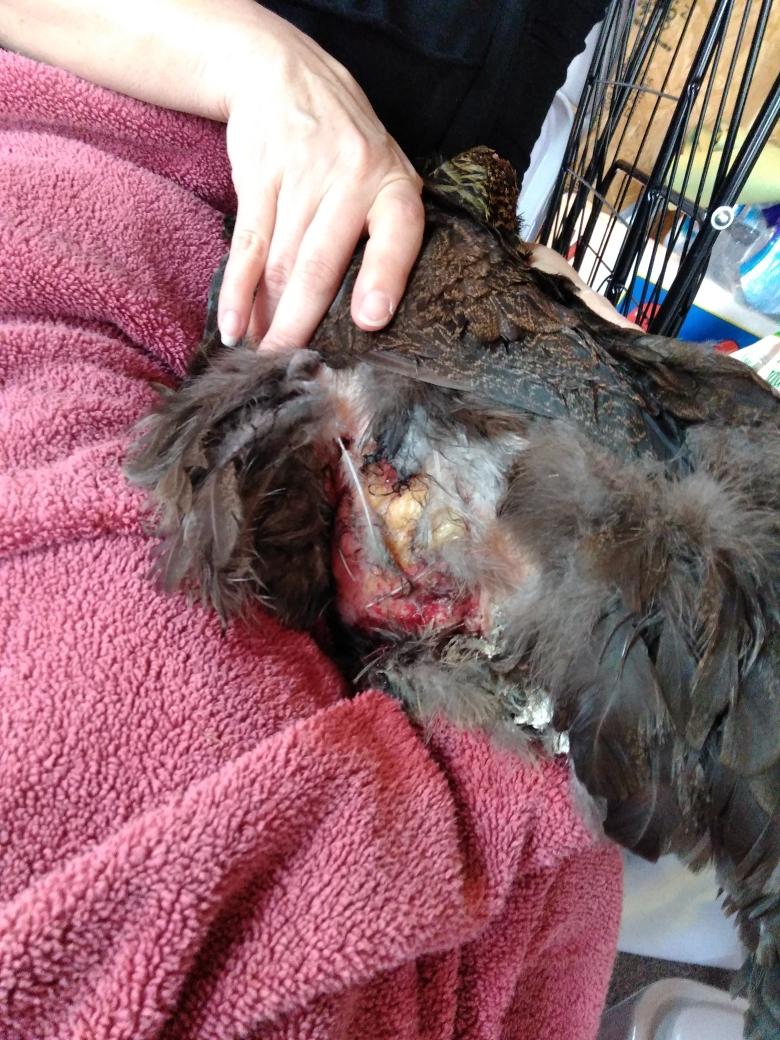
Rex’s injury from the hawk attack.
Rex had been attacked, most of her tail feathers had been pulled out, and she only had a flap of skin left on her backside. We were left trying to figure out who or what the predator was. Was it a dog? The gates were all closed, and we didn’t think it could be a small dog squeezing through the fence. A cat? Possibly, but we couldn’t imagine it. We thought about a hawk, but hawks don’t let go of their prey, so we easily dismissed that.
We put Rex in a cage with water and food, put some medicine on her wound and then talked to my father-in-law who recommended we get an antibiotic. My oldest daughter’s father-in-law is also a veterinarian and he’s local, so we called him. The next day we picked up some antibiotics for our bird. Over the next 10 days, Rex ended up hating us for her treatment, however she was on the mend with the shot in her rear.
It wasn’t until a couple of days later when we learned the truth of what happened to our bird. Our neighbor across the street was just getting off of work when he saw the hawk dive to attack and pick up one of our hens. But then it unbelievably dropped Rex and flew away. That’s why our bird is still alive today. That and the antibiotics. Consequently she has a reputation and an attitude now. She’s the bird who lived.
This is a close-up of hardware cloth with a rooster in the backgroud.
Protecting Your Flock from Predators
Now that we’ve gone over the list of predators, let’s discuss ways we can protect our flock from them.
A Good Coop Will Help Protect Your Chickens
So how do you protect your flock from predators? The first and foremost recommendation is to lock your birds up at night once it’s dark. I’ve read of friends who don’t lock up their birds, and sooner or later, predators will get them. With a little training, you can get them to go into the coop. Our birds seem to have an instinct to go in the coop now, so they let themselves in at night. Some, the ones on the lowest end of the totem pole, are the last to go to bed. But as soon as it’s dark, I go out to shut the run door. I bring a flashlight with me to make sure everyone’s in the coop, as I do a head count, double checking that the doors are secure before leaving.
Predator-proof Your Coop To Keep Your Birds Safe
The second most important suggestion is to make sure you have a predator-proof chicken coop and run, since most predators go out at night when the flock goes in. My husband put hardware cloth or wire mesh on the run, which is more sturdy and smaller in diameter than chicken wire. I wrote a post about the types of coops, you can read here.
Invest in a guard dog for the flock-that’s just what my in-laws did. They were tired of the yearly assaults by foxes so they bought a Great Pyrenees mix. Lights and noises are also supposed to be deterrents, and because of the latter, guinea hens might make good alarms to predators due to the odd sounds they make.
When we had our Shetland Sheepdog, Moses, I truly believe his presence helped discourage aerial attacks. Now we have Sophie, and when she’s outside, I think she does the same. I also believe that if the birds tolerate the dog, and the dog warms to the flock and doesn’t hurt them, then utilize dogs for the benefit of everyone. They are possibly the most beneficial resource we have to dissuade predators from our property; we have only to train them properly.
Since Rex, our hen, got attacked by the hawk, any time our flock hears bird sounds, they run for the coop. They either can’t differentiate between a crow, a Mississippi kite, and a hawk, so they take cover just in case. Or they decide to take cover, because they’d rather be safe than sorry.
Over the years though, we have discovered that the crows and Mississippi kites have nests in the trees surrounding our property. And sometimes when a hawk has flown over screeching, a family of crows or kites will escort the raptor away to keep their own nests and young safe. We’ve witnessed it, although the hawks soon learn and adapt, and stop screeching in order to go undetected. The crows and kites can keep the raptors away, but we can’t depend upon them.
Invest in Shade Trees
The summer months are safer for our birds, because they’re warmer (or hotter, depending upon where you live), so they seek out shade. When we first moved into our house there were only two trees big enough in our backyard where the birds could sit and keep relatively cool. I soon learned they were far safer from predators under those trees in the summer than out walking around in the winter or autumn in full sunlight where they were exposed. In the Spring of 2016 we planted three fruit trees, and every year since, we’ve planted more, either fruit or ornamental.
What Not to Do
It is illegal in the United States to kill hawks or owls, even if they kill or attack our source of food or income. Raptors are protected, but we have to discourage them from coming to our yards. Roosters don’t always fight predators; a lot of people mistakenly think they do. Casanova, our first rooster, fought us over who was going to be the head roo. Megatron, my current rooster, fights actual roosters, to put them in their place (kinda like Casanova, only he was slightly confused). But the rooster is supposed to warn of danger; that’s the main way he protects the flock. There isn’t any way he can take on a dog, skunk, raccoon, or hawk; it would be futile unless the predator was smaller than him.
The best, proven options are a good coop and making sure the birds are inside at night. And during the day, if you have problems with predators, you may have to get a dog suited to chickens. It will deter the predator by always being a presence. You can click here to find out which dogs are best.
This chicken soup with Acini di Pepe recipe was passed down through the generations on my mother’s side. It goes back when, I’m told, her ancestors lived in Sicily till they emigrated to New York.
My mother learned this recipe from her mom. And she probably started making it by the time she was a pre-teen. Then she handed it down to her daughters. It’s one of my kids’ favorite things to eat when they go to her house, even if it has stewed tomatoes in it. Even though it can be considered an old recipe, it’s quite simple to make. And I’ve even made some tweaks of my own.
Ingredients for Chicken Soup with Acini di Pepe
2 chicken breast halves
1 Tbsp Better Than Bouillon Roasted Chicken Base
Salt to taste
1/4 tsp pepper
1 small diced red onion
2 diced celery, leaves removed
1 diced carrot or 10 oz package of mixed vegetables
1/4-1/2 cup fresh or canned whole tomato, diced or pulsed in food processor
1 Tbsp dry parsley
And 1/2 cup Acini di Pepe (Da Vinci is the brand I use)
Instructions
First, cook chicken with 1 Tbsp Better Than Bouillon chicken base in 2 1/2 quarts of water over medium high heat. When it starts to boil, lower to a simmer, and put a lid on the pot.
Next, when the chicken is cooked, check if it has enough salt, and add salt to taste, if needed.
Then, remove chicken and shred once it’s cooked through.
Add pepper, onion, celery, tomatoes, and carrots or mixed vegetables to pot, and simmer for 9 minutes.
Next, add parsley, and increase heat to medium high, to get water boiling.
And add Acini di Pepe last, when everything is cooked, and cook for 8-9 minutes more in boiling water.
Then put shredded chicken back in pot and heat through.
Finally, serve immediately.
I hope you enjoyed this post, and if you make this soup, please let me know what you think! Also, feel free to change it as you like!
Every New Year’s Day I grew up having pierogis and gwumpkies at my maternal grandparents house until we moved to another state. That’s when I was entering 3rd grade. Pierogis are one of my absolute favorite foods. It’s probably because there’s a mixture of dough and butter. Regardless, the Polish cabbage pierogi recipe is the one I’m going to share today. And the one that I love the most.
In case you didn’t know, Pierogis are filled dumplings. Plus, they’re mostly associated with the cooking of Central and Eastern European nations. However, they go by different names in those nations. In Poland they’re referred to as pierogis. Though, in Russia, they’re known by vareniki.
Moreover, in this recipe, the pierogis are filled with cabbage. But, more commonly, they are filled with potatoes. In other nations, they fill theirs with meats. I imagine the choices can be endless, although these are the traditional selections.
Polish Cabbage Pierogi Filling Ingredients
Cabbage
1 Small Onion
3 Tbsp Butter
And Salt and Pepper to Taste
Ingredients for Dough
2 1/2 Cups Flour
1/2 tsp Salt
1 Egg
And 1/2 Cup Cold Water
Pierogi Filling Instructions
First, chop onion and shred cabbage.
Next, cook onion and cabbage in 3 tbsp of butter in frying pan on medium-low heat; season to taste w/ salt and pepper.
Then, simmer until tender.
Dough Instructions, and Putting it all Together
First, sift flour and salt together, and then add egg, and work ingredients into a dough, gradually adding 1/2 cup cold water.
Next, knead dough on floured surface until firm and smooth.
Then roll into ball and let it set for 10 minutes beneath a warm inverted bowl.
Next, take 1/3 dough at a time, roll thin, and then with a biscuit cutter, cut dough into circles.
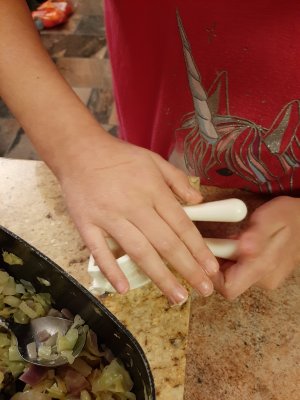
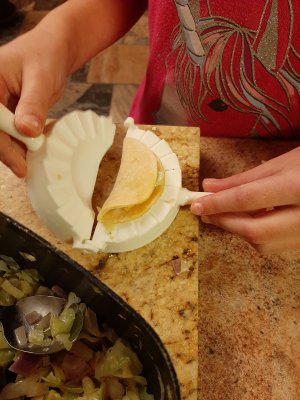
And place a spoonful of filling in center of circle, fold in half and press edges together and crimp to ensure seal.
Then drop pierogis into boiling, salted water, and cook for 10 minutes.
Finally, after pierogis are filled and cook, pour melted butter over them.
These are my all-time favorite pierogis. However, I have also had them with fruit filling as a dessert, and they were unexpectedly wonderful. As I’ve mentioned before, I have some Sicilian in me on my mother’s side, because her mom was Sicilian. Though, I’m also Polish, which comes from my mom’s dad.
Holiday Traditions
When we lived in Arizona, meals at my maternal grandparents house were always a treat. Because, not only did they have quite a spread, but it was very ethnic; Italian on one side and Polish on the other side.
Gwumpkies or golumpkies, aka Polish stuffed cabbage rolls, were another Polish dish my grandpa would make for New Year’s day. This also features cabbage. However, rather than stuffing the cabbage, the meat and rice is stuffed into cooked cabbage leaves.
That’s not a recipe that I have ever cooked personally. Though my mom still faithfully prepares a lot of the recipes that were passed down to her.
What are your favorite holiday recipes? Is there some favorite dish that was handed down in your family? Or is there something that you make every year that gets requested? Please feel free to share, because I love trying new recipes!
I hope everyone has a blessed New Year’s day and a safe, healthy, and prosperous 2021!
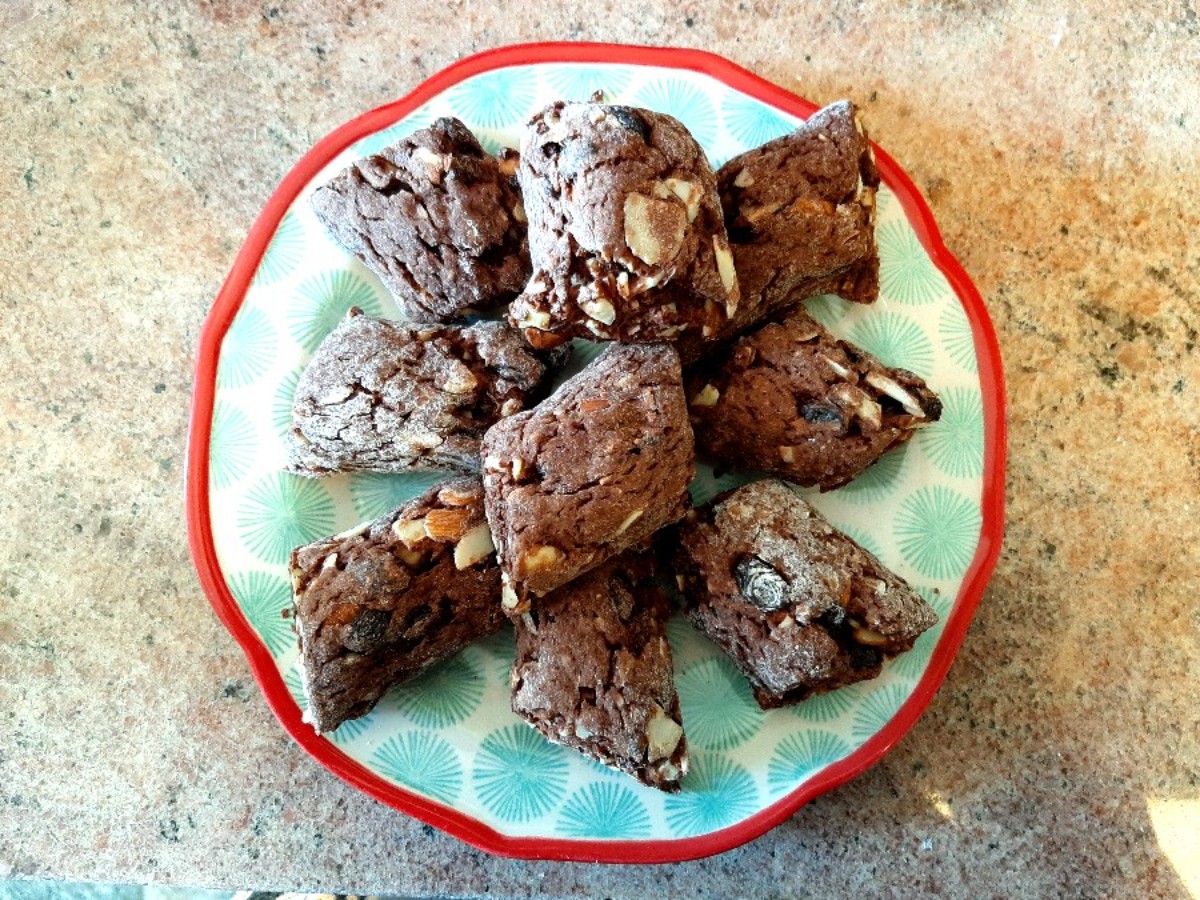
This recipe is one that’s been handed down to me from my mom, which was handed down to her from her own mom; then back generations, originating in Sicily. And they resemble biscotti in a lot of ways, only they are Sicilian cookies. Also, when looking up Papatelli, I saw pictures of them that looked like biscotti. However none looked quite like the ones passed down in our family. They also sound like Italian pepper cookies, in the way that the recipes resemble each other with similar ingredients. Though our cookies are called Papatelli. I hope you enjoy.
Ingredients for Papatelli
3 Cups Flour
1 Cup Sugar
1/2 Cup Cocoa
3 tsp Baking Powder
1 tsp each of Cinnamon, Cloves, Nutmeg, and Pepper
1/2 tsp Salt
2 Eggs
1 Orange Rind with juice
1 Cup of Raisins
12 oz of Sliced Almonds; (recipe originally calls for 1 lb, but we add a little bit less)
1/2 Cup Vegetable Oil; (I use Grapeseed Oil)
1 tsp Vanilla Extract
Milk for Moistening; (just a splash to moisten the dough)
The remaining dough after rolling up half into the shape of a sausage.
Instructions
First, preheat oven to 375°.
Next, measure and mix all dry ingredients, except raisins and nuts.
In separate bowl, beat eggs, vanilla, orange juice, and vegetable oil.
Then, gradually add dry mix into the wet mix, mixing on low to medium speed. And add splash of milk as needed.
Last, add nuts and raisins, and continue to mix by hand, adding more flour to your hands if needed to keep dough together.
Then, on a floured surface, split dough into 2 and roll out like sausages, 1 inch wide and slice diagonally, ~ 1-1.5 inches long.
Next, place the dough 1/2 inch apart on baking sheets.
Then bake for 15 mins.
Finally, cool and enjoy!
What the dough ends up looking like.
Now everyone in my extended family makes these cookies with a white glaze for extra sweetness. However we don’t, since my daughters and I love these cookies just as they are out of the oven, once they’ve cooled. The blend of spices, chocolate, nuts, and raisins make these cookies the perfect snack. Furthermore, they’re deceptively easy to forget how many calories you’re ingesting. We can readily eat several of these before a meal, after a meal, or in place of a meal. But I wouldn’t recommend it.
What are your Christmas traditions? Do you have a favorite cookie recipe that you make in your own family?
If you’re a backyard chicken owner, then it’s likely that with the onset of every spring, you are familiar with the desire to purchase new chicks or chickens. This hobby can be very addictive. So this post is intended to help you know how to introduce new chickens to the flock. Because, otherwise, the new birds can upset the pecking order or bring diseases to your backyard birds.
How to Introduce New Adult Chickens to The Existing Flock
When introducing adult chickens
Never introduce solo chickens to your flock.
Chickens can be mean. Even if you follow all of the recommendations for introducing new backyard birds, if you only present 1 chicken to your existing flock, that bird will inevitably be abused. It stands a better chance if you at least present it with one or 2 other birds. I don’t recommend adding more than that to a well established flock. This is because, more birds can greatly upset the pecking order, especially dependent upon the breeds you’re introducing. Which could cause stress in your existing hens, possibly making them stop laying eggs.
Don’t allow the new birds around your existing members until after you’ve quarantined the newest ones.
This way you can make sure the new birds are disease and parasite free. You don’t want to possibly give the rest of your flock something. Most people recommend keeping the new birds away from your established flock for a month. But I’ve also seen numbers ranging from no less than a week to 30 days. Also, while you are monitoring the new chickens, be sure to wash your hands when going from them to the existing flock.
Watch for pale combs and wattles, feather loss, lethargy, and scaly legs on the new members.
If you purchased the new birds from a reputable dealer, it generally isn’t necessary to isolate the birds for so long.
And then, once you’re satisfied that the new members are healthy, put them somewhere the rest of the flock can see them, and vice versa, preferably for a few days. If you can put the newbies in an enclosure, in the run, so the newbies and existing ones can observe each other, this is the ideal way for everyone to start getting to know each other without excessive violence. You want to do this for at least a couple of days. Because it helps to alleviate stress in the pecking order when the birds are finally let loose in the yard and coop.
Finally, add the newest members, at night, to the coop.
Chickens can’t see well in the dark, so this makes it the perfect time to sneak in the newbies. Then monitor behaviors in both the new birds and existing flock the next morning.
It would be unusual if you didn’t see members of your established flock peck the newbies. This is perfectly natural and acceptable. They are establishing the pecking order with the newest members. And depending on the breed(s) of chickens you have and then recently acquired, it may be limited to only pecking here and there.
However, there are more aggressive/dominant chicken breeds. And if the newest members happen to be one of those breeds, then you might see more than pecking. That’s because those hens will more than likely want to ascend to the top of the pecking order.
If one of the birds starts bullying, and you know which one it is, then remove that bird from the group. Put her somewhere like in a cage or a separate enclosure, away from the rest of the flock, with food and water. And after a couple of days, reunite her with the group. If her behavior hasn’t changed, purchase Pinless Peepers. They sort of act as blinders for the hen’s eyes, which will prevent her from bullying.
If the whole flock (or the majority) is bullying one hen, first you’ll need to check her over for injuries. You’ll more than likely have to separate the bullied hen from everyone since there’s too many doing the bullying in this case. And usually the bullying is due to an injury or a quirk the hen has, that the rest of the flock sees as a weakness. It will continue in this situation for as long as the hen lives.
How to Introduce New Chicks to the Flock
When introducing chicks to the flock
They should have their adult feathers. Sooner than that, they could get hypothermia.
Most people recommend that the chicks be adult size, (so no longer chicks) before putting them in the general population.
We followed this advise with the first, second, and third set of chicks we purchased and our first set of incubated chicks. However, as we got accustomed to raising chickens and our particular birds, we stopped waiting till the chicks were full size.
I don’t suggest this until you are very familiar with your flock and know their temperament. As I mentioned above, some chicken breeds tend to be more contentious than others. So, this will dictate how and when you introduce new chicks to your existing flock.
After their adult feathers are in, put the new chicks in a cage or an enclosure in the run. This serves the same purpose as when you’re introducing adult birds to the flock; so they can see each other.
With our second set of incubated chicks, we waited till they had their adult feathers and then brought the chicks out, in a pet cage. And then we put it in the run, so that they could see the adults, and the adults could see them. We only had 5 that time, so the cage was big enough for them. They also were protected from the adults (thus the cage), and they were protected from the elements and predators (thus the run). We did this for a few days before letting the chicks free.
We discovered that the adults didn’t pay any attention to the chicks. Because they didn’t deem them a threat to their food or position; they never attacked the chicks. It was only when the chicks got around the same size as the existing birds that the head pecking began. Also, those chicks were some of the smartest chicks we ever had. When it was time to be locked up at night, I would go out there and call them to me, to follow me, and they followed me to the coop to get locked up.
Finally, add the chicks to the coop, in the evening. And monitor the existing flock’s behavior the next morning.
Perhaps the most important thing to be careful of when adding chicks to your backyard is predators. You have to watch out for predators for your flock already, however there will be added ones for chicks. Cats, Mississippi Kites, and crows are just a few of the creatures that will not hesitate to attack chicks, but ignore the big girls. And that is merely due to the size difference.
And if you have a rooster, you can’t rely on him to protect the chicks. If he ignores them, he ignores them. Until they get to a certain age and size, they pretty much don’t exist.
Our Ameraucana Maran chicks.
Should You Add a Rooster or Not
Now what do you do when and if you want to add another rooster? I have read other blogs that are adamantly against it, proposing that it’s impossible. Stating and affirming that there will be bloodshed if it’s even attempted. However, I’m here to refute that, because anything is possible. Take most of my roosters, for example, who have not only been introduced but lived together without actual bloodshed.
No one can actually claim that it’s impossible for roosters to get along no matter the situation. And by the same token, I can’t guarantee that all roos will get along. Just, anything is possible. But a good rule to follow is to have 10-12 hens per rooster. And that’s not to be nice to the roos; it’s for the health and safety of the girls.
Since I brought it up, introducing a rooster to the flock is similar to bringing in a new hen:
Quarantine him for at least a week or more.
Next, have a physical barrier, like a cage, between the flock and the new roo, so they can see each other for a few days before they are thrust together.
Introduce the new rooster, in the evening, in the coop.
And the following morning, monitor everyone’s behavior.
Cream Legbar, Ameracauna cockerel.
I’ve mentioned in a previous post here how our Cream Legbar roo was good with his girls relationally, but he was a coward; he’d bring danger to them while opposing us, his benefactors. So, my girls and I wanted to bring someone else in to teach him some manners. That was a joke.
Our Blue Andalusian rooster, Starscream.
We traded a couple of Black Sex-Links for a Blue Andalusian, adolescent rooster we named Starscream. We had a good number of hens, so the girls would be ok, we reasoned. And we wanted our short, scrawny rooster, Casanova, to have someone else to attack instead of us. But that didn’t quite work out the way we wanted it to; they became best buds.
We separated Starscream for the requisite amount of time, then we put him in an enclosure, so the adults could gawk and get accustomed to him. This was the only time Casanova showed true backbone as he made his rooster noises and did his rooster dances for this newcomer.
When we let Starscream out with the other birds, we thought for sure we would have just recompense on our enemy, Casanova; that the Blue Andalusian was going to solve our problems. Boy, were we wrong. Not only did he not solve our original problem, but he created another one.
That he was sexually mature was a fact, but going after the hens was not the issue; we expected that, and once again Casanova proved what a terrible rooster he was, letting this newcomer in and having his way. Yet I have a feeling it was more about self preservation than anything else. If they got into anything at that point, Casanova might win a fight, because of his spurs. And even though they were about the same height, the Blue Andalusian looked weightier than Cass. It would only be a matter of time, I was sure, before Starscream challenged him. We only had to wait, right?
Troubles with Too Many Roosters
We didn’t realize how bad things were with this new roo until one night my husband and I slept without our fan on. Starscream literally screamed (read crowed) all night long. He barely crowed at all during the day; it was like he was being respectful to Cass during the day, in front of him, while at night, he was telling everyone, especially the hens, “I’m the man, I’m the man, I’m the man!” I felt so bad for our neighbors, especially the ones who live closest to the coop.
I’m not exaggerating when I tell you that he crowed all night. All. Night. Long. It kept my husband and me up; I could only imagine the hens couldn’t sleep either. Maybe it was the name we gave him. We were asking for it, right?
Our other birds we added throughout 2017.
We had Starscream for a month and a half to two months before we heard his ‘all-nighter’. That, coupled with the chicks we had brought in over the course of several months (4 introduced as almost adults due to their size, and 5 new adolescent chickens, including Starscream), started having an effect on our established hens and egg production, which I cover in another post. At that point something needed to be done, because he wasn’t serving a good purpose for my girls. I couldn’t continue to wait for him to challenge Casanova and possibly crow all hours of the night, stressing the hens out.
So, if you end up in a situation where your rooster or spare roo is stressing your hens out, you have a few options.
You need to cull him. This is the fastest method of solving the problem. Although, sometimes people have a difficult time with that option. It just depends on how serious the issue is. Are your hens actually getting hurt? Because spare roosters can do that too! Is egg production down?
Re-home him. This is the best solution. If you can find someone to take the roo off of your hands, everyone wins. Ask around and post something on Facebook; you might get lucky.
If you can’t find someone to take him, you can always Google for animal sanctuaries. Sometimes you have to pay a small fee for them to take in the animal. But, it’s worth it.
In Conclusion
Basically introducing roosters, chicks and adult chickens is very similar. You quarantine the adults to make sure they’re not sick. But with chicks, wait until they’re feathered out. And then satisfying the requirements, you place the newbies in an enclosure separate from the established flock, where they can see each other for a few days before combining them in the coop in the evening. Have you ever had any crazy chicken introduction stories? What about chickens bullying other chickens? Your comments are appreciated.
If you enjoyed this post, please like, share, and please don’t forget to follow.
My name is Kristina, and when asked why I started blogging, I easily answer, “Because I love to write.” However I’m not a published author. Although I have no lack of things to fill my time. Such as: I’m a part-time employee, wife, and mother of three daughters. Two of whom are still at home. And now I manage two websites, my husband’s and my own.
Ever since I was little, I loved writing and animals. Also, I used to want to be a veterinarian when I was small until I found out there were certain things vets were required to do to treat the animals. And like veterinary medicine I wanted to be a writer or an author when I ‘grew up’. Though I don’t remember my dreams being encouraged, so I pursued something I didn’t really have the heart for. In any event, I stayed with it, and I have enjoyed it.
I began my blogging journey when I started reading numerous articles about women pursuing and succeeding with their ‘side hustles‘ during the pandemic. So I decided blogging was something I could certainly try, because my passion for both writing and animals has not waned in the least. And living in such uncertain times right now, hopefully my efforts are successful.
Furthermore, I have numerous things I’d like to write about. I even have a work of fiction, though it’s unpublished, because I’m still working on the prequel. Anyway my most prolific subjects right now, and the ones I will spend more time focusing on, are my chickens. Although at times I will blog about the other animals we have and even include recipes.
I would love to hear from other people like me who are where I was when I first started out owning and raising chickens. There’s definitely a lot of hands-on learning involved with backyard chicken-raising. However I gained so much wisdom by reading what other people went through, and I still do! I would also love to get feedback from other bloggers.
If I achieve my goals with my blog, I will be extremely happy. And I might even start a new blog, one completely unrelated to chickens.


































 Chicken Girl