Categories
ducks other fowl Roosters

Can a Duck And Chicken Breed

I use affiliate links to support my content at no extra cost to you.

Raising different farm birds in your backyard makes for some funny stories. And keeping roosters and drakes adds even more amusement. Since we’re approaching duck mating season, you might wonder if a duck and chicken can breed. A simple definition for the verb breed is to produce offspring or young, while mating is basically sex. While my own mixed flock mates, or at least tries to mate on occasion, they have not produced any offspring. So the chances of ducks and chickens actually reproducing a hybrid are slim. Even though inter-species mating certainly happens, it isn’t the norm. Thus, certain conditions must be met for it to occur.

Some cites claim chickens and ducks can’t mate. Likely because they’ve never witnessed it or the circumstances weren’t right for it to develop. Nevertheless, I’ve seen chickens and ducks mating. I’ve even seen chickens mating guineas, and guineas mating ducks, and all kinds of backyard shenanigans. Although, it’s not something you should want. Due to completely different sexual anatomies, one species could get injured or even killed during mating. Therefore, continue reading to find out what properties create the perfect opportunity for inter-species mating. Plus, I’ll explain how to prevent it.

Chicken-Duck Hybrids: Fact or Fiction

First, let’s look at whether ducks and chickens can in fact breed. There have been many chicken-duck hybrid stories for the past decade or so, though I couldn’t find any that were DNA confirmed. Some stories also mentioned separate characteristics of each species, trying to prove it was a chuck or a ducken. But later the person making the claim learned it was a duck species they didn’t know about. Or it had a deformity. Both female ducks and female chickens can hold the sperm of multiple lovers, aka drakes or roosters. It’s in those scenarios when sperm from 2 different males wind up fertilizing a single egg that sometimes result in a chick or duckling having a deformity; consequently, looking like a hybrid. In addition, some of the photos I saw looked like juvenile ducks that were molting. 

Why Ducks and Chickens Shouldn’t Mate

2 red and black roosters with mixed flock of backyard poultry

Even though both ducks and chickens reproduce through internal fertilization, they still have distinct reproductive anatomies. For instance, roosters don’t have outward sex organs, unlike drakes. Rather, hens and roos have cloacas that, once the roo mounts the hen, touch in what is commonly known as the ‘cloacal kiss.’ This lets his sperm enter her reproductive system, and it doesn’t travel far to get to the sperm storage tubules (SSTs). Plus, it happens within minutes of copulating. And once released from the SSTs, the sperm hurries further into the hen’s reproductive organs, primarily the left oviduct. Finally, after entering the oviduct, the sperm waits for the next egg to be released. Then, the moment the egg is released during ovulation, both sperm and egg join to be fertilized. 

On the other hand, ducks typically mate in the water. Although, they can also mate on land. Moreover, it’s estimated that as many as 40% of Mallard duck mating encounters alone are forced. Aggression is an understatement for drakes when we’re talking multiples. Whether one or many, drakes can rape a female duck to death. A final distinction between duck and chicken reproductive anatomy is that drakes have corkscrew phalluses; some as long as 18 cm or longer. And female duck vaginas are anti-corkscrew with spirals and blocked pockets. They developed this way to prevent unwanted fertilization due to rape. Drakes might force a female duck to copulate, but she has the last say.

Roosters mating with female ducks most likely will not end in injury. However, it’s a different story if a drake tries mating with a female chicken. Aside from an aggressive sex drive and a long mating season, drakes are also much bigger than female chickens. And since female chickens aren’t designed to be penetrated, drake phalluses can cause internal damage to a chicken. Or if the drake decides to mate in water, the chicken will drown. As a result, always discourage drakes from mating any female chickens you have.

Why a Duck and Chicken Can’t Breed

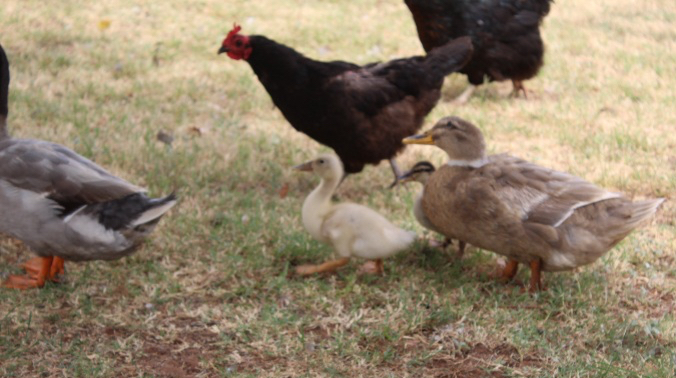
3 ducks in a kiddie pool with a gray guinea and chicken next to it

While there are several definitions for the words ‘breed‘ and ‘mate‘, sometimes they’re used interchangeably as well. Although, for this article, I didn’t do that. Now that I explained that ducks and chickens could copulate, what about breeding? Can they reproduce even if there aren’t any confirmed hybrids? Both ducks and chickens have cloacas. Hence, it’s hypothetically possible, because female ducks decide, just like female chickens, whether they’re going to cooperate with the males. For example, if my rooster, Megatron, decided to mount my Pekin, Bakugo, it might make her day. She seems to like him at least. Yet, she also might or might not go for it. Recall that female ducks have a convoluted vagina due to forced mating. Therefore, would it even work? On the other hand, a drake mating a female chicken would just tear her up. It’s not worth it to try finding out, or letting it happen.

Why Ducks and Chickens Try to Mate
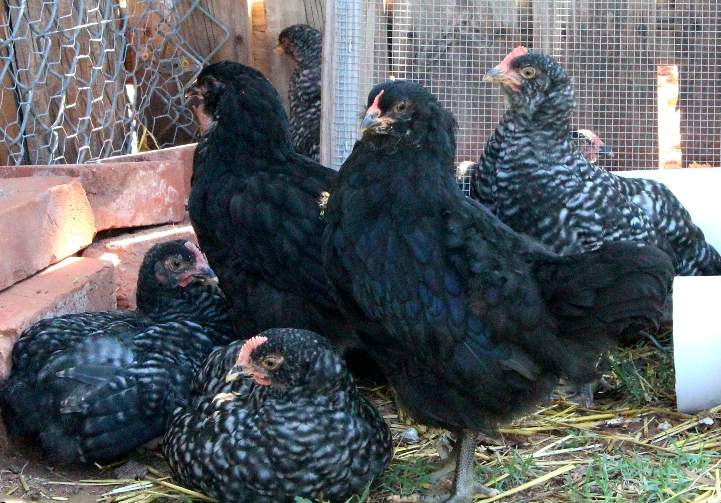
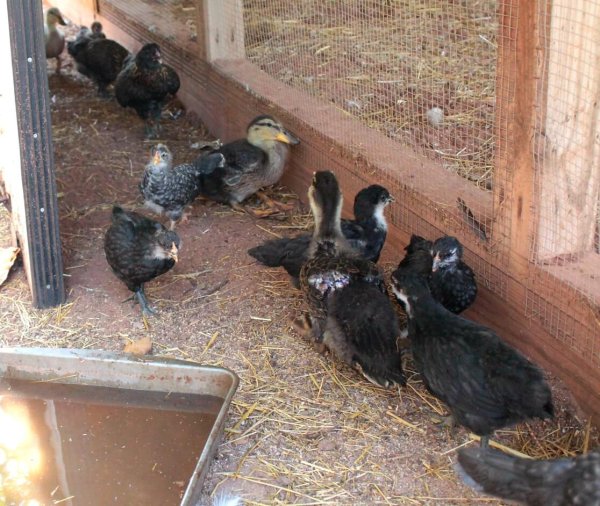
black and spotted baby chickens
This picture features some of the 10 boys we had to get rid of last year!

Now it’s time to find out what causes chickens to want to mate with ducks in the first place, and vice versa. These are from my own observations only. Whether you have guineas mating with chickens or roosters mating with ducks, the following are always issues with inter-species mating, such as 

  • overall space

Not only will overcrowding cause males to breed voraciously, but it can cause inter-species mating. If you have multiple bird species with new hatchlings on limited space, be prepared for inter-species matings and aggression. Moreover, sometimes you might think one of your males is mating, when in fact he’s actually being domineering, or putting another bird in line. Our second-in-command roo, Ravage, did this with our oldest drake a few times before getting his spurs. We had almost 10 roosters we needed to cull last summer, but it was too early to do the job. So, he was showing the drake who was boss of the backyard. Whereas chickens need ~ 3 to 4 square feet each in the coop, they need 10 sq feet each in the run. And ducks need even more space.

  • and female to male ratios within the species

Both too many males and not enough females within a species will cause the males to look elsewhere for possible mates. Again, expect to have issues with inter-species mating when having different bird species in your backyard, and later increasing your flock, especially if you end up with more males. We have guineas, ducks, and chickens. Our drakes tried mating with the guineas, while our roos tried mating with the ducks. Thankfully no drakes tried mating with the hens. On the other hand, we had too many boys in all 3 species, so none of the females got injured. Regardless, a good ratio for chickens is 10 to 12 hens per roo, while drakes need at least 4 female ducks each.

Mating Behaviors of Chickens and Ducks
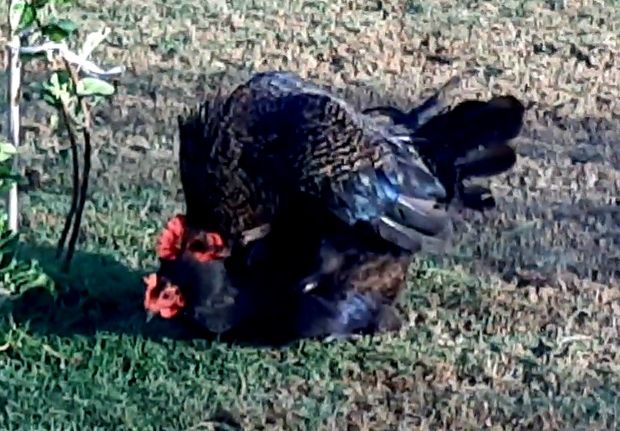
spotted rooster mating a black hen on the grass outside

Chicken Mating Behavior

  • Once roosters are sexually mature, they’re ready to mate all the time. And depending on the breed, they don’t slow down for years, especially if you add competition. 
  • Plus, roos woo their potential mate by doing a little dance and spreading their wing feathers downward. 
  • And if the hen is willing, she lowers herself down so he can mount her. He stands on her while grasping her neck feathers with his beak. 
  • But, even if she isn’t willing, it doesn’t mean the rooster will let her go. He just might chase her down and take her anyway. It makes for an interesting show, because usually he doesn’t succeed.

Duck Mating Behavior

  • Conversely, both male and female ducks bob their heads, as if they were flirting with each other. (And don’t forget Bakugo who always bobs her head at Megatron, my rooster). But in the water it’s signaling more than flirting. 
  • So, a willing female partner will elongate her neck and flatten her back in preparation for her male partner. Sometimes it can be another female partner as well. (It happens). 
  • Then the drake will stand on the female before grabbing the back of her neck and doing his business. 
  • After copulating the male makes a grunt-whistle, which he does above water. And when our drakes are finished having sex, they vacate the sex pool to go clean themselves in a separate pool.

Keeping Ducks and Chickens Together

mixed flock of birds outside on grass in shade

At this point you may be wondering if you should even try raising ducks and chickens together. But don’t worry. Keeping chickens and ducks is definitely possible. And it isn’t difficult. There are just some pointers about both you need to keep in mind, such as

  • have a body of water for your ducks to access. Not only do they need this for mating activities, but they need it to keep their feathers water-proof. 
  • If your chickens get near this source of water, they will likely drink from it. That’s ok too. Just clean it out a couple of times a day, providing fresh, clean water. 
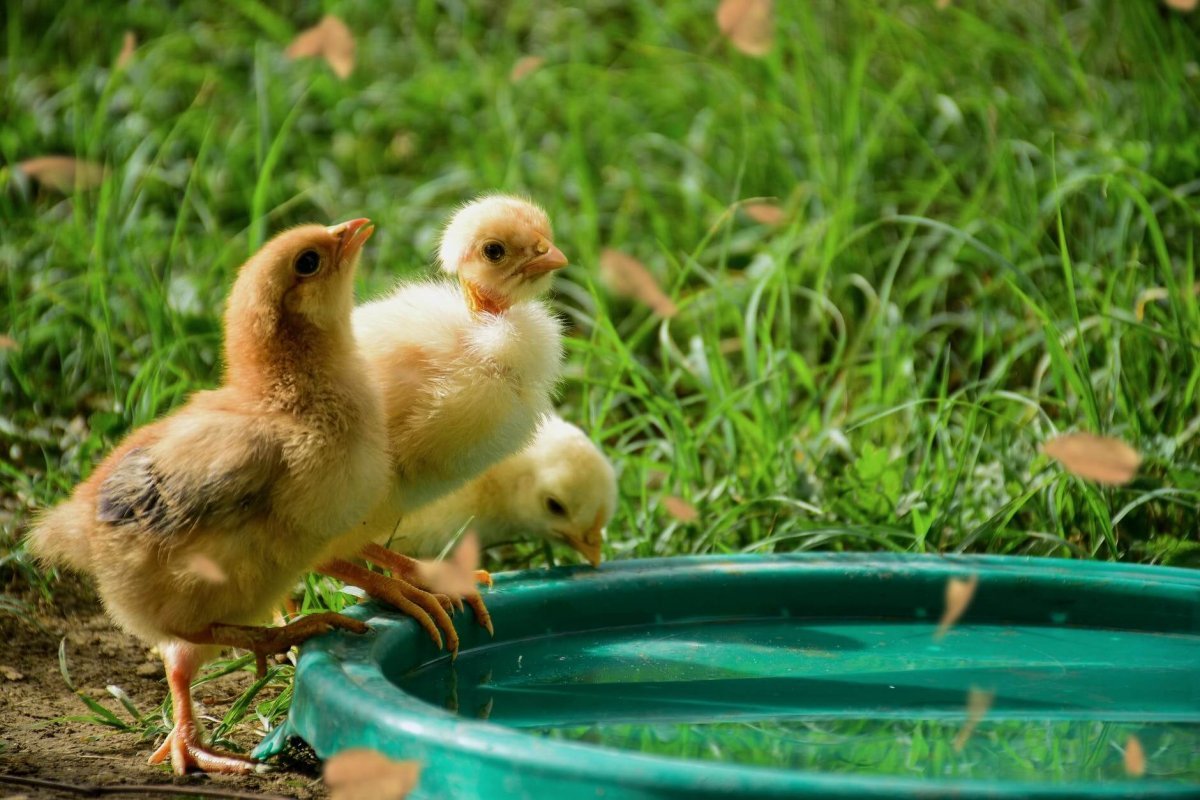
  • While your chickens won’t get in the water, chicks might flit around and fall in. So be careful with any chicks you have or might get.
  • Whereas chickens roost at night, ducks sleep on the floor. And be sure to have enough space for all the birds.
  • Both ducks and chickens can eat the same food.
  • Some chicken breeds and duck breeds aren’t as aggressive as others. Therefore, if you have the perfect ratios and space, aggression in drakes and roosters is probably more breed specific. For instance, we have Pekin and hybrid Mallard drakes and Ameraucana roosters, and none of them have come to blows. Except when we had too many males.

So, Can a Duck and Chicken Breed
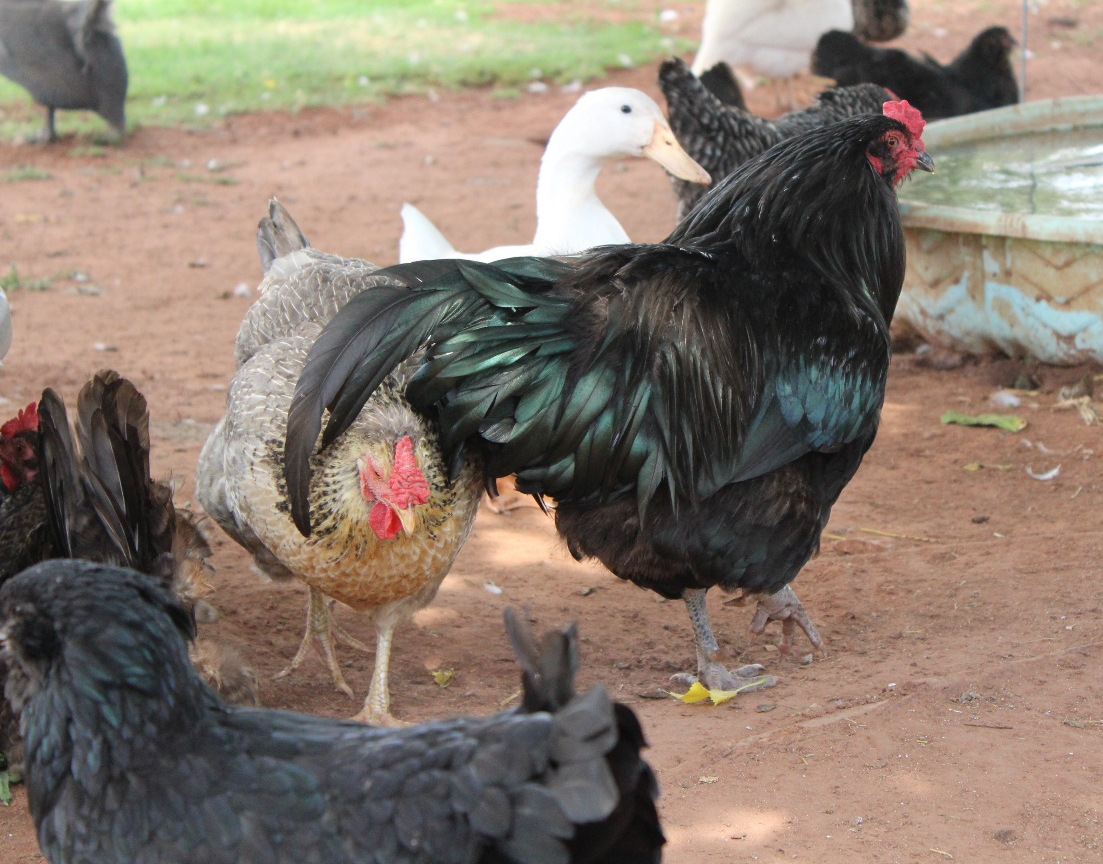
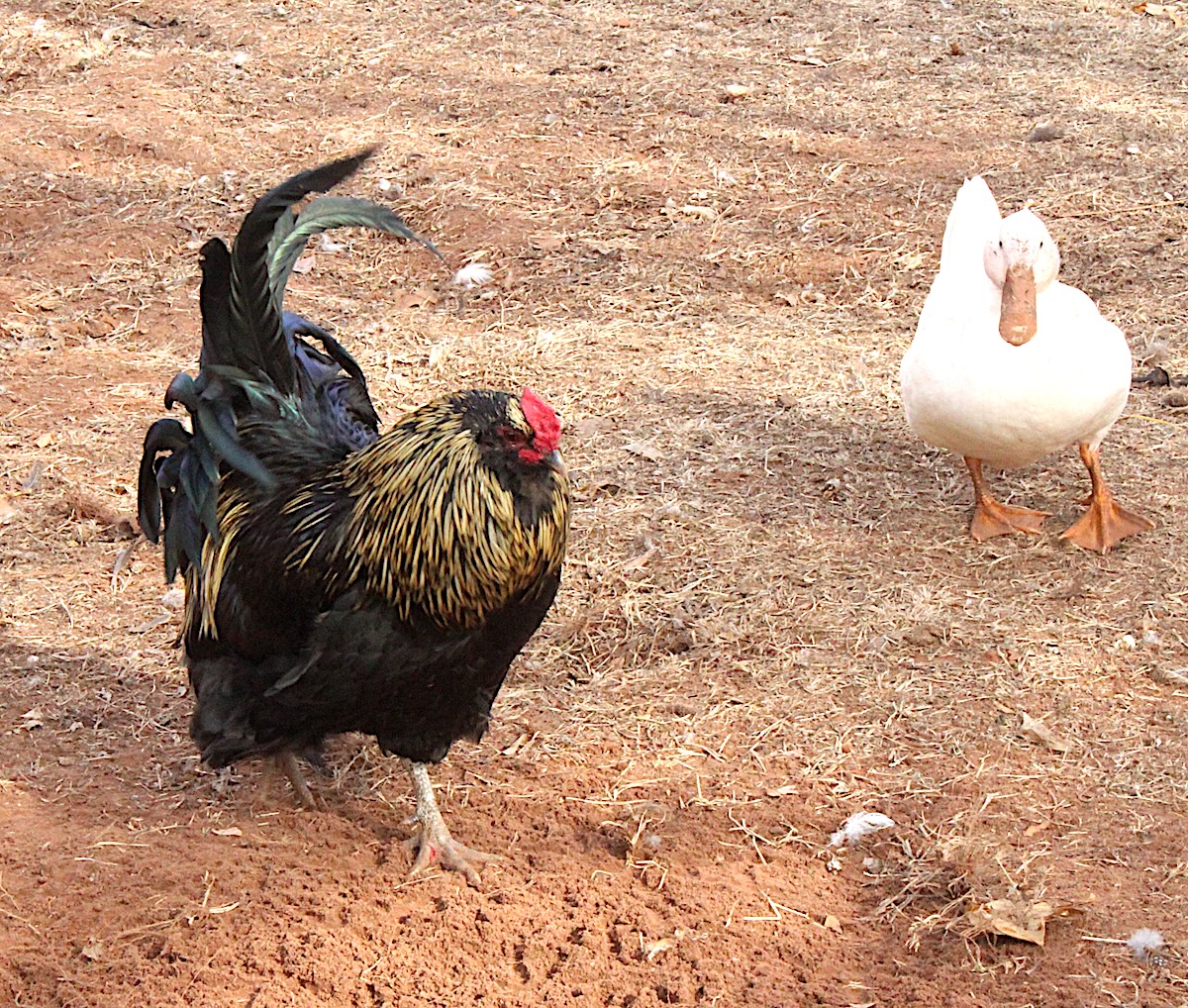
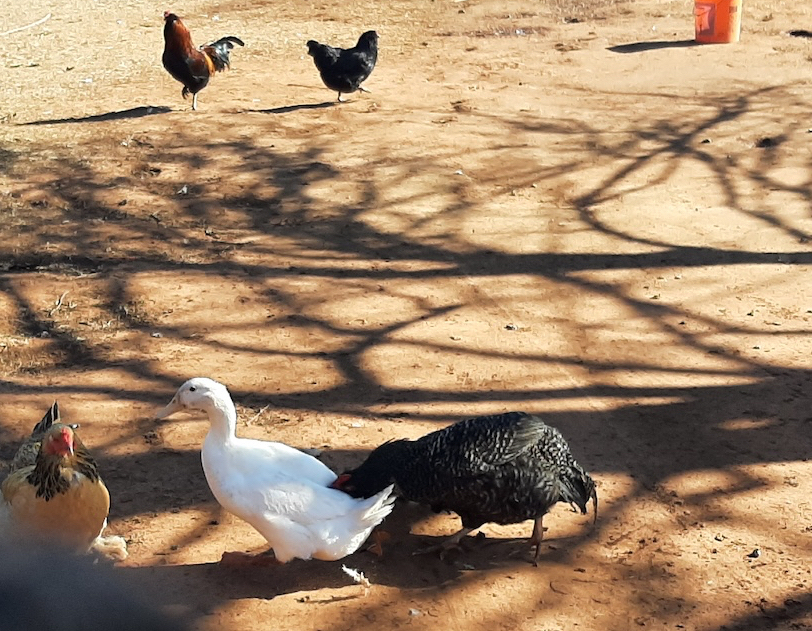
white duck next to a black rooster with mixed flock of birds around them

Despite the fact that a duck and chicken can mate, it’s not something that should be allowed. Granted, if a rooster mates with a duck, she’ll be ok. But, if a drake mates with a chicken, it could be deadly. Additionally, the main reasons ducks and chickens try to mate is due to overcrowding and too many males. Alternatively, because producing offspring hasn’t successfully occurred, it’s safe to assume ducks and chickens can’t breed.

We had to cull 4 roosters a few weeks ago, and the 2 extra drakes last weekend. And I have no idea how many male guineas we have. But so far, they haven’t bothered any females, other than their own kind. If you keep males with your birds and incubate eggs or have broody hens, you might find yourself in similar situations: too many males at times. It doesn’t always happen, but it frequently does. Usually I can tell pretty early which will be female and which male. However, we don’t want to cull them too early, because we eat those ones. Thus, we watch the flock dynamics, making sure everyone is getting along. Although in my house, I’ll tell my husband for a few weeks it’s time to cull the boys until he’s finally ready. And typically he’s waiting for the weather. Something about being a hunter, I think. By the time that happens, I get to see a lot of crazy bird behavior before things settle down again.

Do you have ducks and chickens? Have your birds ever tried mating with each other? What caused them to do so? And how did you handle it? 

Thanks for stopping by! Please like, share, and if you haven’t already done so, you can follow me now.

https://chickcozy.com/kristinasmith
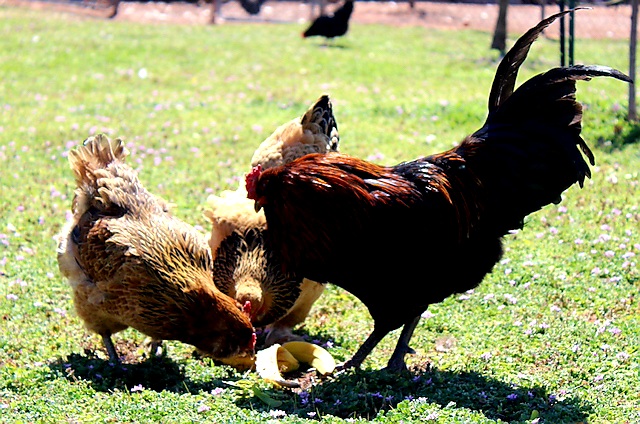
Categories
ducks guineas Hens other fowl raising happy, healthy chickens Roosters

How Do Birds Find a Mate

I use affiliate links to support my content at no extra cost to you.

Early spring marks the start of mating season for most birds, both wild and domesticated. But how do birds find a mate? No doubt many of you are aware of courtship displays among birds. However, how, in particular, do ducks and chickens find mates? While it’s likely you know what a rooster dance is, how do ducks exhibit their desires? In addition, how do ducks and chickens recognize their mates? Moreover, how do they distinguish between male and female within their own species, and that of another? 

A lot of birds, including chickens, are recognized by sex visually, as you’ll see below. However, it’s not so simple with ducks. For instance, we only have 2 kinds of ducks in our backyard: Pekin and hybrid Mallards. Hence, they all look similar by grouping in size and color. The only obvious difference are the tail feathers on the males. Rather than being straight like a female, they curve or curl upward. Well, not long ago we had an Olive Egger we named Benjamin Franklin. And he was a little odd. 

Since his egg hatched the same time the guinea and duck eggs hatched, we raised him with them when he was a chick. But when he was a juvenile, we tried moving him in with the other juvenile chickens. Though, he resisted and kept going back to his original family, the ducks and guineas. However, as he got older, he’d do chicken things, like foraging and hanging out a little bit with the other juvenile roos. Though he’d always go back to his family. Eventually he started having rooster urges, like mating, but not toward any of the female chickens. He would only try to mate with the female ducks. But how did he know which of the ducks were female, and which were male? Join me as I attempt to answer these questions.

How Do Birds Find a Mate

dark red rooster with 2 yellow hens eating a banana peel outside on the grass
Ravage already did his tidbitting, and now he’s sharing a banana peel.

Before a male bird performs for his intended, it’s logical for there to first be attraction. Thus, what causes roosters and hens to be attracted to each other? Likewise, what about ducks? Or, as in the case of my wayward juvenile rooster, what causes cross-species attraction?

What Attracts Roosters & Drakes to the Opposite Sex, and Vice-versa

Mainly what attracts both ducks and chickens to the opposite sex is all about the looks, such as

  • color

While both sexes prefer red combs, female chickens also look for red wattles, and red eye color of potential mates. For chickens, red is a sign of health and fertility. And female ducks fancy blue plumage in a drake, which indicates reproductive strength. It’s also referred to as a special breeding plumage. Female ducks lack breeding plumage, with the exception of the Paradise Shelduck in New Zealand.

Most of our female chickens are black, black and white, or gray. Not very exciting if you ask me. However, for a short time we had one Rhode Island Red hen named Jango. She was middle-aged, and all the boys liked her. She saw more action than the rest of the hens combined. I always wondered if it was because the guys liked red-heads.

  • size

Again, chickens of both sexes lean toward birds with bigger combs. However, comb length isn’t a consideration. And female ducks pick smaller drakes over larger ones. 

  • plumage

It seems both female ducks and chickens go with flashy plumage. For ducks, it has to be the best. Additionally, whether it’s the best ornamental feathers a rooster has or not is up to each female chicken’s interpretation, I suppose. But that’s what a hen looks for.

  • social display

It’s at this point that the courtship displays come into play. And both roos and drakes have them. According to those in the know, roosters have 3 types of courtship displays: waltz, nesting, and feeding. Though, for a female chicken, the first two don’t affect her as much. Rather, if female chickens are attracted to males, it’s usually via tidbitting. Moreover, female ducks choose the most skillful performer.

  • and food

Whether it’s food that males ingest themselves or offer to a potential mate, it has an effect on how well they’re received by females. In one study, female ducks preferred drakes that ate free-choice. It was probably more due to physique than the actual feed or schedule. I assume the drakes that ate free choice looked healthier. And female chickens are lured to roosters by type of treat he’s tidbitting instead of just his call. That makes sense, especially as some roos tidbit leaves or trash. The girls have priorities.

How Ducks and Chickens Recognize Mates, and Males and Females of Other Species

spotted rooster grabbing a white Pekin from behind outside on dirt ground
This is the only shot I was able to get of Benjamin Franklin trying to mate one of the ducks. But it certainly wasn’t the only time.
  • Vocalization

Scientists found that chickens make around 30 sounds, 19 of which are identifiable. And both chickens and ducks can recognize members of their own species, and other signals, by vocalization. In addition, according to the University of Maryland Extension, chick embryos are able to hear around the 12th day of embryonic development. Ducklings also vocalize to each other days before hatching to synchronize their hatch day. And moms of both species communicate vocally to their young while brooding.

  • Imprint at hatch

Imprinting is a quick learning method that occurs at a young age in social animals. Plus, it’s typically a result of visual and vocal cues, which lead us to the next item.

  • Visual

Vision helps chicks identify and recognize their family. Though, studies claim hearing is more reliable. Additionally, chickens rely on vision for their hierarchy. But vision alone isn’t foolproof. For example, one day Chopper, one of our older ‘Cauna hens, wanted to dustbathe. But Loki, a Sex-link hen, was in the spot she wanted. Chop thought Loki was just another random black hen, because we have so many. She proceeded to bully Loki and almost got killed. Even though they were both on the same spot of the pecking order, Loki was a lot bigger. Alternatively, ducklings know their mom and siblings on sight. After all, it’s part of imprinting.

  • Smell

It was initially believed that birds, including chickens, had a poor sense of smell. But studies have demonstrated chickens react to olfactory stimuli, especially in the absence of visual and auditory cues. In addition, this study revealed that chicks form behavioral associations with distinct odors that are added while they’re still in the egg. Thus, chicks can recall scents from the nest before they even hatch. 

And in this experiment, it seems smell is a factor for ducks finding a mate. Even though it’s established that chickens have individual body odors and respond to familiar smells, I couldn’t find anything supporting the same in chickens. Therefore, olfaction could have an effect on mate choice with chickens, and we just don’t know it yet.

  • and Pheromones

Lastly, pheromones go hand in hand with the sense of smell, especially regarding mate choice and reproduction. But since birds weren’t thought to have a sense of smell, so too they obviously couldn’t have pheromones. Although, as more and more research has shown, birds, like chickens and ducks, do have a sense of smell. It would be logical to assume then that they also release pheromones, or at the very least, their very own unique perfume.

Both ducks and chickens have a uropygial gland, aka the preen gland, which is located at the base of their tail feathers. In ducks this gland secretes a waxy fluid, which helps water-proof them. On the other hand, chickens don’t require water-proofing, but the gland still secretes an oily substance. Besides feather care, what other purpose could this serve in chickens? Additionally, it has been observed that both species emit different odors from this gland. And distinct studies on both species conclude the secretions from this gland are likely pheromones.

So, How do Birds Find a Mate

mixed flock of chickens and roosters on the grass outside in the sun

Most birds, including chickens and ducks, find mates based on color, size, and plumage. After this point, the males try to win their intended’s affection by performing a courtship display. And for some birds, like ducks, only the best performer will succeed. But don’t discount the importance of food in the bird dating game. Moreover, birds recognize each other by sound and smell often in the embryonic stage, especially if incubated together. And it’s only after hatch that they visually recognize each other.

Since my species-confused rooster was incubated and raised with guineas and ducks, it’s a possibility that he could also recognize the sounds and smells of the guineas and ducks in ova as well. And when he hatched, he could very well have imprinted on them, recognizing them as family by all of his senses. Therefore, with this insight, it also seems plausible that he would be able to distinguish between male and female. Are you wondering why Benjamin Franklin chose a duck to love instead of a guinea hen? It’s obvious to me: ducks are way smarter compared to guineas.

Have you noticed your chickens were more responsive to a particular mate, or chose one over another? Do you think there are other ways birds can recognize each other?

Thank you for stopping by! Please like, share, and if you don’t already follow me, you can do so now.

https://chickcozy.com/kristinasmith
Categories
All animals Chicks ducks Extras guineas Hens non-fowl other fowl Roosters

Bullying in the Animal Kingdom

Any time we hatch a new chick, duckling, or keet, or maybe get a new cat, fur and feathers get ruffled. No matter the steps and how long we take to introduce a new pet, some type of aggression ensues. And at times it feels like it won’t end. Further, the aggression that occurs at my home is typically intraspecies, which is the same species ganging up on each other. Though, I know others have interspecies aggression. So, I wanted to explore bullying in the animal kingdom.

According to Oxford dictionary, one definition of bully is a person who uses their strength or power to frighten or hurt weaker people. But the legal system doesn’t consider non-human animals as legal persons. Thus, according to the law, backyard birds, dogs, cats, etc are not people. Therefore, our pets can’t be regarded as bullies from these parameters, even though their behavior screams bullying to us.

Nevertheless, if you Google pet bullying, you’ll doubtless find endless examples of exactly this, no matter what the law may say. As a result, it’s apparently quite common among pet parents and animal behaviorists alike to see bullying activity. What is it exactly about these behaviors that look like bullying? Is it normal, and does it serve a purpose. How can we help inter and intraspecies relationships? And do we humans behave the same way?

Why Animals Bully Each Other

multi-colored rooster mating on top of a dark hen on the grass

A couple of years ago I wrote an article on the chicken pecking order. Even if the term was originally in reference to chickens, most, if not all, animals observe some sort of dominance hierarchy. In biology, dominance hierarchy is basically a ranking system in animal groups. Some animals are more dominant, like the alpha, whereas others are more submissive. Consequently, dominance is one of the major reasons animals bully each other. The dominant animal is effectively trying to reinforce their class system or hierarchy.

For instance, if you follow me on Facebook or Instagram, you might know we have a new kitten named Pickles. Initially my cat, Itty, did NOT like Pickles. At all. And I know why. Pickles is ~ 4 months old, eats Itty’s food, goes into Itty’s room, chases Itty, gets on Itty’s bed, and sits on Itty’s chair. Basically Pickles does NOT respect the hierarchy.

On the other hand, when Itty first came to live with us at 5 weeks old, Cake and Meow Meow, our then resident cats, laid the law down for her. And Itty respected them and the law. Even though Meow is no longer with us, Itty still respects Cake, because she knows her place. However, at the same time, Itty knows she herself is a princess. Pickles is a bottom feeder and should be licking Itty’s paws. But Pickles doesn’t seem to know her kitty place. It appears she doesn’t care about hierarchy; she just does what she does. Moreover, she’s certainly not submissive, and it was annoying the hell out of my cat. So, on various occasions I’d hear noises that sounded like cats killing each other. Thankfully they weren’t actually killing each other. Although, it was Itty, cursing Pickles in meows and caterwauling.

Besides dominance, other reasons animals bully each other include

  • mating

Several examples of bullying-type behavior exist in the animal kingdom concerning females during mating. For example, male on female bullying during mating. Or it can happen with any other members of the same species just because it’s mating season. Ducks are a prime example of this. Our first drake killed a female due to his crazy hormones during mating season.

  • boredom

Some animals appear to pick on other animals if they’re stuck together for a bit of time. Think chickens cooped up during inclement weather for days upon days with nothing to occupy them. Alternatively, picture any smart, high energy dog with nothing to do, locked in a small room (or house) with a small, scared pet. An animal in either or both of these situations will pick on or bully another when they have nothing to do, or any way to expend their energy.

  • illness/injury

Chickens mercilessly abuse sick and injured birds. But there could be cases where an ill, injured, or hurting animal lashes out at other animals. For instance, dogs have been known to attack sick or hurt dogs. And they can also attack if they are sick or injured themselves.

  • resource guarding

I’ve mentioned resource guarding before. And generally, bullying in regards to this could be for space, food, water, breeding, etc. An animal is just claiming all of the above as their own, thus, picking on anyone who transgresses.

  • inadequate early socialization

A lack of early socialization, at least for dogs and cats, can easily turn playtime into a fight.

  • space/territory

Many animals will attack and pick on other animals, including members of the same species, if there isn’t enough space for everyone.

  • and stress

Our pets are sensitive to us and their environments. And all of them seem to love routines. (Kinda like us.) Therefore, any changes to their routines can lead to aggression. Be it change in feed, living arrangements, friends, family, schedules, and/or adding or subtracting any other pets all have an effect on them. Not to mention possible life or death situations they may face themselves.

What Does Bullying Look Like in the Animal Kingdom

Now I’ll go through some of the pets I have, and find out what picking on each other might look like in dogs, cats, and chickens.

Signs of Dog Bullying

black and white kitten hiding behind recliner from black and white dog lying on wood floor
  • Being overly pushy with other dogs or with the cats. For example, a bullying dog pushes other dogs out of the way. Or, like at our house, your dog might push the cats or other pets out of the way when they want attention instead of letting anyone else have any.
  • Doesn’t follow commands once very excited
  • Playing rough or harassing non-consenting dogs and/or cats
  • Disrespecting boundaries of other dogs, people, and/or cats
  • Growling, nipping, biting, and pinning playmates to the ground
  • Steals food, treats, and/or toys
  • Ignores signals from other dogs and/or cats
  • Pesters dogs and/or cats who don’t want to play
  • “All in your face”
  • Puts paws on head or shoulders of other dogs most often
  • and Engages in mounting behavior

Symptoms Your Dog is Bullied

  • Tucking tail between their legs
  • Yawning or licking their lips
  • Hiding or avoiding other dogs
  • Rolling over in submissive manner
  • Barking while backing away from another dog
  • Urinating in inappropriate places/indoors
  • Your dog is always being chased by another dog but never the one doing the chasing
  • Always getting mounted
  • and Getting food, water, and toys stolen

Cat Bullying Signs

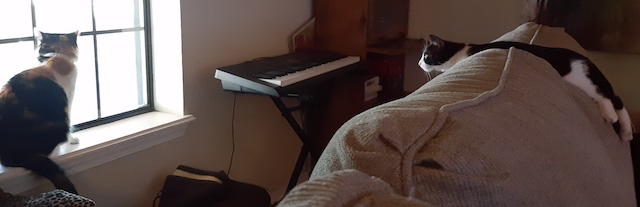
black and white cat lying over cushions of a gray couch, watching a calico cat sitting on a windowsill that's looking out the window
Pickles is on the right, just staring at Itty while she looks out the window.
  • Either passive or overt
  • Denies access to resources: food and water, litter box, toys, and owners
  • Blocks access to the best sun spots
  • Body language of bully: Never backing away, staring, stalking, and emitting low growl when other cat gets close
  • Aggressive posture: arched back, puffed out tail, flat ears, dilated pupils
  • Clawing, biting, and hissing
  • Lowers head while raising hind end as it approaches other cat
  • and Pinning the victim to the ground

By contrast, the bullied cat may spend most of the time hiding or away from the family. They also avoid eye contact with their bully and surrender resources to them. In addition, they might crouch in ambush, but then run off when their bully shows up. Furthermore, they’ll have a puffed out tail, flat ears, and hiss as well, especially if their bully gets too close. This is also how a cat reacts to their dog bully.

Chicken Bullying Evidence

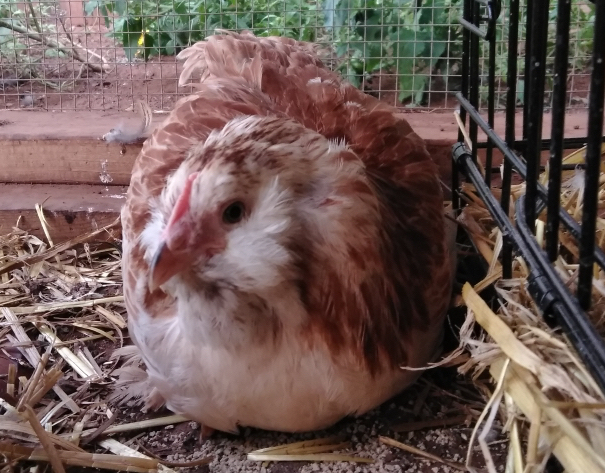
cream and reddish brown chicken sitting on a dirt floor next to a crate with straw and feed around it
This is a picture of Ratchet, a Salmon Faverolle we had around 4 years ago.
  • Chickens missing feathers
  • Other chickens pecking at the bullied chicken, removing feathers, and keeping that one from food
  • Scared chickens or scared ducks
  • Rooster mounting behavior toward other species
  • and Injured chickens

With cats and dogs you might not be sure if they’re playing or being a bully. However, you’ll know in your gut whether or not they’re playing based on the reaction of the other pet. If your cat or dog is bullying, the victim will hide, act scared, or simply not want to be around your bullying pet. But, if it’s simply play, then everyone will enjoy the experience. And they’ll hang out and cuddle together. Trust me, you’ll just know. In addition, according to this article from Care.com, if one cat starts the aggressive act more, and there’s growling and hissing, then in all probability it’s fighting. Basically it’s similar to one dog always doing the chasing while the other is being chased.

On the other hand, chickens are different. No chicken enjoys being pecked or having aggressive acts directed at them. Those birds will either just walk away. Or, if they’re a victim of actual bullying, they will hide. Chickens peck each other, particularly those higher up in the hierarchy, though it doesn’t necessarily mean they’re bullying. They’re just reenforcing their pecking order. And sometimes they’re constantly reenforcing it. Take, for example, the 4 different generations of roosters we have: we have the boss, Megatron, Ravage, the 2nd oldest, Mystogan, his younger brother, and now we have a juvenile roo. Megs runs a tight ship keeping all of those boys in their places. In similar manner, Ravage keeps Mystogan in his place while Mystogan pecks at and runs after the juvenile. And the juvenile roo harries all the other babies. It looks like bullying, but it isn’t really. Since none of the antagonists continue to harass the others, it’s just normal chicken pecking and enforcing of their hierarchy.

Now you may be scratching your head on the rooster mounting behavior one. That’s what Ravage did when we had over 10 roos in our flock at one time. He mounted Squirt, the drake. At first I was wondering if he was actually trying to mate with the drake. But then I figured he didn’t have his spurs yet. So he had to be exerting some sort of dominance out of frustration for space issues and females. Well, after we slaughtered the extra roos, Ravage calmed down. Although, the drake still gives Ravage a wide berth. And the roo now has started mounting Bakugo, our Pekin. Though, I’m not sure if he’s trying to mate her due to stupidity, or if he’s still acting out of dominance.

Stopping a Bully Dog at Home

black and white dog catching a blue frisbee in its mouth outside in a fenced yard

If, after getting this far, you realize, like me, that your dog could be a bully, don’t worry, because there are solutions. Trust me, I know what you’re thinking. At first, you didn’t want to admit your dog might be mean and pick on anyone else. But then, the more you thought about it, the more you just couldn’t ignore the signs. Although, the first thing to do for your bullying dog is to spay or neuter them if they’re still intact, which Sophie most definitely is. (Her surgery is scheduled for September.) Aside from fixing your dog, you can

  • put the bully in time-out

With a negative marker before bullying gets too far, your dog will eventually make the connection between what they’re doing and why they’re in time-out. For instance, when you want your dog to do something else, use a word or sound, like the word no.

  • be picky about who your bully plays with

Choose dogs to hang out with your dog that can handle and actually enjoy your dog and their pushy behavior.

  • intervene as necessary

Using positive interrupters before any bullying occurs, this will replace time-outs when your dog is learning better behavior. A positive marker would be something like the word yes.

  • find a trainer with a really good, patient teaching dog

This type of dog can put up with your dog and effectively communicate with them.

  • teach impulse control in the house

For example, if you’re paying attention to one pet in your house, and your bully pushes in between, ignore the bully and move away. Don’t reinforce bullying behaviors with attention. Rather train your bully dog to sit and wait his turn. And do the same with treats. But reward your non-bully pet with treats first, assuming they’re not a resource guarder.

  • and make sure exercise and mental stimulation demands are met

I truly think that’s what’s going on with Sophie. She requires so much due to her breed, that she gets bored at times, especially if it’s been rainy or extremely hot that we forego our outside fun. But if she does get exercised, she really does do better with the cats.

Curbing the Cat Bully

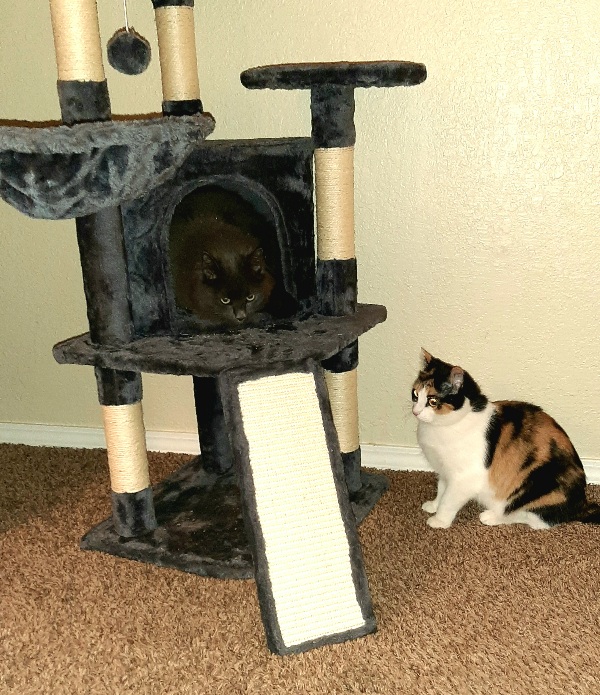
calico cat and gray cat playing around a cat tree

Just as with dogs, the first and best way to put an end to the bullying cat is to spay and neuter the offender, if they’re still intact. However, if they’re already fixed, try the following:

  • Don’t assume cats will work it out

They won’t, because they’re not people. Cats will continue to fight if they perceive a threat to their resources. But don’t get in the middle of their fight either. You don’t want to get hurt. Rather, the best option is to make a loud noise to distract them.

  • Also, don’t separate the resources

Instead of separating all of the resources, see where the cats prefer to congregate. Then make sure there are plenty of resources for all of them. That way the bully has a choice and won’t feel threatened.

  • Make playtime the same time everyday

Because cats are so schedule-oriented, keep playtime on a schedule as well.

  • Play at least 15 minutes with each cat per day

Further, cats get bored easily, so be sure to cycle through the toys. And the more you can play with each cat, the better.

  • Get pheromone diffusers for every room the cats spend together in

I asked our vet about the issue the cats were having, and he recommended the diffusers.

  • If there’s still bullying, see the veterinarian

Your cat might have a health issue that the vet can rule out. Or they can refer you to a pet behaviorist to help out.

  • Re-introduce cats that need to be separate

If cats are at-risk of hurting each other, separating for short-term is a good idea. Flying fur, bloodshed, or urine are all signs a cat’s in danger. And if it’s occurring every time the cats see each other, they need to be separated. And then re-introduce them as if they never met. Jackson Galaxy recommends re-introducing fighting cats with food. You can find the article here.

Ending Chicken Bullying

black chicken pecking the straw in bottom of a large rectangular container
This box serves as a time-out and broody box, depending on the situation.

Unlike cats and dogs, chickens don’t get spayed or neutered. Though, you can

  • make sure your chickens have enough space

Inside the coop, each chicken needs approximately 4 sq ft, while they need around 10 sq ft each in the run. But that’s assuming they stay cooped up all the time. If they get to go out, they can have 5-10 sq ft each in the run.

  • have the proper ratio of hens to roos

If you have roosters, be sure to have at least 10 hens per rooster. Otherwise, as I’ve pointed out elsewhere, the roosters will tear up the hens’ backs.

  • provide enough feed and water stations

I can’t tell you how many feed and watering areas I have. It seems like each bird wants her own, the prima donnas.

  • and if bullying continues, separate the bully for a couple of days

Since their pecking order is all important to them, you want to separate the bully from the flock for a few days. Once the bully is back with the group, sometimes they have to re-establish the pecking order. Thus, it’s better for the bullied hen or roo.

Hints of Bullying in Human Children

girl in denim sitting alone crying in a doorway
Photo by Pixabay on Pexels.com

In order to have a comparison with the previous sections, the last animal I’m going to cover is the human child. Therefore, some signs a child is bullied include

  • bruises, cuts, and scratches
  • torn clothes
  • missing property
  • poor eating or sleeping
  • bed wetting
  • complaints of headaches or stomachaches
  • changes in the child’s mood: sad, anxious, upset, unhappy, or angry
  • spending time alone or doesn’t want to go out or to school
  • having trouble with schoolwork
  • and/or withdrawn

As you can see from the bullied human indicators, they reflect a combination of all of the bullied animal signs. However, reasons people bully aren’t exactly the same as animal bullying. According to a study by Ditch the Label, people are more likely to bully if they’ve suffered stress and trauma. To me that sounded like cats and chickens. If they perceive their resources are threatened, they’ll fight and generally have conflict. Additionally, according to the same study, 66% were male.

Compared to my pet household, which are mostly female, it doesn’t track. But, in the wild animal kingdom, bullying is more male dominant. Further, I didn’t include guineas in this post, which are true bullies in the yard. Every single male guinea is a bully for no reason that I can fathom, irrespective of species. Plus, it can’t have anything to do with the pecking order, given that chickens, ducks, and guineas aren’t the same species. And they don’t interact with each other, except when the male guinea attacks the other species.

In Summary

Maybe bullying serves a purpose in the animal kingdom, particularly in the wild. Nevertheless, living as we do with our pets, often in close proximity, we can’t afford to just let them be. Since allowing them to figure it out would be risking them injury. Regardless of our personal feelings toward animals, that would be costly at the very best, and inhumane at the worst. Consequently, it’s in everyone’s best interest to find out quickly why a pet is getting picked on and remedy it.

I’m happy to report that Itty and Pickles never had any bloodshed with their differences. They would both take turns chasing each other. Though there would be growling, screaming, and hissing. Itty would puff up so big to warn Pickles, who just ignored her signals. Moreover, they would both smack each other. However, their claws were evidently sheathed, since no one got injured. Regardless, currently they’re having less noisy days than before. They still chase each other, but it resembles play now more than ever. We got pheromone diffusers, gave equal attention to both of them, and rewarded play time.

Do you have any experiences where one pet bullies another one? How did you handle it?

Thanks for stopping by! Please share, and if you don’t follow me already, you can do so now.

Categories
ducks other fowl

What are the Friendliest Ducks

Over the past decade, ducks have gained popularity from the farm to the backyard. Some of them can compete with chickens for egg laying, while others are as good as guineas at pest control. Further, a few even make great pets. Given there are over 100 plus species of ducks, you might have wondered what are the friendliest ducks. Therefore, I’ve narrowed down a list of the 5 friendliest ducks around.

Ducks are classified into 3 groups, dabbling, diving, and perching, due to their distinguishing behaviors. But then, the American Poultry Association (APA) recognizes 17 duck breeds. Moreover, they further categorize ducks into classes: heavy, medium, lightweight, and bantam.

Generally, heavyweight ducks make better meat ducks. However, some can be dual purpose for both meat and eggs. And according to the APA, all duck breeds can be used for exhibition, which brings me to the bantam duck. These are small duck breeds that are primarily kept as pets or for exhibition. Medium and lightweight breeds can be a mixture of exhibition ducks, egg or meat production, or dual purpose. Or they can include all of the above. Continue reading for the friendliest ducks.

Friendliest Ducks

  • Call duck

The Call duck is thought to have originated in The Netherlands. And they were first used as decoys to lure wild ducks into traps. However, that practice is now banned. The females are very noisy, not unlike most female ducks. But, being bantams, they don’t get bigger than 2 lbs! Since they come in many varieties, they also look similar to regular ducks. So, usually they are kept as show ducks or pets. Also, they have the sweetest disposition, thus, they’re good with kids. Though, they tend to go broody. And if you’re not careful, they can fly away. Also, you’ve heard of cat cafes. But have you heard of Call duck cafes? They’re evidently all the rage in China.

  • Cayuga
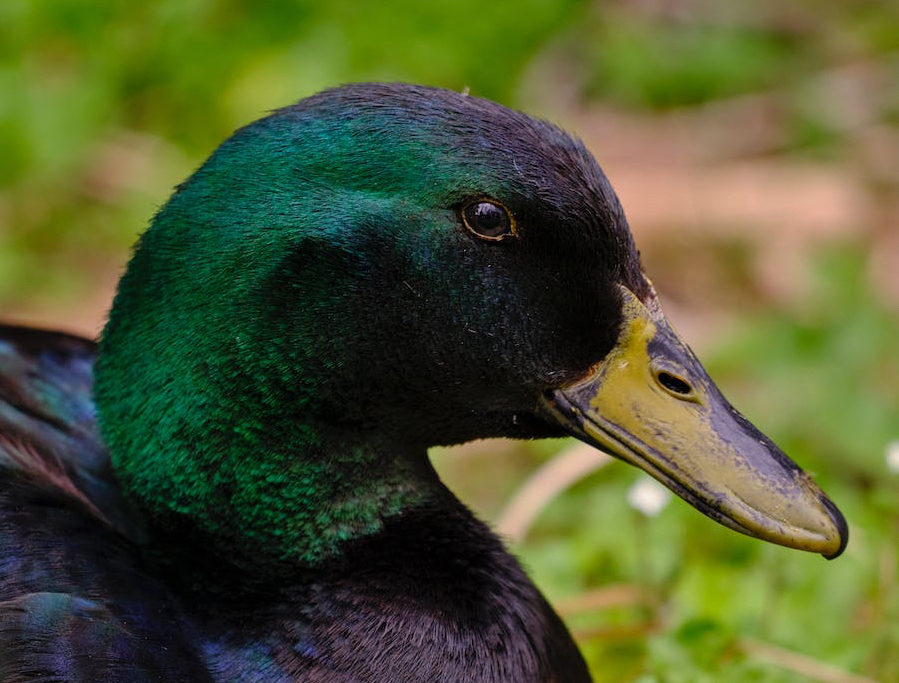
close-up headshot of a black Cayuga duck with green and purple sheen on its feathers sitting on grass
Photo by Engin Akyurt on Pexels.com

The Cayuga is an American breed of domestic duck that was the primary duck meat for the US until 1840. Even though people typically keep them for ornament, Cayuga lay ~100-150 eggs annually. And they can be considered a dual purpose duck, since they’re a medium to heavyweight breed. Also, their eggs start out dark to black, but by the end of the laying season, they are lighter. Additionally, this breed will go broody. But they are considered calm and friendly. And if they’re handled well when ducklings, they can be tamed.

  • Mallard
2 male mallards with green heads and 1 female mallard duck with buff colored feathers floating on body of water
Photo by Fredson Silva on Pexels.com

With the exception of the Muscovy, most domestic ducks descended from the Mallard. Hence, some people refer to the Mallard as the mother of all ducks. Since this duck breeds so prolifically with many domestic ducks, the mallard is considered invasive. As such, there are more than 80 Mallard varieties. In addition, Mallard ducks are medium weight ducks that lay about 140-150 eggs yearly. And they definitely can go broody. They’re great foragers, and tend to do more of that than eating feed. Plus, they will fly if they decide to. Therefore, if a Mallard duck hatches ducklings, they might just take their young and go, like ours did. Also, they might not be the biggest duck out there, however, they sure can be bossy. When our full Mallard duck, Aizawa, was around, she was definitely the matriarch of the ducks. Though, now her son, Squirt, a Pekin/Mallard mix is the drake of the bunch.

  • Pekin
white Pekin duck walking on green grass in daytime
This is our most senior duck, Bakugo. And she’s also the friendliest so far.

The Pekin is an American domestic breed that replaced the Cayuga for meat production in the 19th century. Additionally, they’re a heavyweight breed for dual purpose. Plus, some people just like Pekins for pets. They lay about 150 eggs annually. And they don’t tend to go broody. Pekins are good at foraging too. Plus, if you have leftover greens, or something you’re tossing from your garden, Pekins are the ducks for the job. They love greens, and they’ll work hard at whatever you give them. Moreover, they usually have a sweet, calm, and easygoing disposition. Bakugo, our Pekin, gets along with all the other birds in our backyard.

  • Welsh Harlequin

This domestic duck breed was developed in Wales by Leslie Bonnet from 2 lighter colored Khaki Campbells in the mid 20th century. Despite being a lightweight breed, they’re still considered dual purpose. Also, if you can keep them from going broody, they can produce ~ 200 eggs yearly. In addition, this breed is noted for being exceptionally calm, and a good breed for children learning about ducks. And they get attached to their humans as well. While most ducks are very noisy, the Welsh Harlequin is basically a quiet breed. Though these ducks obviously will quack when they lay eggs. And they’re louder than Muscovies. But according to several sources, most birds are.

There are many more ducks that could be included on this list, like the Khaki Campbell, Rouen, and Indian Runner. Because, just like chickens, they have their own personalities. And like chicken TV, ducks are fun to watch too.

To Summarize

black chickens with mixed breed of ducks on the grass outside

Regardless of whether you’re a newbie, hobbyist, or veteran duck parent, and no matter which breed you pick, ducks are a great option to add to your backyard. Given there are so many choices out there, you’re bound to find one perfect for your home.

And ducks are easy to raise, so long as you provide fresh food, clean water to drink and bathe in, and plenty of greens. But don’t forget, they love to forage for bugs. Further, if you already have chickens, not to worry, because chickens and ducks usually get along just fine.

If you have ducks, which kind do you have? And do you have a favorite breed?

Once again, thanks for taking the time to read this post. Please share. And if you don’t follow me already, you can do so now.

Categories
ducks other fowl

How Ducks Get Clean

Have you ever wondered how ducks get clean? Or perhaps, you’ve watched how they do it. Plus, is it the same as other birds? While we’re on the subject, do ducks get sick if they can’t get cleaned?

I realize my duck posts are typically more popular. However, I also know I don’t write about them as frequently. Although, one of my ducks deserves more to be said about her. So, I’ll try to remedy that in this article as I address how ducks get clean.

How Ducks Get Clean

duck preening on pond water
Photo by Aaron J Hill on Pexels.com
  • Preening

Preening is the regular, essential grooming practiced by birds to keep their feathers clean, healthy, and strong. 

© 2023 – Birdfact

All birds preen to maintain feathers by using their beaks to clean plumage and take care of parasites. Additionally, for aquatic birds, preening spreads oil from the preen gland with the beak over feathers to keep them waterproof.

  • Submersion

In addition, ducks will submerge their heads in water to clear out their eyes and nostrils.

  • Showers or rain

Yes, ducks love the rain. Very likely if you have ducks, you’ve seen them gamboling in the rain. Or, even if you’re watering with the hose, they’ll stand under that as well to get clean.

Have you seen a duck dust bathing before? No, I’m not joking. Ducks will, at times, dust bathe. In fact, Bakugo, our Pekin, has been known to dust bathe with the chickens.

What Happens if Ducks Can’t and Don’t Clean Themselves

Ducks are known to be more resilient to sickness and pests than most other domestic birds. However, that doesn’t mean they can’t or won’t get sick. For instance, just by having an insufficient amount water for these birds can create issues, such as

wet white feather in close up shot
Photo by u0414u0435u043du0438u0441 u041du0430u0433u0430u0439u0446u0435u0432 on Pexels.com
  • wet feather

Another term for a duck’s feathers being water-logged is wet feather. And there are multiple thoughts as to the cause. But one of the reasons is having an inadequate water supply for your ducks.

  • foamy eye

Typically a duck that has foam or bubbles in its eyes has an underlying respiratory infection as well. Though, this condition is said to be preventable if ducks have sufficient water to submerge their heads in.

  • and dehydration

Whether it’s too cold or in the middle of a heat wave, outside animals, including ducks, are at-risk for dehydration. Furthermore, ducks can’t go ~ 8 hours without water. That’s how important it is to them.

Moreover, one of the most important reasons ducks need water is to drink while they eat. You see, they take a bite of food, then a sip of water, all so they don’t choke to death.

Things You Can do to Help Your Ducks Get Clean

caption of lightbulb
Photo by Pixabay on Pexels.com

Since ducks need water for their health and life, it’s absolutely essential to provide enough of it. However, for most commercial outfits, the struggle has been to find the right type of watering system for ducks. For example, if ducks are long exposed to wet litter in the coop, they end up getting diseased feet. So, that’s not an ideal situation either.

Therefore, to prevent this for your backyard ducks, try pasture-raising them. That way ducks can have all day access to water. And you won’t have to deal with the constant mess. Plus, they won’t be exposed to water-ridden litter, which breeds disease. In addition to that, get

  • shallow water pans or keep waterers by food

Keep water near food for ducks, so they don’t choke. Although, don’t leave any in the coop, because they can go overnight without water.

  • kiddie pool or small pond

Unless you just want to, you don’t have to get anything elaborate for your ducks. They will be totally ecstatic with a kiddie pool from WalMart. But, depending on how many ducks you have, you may need to get more than one.

Also, ducks poop, eat, drink, and clean themselves in their swimming hole. But they still require clean water to drink to be healthy. Therefore, at a minimum, clean out the swimming hole once daily.

In Conclusion

You saw that the main way ducks and all birds get clean is by preening. However, ducks prefer to add water to their routine as well. This is to prevent certain diseases and to remain waterproof. Moreover, if you have ducks, make sure to add waterers by their food to prevent choking. And get a kiddie pool for them too.

Categories
guineas other fowl

Why have Guinea Fowl

Around 3 years ago we bought 2 guinea keets in addition to 2 barred rock chicks. And at first all 4 were buddies to our preemie chick, Baby Nay. But we ate the male guinea, for reasons I’ll share momentarily. Since then, we’ve expanded our backyard flock to include ducks, and even more chickens. Because this is my first post about guineas, I’ll explain reasons why to have guinea fowl.

Guineas are native to Africa. Even though there are about 6 different types, the one we’ll look at is the helmeted guinea fowl, which has been established most everywhere. Did you know guineas are related to chickens? Although you wouldn’t know it just by looking at them, or by their behavior.

What do Guinea Fowl Look Like

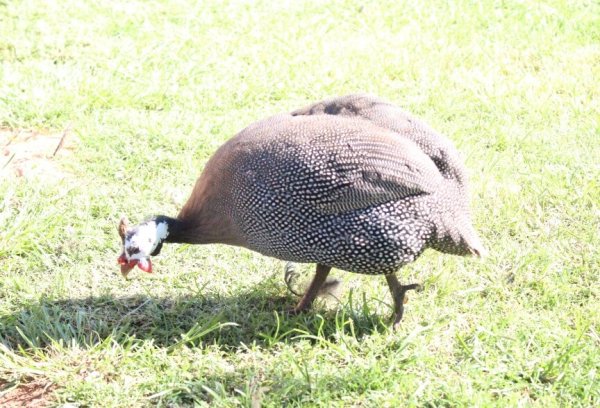
gray helmeted guineafowl eating grass outside

If you’ve never seen any, these birds have a curious appearance. The helmeted guinea fowl have small heads that sport an exotic bony crest on top. And they have featherless faces that can be white, red, or blue skin. Also, their bodies are somewhat large and oval-shaped. Plus, their plumage comes in an array of colors. Further, their beaks are short and curved, but still sizable.

Pros to having Guinea Fowl

one white guinea, one gray guinea, and one gray chicken outside on the grass
The happy couple together.

Below are some advantages to keeping guineas, such as

  • Insect patrol

Probably the number 1 thing you’ve heard about guineas is their pest control abilities. And I confess that we don’t have a problem with bugs in our yard. However that could also be due to the ducks.

  • An alarm

Having guineas sometimes feels like you live in a foreign land. And that’s because of the sounds they make. They definitely let you know when something isn’t right, even if it’s just a false alarm. Yet many people believe guineas are good predator control because of their noisiness.

  • Their independence

You don’t have to do as much for guineas as for chickens when you have guinea fowl. Since, just like chickens, they forage. Though, if not trained, these birds will forage very far afield.

Plus, like ducks, guinea fowl are mostly healthy birds, which means they aren’t as susceptible to illnesses as chickens. But that doesn’t mean they can’t get sick.

  • They’re romantic

Yes, you read that correctly; guineas can be romantic. Out of all the birds we have (chickens, ducks, and guineas), only guineas will do the impossible for their mate(s). And that is they mate for life. Drakes and roosters have harems which, depending on the species, can be quite large. Hence, they are not monogamous.

Furthermore, some guineas travel many lands till they find their true love. That’s what happened to Leorio 2.0, the male guinea who found himself in our garden of Eden. Seriously, I don’t know where he came from, but he decided to stay. And it wasn’t only due to the bird paradise he saw. He also was enraptured with our lone guinea hen, Kurapika. And once he heard her racket and saw her hideousness, he just had to stay.

  • Food

You can eat both guinea eggs and guinea meat. However I personally have never tried a solo guinea egg, because my husband said it tasted gamey. So when we have guinea eggs, we scramble them with either chicken or duck eggs.

On the other hand, guinea meat is fantastic! Even though I’ve read others say it tastes like pheasant, (which I’ve never tried) I think guinea meat tastes like actual chicken. Like the chicken you buy in the store.

Cons to Having Guinea Fowl

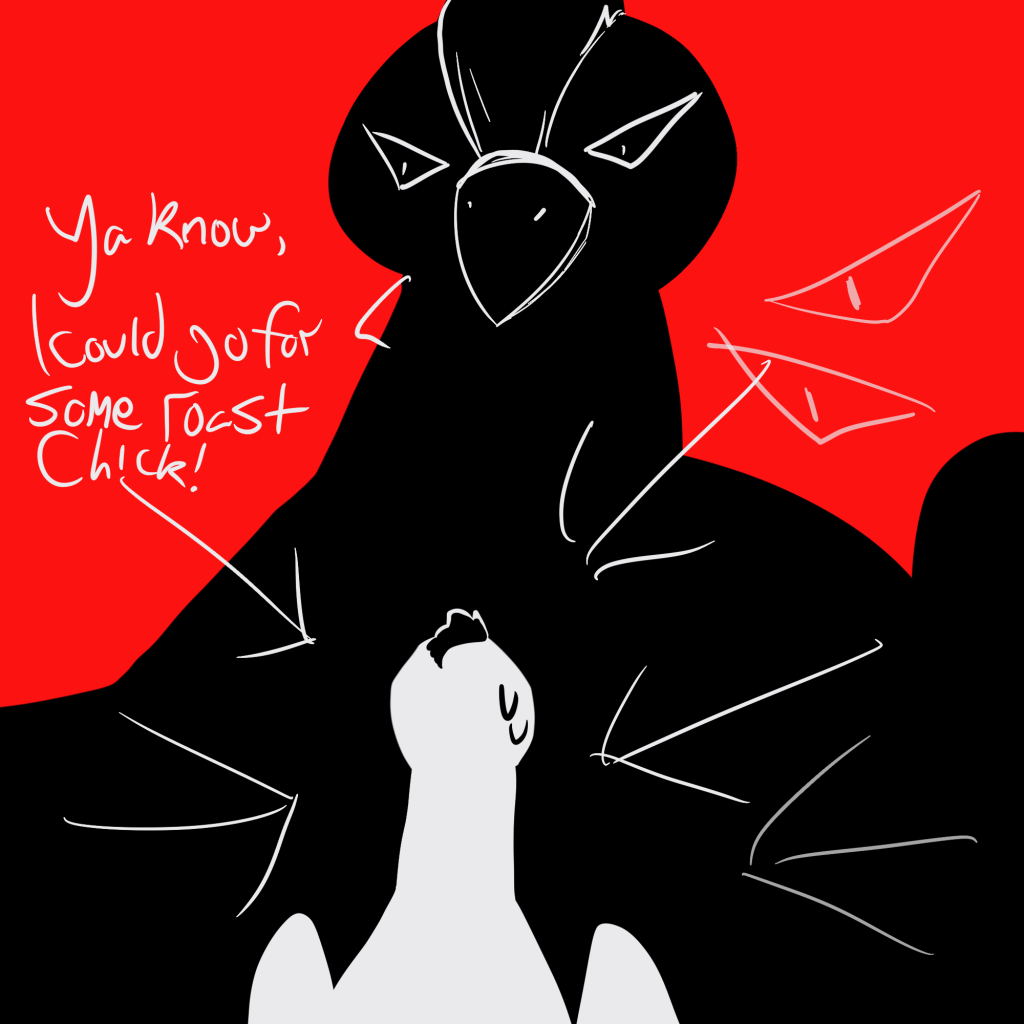
digital image of a big black bird bullying a smaller white bird
Digital Art, Courtesy of Sarah Smith
Just as there are benefits to keeping guineas, there are also some disadvantages to them, which include

  • Noise pollution

Guineas make a lot more noise than a rooster. In the same way that their obnoxious sounds can be a benefit, like for predator alerts, they’re also a con.

  • Difficulty training

We didn’t have too much trouble training our guineas, (even our original male when we had him) to go in the coop at night. But guineas prefer to sleep out in the open, and up in a tree or similar. That’s what Leorio 2.0 does. Apparently his previous owners gave up on his training, thus he’s with us now.

  • Bullying

It doesn’t really matter how many guineas you have, they will bully your other backyard birds, especially the younger ones. If you only have one guinea, it will bully the others. But if you have a male, he’ll terrorize the baby birds. And that’s why our first guinea didn’t live very long. Leorio 2.o is currently not making a very good impression on me by bullying all the baby chicks. He makes the tiny ones cry; no telling what he tells them.

  • Intelligence issues

Guineas aren’t known for being smart. For example, the guineas we have, and the one we no longer have, always go in the front yard, or on our side of the backyard. However they can never remember how to get back on their side. Therefore, they will pace and pace and pace the fence line, all while making their plaintive cries for help.

  • Terrible mothering

It’s said that guinea hens aren’t good mothers. My guineas haven’t raised their own keets, so I have no experience in this. But just going by their lack of intelligence, I have no doubts.

On the other hand, we’ve had 2 of our broody hens hatch 4 keets. And everyone is doing wonderful. Of course the surrogate parents have no idea there are any children at all.

Best Time to Get Guinea Fowl

person holding brown and white guinea keep

The most opportune time to raise guineas is when they’re keets, or babies. And it’s ideal to raise them with some chicks; that way they learn the ropes of staying around home and all about the coop. But once they’re grown that won’t necessarily prevent them from bullying.

So, Why have Guinea Fowl

black rooster, Mallard mixed drake, and white duck by a kiddie pool under a tree
The boss rooster and top drake are the birds with the most rank. And no one messes with them.

Assuming you live on acreage, guinea fowl would make a good addition to any backyard flock, even with their cons. And if you raise them when they’re babies with chicks, you should have no problem getting them to stay on your property. Additionally, make sure you have older chickens, or ones with rank, that won’t get bullied. None of our ranking birds are harassed by the guineas; it’s just the young ones. And the males seem to be the worst bullies.

Plus, guineas are fun to watch, especially when they’re together. Furthermore, you would have another type of egg to eat. And if you wanted to, you could try guinea meat, which I think is delicious.

Do you know anyone with guineas? Or do you have any? If not, are you more inclined to get any now that you know more about them? Your comments are appreciated.

If you enjoyed this post, please like, share, and please don’t forget to follow!

Categories
Chicks ducks Hens other fowl Protecting Your Backyard Birds raising happy, healthy chickens Roosters

Can You Mix Ducks with Chickens

Chickens are often the first bird homesteaders will tackle before raising other livestock. They cite practical reasons: food, composting, and pest control. Since ducks are some of the smartest and hardiest, they debut on the farm after chickens. But before getting any birds, I’ll answer the question Can you mix ducks with chickens.

You can, in fact, raise chickens and ducks together. However, there are some slight differences with both kinds of birds. And, with careful consideration, you should have no problem mixing both. So, whether or not you’ve purchased any ducks, just continue reading.

Brooding Facts for Both Ducklings and Chicks

chick feed in a shallow dish with chicks in a brooder

Recently I wrote an in-depth article explaining how to raise ducklings and chicks together. So I’m only going to list the main points.

  • Provide the same feed for both

Contrary to popular belief, you can give medicated feed to ducklings, as I explained a short while ago. But no matter what, by the 3rd week, make sure the protein is no more than 18%, or your ducklings will be at risk for something called Angel’s Wing. And provide niacin in the form of brewer’s yeast, so the ducklings can thrive. (This needs to be provided lifelong in the duck’s diet.)

Also, regular chick fountains and nipple waterers work well with ducklings. However, shallow pans for feed are ideal due to their bills.

  • Similar brooder temperature for both

There is only a 5° difference between both birds when starting the brooding process. Therefore, just observe them to see whether they are cold or hot. If they huddle together, they’re cold. And if they move as far away as they can from the heat, then they are hot. And adjust accordingly.

  • Clean brooder daily

Both ducklings (and ducks) drink as they eat to prevent choking. And this causes a big mess in the brooder that needs to be cleaned on a daily, sometimes several times a day, basis.

  • Harassment

Depending on the number and breed of chicks and ducklings you have, could determine who does the bullying and who gets bullied. In my experience, our chicks have always done the bullying until they were juveniles. But by then, the ducks were much larger, thus the roles were reversed.

It’s definitely simpler to raise chickens and ducks on their own. However, it’s not unrealistic to raise them together either.

Teenager Ducks and Chickens

mixed flock of birds outside on dirt ground with blue triangle of feed

At this stage of development, your ducks and chickens are going through puberty. You know, their voices crack and they look fugly. In addition, you might notice your ducks bullying the chickens they once hung out with. But by the time they’re all adults, this behavior generally stops.

The 3 ducks we recently raised with our juvenile chickens bullied their brooder buddies. And they even tried to bully one of our cats. But that only lasted until the 2 juvie drakes were sold to someone in need of them, so the lone female no longer feels the need to bully. Thus, it’s the other way around again. Plus, when we raised Squirt, the boss drake, he was raised alone by me. Therefore, he really didn’t bully anyone, and no one bullied him. I’m still constantly learning about ducks. And I know I don’t know all there is to know about them.

Advice for Smooth Desegregation

kiddie pool with ice in the shade
This picture shows ice in the pool; and that’s due to the triple digit heat lately.

Depending on the time of year and temperature will determine when you move your newbies outside. For instance, if it’s spring and still chilly out, then wait till the chicks are ~ 5-6 weeks old. However, if it’s summer and hot in the evenings, like it’s been lately, you don’t necessarily need a heat lamp. But still wait for the chicks to get to 5-6 weeks old for size. Then you need to

  • Check your coop space

Ducks need twice as much space as chickens do. And if your chickens use a ramp to get in the coop, you might need to come up with something so the ducks can get in too.

Also, ducks don’t use nesting boxes. Therefore, just put some straw on the floor of the coop, and they’re fine.

  • Circulate the air in the coop

You likely already have your coop well ventilated with your existing flock. However, since ducks emit ~ 90% moisture, there needs to be adequate circulation in the form of predator-proof windows and air exhaust vents on the roof.

  • Gradually mix your new ducks and chickens with the established flock

Put your juvenile mixed birds in a pen where they and your primary flock can see each other without aggression for a few days to a week.

  • Provide water

This source of water is different from the drinking water. Though you will see both the chickens and ducks drinking from it. But if you don’t provide this water source for the ducks to bathe and preen their feathers, they can develop wet feather.

Mixing Adult Ducks and Chickens

a couple of chickens and ducks mixed in with kiddie pools outside under a big shade tree

Up to this point I’ve covered the basics from brooding ducklings and chicks together to integrating the juveniles with the adults. From the time the ducks are adults, they no longer hang out with the chickens they were raised with. Unless they happen to be eating, sharing snacks, or drinking together. Or unless you have a species-confused duck, like me.

Now it’s time to go over some final important details.

  • Continue to supply the same type of feed for ALL backyard birds

Once the ducks and chickens you raised are adults, they can eat layer feed like everyone else. And continue adding 1 TBSP brewer’s yeast to 1 cup of feed.

  • Carry on with same feeders and waterers

Since your duck-raised chickens are used to eating out of a shallow pan, continue that with the newbies. However, with your established flock, you can try keeping the technique you’ve been using. Though, if they start eating the newbies’ food, you may need to just switch everyone to the new method. And the same goes for their waterers.

  • Provide a watering hole

This is one of the most important points, because ducks not only love water, they need it. And not just drinking water either. They need access to a source of water to swim and bathe in. But again, it doesn’t need to be custom. You can just purchase a kiddie pool, and they will be content.

Also, when ducks swim, they poo; and they drink from this water source as well. And the chickens might too. So it needs to be changed at least twice daily.

At about this point, you might be wondering if chickens will drown in the kiddie pool. And the answer is debatable. Sure, chickens can’t swim like ducks. Plus, their feathers aren’t waterproof, and they lack webbed feet. But since they don’t like water the way ducks do, they usually only approach the watering hole to drink. From the time we’ve had our ducks and kiddie pool, no chickens have drowned. Though chicks should definitely be monitored.

Can You Mix Roosters and Drakes

black rooster stops by mixed mallard drake outside by a tree
In this picture, it looks like the 2 males are sharing a moment.

Given both roosters and drakes can be territorial, it’s only natural to wonder if you can have both at the same time. I usually only keep 2 adult roosters at any time. And they’ve never had a problem with the drake, whichever one I had, even when it was the sex-crazed Kirishima.

But it’s true that drakes might try to mate with hens. And this is usually the case when there aren’t enough females for the drakes. Just as there is a proper ratio for hens to roosters, there’s a proper ratio for ducks to drakes. Proper in this sense maintains harmony in the flock.

Therefore, to prevent abuse to your hens and ducks, and any fighting between roosters and drakes, provide enough females for both. You will find various recommendations on this subject. But I advise you to err on the side of caution, especially regarding mating season and drakes. Each rooster needs ~ 10-12 hens, while drakes require ~ 3-6 ducks each. You know what they say? The more the merrier.

What About Flock Dynamics

mixed flock of ducks and chickens outside near 2 kiddie pools under shade tree

Now that you’ve hypothetically (or realistically) integrated ducks into your flock, has the pecking order changed? Did you notice whether the ducklings, then juvenile ducks had a hierarchy remotely similar to the chickens?

Most duck lovers agree, me included, that ducks have a pecking order. Though it’s way laid back compared to chickens: they may chase, peck at (in their own way), or quack at someone. But usually the group doesn’t gang up on that someone, like chickens do.

In addition, the boss in each group is the male. But if there are 2 roosters, it is generally the senior rooster, unless he is weaker or has been challenged and fallen from grace. Drakes are different. The senior drake is more concerned with mating, from what I’ve observed, and so that influences most things. We had 2 juvenile drakes recently and Squirt ignored them; he’s only interested in the females. However, I’m happy to report, he hasn’t killed any ducks, unlike his predecessor. And the juvenile drakes, from what I observed, were just living life, being kids.

Also, my roosters stay away from Squirt, although I’m not sure why. But then, they stay away from the ducks altogether; almost pretend like they’re not there. On the other hand, Squirt will get in Megatron’s face and yell at him only when Bakugo is flirting with him. Thankfully they haven’t come to blows yet.

So, Can You Mix Ducks with Chickens

6 different types of ducks under a tree near a fence

While raising chicks and ducklings together can be difficult, it’s not theoretical. Plus, they form a unit until they become adults. And at that time they tend to stay with their own kind. Once adults, they might ignore one another, but they don’t squabble or fight each other. Furthermore, males of both groups are boss of the yard. However, if there was ever any contest, the drake would be the clear winner. Though it’s the duck’s callous disregard of the pecking order that makes one think they don’t even have one. But they do, in their own duck-ish way.

I sincerely hope I’ve answered any questions you might have had about mixing ducks with chickens. Do you currently have any ducks? Or are you thinking about adding any? Your comments are appreciated.

If you enjoyed this post, please like, share, and please don’t forget to follow!

Categories
Chicks ducks other fowl raising happy, healthy chickens

Raising Chicks and Ducklings Together

After having chickens for any length of time, it’s only natural to progress to another domestic bird. Moreover, it’s also reasonable to have questions about raising chicks and ducklings together. Unfortunately most websites discourage you from attempting it, saying there are too many differences. However raising both together isn’t impossible. And the two have more in common than not.

Most sites even claim you cannot incubate, hatch, and brood chicks and ducklings together. Although that is simply not true. It can be done, as others have done so. What’s more, I’ve also incubated, hatched and raised ducklings and chicks together a few times.

But it is a lot of work. Likewise you don’t have to raise them together. Unless you find yourself incubating some chicken eggs and end up getting some ducklings. In that case, you might want to read this.

Brooder Basics Between Ducklings and Chicks

digital art of brown chick makes fun of yellow duckling on black background
Digital Art, Courtesy of Sarah Smith

Below you’ll find some key points when raising both ducklings and chicks together.

  • Feed is the same for both

First, you can feed either medicated or non-medicated chick starter to both birds, EXCEPT only give ducklings chick starter for 2-3 weeks. After that, switch to grower, unless your chick starter is only ~ 18% protein.

Yes, there used to be a time, long ago, when ducklings couldn’t have medicated feed. However that is no longer true. Read this article by the National Library of Medicine regarding the lack of adverse effects of medicated feed and ducks. Plus, it’s what I feed my ducklings, and they’ve never had a problem.

In addition to chick starter, you need to add niacin, because ducklings require 10mg of it to thrive and grow. And you can find it in brewer’s yeast. Just sprinkle ~ 1 TBSP per cup of feed. Further, it’s perfectly safe for chicks and chickens.

  • Feeders and fountains

Given the duck’s bill, provide chick starter in a shallow dish. Having water in a regular chick fountain works just fine. And Cornell University College of Veterinary Medicine even found that nipple waterers worked ok.

  • Brooder temperature is similar for both

Managing the brooder temperature till both kinds of poultry are feathered out is comparable. Even though the beginning temperature for each is a 5° difference, it’s important to not lose sight of monitoring how the birds react to the temperature. If they huddle, they’re cold. But if they’re moving as far away from the heat source as possible, then they’re hot. It’s really quite simple to just watch them.

  • Clean brooder & change bedding daily

In order to prevent choking, ducklings (and ducks) drink water as they eat. And it’s this combo that creates a daily mess in the brooder. A big, wet, stinky mess, sometimes several times a day, that, unless cleaned up on a regular basis, could compromise the health of the chicks. And it’s this that I consider the biggest hurdle to raising ducklings and chicks together.

  • Bullying

Harassment by ducklings is another often mentioned reason not to raise chicks and ducklings together. Though, in my experience, chicks are just as likely to bully ducklings.

We have successfully brooded and thus, raised a few generations of chicks and ducklings together. And this is what seems to work for us. First, understand that the type of bird you raise more of usually has the advantage. So if you raise more chicks, they might dominate the ducklings, for a time. But if you raise more ducklings, then they might be the antagonizers.

Tips for Brooding Chicks and Ducklings Together

duckling on screen of brooder
This is a picture of one of the ducklings we’ve raised with our chicks this year; they’re all juveniles now.

When we got our first ducklings, we started small: we only got 3. And since ducks are naturally bigger, we’ve kept our duckling and duck numbers small. Plus, we’ve incubated and hatched most of our own ducklings with our chicks. Also, given that ducklings take an extra week to incubate, the chicks have a week to get bigger and sturdier.

However, before jumping into raising babies together, decide first if you can commit the course. Especially due to the fourth item on the list: cleaning up the mess.

Then, if you are, resolve to

  • check your brooder

Ducklings need almost 179% more space than chicks. Though both their space requirements will double in a month. So make sure the brooder box will house them both comfortably, along with their feed and water.

  • either incubate or purchase chicks before any ducklings

Considering that ducklings are bigger than chicks, plan on having the chicks for ~ 5-7 days before the ducklings. This will help them gain a little weight and not be so wobbly before the newbies arrive.

  • have at least three times as many chicks as ducklings

By having more chicks than ducklings, this could make the chicks the aggressors. Although the ducklings will be able to handle it, because they’re bigger. Also, depending on the breed you pick out, will likely determine if the chicks will be aggressive. But this is true for ducklings as well. We have mostly Ameraucana chickens, while we have Pekin and Mallard ducks. And they’re all pretty laid back. Plus, once both hit the juvenile or teenage years, the roles reverse.

Additionally, never get a lone chick, chicken, duck, duckling, or any type of backyard bird. It will get bullied and most likely have a miserable life. Therefore, at least get 2 ducklings and 8 chicks, if you want to start small.

It certainly is easier to raise them separately. But it’s not impossible to do both together, especially if you follow these tips. And don’t forget to clean the brooder and change the bedding daily.

Juvenile Ducks and Chickens

mixed flock of juvenile ducks and chickens hiding in bushes outside
You can’t see them all, but you should be able to see some chickens and ducks in this photo.

When raising ducklings with chicks, once they’re teenagers, they become a flock. They stay together, and feed and water together. I wouldn’t say that they’re buddies. But they consider themselves a unit of some sort.

At this stage, you continue to keep their grower feed the same, whatever you get. And continue supplying brewer’s yeast, as well as how you supply the feed and water.

Tips for Peaceful Integration

person holding 2 ducklings

Before moving your juvenile ducks and chickens in with your existing flock, there are some things you’ll need to take care of, such as

  • make sure you have space

Despite the fact ducks can be housed in the same coop as chickens, they need twice as much space as the latter. So just be certain you have enough of it, but you don’t need to make or get anything extra for them. However, if your chickens use a ramp to get in at night, make sure it’s not too steep for the ducks.

In addition, ducks can’t roost. And they prefer sleeping out in the open. Therefore, it might be ideal for the ducks to nest in the run, away from roosting chickens.

  • have coop well ventilated

According to Cornell University College of Veterinary Medicine, ducks ingest and eliminate more h2o than chickens. And their poo is over 90% moisture. For that reason, the coop needs adequate ventilation. Again, nothing fancy: a couple of predator-proof windows and air exhaust vents on the roof.

  • slowly integrate ducks and chickens with the flock
Juvenile ducks and chickens outside interacting

Either when the juvenile birds are feathered out, or the ducks are 3-4 weeks old, it’s time to introduce the newbies to your existing flock. The ducks will nearly be adult size by then, but the juvenile chickens will still be small-ish. Though that’s ok, once again, depending on your breed(s) of chickens. Mine don’t bother the young ones until they look like adults. **If you live somewhere cold, just make sure the temperature is ~ 75°, since the ducks won’t be fully feathered at 3 weeks.

So put the newbies in a pen where the existing birds can observe them, as they please, for a few days. Then watch for any aggressive behavior as they mingle with limit. Usually there are some curious chickens or some looking for food. Otherwise they’re not too interested after the initial inspection.

  • Supply extra water

While the newbies are being gawked at by the establishment, have a source of water available for the ducks. But it can be as simple as a pan of water, depending on the number of ducks you have. However the important thing is that they can get in to clean and maintain their feathers. When everyone is finally incorporated together, you can get a kiddie pool.

In Summary

If you really want to raise chicks and ducklings together, it’s totally doable, since they can eat the same food, and eat and drink out of the same containers. You just have to add brewer’s yeast to their diet. Plus, they can be brooded similarly.

But the mess is real, and you have to be diligent to clean it daily. And there are definitely some breeds of ducks that are bullies. Therefore, if you’re still unsure, I recommend doing some more research, by clicking on any of the links highlighted in this post.

Do you have ducks, or do you want ducks? If you have them, what’s the easiest part of raising them? Your comments are appreciated.

If you enjoyed this post, please like, share, and please don’t forget to follow!

Categories
ducks Hens other fowl raising happy, healthy chickens

Difference Between Chicken Eggs and Duck Eggs

Eggs are one of the healthiest foods on the planet. They’re fairly easy to obtain and inexpensive. And there are other eggs besides the common chicken egg. Quail, turkey, duck, and goose eggs can also be eaten. Cooking with duck eggs has been around for a while, especially in Asian markets. Perhaps you’ve seen them at specialty markets or on a restaurant menu. The following is the difference between chicken eggs and duck eggs.

Most Apparent Difference Between Chicken Eggs and Duck Eggs: Appearance

  • Size of the egg
4 different colored and sized eggs
The 2 eggs on the left side are duck eggs, while the 2 on the right are chicken eggs. Pekin ducks lay large creamy white eggs, and Mallards lay smaller greenish blue eggs. At least ours do.

The size of duck eggs can be 50-100% larger than the average chicken egg. However it also depends on the duck. Some ducks, like our Mallard, are smaller than your typical chicken. And so their eggs will tend to be smaller than the average chicken egg.

  • Color of the eggshell

Just like with chickens, the color of a duck eggshell depends on the breed, diet, environment, and genes. And eggshells can be pale gray, creamy white, green, black, or blue.

  • Size and color of egg yolk
3 egg yolks in 3 separate bowls
The dark orange on the bottom right is from a chicken. The egg in top center is from the Mallard, and the bottom left is from a Pekin. Notice how the chicken egg has more white than the duck eggs.

Duck egg yolks are also different in size and color. Chicken egg yolks can be yellow, yellow orange if the chicken is pasture-raised, while duck egg yolk can be a deeper shade of golden orange. In addition, the yolk tends to be bigger than chicken egg yolk.

Second Difference Between Chicken Eggs and Duck Eggs: Taste

  • Creamy taste

For the most part, chicken and duck eggs taste similar, but duck eggs are creamier.

  • Intense flavor

In addition to the creamy taste, people who eat duck eggs think their flavor is richer than chicken eggs.

Third Difference Between Chicken and Duck Eggs: Nutrition

  • More nutrients
letters spelling out nutrition on flowery background
Photo by Bluehouseskis on Pexels.com

Duck eggs have more fat, protein, and cholesterol than chicken eggs. Furthermore, they also contain more vitamins, particularly vitamin B12, which is important for red blood cell formation, DNA, and cell metabolism.

And according to Livestrong and Mayo Clinic, the cholesterol in eggs isn’t the same as bad cholesterol in our bodies. However, people with diabetes could be at risk for heart disease. (Though experts don’t know yet the connection between diabetes, eggs, and heart disease.)

Fourth Difference Between Chicken Eggs and Duck Eggs: Extra info

  • Availability
food display in the market
Photo by Meruyert Gonullu on Pexels.com

Chicken eggs are generally easier to obtain: at the grocery store, farmer’s markets, or from your neighbor, whereas duck eggs aren’t mainstream. Although they are gaining popularity with backyard bird enthusiasts.

  • Cost

Due to the fact that duck eggs can be difficult to find, that tends to drive up the price. However, chicken eggs, where I live, are about $2-3 a dozen at the store.

  • Allergies

Some people can be allergic to chicken eggs, but not to duck eggs. Or vice versa. And that’s because the proteins in both are similar but not exact. Therefore, if you have a known allergy to chicken eggs, it’s recommended to talk to your healthcare professional before trying duck eggs.

So, the next time you’re out grocery shopping, and assuming you don’t have an egg allergy, why not give duck eggs a try?

Thanks for stopping by! If you enjoyed this post, please like, share the post, comment, and don’t forget to follow!

Categories
ducks other fowl recipes

Cooking with Duck Eggs

Maybe you’ve watched cooking shows or seen recipes that specifically called for duck eggs. Or perhaps you’ve seen them in your grocery store or at a specialty market. And if you live on acreage, no doubt you’ve heard ducks quacking in your neighborhood. Furthermore, if you’ve ever been given these prized objects, you might already be familiar with cooking with duck eggs.

However, if you’ve never tried duck or duck eggs, you don’t know what you’re missing. The meat is delicious, and so are the eggs. Though there’s more to it than that. There are a lot of benefits to cooking with duck eggs, primarily for baking.

Cooking with Duck Eggs

flour and eggs scattered on table before bread baking
Photo by Flora Westbrook on Pexels.com

Here are some more benefits to cooking with duck eggs:

Due to the first three items on the list, duck eggs are usually sought after by chefs. The protein in duck eggs, particularly in the whites, tends to make fluffier and creamier custards and cream fillings. But also breads, cakes, and quick breads are better as well.

  • duck yolks are bigger than chicken egg yolks
  • ducks continue to lay even during hot and cold temperatures
Mallard duck on her nest
This is our Mallard, Aizawa, hidden in her nest.

This is important because chickens will have a down time during their molt. But they also won’t lay if the temperatures are on either extreme, too hot or too cold.

  • and the last benefit is that some people have discovered that if they’re allergic to chicken eggs, they can eat duck eggs just fine

But if you just want to have eggs, you can do that too. Boil them, fry them, or scramble them, you can cook duck eggs the same as chicken eggs. However, if you’re baking with them and the sizes are different than chicken eggs, figure 2 duck eggs for 3 chicken eggs.

Thanks for stopping by! If you enjoyed this post, please like, comment, share, and please don’t forget to follow!