

Some links here earn me a small commission at no extra cost to you.
Warning: This post contains graphic images.
For eons in the wild, animals have masked any sign of weakness to avoid being eaten. This is instinctual behavior to hide from predators. And backyard chickens are not immune to this tendency. Therefore, chickens are hardwired to lie low when sick. Or they might even pretend that all is well. So, how do you know if one of your birds is ill or hurt before it’s too late? Today I’ll go over how to tell if a chicken is sick. Moreover, I’ll address the best ways to prevent sickness. And then cover treating the most common chicken illnesses.
When you have backyard chickens for a certain length of time, you definitely get to know them. You know your birds’ personalities and tendencies. And you know what they’ll do first thing when you open the coop door in the morning. However, you can also get so busy that you overlook those same things. It happens. I know, because I’ve done it. It’s easy to get into the rhythm of busy life and slack off on observing them. I’m not going to insult anyone by assuming you don’t know your birds. But I know people are human, with human tendencies, just like me. And when we get busy, we forget, sometimes even fundamental information.
The illnesses I list below aren’t the big ones that wipe out entire flocks. In fact, they’re not even ones you hear about on the news. Though, if ignored long enough, they can certainly be deadly. Because sometimes it’s the little things that trip us up more. And, as I said, they are way more common if we let things go for just long enough.
Disclaimer: Consult with a veterinarian before using the information provided in this post. I am not a veterinarian and the info contained in this post should not be seen as professional veterinary advice. If you use or rely on the information in this blog post, you do so at your own risk.
Most Basic Chicken Afflictions
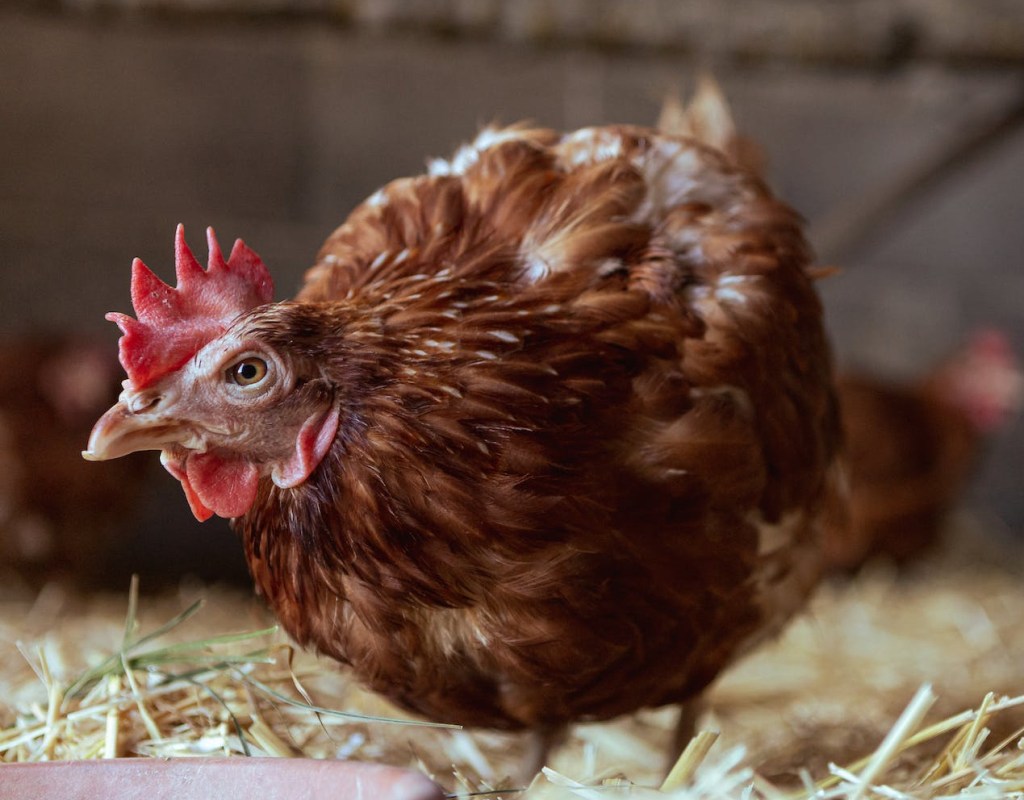
When I think of the most common chicken ailments, I automatically think of the most common human illnesses, like the common cold. Although not fun, people don’t necessarily die from them, unless there’s an underlying condition or weakness. However, you still don’t want to ignore the symptoms, which is why we manage them. And it’s the same with chickens. Some of these aren’t necessarily deadly when chickens first have symptoms. But, the problem is, chickens are excellent at hiding symptoms. Consequently, once you become aware that something’s going on, they’re worse than you think. Therefore, the most basic afflictions chickens will encounter include
- parasites, such as mites, including leg mites, lice, ticks, and worms
All of these parasites can cause listlessness, decreased egg production, and a pale comb. And you can visually see them upon inspection. Also, if one bird has a parasite issue, you can bet you have other birds with them as well.
- respiratory issues
Nasal discharge, coughing, wheezing, and difficulty breathing are all symptoms of respiratory issues. But that doesn’t necessarily mean they have Bird flu. There are plenty of colds and viruses that go around for chickens just as they do for people. If you have a bird that presents with respiratory issues, examine the rest of the flock for similar issues. They may or may not have a communicable disease.
When we had our Wyandotte boss, Fives, it seemed like she inherently always had something she was dealing with. However, none of the other chickens caught anything she had. But we isolated her just in case and until she sounded and was doing better.
- diarrhea
Runny poo or a dirty bottom indicate GI issues. Moreover, this can be a contagious illness that you might see in some of your other hens.
- crop issues, like sour crop and/or impacted crop
Sour crop is smelly, and when you press on the crop, liquid pours from the hen’s beak. However, an impacted crop is where the crop is very hard and won’t empty, because something indigestible is stuck in the crop. Plus, it’s a serious issue if not dealt with immediately. With either issue, the bird won’t eat.
- egg binding
Signs of egg binding includes distended abdomen, straining, decreased activity, swollen vent, restlessness, and frequent sitting. Plus, your hen will waddle like a penguin. And upon inspection of the oviduct, there should be an egg.
- injury from predator or from rooster during mating
Not only do you have to watch for predators from the land and air, but you have to watch your rooster too. If your hens are a lot smaller than your roo, or he’s just ungainly during mating, he can injure them. And the hen will hide her injury and be less likely to compete for food. Thus, she’ll get weaker, and invite more trouble to herself. She may not have any visible injuries, other than limp or hold a wing a certain way.
Signs a Chicken is Sick

Therefore, when you let your birds out each morning, just watch them for a few minutes. And mentally go through a quick checklist of the above symptoms. I’ll narrow them down for you. Ask yourself if any of them
- appear tired
- have pale combs and wattles
- have any visible parasites
- are coughing or sneezing
- have watery or bubbly eyes
- have abnormal droppings
- are not eating
- have full crops in the AM
- can stand on their own
- have NOT laid an egg recently
- are injured or holding a wing a certain way
- or have any strange lesions on the comb or wattles
If you discover that you have birds that are indeed ill, then isolate any from the main flock. And call your vet if they see chickens. However, don’t worry if you don’t have a vet that sees chickens or you can’t find one. Unless you are a big operation and are seeing widespread illness in your flock, this is likely an isolated incident. Thus, with a little TLC, your bird or birds will be back to normal in no time.
How to Prevent a Chicken from Getting Sick

Alternatively, if you rarely clean your chicken coop or waterers, or don’t regularly change the feed, then this might not be an isolated event. Therefore, the single most important thing you can do to prevent your chickens from getting sick is keeping your coop clean.
Since my husband medically retired 4 years ago, he no longer super duper cleans the coop only twice a year. Now he has the cleaning scheduled every 2 weeks. (Yes, you read that correctly.) Although, he still empties out the boxes on a daily basis. Due to his efforts, our chickens have been parasite free with absolutely no need to treat. And keeping the coop clean seems to keep most germs away. But, unfortunately, it doesn’t prevent crop issues, an egg-bound or an injured hen. Still, the only issues we’ve had have been from predators or roosters.
How to Care for a Sick Chicken

So, what do you do for an unwell chicken? How do you take care of them? For starters, if you know a poultry vet, call them. But again, if not, it isn’t the end of the world. Many backyard chicken enthusiasts don’t have access to a poultry veterinarian but still keep chickens. Other steps to take include
- quarantine ill birds ASAP
Even if they aren’t contagious, depending on the symptoms and recommended treatment, you may still want to isolate your sick bird(s). Recall that chickens are notorious for bullying if and when they sense weakness. Hence, another reason to separate sick birds from the flock is to protect them from bullying and possibly cannibalism. Being harassed would only further aggravate their issue.
- hydrate your ill birds
Make sure your sick bird or birds are drinking even if you have to use a dropper. Additionally, adding some electrolytes can be very beneficial to an ill bird, particularly if they were dehydrated.
- offer food
In the beginning of treatment it isn’t as necessary as water. That said, if your unwell hen will eat, by all means, offer some food.
How to Treat an Ill Bird

If your sick bird is showing signs from the most basic chicken afflictions above, and other than parasites, no other birds are affected, then continue reading for specific instructions.
Parasites

If your ill bird is infested with mites or lice, the best treatment is to
- clean the coop thoroughly.
- and spray the coop and chickens with Elector PSP. There’s no egg withdrawal for this treatment.
But if your bird is infested with worms, then you need to
- find out what kind of worms they’re infested with
Some are rare, while others are more common. Also, there are different types of de-wormers. With that in mind, avoid the natural de-wormers, because you’ll waste your time and your bird’s health. They don’t work whatever they promise. Trust me, you need something that really works. Not garlic, not apple cider vinegar, and no, not diatomaceous earth either. Check out The Chicken Chick for more info on specific worms and de-wormers. And once you’ve got your girls back to normal, follow the list below to keep them that way.
To prevent any more worm infestations, you need to
- keep the coop clean
- keep food in pest proof containers like a galvanized metal trash can
- provide fresh, clean water daily, and clean waterers daily
- don’t throw food or treats on the ground
- and practice good biosecurity: don’t let wild birds in your yard
Respiratory Issues

Chickens with respiratory issues can be quite stressful for you, the chicken keeper. For one, you don’t know if it’s serious. And two, you’re not sure if it’s contagious, since you hear annual reports of contagious chicken diseases. But it’s essential you don’t freak out. The best things you can do for your bird with a respiratory issue are already listed for you under how to care for a sick bird above. Other than that, watch your remaining birds to see whether they start developing any similar symptoms. Plus, continue to monitor your ill bird for changing symptoms. Are they getting worse, improving, or do they have any sores or spots on their combs or wattles? How about bubbly eyes?
If yes to the spots or lesions on combs and wattles then it could be fowl pox. And you would need to keep your birds quarantined for 2 to 3 weeks. Plus, there are 2 types of fowl pox: wet pox or dry pox. Wet pox is more serious as it’s internal and can cause breathing issues. There’s no treatment for fowl pox. However, if they only have bubbly eyes and not respiratory problems, then it’s some type of eye infection. And you can try gently rinsing the eye with saline. Then apply Neosporin. Although, that might not do much, since chickens dust-bathe. So you might need a chicken vet after all. We struggled with this issue in a juvenile rooster.
Diarrhea

There can be several reasons why a chicken would have loose, runny stools, such as
- coccidiosis
Your chickens and my chickens have coccidiosis. However, they don’t suffer the effects, because they’ve built up an immunity to it. Though, if you don’t practice good biosecurity, then someone who also owns chickens can pass their chickens’ coccidia to your chickens. And vice versa. Other symptoms of severe coccidiosis is weight loss and blood in the stool. Go here for more info on how to treat or prevent diarrhea caused by coccidiosis.
- Worms
Usually worms do not produce diarrhea. That is, until a high worm load irritates the gut. And then that can cause a secondary bacterial infection, according to Richard Jackson BVMs from Poultry Keeper.
- Viruses (such as rotavirus and adenovirus)
Young birds are most susceptible to diarrhea caused by viruses. If your bird has a virus, the illness will have to run its course. However, sterilize and sanitize everything related to your chic kens. And keep your ill bird separated from the flock.
- Bacterial diarrhea
This could occur due to coccidiosis, worms, or any time the gut is damaged. Think of it as the chicken’s gut bacteria is out of balance. Fix the culprit, and then offer probiotics.
- And a feed too high in protein
If you don’t feed your chickens the appropriate commercial feed, the result can be too wet droppings. And that will cause the litter to be too wet, which can further cause issues. Or it can be a breeding ground for disease if the chicken is untreated.
Now if the bird is otherwise healthy, eating and drinking, then just offer supportive care, making sure they don’t get dehydrated. Plus, you can collect a stool sample. And send it to your veterinarian for a worm sample. See here for detailed pictures and descriptions in case you aren’t certain about your own birds and their diarrhea.
Crop Issues

There are many different articles and thus, recommendations for these issues. And you’ll find that people use sour crop and impacted crop interchangeably. However, they are not the same at all. They are distinct conditions, requiring distinct treatments. If your bird has impacted crop, but you treat them with the advice for sour crop, you will delay the proper treatment. And your bird might die.
Therefore, if you notice a sour smell from your bird, and they leak liquid when you press on their full crop, they have sour crop. So, you want to
- flush the crop with 1 tsp Epson salt and 1/2 c water. Use a syringe, careful not to get water in the bird’s airway.
- and treat the fungus: mix 4 oz of powdered bluestone copper sulfate with 1/4 c ACV(apple cider vinegar) and 32 oz of water. Then to each gallon of the sick bird’s water, add 1 tbsp of this solution. Do NOT put the solution in metal.
An impacted crop is where the crop is almost rock hard, because something indigestible is stuck. Again, there are many suggestions. But I don’t know if the people who offered those suggestions actually had any real-world experience with a chicken suffering from impacted crop. They recommend to lubricate the crop with olive oil or similar. How is that supposed to help? I guess I can see in theory, but in practice? You can try those wonky methods if you want. But, as I said, impacted crop is a life and death situation. Time is not on your side.
Unfortunately, it was while I was trying all of the wonky methods, when I finally came to the conclusion that nothing was helping my bird. I had to take drastic measures. So, I found some videos on people performing surgery on their own chickens; the same exact one my bird needed. And I ordered the materials. Although, my bird didn’t make it. She died before my order ever arrived. Please don’t be me. If you don’t have a chicken vet, order supplies so you’ll have what you need in the event you have a bird with impacted crop. Check this site out for more info. There are plenty of sites out there from others, like me, who’ve actually had chickens with impacted crop. Surgery is the only answer, if you want to save your bird. But you have to know the difference between impacted, pendulous, and sour crop.
Egg Binding

If you have a hen walking like a penguin, the number one condition that comes up on the internet is egg binding. However, there definitely can be other things going on. That said, an egg-bound chicken is certainly an emergency, not to be taken lightly. Thus, if your ill bird has other signs of being egg-bound, you can
- offer her electrolytes in her water. But, if she won’t drink on her own, help by using a dropper.
- Next, submerge her lower body, including vent, in a warm bath for 10-20 minutes. Gently towel her dry to prevent the egg from breaking.
- Then apply Vaseline or KY jelly just inside and around the vent. This is to help her pass the egg.
- Next, put her in a dark, separate place away from the flock.
- If she is truly egg-bound (you know there’s an egg), and she hasn’t passed it yet, then absent veterinary help, most sites recommend removing the egg manually. However, it is extremely dangerous and difficult. So, caution is also advised.
- As long as your hen appears well and not in shock, gently palpate her abdomen to locate the egg.
- Then carefully shift the egg, trying to move it, so the hen can hopefully pass it.
- Should this prove to fail too, the last option would be aspiration, implosion, and then removing it manually.
- Check out Tim Daniels from Poultry Keeper for his advice.
- And the best way to prevent egg binding is to feed your birds the appropriate commercial feed. And provide oyster shell. Plus, limit the treats to keep your birds from getting obese.
In the event you have a chicken with all of the signs of egg binding, except the presence of an actual egg, what then? As I mentioned, something else could be going on. So, if you do NOT see an egg on examination of your bird, then you know for sure they aren’t egg-bound. On the other hand, they may have
- egg yolk peritonitis
- salpingitis
- cystic ovary
- uterus infection
- ascites from liver
- heart disease
- or be an internal layer
Most of the above are as serious as an egg-bound hen. Further, some of the issues require antibiotics, hormones, or surgery. However, in the case of heart disease, other medications would also be involved.
Injury
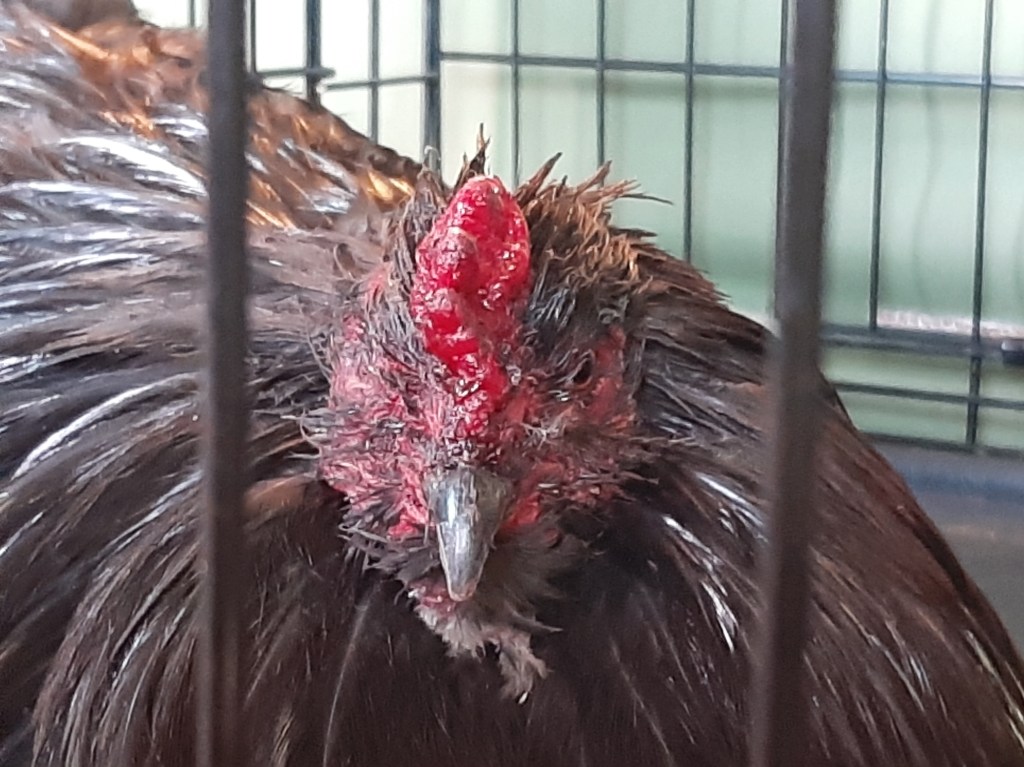
Unfortunately this is the most prevalent issue we personally have to deal with on our acre. And mostly it’s due to dogs. Neighbors’ dogs. But we have our chicken first aid kit, which I highly recommend you start putting together. See here for instructions. So far we’ve not had to take any of our birds to the vet due to any predators. We have had to call once for an antibiotic. And that was due to a hawk attack. Thankfully, the hen lived, because of that antibiotic. Although, we have also lost one duck and one guinea when we went on vacation this past spring. Therefore, I want to encourage you that if you’re around and one of your birds gets attacked, your presence alone will likely save that bird. My husband and I usually work together on these issues. He’ll find the bird since he’s outside usually working. Then he’ll get me, and I’ll grab the kit. So, if you find an injured bird,
- First, assess the injured bird.
They will be frightened and in pain. Though, hopefully, nothing will be broken, other than skin and feathers.
- Next, clean the wound with Vetericyn wound care spray.
- Then liberally apply Gentian violet .5% over the wound(s).
Gentian violet is an antiseptic dye used to treat fungal infections of the skin (such as ringworm & athlete’s foot). But it also has some antibacterial effects. For all of our birds who’ve been attacked, this is our first line of defense. And our birds don’t start going crazy, pecking the heck out of those birds with the purple stuff on their wounds. I believe Blu Kote is made of the same thing.
- Depending on the injury, you may keep the injured bird isolated from the flock for a couple of days. Or not. It’s entirely up to you.
Most sites would probably recommend isolating the injured bird. However, the only bird we’ve ever isolated was Megatron, when he got his tail feathers kicked by Baby Nay and would’ve died had I not intervened. All of our other injured birds, including Rex (hawk bait), were allowed with the flock. One was going broody anyway, so she secluded herself. We didn’t have to do anything.
- Provide fresh feed and fresh, clean water daily. Check their wounds that they’re not getting septic or angry looking; that they’re indeed getting better.
You may need to re-apply the Gentian violet. And if you did isolate your bird, like I did with Megs, then let them back in with the flock. He was and is the boss, so I didn’t have to do anything special. But I let him back in with the flock after a week. Birds have phenomenal memory even with their pecking order. I don’t re-introduce my birds a special way once I’ve taken them out of the group; they know each other already. And they simply don’t care, except for the one who wants to rejoin the group.
In addition, we’ve had birds that have had only feathers out during an attack. But we’ve also had birds that have had skin missing. Though, we haven’t had to deal with bleeding with any of them or their wounds.
So, How do You Tell if a Chicken is Sick
Just like other prey animals that get sick or hurt, chickens will act like everything is ok. And they may hide when ill or in pain. Therefore, it’s vital that you know what your chickens are like, including their mannerisms. Thankfully, though, there are universal signs. Not eating, being tired, lethargic, losing weight, not congregating, coughing, and sneezing are all signs someone, including birds, aren’t feeling too well. And the best prevention for keeping chickens healthy is keeping the coop clean and practicing good biosecurity.
How would you say your birds fare when it comes to illness or health? If they’re pretty healthy, what do you attribute it to? Thank you for visiting. Please share, and if you don’t follow already, you may do so now.
https://chickcozy.com/kristinasmith


One reply on “How to Tell if a Chicken is Sick”
[…] I wrote a post on how to tell if a chicken is sick. In the article I pointed out some of the most common chicken […]
LikeLike