

Any time we hatch a new chick, duckling, or keet, or maybe get a new cat, fur and feathers get ruffled. No matter the steps and how long we take to introduce a new pet, some type of aggression ensues. And at times it feels like it won’t end. Further, the aggression that occurs at my home is typically intraspecies, which is the same species ganging up on each other. Though, I know others have interspecies aggression. So, I wanted to explore bullying in the animal kingdom.
According to Oxford dictionary, one definition of bully is a person who uses their strength or power to frighten or hurt weaker people. But the legal system doesn’t consider non-human animals as legal persons. Thus, according to the law, backyard birds, dogs, cats, etc are not people. Therefore, our pets can’t be regarded as bullies from these parameters, even though their behavior screams bullying to us.
Nevertheless, if you Google pet bullying, you’ll doubtless find endless examples of exactly this, no matter what the law may say. As a result, it’s apparently quite common among pet parents and animal behaviorists alike to see bullying activity. What is it exactly about these behaviors that look like bullying? Is it normal, and does it serve a purpose. How can we help inter and intraspecies relationships? And do we humans behave the same way?
Why Animals Bully Each Other

A couple of years ago I wrote an article on the chicken pecking order. Even if the term was originally in reference to chickens, most, if not all, animals observe some sort of dominance hierarchy. In biology, dominance hierarchy is basically a ranking system in animal groups. Some animals are more dominant, like the alpha, whereas others are more submissive. Consequently, dominance is one of the major reasons animals bully each other. The dominant animal is effectively trying to reinforce their class system or hierarchy.
For instance, if you follow me on Facebook or Instagram, you might know we have a new kitten named Pickles. Initially my cat, Itty, did NOT like Pickles. At all. And I know why. Pickles is ~ 4 months old, eats Itty’s food, goes into Itty’s room, chases Itty, gets on Itty’s bed, and sits on Itty’s chair. Basically Pickles does NOT respect the hierarchy.
On the other hand, when Itty first came to live with us at 5 weeks old, Cake and Meow Meow, our then resident cats, laid the law down for her. And Itty respected them and the law. Even though Meow is no longer with us, Itty still respects Cake, because she knows her place. However, at the same time, Itty knows she herself is a princess. Pickles is a bottom feeder and should be licking Itty’s paws. But Pickles doesn’t seem to know her kitty place. It appears she doesn’t care about hierarchy; she just does what she does. Moreover, she’s certainly not submissive, and it was annoying the hell out of my cat. So, on various occasions I’d hear noises that sounded like cats killing each other. Thankfully they weren’t actually killing each other. Although, it was Itty, cursing Pickles in meows and caterwauling.
Besides dominance, other reasons animals bully each other include
- mating
Several examples of bullying-type behavior exist in the animal kingdom concerning females during mating. For example, male on female bullying during mating. Or it can happen with any other members of the same species just because it’s mating season. Ducks are a prime example of this. Our first drake killed a female due to his crazy hormones during mating season.
- boredom
Some animals appear to pick on other animals if they’re stuck together for a bit of time. Think chickens cooped up during inclement weather for days upon days with nothing to occupy them. Alternatively, picture any smart, high energy dog with nothing to do, locked in a small room (or house) with a small, scared pet. An animal in either or both of these situations will pick on or bully another when they have nothing to do, or any way to expend their energy.
- illness/injury
Chickens mercilessly abuse sick and injured birds. But there could be cases where an ill, injured, or hurting animal lashes out at other animals. For instance, dogs have been known to attack sick or hurt dogs. And they can also attack if they are sick or injured themselves.
- resource guarding
I’ve mentioned resource guarding before. And generally, bullying in regards to this could be for space, food, water, breeding, etc. An animal is just claiming all of the above as their own, thus, picking on anyone who transgresses.
- inadequate early socialization
A lack of early socialization, at least for dogs and cats, can easily turn playtime into a fight.
- space/territory
Many animals will attack and pick on other animals, including members of the same species, if there isn’t enough space for everyone.
- and stress
Our pets are sensitive to us and their environments. And all of them seem to love routines. (Kinda like us.) Therefore, any changes to their routines can lead to aggression. Be it change in feed, living arrangements, friends, family, schedules, and/or adding or subtracting any other pets all have an effect on them. Not to mention possible life or death situations they may face themselves.
What Does Bullying Look Like in the Animal Kingdom
Now I’ll go through some of the pets I have, and find out what picking on each other might look like in dogs, cats, and chickens.
Signs of Dog Bullying

- Being overly pushy with other dogs or with the cats. For example, a bullying dog pushes other dogs out of the way. Or, like at our house, your dog might push the cats or other pets out of the way when they want attention instead of letting anyone else have any.
- Doesn’t follow commands once very excited
- Playing rough or harassing non-consenting dogs and/or cats
- Disrespecting boundaries of other dogs, people, and/or cats
- Growling, nipping, biting, and pinning playmates to the ground
- Steals food, treats, and/or toys
- Ignores signals from other dogs and/or cats
- Pesters dogs and/or cats who don’t want to play
- “All in your face”
- Puts paws on head or shoulders of other dogs most often
- and Engages in mounting behavior
Symptoms Your Dog is Bullied
- Tucking tail between their legs
- Yawning or licking their lips
- Hiding or avoiding other dogs
- Rolling over in submissive manner
- Barking while backing away from another dog
- Urinating in inappropriate places/indoors
- Your dog is always being chased by another dog but never the one doing the chasing
- Always getting mounted
- and Getting food, water, and toys stolen
Cat Bullying Signs
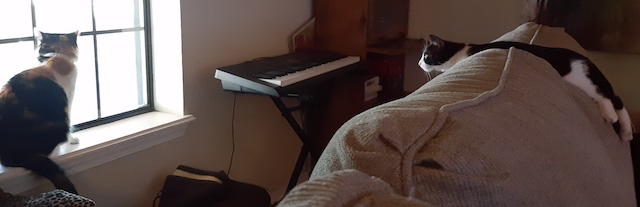
- Either passive or overt
- Denies access to resources: food and water, litter box, toys, and owners
- Blocks access to the best sun spots
- Body language of bully: Never backing away, staring, stalking, and emitting low growl when other cat gets close
- Aggressive posture: arched back, puffed out tail, flat ears, dilated pupils
- Clawing, biting, and hissing
- Lowers head while raising hind end as it approaches other cat
- and Pinning the victim to the ground
By contrast, the bullied cat may spend most of the time hiding or away from the family. They also avoid eye contact with their bully and surrender resources to them. In addition, they might crouch in ambush, but then run off when their bully shows up. Furthermore, they’ll have a puffed out tail, flat ears, and hiss as well, especially if their bully gets too close. This is also how a cat reacts to their dog bully.
Chicken Bullying Evidence
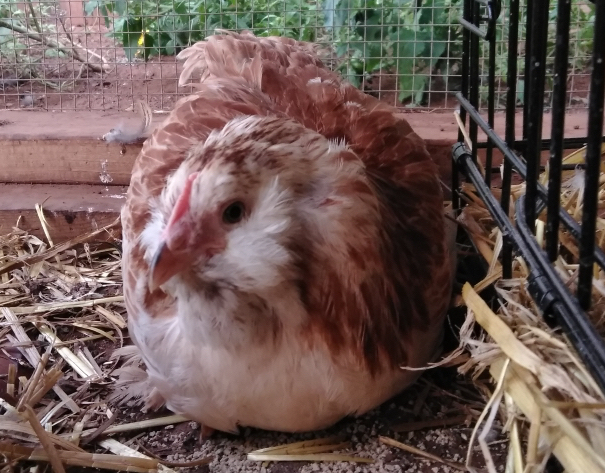
- Chickens missing feathers
- Other chickens pecking at the bullied chicken, removing feathers, and keeping that one from food
- Scared chickens or scared ducks
- Rooster mounting behavior toward other species
- and Injured chickens
With cats and dogs you might not be sure if they’re playing or being a bully. However, you’ll know in your gut whether or not they’re playing based on the reaction of the other pet. If your cat or dog is bullying, the victim will hide, act scared, or simply not want to be around your bullying pet. But, if it’s simply play, then everyone will enjoy the experience. And they’ll hang out and cuddle together. Trust me, you’ll just know. In addition, according to this article from Care.com, if one cat starts the aggressive act more, and there’s growling and hissing, then in all probability it’s fighting. Basically it’s similar to one dog always doing the chasing while the other is being chased.
On the other hand, chickens are different. No chicken enjoys being pecked or having aggressive acts directed at them. Those birds will either just walk away. Or, if they’re a victim of actual bullying, they will hide. Chickens peck each other, particularly those higher up in the hierarchy, though it doesn’t necessarily mean they’re bullying. They’re just reenforcing their pecking order. And sometimes they’re constantly reenforcing it. Take, for example, the 4 different generations of roosters we have: we have the boss, Megatron, Ravage, the 2nd oldest, Mystogan, his younger brother, and now we have a juvenile roo. Megs runs a tight ship keeping all of those boys in their places. In similar manner, Ravage keeps Mystogan in his place while Mystogan pecks at and runs after the juvenile. And the juvenile roo harries all the other babies. It looks like bullying, but it isn’t really. Since none of the antagonists continue to harass the others, it’s just normal chicken pecking and enforcing of their hierarchy.
Now you may be scratching your head on the rooster mounting behavior one. That’s what Ravage did when we had over 10 roos in our flock at one time. He mounted Squirt, the drake. At first I was wondering if he was actually trying to mate with the drake. But then I figured he didn’t have his spurs yet. So he had to be exerting some sort of dominance out of frustration for space issues and females. Well, after we slaughtered the extra roos, Ravage calmed down. Although, the drake still gives Ravage a wide berth. And the roo now has started mounting Bakugo, our Pekin. Though, I’m not sure if he’s trying to mate her due to stupidity, or if he’s still acting out of dominance.
Stopping a Bully Dog at Home

If, after getting this far, you realize, like me, that your dog could be a bully, don’t worry, because there are solutions. Trust me, I know what you’re thinking. At first, you didn’t want to admit your dog might be mean and pick on anyone else. But then, the more you thought about it, the more you just couldn’t ignore the signs. Although, the first thing to do for your bullying dog is to spay or neuter them if they’re still intact, which Sophie most definitely is. (Her surgery is scheduled for September.) Aside from fixing your dog, you can
- put the bully in time-out
With a negative marker before bullying gets too far, your dog will eventually make the connection between what they’re doing and why they’re in time-out. For instance, when you want your dog to do something else, use a word or sound, like the word no.
- be picky about who your bully plays with
Choose dogs to hang out with your dog that can handle and actually enjoy your dog and their pushy behavior.
- intervene as necessary
Using positive interrupters before any bullying occurs, this will replace time-outs when your dog is learning better behavior. A positive marker would be something like the word yes.
- find a trainer with a really good, patient teaching dog
This type of dog can put up with your dog and effectively communicate with them.
- teach impulse control in the house
For example, if you’re paying attention to one pet in your house, and your bully pushes in between, ignore the bully and move away. Don’t reinforce bullying behaviors with attention. Rather train your bully dog to sit and wait his turn. And do the same with treats. But reward your non-bully pet with treats first, assuming they’re not a resource guarder.
- and make sure exercise and mental stimulation demands are met
I truly think that’s what’s going on with Sophie. She requires so much due to her breed, that she gets bored at times, especially if it’s been rainy or extremely hot that we forego our outside fun. But if she does get exercised, she really does do better with the cats.
Curbing the Cat Bully
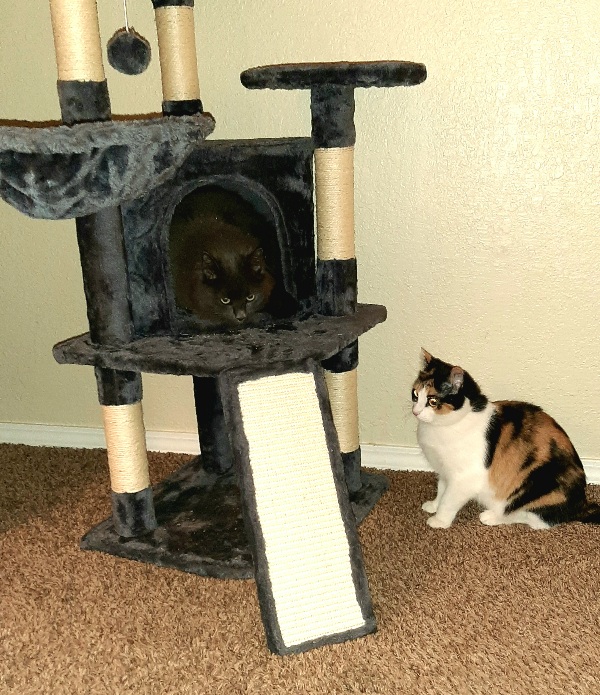
Just as with dogs, the first and best way to put an end to the bullying cat is to spay and neuter the offender, if they’re still intact. However, if they’re already fixed, try the following:
- Don’t assume cats will work it out
They won’t, because they’re not people. Cats will continue to fight if they perceive a threat to their resources. But don’t get in the middle of their fight either. You don’t want to get hurt. Rather, the best option is to make a loud noise to distract them.
- Also, don’t separate the resources
Instead of separating all of the resources, see where the cats prefer to congregate. Then make sure there are plenty of resources for all of them. That way the bully has a choice and won’t feel threatened.
- Make playtime the same time everyday
Because cats are so schedule-oriented, keep playtime on a schedule as well.
- Play at least 15 minutes with each cat per day
Further, cats get bored easily, so be sure to cycle through the toys. And the more you can play with each cat, the better.
- Get pheromone diffusers for every room the cats spend together in
I asked our vet about the issue the cats were having, and he recommended the diffusers.
- If there’s still bullying, see the veterinarian
Your cat might have a health issue that the vet can rule out. Or they can refer you to a pet behaviorist to help out.
- Re-introduce cats that need to be separate
If cats are at-risk of hurting each other, separating for short-term is a good idea. Flying fur, bloodshed, or urine are all signs a cat’s in danger. And if it’s occurring every time the cats see each other, they need to be separated. And then re-introduce them as if they never met. Jackson Galaxy recommends re-introducing fighting cats with food. You can find the article here.
Ending Chicken Bullying

Unlike cats and dogs, chickens don’t get spayed or neutered. Though, you can
- make sure your chickens have enough space
Inside the coop, each chicken needs approximately 4 sq ft, while they need around 10 sq ft each in the run. But that’s assuming they stay cooped up all the time. If they get to go out, they can have 5-10 sq ft each in the run.
- have the proper ratio of hens to roos
If you have roosters, be sure to have at least 10 hens per rooster. Otherwise, as I’ve pointed out elsewhere, the roosters will tear up the hens’ backs.
- provide enough feed and water stations
I can’t tell you how many feed and watering areas I have. It seems like each bird wants her own, the prima donnas.
- and if bullying continues, separate the bully for a couple of days
Since their pecking order is all important to them, you want to separate the bully from the flock for a few days. Once the bully is back with the group, sometimes they have to re-establish the pecking order. Thus, it’s better for the bullied hen or roo.
Hints of Bullying in Human Children

In order to have a comparison with the previous sections, the last animal I’m going to cover is the human child. Therefore, some signs a child is bullied include
- bruises, cuts, and scratches
- torn clothes
- missing property
- poor eating or sleeping
- bed wetting
- complaints of headaches or stomachaches
- changes in the child’s mood: sad, anxious, upset, unhappy, or angry
- spending time alone or doesn’t want to go out or to school
- having trouble with schoolwork
- and/or withdrawn
As you can see from the bullied human indicators, they reflect a combination of all of the bullied animal signs. However, reasons people bully aren’t exactly the same as animal bullying. According to a study by Ditch the Label, people are more likely to bully if they’ve suffered stress and trauma. To me that sounded like cats and chickens. If they perceive their resources are threatened, they’ll fight and generally have conflict. Additionally, according to the same study, 66% were male.
Compared to my pet household, which are mostly female, it doesn’t track. But, in the wild animal kingdom, bullying is more male dominant. Further, I didn’t include guineas in this post, which are true bullies in the yard. Every single male guinea is a bully for no reason that I can fathom, irrespective of species. Plus, it can’t have anything to do with the pecking order, given that chickens, ducks, and guineas aren’t the same species. And they don’t interact with each other, except when the male guinea attacks the other species.
In Summary
Maybe bullying serves a purpose in the animal kingdom, particularly in the wild. Nevertheless, living as we do with our pets, often in close proximity, we can’t afford to just let them be. Since allowing them to figure it out would be risking them injury. Regardless of our personal feelings toward animals, that would be costly at the very best, and inhumane at the worst. Consequently, it’s in everyone’s best interest to find out quickly why a pet is getting picked on and remedy it.
I’m happy to report that Itty and Pickles never had any bloodshed with their differences. They would both take turns chasing each other. Though there would be growling, screaming, and hissing. Itty would puff up so big to warn Pickles, who just ignored her signals. Moreover, they would both smack each other. However, their claws were evidently sheathed, since no one got injured. Regardless, currently they’re having less noisy days than before. They still chase each other, but it resembles play now more than ever. We got pheromone diffusers, gave equal attention to both of them, and rewarded play time.
Do you have any experiences where one pet bullies another one? How did you handle it?
Thanks for stopping by! Please share, and if you don’t follow me already, you can do so now.

 Chicken Girl
One reply on “Bullying in the Animal Kingdom”
[…] treatment, you may still want to isolate your sick bird(s). Recall that chickens are notorious for bullying if and when they sense weakness. Hence, another reason to separate sick birds from the flock is to […]
LikeLike