
We’re about to head into the season where the days get shorter. Yes, it’s hard to believe it’s almost autumn. But hopefully the weather will cool off. So, this prompts the question, “Do chickens need light in the coop?” This is different from heat and adding a heat source. Strictly speaking, we’re only discussing light. Therefore, we’ll define the roles light serves in the brooder and coop. Plus, go over the pros and cons of adding light to the coop.
Purpose of Light in the Chick Brooder

According to the University of Maine, the main function of having light in the brooder is for chicks to locate food and water. So, any time you raise chicks, you absolutely need light. Some people choose a 250-watt infrared bulb that will supply both heat and light, while others will provide a heat plate. Thus, if you’re of the latter group, just make sure you have plenty of either natural or artificial light for your chicks. Poultry Extension recommends chicks be provided with 48 hours of light post hatch, because it will take that long for them to reach peak sensitivity to spatial details.
Another result of adding artificial light directly to the brooder is exponential growth rate. Try this some time at home when you have a broody hen or hens. Once the hens hatch their chicks, go pick up a couple of day-old chicks, from a breeder or hatchery, and compare their sizes to the ones hatched by the broody hens. Trust me, you’ll be astonished at the difference. You’ll think the ones hatched at home are malnourished. But they’re not. Light, including wavelength, duration, and intensity also affects behavior.
Chickens and Light

Conversely, the purpose of a light in the coop for adult birds is to keep hens laying for as long as possible. Chickens absorb light through their retinas. However they also sense light through the pineal gland and hypothalamus. The pineal gland is accountable for regulating the circadian rhythm through melatonin. Also, both the hypothalamus and pituitary gland in chickens are responsible for reproduction. In addition, chickens can see more UV light than us. And studies involving light found that different wavelengths affect poultry reproduction.
According to NIH, light stimulus is emitted to the hypothalamus through the back of the eyes. Then it causes the release of GnRH, an important hormone for reproduction. Further, light prompts the production of follicle-stimulating hormone (FSH) and luteinizing hormone (LH), which are responsible for egg production. As a result, adding light not only increases egg production, it sexually matures hens faster.
Given that chicks need light in order to find food and water, and that it takes ~ 48 hours for sensitivity to spatial detail to peak, we won’t go over pros and cons with them. It’s well established that chicks need light.
Pros and Cons of Adding Light to the Coop

The main advantage of adding light to your coop is that your hens will lay eggs longer. Chickens require ~ 14 – 16 hours of daylight in order to lay eggs. It’s part of their circadian rhythm. Thus, when the days get shorter, a hen’s retina, pineal gland, and hypothalamus registers the change, causing a decrease in egg production. Other benefits to having a light in the coop include
- you can also see in less daylight
Adding light to the chicken coop, when daylight gets below 9 hours daily, gives you the ability to see while doing your chicken chores.
- and different wavelengths have distinct positive effects on the birds
For instance, blue light has been noted to improve the health of pullets. Additionally, blue and green lights calm chickens more than red light. Moreover, lights with a sufficient red spectrum (2700K–3000K) are recommended for laying hens.
Reasons not to add a light to the chicken coop mostly involve wavelength, intensity of the light, and duration. For example,
- lower spleen percentages were noted in hens exposed to red-LED compared to normal and blue-LED
It was thought that hens exposed to red-LED had a weaker immune system, because they had decreased spleen sizes compared to normal-LED. However, research from Journal of Applied Poultry Research cautions that something else other than red-LED may have manipulated the results.
- and Too bright and duration of light can cause stress to the hens
Time and again we’ve discussed that stress of any type affects egg production. And high intensity light makes laying hens more aggressive and nervous. Plus, it induces pecking and cannibalism as does having a constant supply of light. Therefore, there’s no reason to keep a light on for longer than necessary. Your chickens won’t lay more eggs or continue even if you do.
Best Light for the Chicken Coop
You can either place compact fluorescent light bulbs (CFL) or light emitting diodes (LEDs) in your chicken coop. And there are pros and cons to both. However, most sites recommend using LEDs based on cost, carbon footprint, and ease of cleaning. When your coop gets dusty and dirty, just be sure to dust down your LED lights. Read this article for a breakdown of each light bulb.
Best Wavelength, Intensity, and Duration for the Chicken Coop

Since you want to simulate daylight in order to continue getting eggs, then the best wavelength is white light. And I’ve read suggested intensity ranges from 15 lux to 30 lux. However, lux are used in countries where the metric system is common, whereas foot-candles are standard in the US. Foot-candles measure lumens at bird level per square foot, while lux is lumens per square meter. So one foot-candle is roughly 10.76 lux. Moreover, according to Poultry Extension, brooder intensity is advised at 2 foot-candles while only 1/2 a foot-candle afterward.
Continue reading to find out how to add light to the chicken coop.
How to Add Light to the Chicken Coop
- Provide 1 foot-candle of light (10 lux or 60 watt) per 100 square feet where it will shine on feeders and waterers
You can hang a bulb ~ 7 feet above. However, depending on the size of your coop, a single bulb can create shadows. Thus, an LED strip might be better.
- Use a timer
By doing this, you won’t have to get up early to turn the lights on. And if you forget one day, it’ll still be ok, because of the timer.
- Start adding artificial light when day length lessens to about 15 hours
And keep lighting your coop through the winter and spring, until daylight is back up to 15 hours a day.
So, Do Chickens Need Light in the Coop
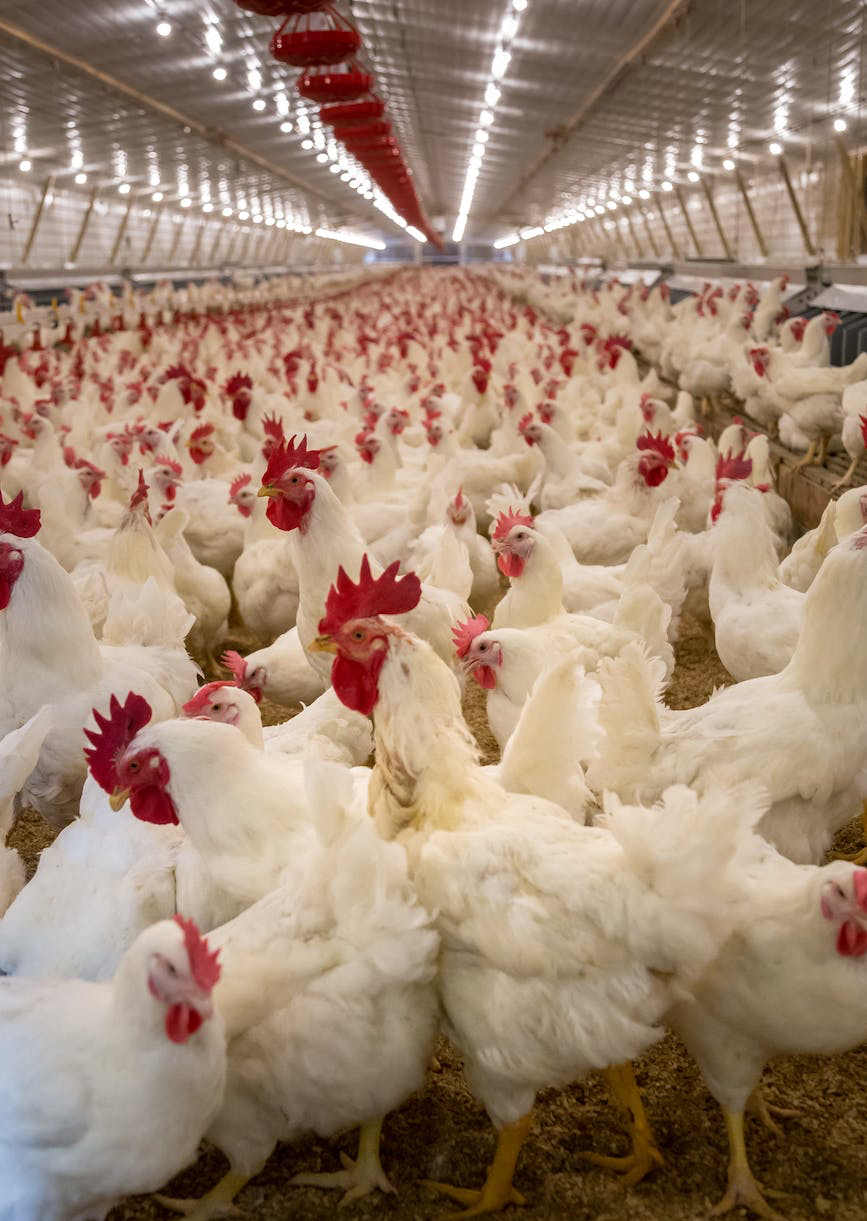
Adding a light to the chicken coop is a question every chicken keeper has to answer for themselves. And it depends on what your purpose is for having chickens. Are they your pets, like a dog and a cat? Or are they a source of income? If they fall into the latter, then you most likely want to add lights. We’ve seen that having a light in the coop doesn’t harm chickens, especially if the intensity and duration is just right.
Do you have a light for your chickens? Other than getting eggs, have you noticed any other changes with the lights? Thanks for stopping by! Please share, and if you don’t already follow me, you can do so now.
 Chicken Girl