

Most cat parents know cats are obligate carnivores. That means cats depend on meat for survival. Although, you’ve probably witnessed your kitty munching on some grass at least once or twice. In fact, some places actually sell cat grass growing kits. But what does cat grass do for you cat? And what is it exactly?
First, What is Cat Grass

Cat grass is absolutely distinct from the grass on your lawn. Rather, it’s the sprouts from cereal grass seeds, commonly rye, barley, oat, or wheat. What’s more, it can be grown indoors or out. Though, wait to plant till after the threat of frost has passed.
Below is a list of vitamins and minerals in cat grass beneficial to your cat, including
- folate
Vitamin B9, or folate, aids digestion and cell growth.
Studies suggest chlorophyll may be an antioxidant. And it’s touted to be a deodorizer and immune system booster.
- vitamin A
Beta carotene is essential for good eyesight and a healthy coat.
- vitamin C
This awesome vitamin is an antioxidant, anti-inflammatory, and aids the immune system.
- vitamin E
Labeled essential for optimal health, vitamin E can be used to treat mites, eczema, and allergic dermatitis. But it’s also an antioxidant, necessary for healthy circulation and immune systems.
- vitamin K
This vitamin is necessary to prevent bleeding issues. In addition, it’s essential for liver function.
- vitamin B5
Pantothenic acid, or vitamin B5, metabolizes carbohydrates, fats, and some amino acids.
Lecithin is a group of fats that attract both water and fats. But usually water and oil don’t mix. That’s where lecithin comes in. Because lecithin is a fat emulsifier, it blends the fat binding hairballs, which allows your kitty to pass them.
- magnesium and calcium
Both are important for the development of bones and teeth.
- and iron
Iron is responsible for the production of hemoglobin, a protein that allows red blood cells to carry oxygen.
However, cats don’t need to eat cat grass, if they’re being fed a well balanced diet. Despite that, it doesn’t mean cat grass isn’t good for them in other ways. Especially if you notice your cat trying to nibble regular grass or plants, it’s better to provide them cat grass and be safe.
So, What Does Cat Grass do for Your Cat
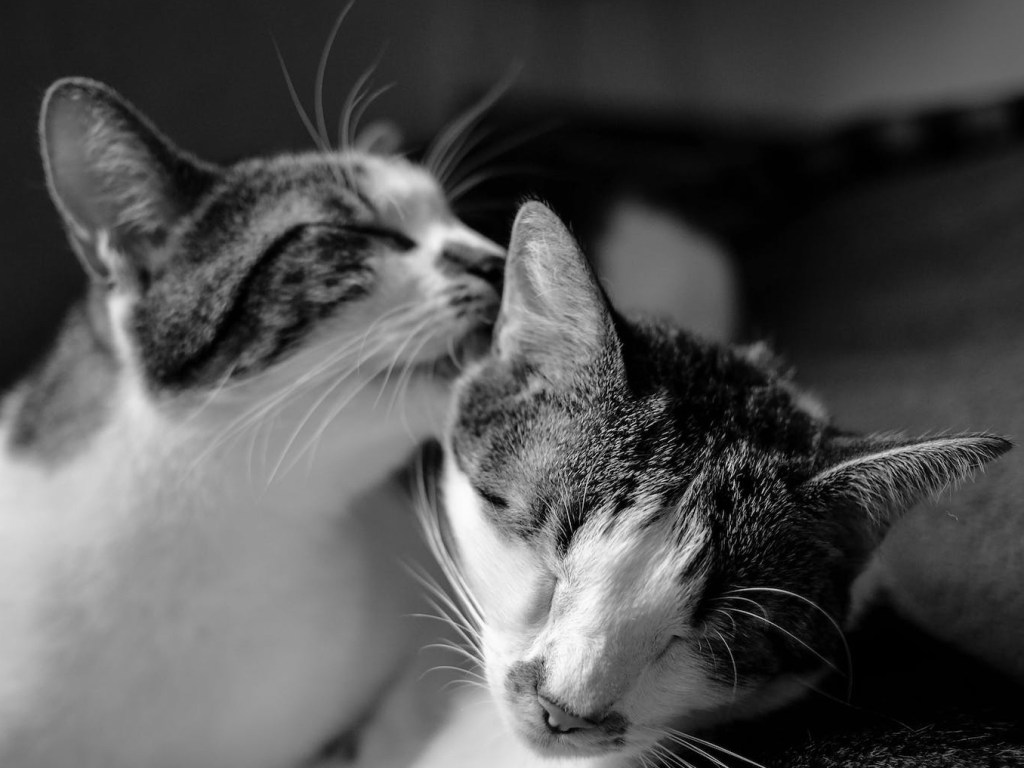
Anyone who’s ever had a cat has witnessed their curiosity. Plus, most animals examine things with their mouths, cats included. But why do cats like cat grass? And what is so appealing about it? Continue reading for the following theories.
- It helps indigestion.
The most popular belief is that cats consume cat grass, because it helps upset tummies. Due to regurgitation that follows at times, it’s thought cats purposely eat grass to help them throw up. I’ve witnessed my own cat eat cat grass to try (to no avail) to vomit after I gave her medicine. Personally, I think she’s a medicine cat, and knew I drugged her. Thus, she wanted to get back to normal.
- Cat grass is a laxative.
At times your cat may eat food that gets stuck in their GI tract. So, if they eat cat grass, they might be trying to loosen things up.
- Great for hairballs.
Cats are meticulous in their grooming. In fact, bathing herself is Itty’s most favorite pastime. Additionally, some cats get terrible hairballs, particularly long-haired cats. Similar with the first two items, cat grass can ease the issue of hairballs.
- Cat grass can prevent or expel internal parasites.
Scientists believe younger cats eat cat grass, because their immune systems aren’t as good at keeping parasites away. And researchers have speculated that house cats eat grass based on an instinct to expel intestinal parasites. Not that these cats actually have any parasites; it’s just in their genetic makeup to munch on grass to prevent the parasites.
- Lastly, it provides mental stimulation.
This is one of the most important reasons to have cat grass available for your cat. Since foraging is instinctual, it’s a great way to develop your cat’s cognition. In addition, indoor cats tend to get bored. So, it provides that necessary means for their inquisitiveness.
Also, not every cat that partakes of cat grass is sick. Most of the time when Itty eats her greens, she doesn’t throw up afterward. She’s simply enjoying herself in her own little world.
How Safe is Cat Grass

Whether your cat shares a home with a dog or a bunny, cat grass is safe for all of them as well as chickens. However, wheatgrass seems to be preferred for pets other than cats. Additionally, you have control over it since you plant and take care of it. And so long as you keep it chemical-free, it will remain safe for your pets.
That said, the first time you offer your feline friend some cat grass, don’t overdo it. Even though it isn’t toxic, you might have a big mess to clean up. Moreover, keep the cat grass in a completely separate area from your other plants, given that many are toxic to cats. And cats don’t know the difference between what they can or can’t eat, especially when it comes to greens.
Signs to Watch for Regarding Cat Grass Dining
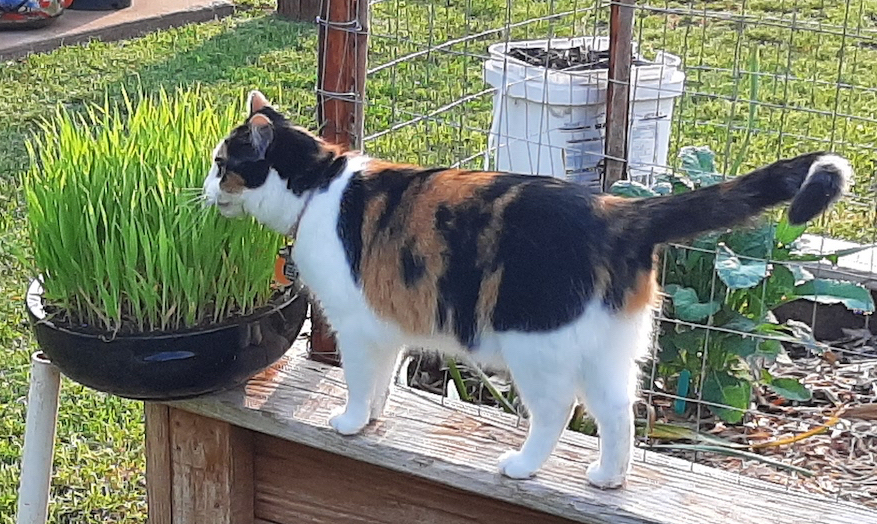
Whereas eating cat grass is safe, cats instinctively will puke to relieve digestion issues. But, if your cat eats cat grass and doesn’t vomit, that’s not a problem. However, if your cat vomits every time they eat cat grass, call your veterinarian. According to Chewy, it could be a GI issue. Or if they’re puking blood, it might signal they’ve ingested a toxin. Regardless, your vet needs to be contacted immediately.
How to Plant Cat Grass

When our daughter, Hannah, worked at a plant nursery, she brought us home some cat grass seeds. Though, it wasn’t till this Spring that my husband planted them.
First, he filled a pot with Miracle-gro potting soil. Next, he spread the seed. Then he covered it with an inch more of Miracle-gro potting soil. And after he watered it, he placed it in the greenhouse, in direct sunlight. Also, he watered it a few times a week. But he didn’t soak it. And it started sprouting within a couple of days.
Cat grass is ready for your cat to munch on 10-14 days after sprouting, or once it’s ~ 4 inches tall or higher. Furthermore, it will last about 3 weeks. Let your cat eat directly from the pot. And water with a spray bottle. When the grass begins to wilt, most sites recommend planting new seeds. And that’s usually around 3 weeks. Though, some places advise that with regular care and trimming, you can get more life out of your cat grass.
To Summarize

Cat grass is from cereal grass seeds, and can be grown both inside and outside. Even though house cats don’t need it, cat grass still contains vitamins and minerals essential to their diet. Theories about why cats eat grass abound: it’s an emetic, a laxative, and it provides mental stimulation for bored cats. Moreover, it’s safe for all your pets as long as you keep it chemical-free. And don’t forget to keep it away from other plants, so your cat won’t get confused. Further, if your cat eats it and pukes more than once a week, call your vet to make sure your cat doesn’t have a blockage or underlying health issue.
Does your cat eat cat grass? And if you have other pets, have they tried any?
As always, thank you for reading my posts. And I appreciate your comments. Please share, and if you don’t already follow me, please do so now.
 Chicken Girl