

As the eggs decrease and chickens molt, you might be concerned about your birds and the weather. But did you know that chickens are better equipped for the cold? It’s summer heat they have more difficulty with. Regardless, below are tips on how to care for chickens in cold weather.
I’ve known that chickens are very hardy birds since having them for over 8 years. And I’m also aware that certain birds are better suited for cold weather, while others are suited for hot weather. What I didn’t know was that there’s really no minimum temperature for keeping chickens. That’s because chickens can acclimate to the weather conditions where they live.
How to Care for Chickens in Cold Weather

Water Responsibly
Since you want the coop to stay as dry as possible, don’t leave food or water in the coop. Plus, if it’s freezing outside, their water will freeze too. And then your birds will be cold. Not only is water essential to a chicken’s diet, it also helps with digestion. In fact, studies found that chickens down 1.5 to 2 times as much water as feed. In addition, if their water is frozen and they can’t drink, they will get dehydrated.
I would love to have electricity to my coop. It would help with many things, especially frozen water. Though, that’s just not feasible at this time. Here are options regarding managing your chickens’ wintry water. Some tips assume you have electricity in your coop, whereas others don’t.
Control Moisture in the Coop
Again, don’t leave water in the coop, especially overnight, because your birds will be sleeping anyway. Just keep the water in the run. And depending on the litter method you use, check your run and coop floor if your chickens are pasture raised. For instance, as it gets colder and there’s any sort of precipitation, your birds might track in mud or leaves. That will cause moisture in the coop.
Moreover, use dropping boards, which are shelves that collect chicken droppings. Then scrape them each morning and remove the poop from the coop. Since chicken waste contains ~75% moisture, the less poop in the coop, the less moisture. Further, ammonia is generated by bird droppings. Therefore, if allowed to get out of hand, it can create a health issue for you and your chickens.
Also, if you have windows in your coop and notice condensation on them in the mornings, you have a moisture and humidity problem. Even if you don’t have windows, inspect the walls and ceiling carefully for condensation. If you see any, it could be due to neglected bird waste, waterers in the coop, absolutely no ventilation, or unsatisfactory litter type. Just go through each of those items and eliminate their possibility.
Use Sand for Litter
Many chicken keepers have been using sand as a litter material as opposed to straw, hay, or pine shavings. Think of a giant cat litter box but for chickens. Without getting into too much detail, it is said to have better absorbency. So, the idea is it keeps the coop drier, which is vital to keeping your birds warm during winter.
After reading all of the literature out there on it, we definitely plan on changing over to sand.
Eliminate Drafts
First, examine the coop for any needed repairs, like holes or broken seals in doors and windows. Block any drafts in the coop, especially where your birds roost. Actually stand in there, if you can, and try to see if you can feel any drafts yourself. However, still make sure you have ventilation at the top of the coop for moisture and ammonia to escape. Don’t seal up the coop completely. Your birds will still make moisture: through respiration and their waste. Therefore, if it’s sealed completely, the moisture will just be trapped in the coop. And it will make the litter wet and condensation will build up, making your birds cold, and then sick.
Next, depending upon the snowfall amounts in your area, add a roof to your run and plastic sheeting to the sides. Or, if you can’t do a roof, cover your entire run with plastic sheeting to create wind breaks. Although, if you get a lot of high winds on your property, you might need something stronger, like a tarp.
Relieve Boredom
If your birds are going to be cooped up due to inclement weather, provide enrichment activities. Add roosts in the run. And fill a kiddie pool with potting soil to let your chooks dust bathe. Plus, if your run has a roof, hang a cabbage from the ceiling for them to eat. It’s a healthy treat while stimulating their foraging instincts.
Feed
Continue providing the appropriate commercial feed. And offer free-choice grit, since foraging may be hindered. Moreover, digestion of scratch grains produces heat. Usually I refer to scratch as crack cocaine, thus, I don’t recommend it. Although, if it keeps the chooks warm, let them have some in the evening during winter. But moderate amounts.
To Heat or not to Heat
Recall that I said, “chickens can acclimate to the weather conditions where they live.” If you add a heater, your birds will never acclimate to the cold. Besides, there are some issues with adding a heat source to a chicken coop.
First of all, heaters are a fire hazard. It’s just not worth the risk of setting fire to my coop or house, and losing everything. Secondly, having a power outage will kill chickens. If they haven’t acclimated to the weather, chickens can die from quick, severe drops in temperature.
There are very few instances where a chicken might need supplemental heat. But by and large, most do not. You’ll find those few cases further down. Regardless, monitor every bird for signs of weakness, inactivity, or frostbite. Some sites refer to cold stress as birds huddling together or standing with one foot up. However, some of my birds do that on days when it’s 40°F out. One of my roosters was crowing on one foot like a diva the other day.
Eggs
Collecting eggs frequently not only prevents egg-eating, but it also prevents the eggs from freezing. However, to further protect your eggs, line your nesting boxes with organic material in the event your hens peck test the bedding. And replace weekly as it becomes used, old and/or lacking. I don’t recommend blankets or similar, due to moisture retention. In addition, always inspect the eggs you collect. And throw out any with cracked shells to prevent food-related illness.
Snow or Ice
Chickens don’t like inclement weather. Most of my chickens, and all of my ducks, will go out when the snow starts melting. They’ll walk around and eat the snow. Though, if yours aren’t like mine, you may have to shovel a path for your birds. But don’t force them to go out in the snow. This is where a roof or tarp for your run comes in handy.
Frostbite
Be aware that when winter weather is bad and temperatures are below freezing, even cold hardy birds are at-risk for frostbite. But birds with single combs are at even greater risk. So a preventative measure is to spread Vaseline on their combs and wattles.
Additionally, if there’s condensation in your coop or you smell ammonia, your birds are in danger of frostbite. Low temperatures plus high humidity spells trouble.
Exceptions to these Cold Weather Tips
Smaller breeds, like Silkies, those that are molting or have large combs and wattles may need more care to stay warm, maintain body weight and remain healthy during extreme weather. Generally speaking any bird can get into trouble if left in the cold long enough. However, if your birds are healthy, you’re following the above tips and don’t leave your birds out in inclement weather, they should be fine.
The only precautions would be if you have smaller breeds, birds that have large, single combs or sick birds already. Then assuming you have a barn, put your at-risk birds in there, so they’ll be warmer. But if you have an ill bird, you want to quarantine them anyway. Therefore, maybe bring them inside the garage so they’ll be warm. Though, once they’re well, don’t suddenly bring them outside to severe temperatures to die. You have to get them acclimated to the weather again slowly. So, you might bring them back out when it’s sunny out.
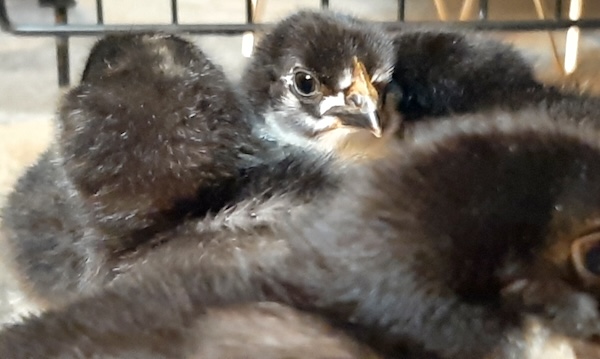
Chicks and caring for chicks are completely different. They shouldn’t be outside, since they’re not feathered out yet. And without a heat source, chicks will die. See here for caring for chicks.
Have your chickens ever had issues during winter? What happened, and what did you do? Thanks for reading this. Please like, share, and if you don’t follow me already, you can do so now.
 Chicken Girl