Providing helpful information regarding our feathered, feline, and canine friends while also sharing fun stories. And locally we provide pet sitting services.
I use affiliate links to support my content at no extra cost to you.
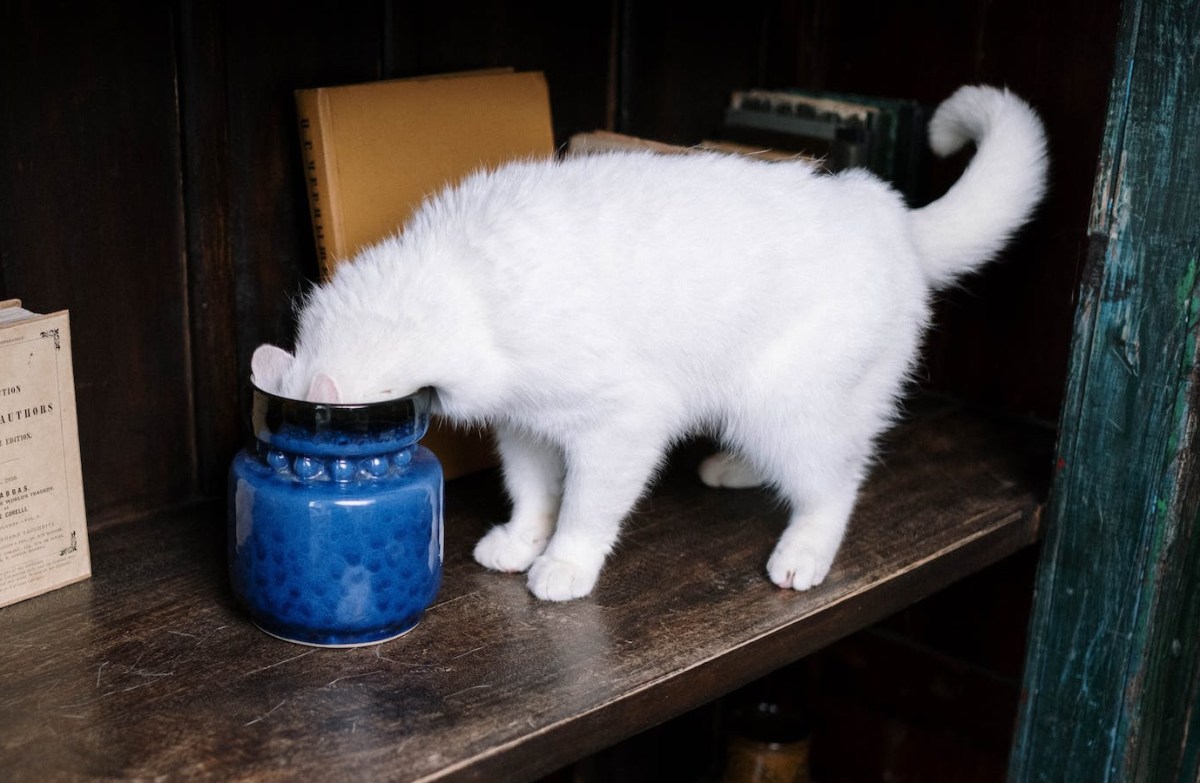
Most animals are curious to one degree or another. Although some animals, like dolphins and apes, are exceptionally curious. Of course you’ve likely witnessed your cat or dog being snoopy at times as well. Besides cats and curiosity go hand in hand. But why are they so nosy?
Well, for one, their senses of smell, hearing, and touch are superior to our own. Not only that, cats also see better than we do in the dark. So, that’s four out of five senses that outperform ours. All of this encourages cats to explore. They smell and scent (through their mouths) the floor, grass, chairs, and everything. And they prefer heights to ground level. Therefore, just expect them to climb. Plus, they can fit into tight spaces. However, other than their better senses, why are cats so curious?
Besides their senses, a major reason your cat is so nosy is due to instinct, inherited from their wild ancestors. In fact, wild cats today are just as curious. And curiosity helps wild cats for survival, not only to hunt, but also to watch out for predators.
Consequently, when your cat sits on the counter or a chest of drawers, you witness their inherited hunting reflexes. Cats prefer heights for protection and hunting.
Intelligence
In a previous post, I mentioned that a cat’s brain is 90% genetically similar to our brains. And according to the Institute of Electrical and Electronic Engineers, curiosity and intelligence are closely connected among higher animal species. Further, in order for a cat to be able to open a door, they have to have intelligence, which demonstrates problem solving and curiosity.
Age
Young cats, aka kittens, usually have more curiosity and energy than adult cats, since everything is brand new. Cats don’t necessarily lose their curiosity. It’s just that they could grow to be more wary as they age.
Attention
Just like with children, cats can get into things to get your attention. It may not start that way intentionally. However, it could develop into a fun activity for your cat.
Can Curiosity Kill a Cat
The old proverb originally said, “care or worry will kill a cat.” Although, both nature and science teach us that curiosity is good for humans. Therefore, it’s logical that it’s also beneficial for all animals, including cats. Be that as it may, your cat’s curiosity could still get them into trouble if steps haven’t been taken.
For instance, household cleaners, bleach, and disinfectants are obvious dangers your cat’s curiosity could get them into. However, the trash could contain small bones that are tempting to a small predator. And they can fracture and perforate the digestive tract or get caught in your cat’s stomach. Don’t forget chocolate is toxic to cats as are many plants. Medications, prescription or OTC, creams, lotions, sunscreen, and etc are all bad for your cat. Whatever chemicals you keep in your garage are harmful as well. Moreover, if you let your cat go outside, there are feral cats, dogs, and other predators to think of.
To keep your fur baby safe, make sure your cat can’t get into any cabinets that contain poisonous chemicals or medications. And keep a lid on the trash or empty it frequently. Further, if you let your cat out, don’t let them out unsupervised, in the event they’re like my cat. She’s kinda slow when it comes to climbing due to her weight and unused muscles. She can climb, just not as fast as the other two resident cats.
Itty climbed a telephone pole.
Cats and Curiosity
Since this past May, Itty has been getting me up at different hours of the night by scritching and scratching my side of the bed with her claws. (It’s no longer for food.) Because I’m no longer working outside of the house, I entertain her wishes. At first it was just once a night. Then it moved up to twice a night. Now I’m up at all hours. She has me follow her around, checking out the perimeter of the house, like a night guardsman or something. I guess she’s making sure everything is ok. But sometimes I think she’s hunting.
And then she’ll have me take her outside when it’s dark. That’s definitely to hunt. Her curiosity is certainly hitting full peak. She’s started going over to the chicken side, so I have to chaperone her. I don’t want her getting loose to the front, and then getting killed by a dog. She goes through everything, and I mean everything of those chickens’. If they had a lingerie drawer, she would be going through that. Highly nose cat.
Do you have a curious cat? How do you allow them to safely engage their curiosity? Thanks for reading my blog! Please like and share, and if you don’t do so already, you can follow me now.
Photo by hazan aku00f6z u0131u015fu0131k on Pexels.com
Was there ever a time when you were holding your cat and suddenly noticed fur everywhere? That’s happened to me with Itty a few times. Therefore, at those specific times, I wanted to know, why is my cat suddenly shedding so much? I had a guess to Itty’s shedding. But there can be many causes.
Shedding is a normal process for cats, just as molting is for chickens and snakes. Plus, your cat will always leave behind errant hairs. However, at times, it can seem to be too much fur. Or, as I pointed out before, it seems like it comes out of nowhere. So, what’s considered a normal amount of shedding? In addition, what’s causing all the shedding? And should you be worried? We’ll answer those questions. Then go over tips to help you with your shedding cat.
What’s Considered a Normal Amount of Shedding
Cake is a free spirit.
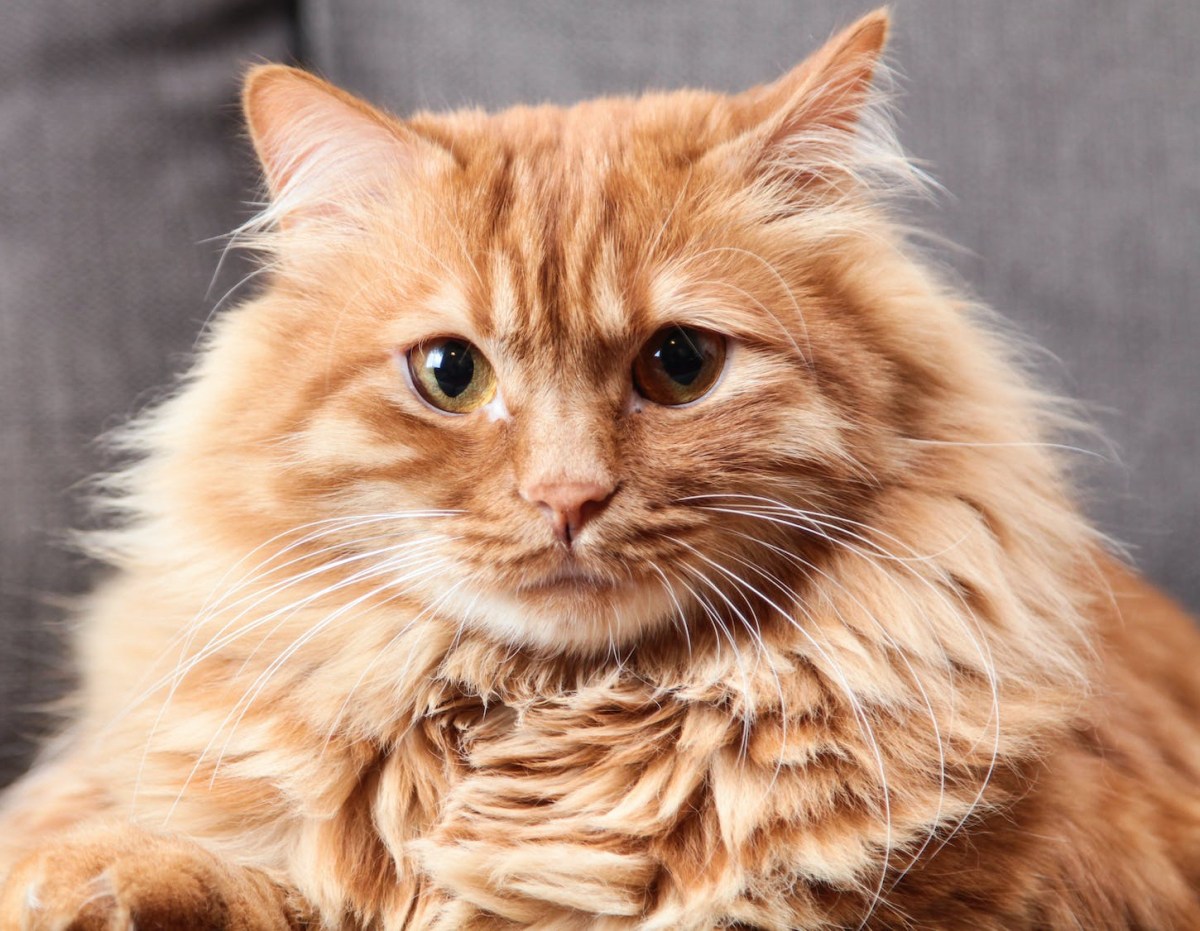
We didn’t have cats till moving to Oklahoma, but we did have a dog. So I already knew about dogs shedding. However, when our last dog passed away, the fur was almost non-existent in the house. That is until we got a bunny. Then, not long after, we got Sophie, our Aussie. That’s not to say Itty won’t shed; she just doesn’t as much as Cake, who has a fluffy coat. And Pickles might not have as much fur, though she’s a kitten. Thus, she’s transitioning to her adult coat. Consequently, she seems to shed as much as Sophie.
Cats can shed twice annually. In the spring they shed their winter coat. And in the fall, they shed to replace their fur in order to get their winter coat. Although, if you have an indoor cat, like me, you might not notice the shedding as much all at once. On the other hand, if you have long-haired cats or cats who have a lot of fluff, they tend to shed more than short-haired breeds.
Why do Cats Shed
Pickles when she was a little younger.
Similar to us shedding hair, cats primarily shed their fur to make room for new fur. It’s based on a cycle and daylight exposure. And many things can influence this cycle, including whether your cat is inside or out. Though, usually indoor cats will shed some throughout the year. Other reasons cats will shed their fur include
allergies
If your cat is suffering with allergies, excessive or abnormal shedding is one of the signs.
parasites
Fleas, ticks, and mites cause itchiness and inflammation, which then spurs your cat to scratch and scratch. And a lot of scratching will lead to shedding.
ringworm
Rather than an actual worm, this is a fungal infection that affects the hair and hair follicles. In addition, one of the first symptoms can be a bald spot on your cat’s body.
pregnancy
Both pregnancy and lactation can deprive cats of calcium and minerals necessary for their coat. And that can lead to shedding.
metabolic disorders
Damage to the thyroid or hypothyroidism can bring about a decline in hair follicles. Plus, kidney failure leads to hair loss, while diabetes causes dandruff, flaking, and unkempt fur.
poor diet
Lack of sufficient protein or inadequate food can cause shedding. If you’re a first time cat owner, ask your veterinarian what brand they recommend you feed your fur baby.
age
When a kitten is reaching adolescence, ~ 6 to 12 months old, they start to shed their baby fur. Moreover, coat quality changes as animals and people age. Fur and hair get thinner. Thus, for cats, shedding is likely the culprit.
and lastly stress
When cats experience a sudden fear response, like going to the veterinarian, quick shedding is a normal biological response. On the other hand, longterm or chronic stress can cause behavioral issues, such as over-grooming. And that leads to hair loss, such as bald spots.
As you can see, some of these causes of shedding are quite normal and nothing to be concerned about. However, some of them definitely merit a visit to the vet. Next, we’ll look at ways you can help your kitty when they’re shedding or to prevent it before it starts.
If the shedding is due to seasonal change (spring or fall) or their age, then try the following:
Get the appropriate tools
Short-haired cats need a fine-toothed flea comb, soft brush, grooming mittens, and a shedding tool. Long and medium-haired cats need a wide-toothed flea comb, longer brushes, and a shedding tool.
Use those tools regularly
Combing and brushing your cat several times per week and daily during seasonal changes will help in the long run. In fact, this is the #1 piece of advice anywhere. Also, this is best to start when cats are young. But, if you didn’t, it’s ok. Just offer positive reinforcement, and go slow. Also, definitely go slow when using the shedding tool. And don’t over-use!
Get your kitty professionally groomed
Some brave souls opt to bathe their own cats when shedding is at its worst. After a warm bath with cat-safe shampoo, comb and brush your fur baby till they’re dry. You’ll be surprised by all the fur!
Boost hydration
It’s not that your cat is to the point of dehydration. But cats are known to be picky when it comes to water and where it comes from. Thus, if you don’t change their water daily, have an automatic water dispenser, or a fountain, that could be contributing to their shedding.
Improve mealtime
Adding wet food containing seafood will do so much for your cat’s coat. I personally can vouch for that. When Itty came to us she had a dull, dry coat. However, it wasn’t until I started adding wet food to her diet that her coat got bright, shiny, and silky. Now that she’s an adult, she also spends the majority of her waking time grooming herself. And, as I mentioned, she rarely ever sheds, unless she’s stressed.
However, if shedding isn’t due to seasonal change or age, or if your cat is pregnant or has any bald spots, call your veterinarian. Your vet is better equipped to give you advice on what’s going on with your kitty. Anything from fleas and stress to age-related disorders or allergies can also cause shedding.
To Summarize
This is Itty.
Shedding is normal for cats, just as it is for dogs. However, parasites, ringworm, allergies, old-age, stress, and disease can also affect cats and ultimately their coats. Any time your cat is shedding excessively and you’re unsure of the reason, or if they have bald spots, it’s best to let their vet check them out.
Other than seasonal change, do you know why your cat sheds? How do you handle it? As I said, Itty is our only cat that doesn’t shed a lot, unless she’s stressed. And as far as stress, she’s been doing much better. Thank you for stopping by. Please share, and if you don’t already do so, you can follow me now.
When people consider animal intelligence, they probably imagine a dog, a chimpanzee, or a dolphin, but not usually cats. Cats are typically portrayed as uninterested, lazy, and snobby creatures. In medieval times they were even depicted as being associated with the devil. However they weren’t necessarily considered pea-brained. Though, who really knows, right? On the other hand, for fellow cat parents, you know something different. Your cat isn’t a dog, a chimp, or a dolphin, and certainly not demonic. Even if your cat is cunning, they’re still smart in your book. Join me as I attempt to answer the question, “How smart are domestic cats?”
Let’s look at the question for a minute. Who or what are we weighing cats against? Dogs? Humans? Stray cats or wild cats? It would be great to say definitively that domestic cats are smarter than dogs. Regardless, it’s just not that simple. Cats haven’t been studied as extensively as certain other species. At first, scientists spent all their time researching mice, rats, and pigeons. But then in the 1990s, dog cognition started to be studied. Some scientists attempted to study cats at the same time, though without much success. So it wasn’t until the past decade that any significant headway into feline research came about.
Before we can answer how smart cats are, it’s important to understand how intelligence is measured. Equally as relevant is how one defines cat intelligence. You’ll likely find different definitions. But basically they all amount to the same thing: Cat intelligence is a series of events that guide behavior, such as sensing, perceiving, recalling, and reasoning. Moreover, human intelligence can be measured by IQ tests, such as the Wechsler Adult Intelligence Scale, whereas most animal cognition tests involve
gauging an animal’s problem solving potential
An animal’s problem solving ability would be whether they can work with groups, use tools, etc.
measuring the size of an animal’s brain and complexity
Encephalization quotient (EQ) predicts cognition via comparing one animal’s brain to an animal of similar size.
evaluating the animal’s sense of self awareness
This type of test is called a mirror test. For instance, a spot or mark, like a red dot, is placed on the animal’s forehead. If the animal recognizes its own reflection, by touching its face, then the animal passes the test.
studying an animal’s self control and capability to act on new info
The self control or pointing test instructs an animal to anticipate food in a specific place. Then the location changes and the human points to a new spot. Domestic animals, like dogs, excel at these tests. And human babies pass these tests around age 1 year.
When writing this post, it became obvious that analyzing animal intelligence is ongoing and not simple to answer. As a result of being measured by human standards, those very studies are questioned by some people.
Comparing Cats to Humans
Digital Art, Courtesy of Sarah Smith
Believe it or not, cats have similarities to humans. If you’re a cat parent, you already sense this. And I’m not talking about character traits here. But seriously, humans and cats share 90% of the same DNA. With that in mind, the human brain contains ~86 billion neurons while a cat’s brain has ~ 1.2 billion. Also, the surface area of a cat’s cerebral cortex is 83 cm2️⃣ compared to 2400 cm2️⃣ in humans. And their cerebral cortices contain ~250 million nerve cells in contrast to our 16 billion. Since cats are smaller, it makes sense, right, because their brains are smaller than ours? However, intelligence isn’t all about brain size. In reality, it’s about number, size, and complexity of nerve cells.
Not only are cats 90% genetically similar to us, their smaller brains are also nearly90% identical to our own. A cat’s brain has a cerebrum, cerebellum, brainstem, 2 cerebral cortices, and surface folding, just like ours. Moreover, like a human brain, a cat’s is divided into areas. And each has a unique job to carry out. Plus, like ours, a cat’s brain is created to have good memory, both short-term and long-term. Though, a cat’s brain takes up only ~ 0.9% of their body mass in comparison to ~ 2% in the average human.
Traits of a Socially Smart Domestic Cat
Just a month ago before Itty and Pickles made friends.
Recently social intelligence has been the most common subgroup to be studied. Additionally, there are some basic features socially smart cats possess, including
Simply put, associative learning for animals is the process by which an animal connects (or associates) stimuli with certain behavior. For example, my cat, Itty, knows that if she scratches my mattress (the stimulus) every night, I’ll wake up to feed her (the behavior). She memorized her particular action produced my reaction of rewards. (And now I’m stuck waking up in the middle of the night each night.)
social referencing
Social referencing tests whether a cat will pick up on their owner’s emotional cues regarding certain things. Not long ago I wrote a post on Itty being stressed. However, now I believe she was reflecting what I was feeling about my new work schedule. Moreover, I think I contributed to her anxiety with Pickles, our new cat. And she doesn’t like being around certain people based on how I think she feels around them.
secure attachment style
Cats, like dogs and humans, have attachment styles. While humans have 4 attachment styles, cats only have 2, and dogs 3. Additionally, a cat will have either a secure or insecure attachment style. And a secure attachment style is associated with emotional intelligence. Plus, research has found that cats are more securely attached to their people than not.
staying responsive to human cues
These type of tests can involve pointing, following an owner’s gaze, and responding to their owner’s voice as well.
There are many examples of people who’ve trained their cats. Every cat has their own personality. While one may be a piece of cake to train, another might not be as easy.
Should We Compare Cat IQ
This was a few years ago, and they both wanted to be in the room with us.
When studying for this post, several websites claimed that many animal behaviorists thought cats had the same intelligence as a 2 year old human child. However, every single website failed to mention which study or animal behaviorist did the research substantiating those claims. On the contrary, the few verifiable sites and scientists who’ve actually studied cats never mentioned human ages. And very few compared cat intelligence to any other animal. In addition, it’s important not to compare a cat’s intelligence to that of really any other species, given that a cat is still a cat, rather than a dog, a human, or any other animal. Cats excel at hunting while dogs work great with groups. We all have our different strengths, what we were essentially built for. Thus, when evaluating a domestic cat’s intelligence, it should only be analyzed against another domestic cat.
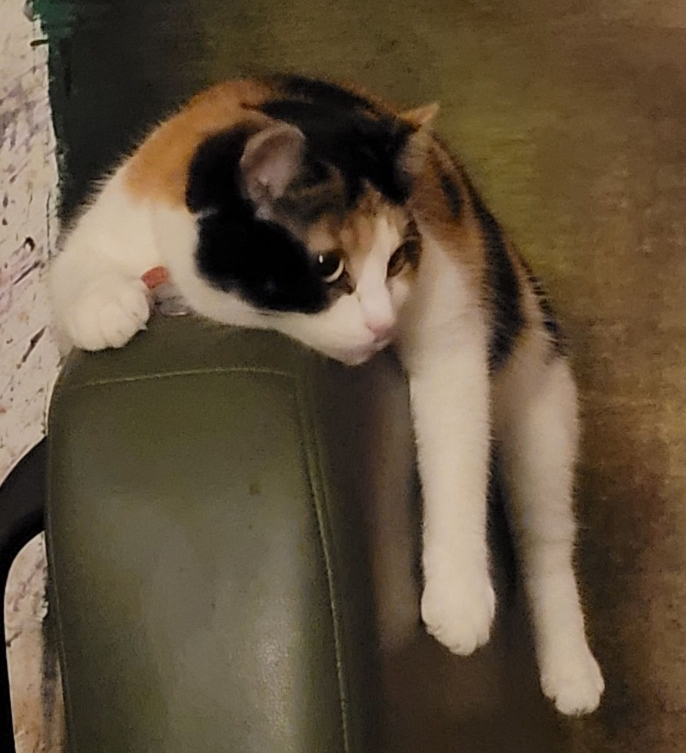
At our house we have 3 different domestic cats: a 4 month old tuxedo kitten, an adult calico cat, and an adult Russian Blue cat. And they all have distinct levels of brainpower and energy. However, the cats with more energy appear smarter, at first glance, than the one with less energy. If we go by some of the tests found on the internet, the less energetic cat would hardly pass any of them. Though I’m hesitant to say the more relaxed cat is deficient in the brains category. She just might not care enough about that particular thing at any given moment. Or perhaps she’s not sufficiently motivated to give a crap.
Then take Sophie, our Aussie, who not only is known for her mega energy needs, but is also highly intelligent. Not every family or person out there is like us, I’m aware. Most people are in the great divide: dog people or cat people. Instead we have the benefit of observing several species of animals on our property. And I can tell you that both Sophie and Itty have my morning routine down to a T. While one of them is up my butt, barking to hurry me, the other one is quietly watching and anxiously waiting to see when I’ll be ready to take them outside. Both of them know just before I take them out, I put my shoes on, make my tea, and then I put my sunglasses on. Even though Itty and Sophie are completely different creatures, they share the same expectant look in their eyes.
How Smart are Domestic Cats: Through the Eyes of History
Photo by Miguel u00c1. Padriu00f1u00e1n on Pexels.com
If you Google how smart are domestic cats, your browser will inevitably display a contrast between dog and cat intelligence. Plus, ways dogs have joined humans in the workforce throughout history are usually listed as well. Conversely, the same cannot be said for felines. Alternatively, you just need to go about your search in a different manner. Despite people in the Middle Ages having both bad and very wrong associations about cats, the rest of history casts a favorable light on these cute furballs. Besides being excellent mousers, other jobs cats have held include
pest control for snakes, rats, mice, etc, and companions in Egypt thousands of years ago. And when cats died, their owners mummified their cats and dressed them in jewels to signify the owners’ status.
mascots and companions to Roman soldiers in 5th century BCE.
custodians of precious books and manuscripts in Buddhist temples starting around the mid 6th century CE. Then cats began to symbolize good luck and fortune dating back to the 17th century with the creation of Maneki-neko, “beckoning cat”.
war heroes, such as Crimean Tom during the Crimean War (1854). Plus, 500,000 cats were deployed during WWI (1914-1918). Also, Simon throughout the Chinese Civil War (1949).
and lastly therapists. Actually, it’s cat therapy, like pet therapy. So, whether for first responders, soldiers overseas, or patients, cats have proven to comfort those in need.
But How to Test Cat Smarts
Digital art, courtesy of Sarah Smith
If you have one or more cats, and you’re interested in assessing their brainpower, there are some simple tests you can try. However, you may have observed some giftedness in your pets before now. Some of the studies that Vitale and others have done with cats, I’ve observed with Itty. I’ve already mentioned Itty taking cues from my emotions (social referencing), memory, associative learning, pointing and following my gaze. But Itty also has distinct meows for different things she wants. And she makes sure I follow her to help her out with whatever she needs, like going outside or getting past the dog unmolested, which, to me, indicates problem solving. Although, I had no idea any of those things categorically had to do with smarts until researching cat intelligence.
I won’t include any cat intelligence tests on this post, because I feel there are too many factors involved. And the intelligence tests that I’ve seen aren’t really able to capture how intelligent one cat is. For instance, anything that has to do with toys, Itty isn’t interested in. Ever since she was spayed, her energy levels plummeted. So playtime isn’t her thing anymore. Also, she looks like she can’t imagine the toy being prey. She’ll look from the toy to the string up to the wand to my arm and hand. But, if we go outside, she’s a different cat. She’ll chase birds and bugs to her heart’s content. However I will post a link to a test. Don’t worry if your cat doesn’t do so well, especially if you’ve observed your cat being super brainy. Just remember, cats are really quite smart. It’s just tough to test them.
How Smart are Domestic Cats
Cake playing a board game.
The intelligence of domestic cats has been compared to dogs and human children countless times. But since intelligence for each species is unique, it isn’t something that really should be compared cross-species. Every species excels at something peculiar to them. Also, cats haven’t been studied as much, because they haven’t been bred for as long as dogs. That means they’ve retained their wild nature. Moreover, there are tests you can use to measure your pet’s intelligence. Though, observing their behavior is much easier, if you have the time. But no matter how their intelligence rates, remember to love your pets.
Do you have a super smart cat? How do you know they’re brainy? I’d love to hear your stories. Thank you for stopping by! Please like, share, and if you don’t already follow, please do so now.
Most cat parents know cats are obligate carnivores. That means cats depend on meat for survival. Although, you’ve probably witnessed your kitty munching on some grass at least once or twice. In fact, some places actually sell cat grass growing kits. But what does cat grass do for you cat? And what is it exactly?
First, What is Cat Grass
Cat grass is absolutely distinct from the grass on your lawn. Rather, it’s the sprouts from cereal grass seeds, commonly rye, barley, oat, or wheat. What’s more, it can be grown indoors or out. Though, wait to plant till after the threat of frost has passed.
Below is a list of vitamins and minerals in cat grass beneficial to your cat, including
folate
Vitamin B9, or folate, aids digestion and cell growth.
Studies suggest chlorophyll may be an antioxidant. And it’s touted to be a deodorizer and immune system booster.
vitamin A
Beta carotene is essential for good eyesight and a healthy coat.
vitamin C
This awesome vitamin is an antioxidant, anti-inflammatory, and aids the immune system.
vitamin E
Labeled essentialfor optimal health, vitamin E can be used to treat mites, eczema, and allergic dermatitis. But it’s also an antioxidant, necessary for healthy circulation and immune systems.
vitamin K
This vitamin is necessary to prevent bleeding issues. In addition, it’s essential for liver function.
vitamin B5
Pantothenic acid, or vitamin B5, metabolizes carbohydrates, fats, and some amino acids.
Lecithin is a group of fats that attract both water and fats. But usually water and oil don’t mix. That’s where lecithin comes in. Because lecithin is a fat emulsifier, it blends the fat binding hairballs, which allows your kitty to pass them.
Iron is responsible for the production of hemoglobin, a protein that allows red blood cells to carry oxygen.
However, cats don’t need to eat cat grass, if they’re being fed a well balanced diet. Despite that, it doesn’t mean cat grass isn’t good for them in other ways. Especially if you notice your cat trying to nibble regular grass or plants, it’s better to provide them cat grass and be safe.
Anyone who’s ever had a cat has witnessed their curiosity. Plus, most animals examine things with their mouths, cats included. But why do cats like cat grass? And what is so appealing about it? Continue reading for the following theories.
It helps indigestion.
The most popular belief is that cats consume cat grass, because it helps upset tummies. Due to regurgitation that follows at times, it’s thought cats purposely eat grass to help them throw up. I’ve witnessed my own cat eat cat grass to try (to no avail) to vomit after I gave her medicine. Personally, I think she’s a medicine cat, and knew I drugged her. Thus, she wanted to get back to normal.
Cat grass is a laxative.
At times your cat may eat food that gets stuck in their GI tract. So, if they eat cat grass, they might be trying to loosen things up.
Great for hairballs.
Cats are meticulous in their grooming. In fact, bathing herself is Itty’s most favorite pastime. Additionally, some cats get terrible hairballs, particularly long-haired cats. Similar with the first two items, cat grass can ease the issue of hairballs.
Cat grass can prevent or expel internal parasites.
Scientists believe younger cats eat cat grass, because their immune systems aren’t as good at keeping parasites away. And researchers have speculated that house cats eat grass based on an instinct to expel intestinal parasites. Not that these cats actually have any parasites; it’s just in their genetic makeup to munch on grass to prevent the parasites.
Lastly, it provides mental stimulation.
This is one of the most important reasons to have cat grass available for your cat. Since foraging is instinctual, it’s a great way to develop your cat’s cognition. In addition, indoor cats tend to get bored. So, it provides that necessary means for their inquisitiveness.
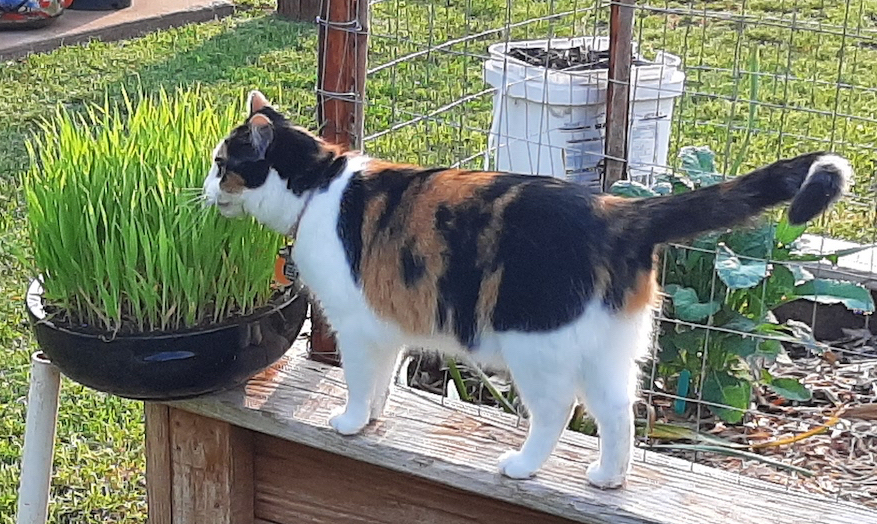
Also, not every cat that partakes of cat grass is sick. Most of the time when Itty eats her greens, she doesn’t throw up afterward. She’s simply enjoying herself in her own little world.
How Safe is Cat Grass
Whether your cat shares a home with a dog or a bunny, cat grass is safe for all of them as well as chickens. However, wheatgrass seems to be preferred for pets other than cats. Additionally, you have control over it since you plant and take care of it. And so long as you keep it chemical-free, it will remain safe for your pets.
That said, the first time you offer your feline friend some cat grass, don’t overdo it. Even though it isn’t toxic, you might have a big mess to clean up. Moreover, keep the cat grass in a completely separate area from your other plants, given that many are toxic to cats. And cats don’t know the difference between what they can or can’t eat, especially when it comes to greens.
Signs to Watch for Regarding Cat Grass Dining
Whereas eating cat grass is safe, cats instinctively will puke to relieve digestion issues. But, if your cat eats cat grass and doesn’t vomit, that’s not a problem. However, if your cat vomitsevery time they eat cat grass, call your veterinarian. According to Chewy, it could be a GI issue. Or if they’re puking blood, it might signal they’ve ingested a toxin. Regardless, your vet needs to be contacted immediately.
When our daughter, Hannah, worked at a plant nursery, she brought us home some cat grass seeds. Though, it wasn’t till this Spring that my husband planted them.
First, he filled a pot with Miracle-gro potting soil. Next, he spread the seed. Then he covered it with an inch more of Miracle-gro potting soil. And after he watered it, he placed it in the greenhouse, in direct sunlight. Also, he watered it a few times a week. But he didn’t soak it. And it started sprouting within a couple of days.
Cat grass is ready for your cat to munch on 10-14 days after sprouting, or once it’s ~ 4 inches tall or higher. Furthermore, it will last about 3 weeks. Let your cat eat directly from the pot. And water with a spray bottle. When the grass begins to wilt, most sites recommend planting new seeds. And that’s usually around 3 weeks. Though, some places advise that with regular care and trimming, you can get more life out of your cat grass.
To Summarize
Cat grass is from cereal grass seeds, and can be grown both inside and outside. Even though house cats don’t need it, cat grass still contains vitamins and minerals essential to their diet. Theories about why cats eat grass abound: it’s an emetic, a laxative, and it provides mental stimulation for bored cats. Moreover, it’s safe for all your pets as long as you keep it chemical-free. And don’t forget to keep it away from other plants, so your cat won’t get confused. Further, if your cat eats it and pukes more than once a week, call your vet to make sure your cat doesn’t have a blockage or underlying health issue.
Does your cat eat cat grass? And if you have other pets, have they tried any?
As always, thank you for reading my posts. And I appreciate your comments. Please share, and if you don’t already follow me, please do so now.
Cats have their first reproductive, or heat cycle when they reach sexual maturity. And for some breeds that can be as early as 4 months old. While for others, that could be as late as 18 months. However the average age is typically ~ 6 months old. (Itty was 10 months old when she had her first heat.) And cats display some signs that they are in season, so you will notice them acting differently. Continue reading to find out how to tell if your cat is in heat and how you can help her.
Cats are seasonally polyestrous, which means they’ll have multiple heat cycles during breeding season. Thus, in the US, February through October is considered the perfect breeding season. Therefore, your cat will likely cycle every 14-21 days from February to October if they aren’t already spayed or pregnant.
But how long does a cycle last? Each heat cycle lasts several days. Also, if the queen, or intact female cat, is not mated during the heat cycle, then she’ll go out of heat. For example, when Itty had her first heat, it lasted about a week. Or so I thought, because 3 or 4 days later it returned with a vengeance.
Signs Your Cat is in Heat
She’s extremely vocal
This is one of the signs many pet parents notice first. Whether it’s yowling, caterwauling, or meowing when there was barely a mew before, cats in heat make all kinds of new noises.
Take Itty, for example, who, 2 days before we realized she was in heat, started meowing at me in the middle of the night. Full on meowing, while most of the time she only has little mews, that don’t even qualify as meowing. I thought she wanted to play with me or needed something. Or just loved me. Then the other signs started showing up.
She’s more loving than the dog
The second clue your cat’s in heat is that she’s more loving than your dog, if you have one.
For instance, she lets you pet her, she rubs against you, and wants your attention and affection, whereas before maybe she was elusive. If your cat isn’t spayed, and she’s now extremely affectionate, it could just be she’s in heat.
Change in eating habits
She may eat less when she first starts her heat cycle than she was before. However she might return to her normal feeding schedule in time; that’s how it’s been for Itty.
A lot of floor action; ie, her tail and rear seem to always be up in the air. Plus, she rolls around on the floor more than she used to
Female cats in the first position, called lordosis, are signaling that they are ready to mate. And by rolling on the floor, she’s releasing her pheromones all over the place. She’s just hoping it will catch some cat’s fancy.
Moving her hind end and treading her hind feet when her back is petted
At this stage of her heat cycle, she’s very receptive to being mated, and might try anything to achieve her ends.
Begging to go outside (if an indoor cat)
Or she’ll try to sneak out if you’re not careful. And you might even start seeing toms, or male cats, gathering around your home in search of your cat.
Some queens will either urinate more often or spray urine on objects. Since cat urine contains both pheromones and hormones, this signals to other cats that they are in heat.
However this isn’t the only way that cats mark their territory; the other way is by scent rubbing against objects. (I’m thankful that Itty doesn’t spray.)
Another sign your cat is in heat is if she’s even more of a fastidious groomer than before
If you notice your fur baby grooming her lady bits round the clock, chances are pretty high that she’s in heat.
And the last sign your cat is in heat, is that she flirts with your other pet(s)
Rather than just reserving all of her lovey dovey behavior for you, your cat may treat the dog or rabbit the same way; maybe even more so. You’ve caught them almost having inter-species relations! (Gasp!)
That’s what Itty does with Sophie, in spite of the dog’s protests.
Even though they make a lot of noise and act like they’re suffering, the feline cycle is different to human women. Typically cats in heat don’t bleed; that’s because they reabsorb the uterine lining instead of bleeding it out. And experts believe cats in heat aren’t in pain when they make all their racket; it’s just their mating calls.
Although, what you can do is have a heating pad out for your cat, and see if she uses it. Itty didn’t use ours. But the trick that always seems to help her is when I play with her. And she’s good at trying to distract herself too.
Also, definitely keep your cat away from male cats if you don’t want her to get pregnant. And
try giving your fur baby some catnip
use Feliway or other cat pheromones throughout your home
and keep the litter box(es) clean
If your cat isn’t spayed and she hasn’t had her first heat cycle, talk to your vet about the best time to get her spayed. Some sites claim that veterinarians can still perform the surgery even while cats are in heat. However, just because they can do something doesn’t mean they will. For instance, we had to postpone Itty’s spay until mid-summer to see whether her heat cycle is waning. It should be a lot better than when it first started. But we’ll see.
Assuming you have a cat, did you get her spayed before she started her heat cycle? Or did you wait until she already started it? If you waited, did she have any or all of the signs I listed? Alternatively, did she exhibit extra ones? Your comments are appreciated.
Thank you for taking the time to read this. And if you enjoyed it, please like, share, and don’t forget to follow!













 Chicken Girl