Categories
Hens raising happy, healthy chickens Roosters

Can Chickens Fly

When we were younger we learned that feathers and hollow bones allowed birds to fly. You may be curious to know that chickens also possess those traits. And yet, can chickens fly? Well, yes and no.

When chickens are only a few weeks old, they can fly or flit around. And that’s the closest they come to resembling flying around like other birds. But when they’re older, they don’t fly so much as use their wings to propel up and over objects. So they don’t cover much distance. That’s because not all of their bones are hollow.

Chicken Origins
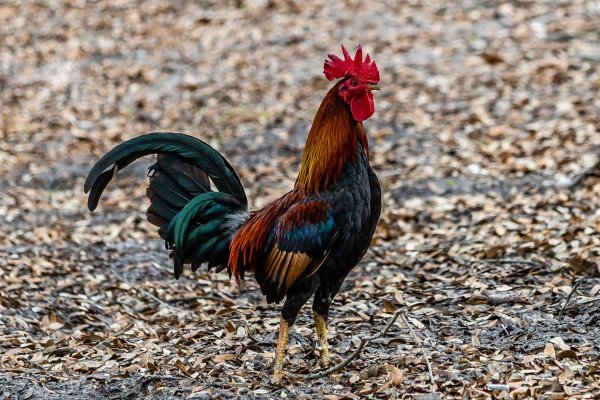
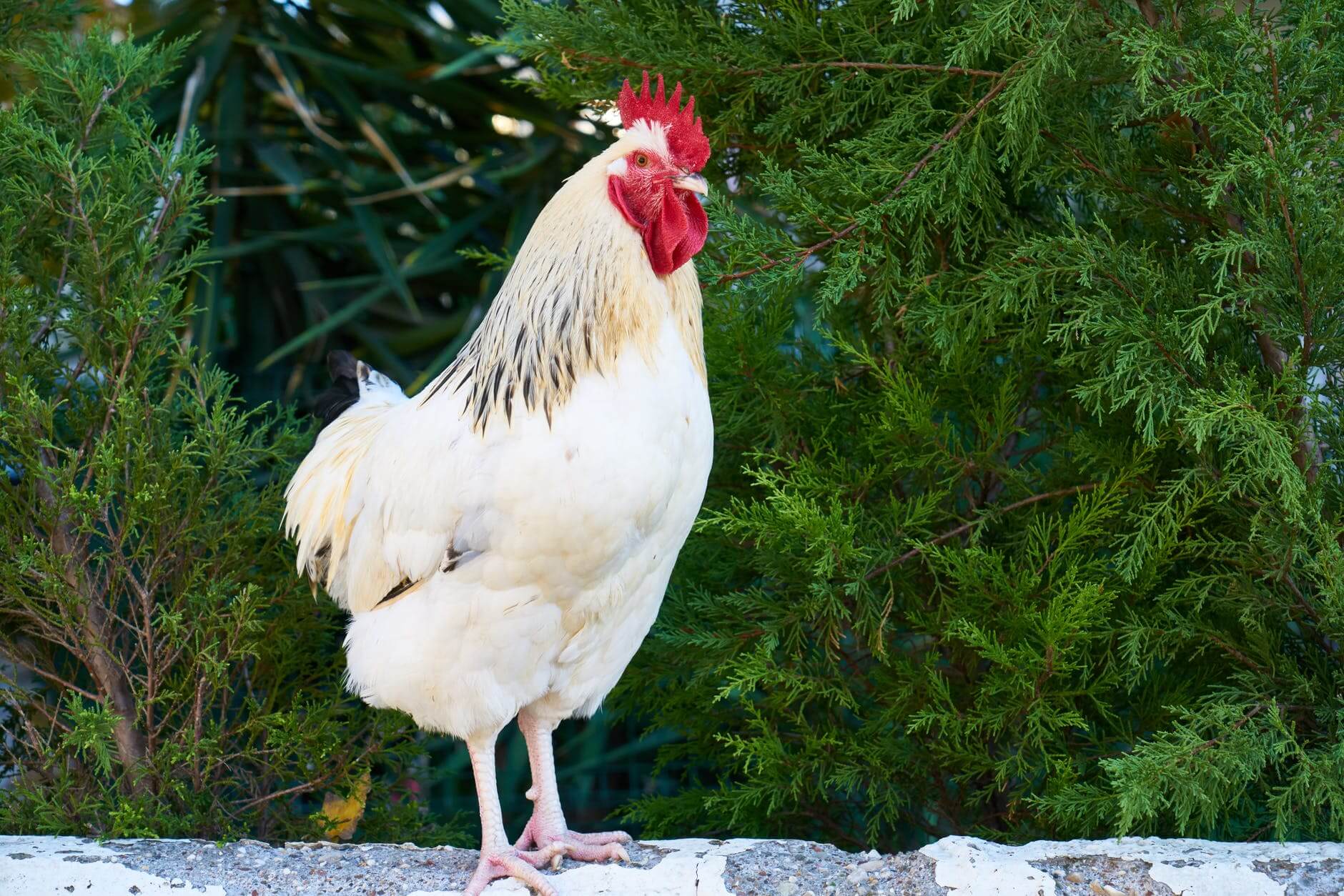
colorful rooster on the ground
Photo by Paul Harrison on Pexels.com

Modern poultry descends from the Red Jungle Fowl, which has the ability to take off and fly away from danger. However this amazing bird isn’t suited for long flights. And present-day chickens have had this capability bred out of them with heavier body mass.

But still, there are backyard birds that have maintained this talent.

Chicken Breeds that can “Sort of” Fly
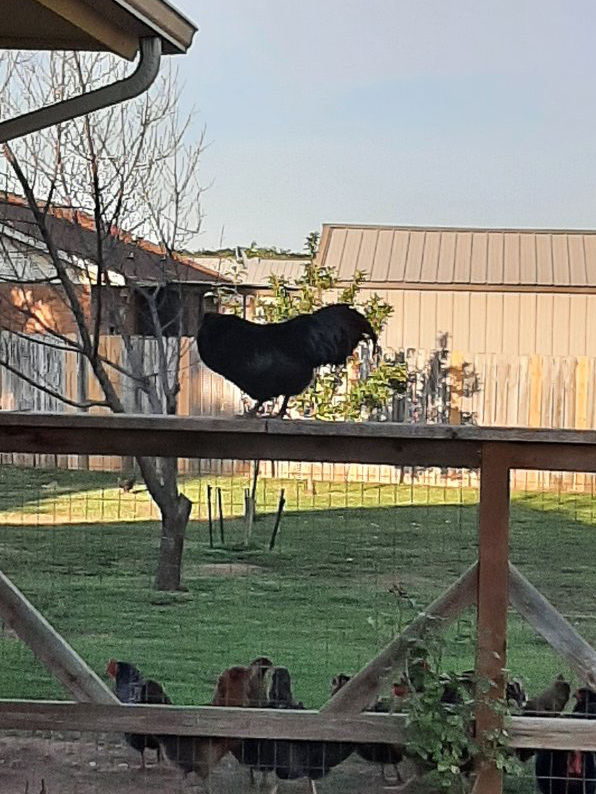
Black Ameraucana rooster standing on wooden fence
Megatron, the rooster boss.

The following is a list of breeds that can manage the art of flying better than their counterparts.

Heavier birds, like Wyandottes and Black Sex-links, can’t even get off the ground. Although, why would chickens want to fly in the first place?

Reasons Chickens Might Fly
mixed flock of chickens in a yard separated by a chainlink fence
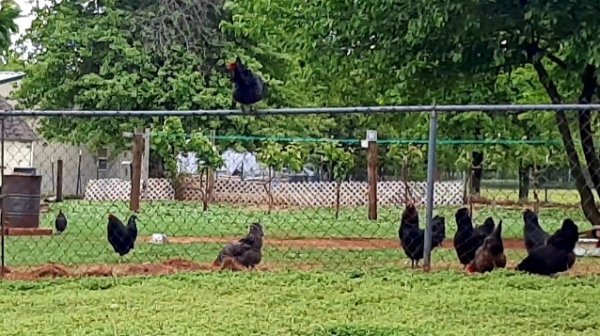
In this picture, Tiny Nuts just flew back over the fence, while some of his hens stayed in the front yard. And one hen is on the fence, about to cross over to the other side.
  • The Grass is Always Greener.

Chickens love to explore and will go in your neighbor’s yard, because the grass and bugs are way better than what’s in your yard! Or maybe they just think the fence is some cool obstacle they’re meant to cross, and your yard and your neighbor’s yard just belong to the birds.

  • Henhouse Bullying

Introducing new birds, chicks figuring out the pecking order, and 2 adult roosters can and will cause some birds to seek out new territory.

I noticed that’s what Tiny Nuts has been doing with his harem, while it was raining yesterday, and he wasn’t allowed in the run. I figured out that he just wants his own place where he and his girls can live in peace.

  • Predators

And the last reason backyard birds will fly away from their own yard is if there is a threat, such as a predator.

How High can Chickens Fly

6 ft tall wood panel fence
Our neighbor’s 6 ft tall fence. (The yellow yard stick isn’t truly a yard stick, as it measures 48 inches. It’s for comparison purposes.)

A four foot fence is not a deterrent to the breeds I listed above. For example, on separate occasions, both my Ameraucana rooster and his hatchery mate flew over my neighbor’s 6 foot fence. While their dog attacked Soundwave, Megatron slept in their barn overnight. But both were recovered and are fine.

Since having Megatron, I have seen some amazing aerodynamics. Also, his genes have been passed to all of his offspring. In addition, he inspires the other chickens to take risks as well, even if they can’t quite fly. They’re convinced the grass is greener.

How to Prevent Chickens from Flying
backlit photo of clipped chicken wing

I have seen material that suggests building a covered run or a taller fence as the right option. And though neither is bad, they just aren’t going to stop your backyard birds from flying over your fence if you have one of those “flying” breeds. None of mine have ever “flown the coop”. But when they’re approaching adulthood, they fly over the fence all the time. Further, you might not want to build a 10 foot plus tall fence all over your yard. And if you have a very big yard, it could be cost prohibitive.

Rather than building a bigger fence, another option posed by cleverpetowners.com is to trick their eyes with stakes and fabric. You can find their suggestion and instructions here.

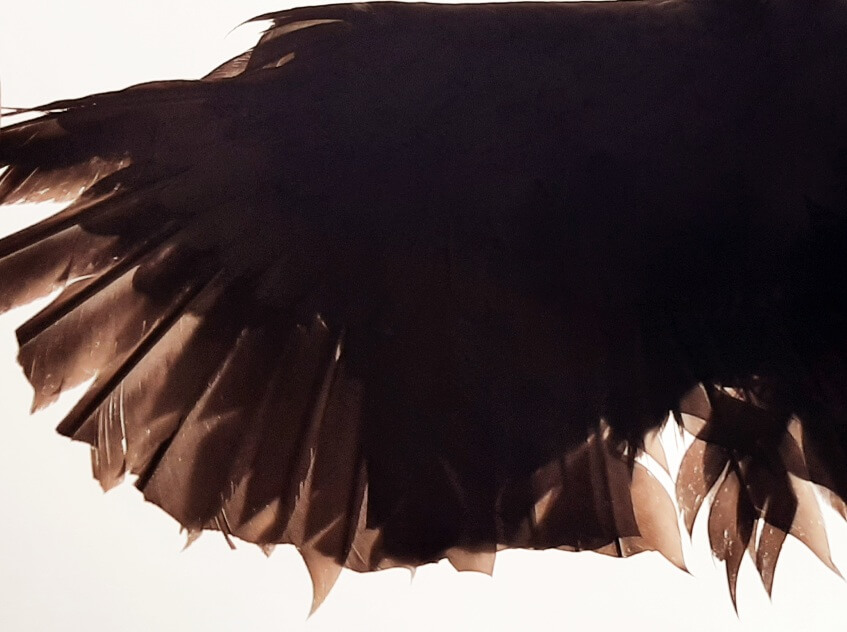
And the final option is wing clipping. Despite being somewhat controversial, if done properly, it is not painful to the birds at all. Furthermore, it isn’t permanent. The controversy stems from the idea that it promotes irritation, feather-picking, starting a vicious cycle. And that the birds whose wings are clipped are hindered from exercise and can’t get away from fearful situations.

From my own experience of raising chickens on an acre for 7 years, I can say that none of that exists. The birds whose wings we clip just seem to be expanding their territory. And usually it’s their rooster leading them into danger. Once the wing clipping has commenced and is finished, the only thing the birds find is that they can no longer go where they wish to go. So they have to be content in their own yard. There’s no feather picking and no irritation. And they certainly aren’t hindered from exercising, because they can still walk just fine.

As far as the fearful situations go, we only live on an acre; and the only predators that lurk around us are dogs or hawks. And the dogs can’t get to our birds with our sturdy fence. Additionally, our birds know to run to their coop at the first sign of danger. Or they use burst flight to get away, unless their wings are clipped. Therefore, if you live on a lot of land, you might not want to clip your chickens wings. I don’t think my in-laws do, and they live on 40 acres. Thus, they get a lot more predators. So, in that case, wing clipping could put the birds at a disadvantage.

In Conclusion
Black Ameraucana rooster flying vertically while dog and person watch
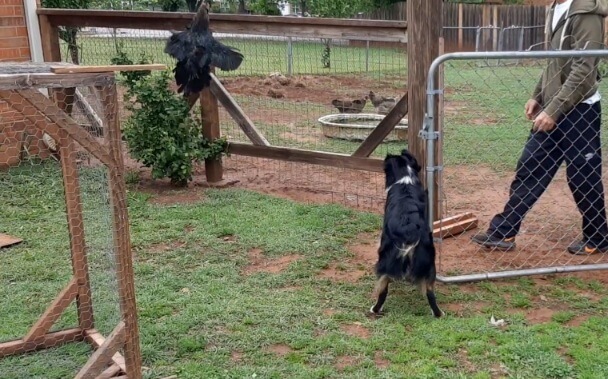
Can you see Tiny Nuts fly vertically? It’s not the best picture, but none of my birds need a running start to fly. And he was never in danger from Sophie.

We learned that chickens descend from Red Jungle Fowl, which can fly. And many chicken breeds can still fly vertically. We also learned that they fly to get to greener pastures and to avoid conflict and predators. In addition, most backyard birds that fly can easily clear 6 feet, while some can fly over 10 feet. Further, the suggestions to prevent your birds from flying include building a taller fence, tricking them with stakes and fabric, and/or wing clipping.

Thanks for stopping by! If you enjoyed this post, please like, post a comment, share, and please don’t forget to follow!
Categories
Chicks Hens raising happy, healthy chickens Roosters

Best Chickens for Beginners

Not long ago I wrote an article about the best chickens for laying eggs. And the past few posts have been on chicks. But if you’re interested in backyard birds and aren’t too concerned about eggs or meat, then I’ll tell you the best chickens for beginners.

You’ll still have to take where you live into consideration. That’s because it will affect the birds you choose. Therefore, if you a pick a breed that has a large comb and wattles, living in a warmer climate will be ideal. Likewise, if you live in the Northern Hemisphere, then picking ones with smaller combs would be better.

Further, some of these chickens were mentioned before as excellent egg layers. But all of the ones on today’s list, including the previously mentioned ones, are easy going, simple to care for, and for newbie chicken owners.

Best Chickens for Beginners: Ameraucana

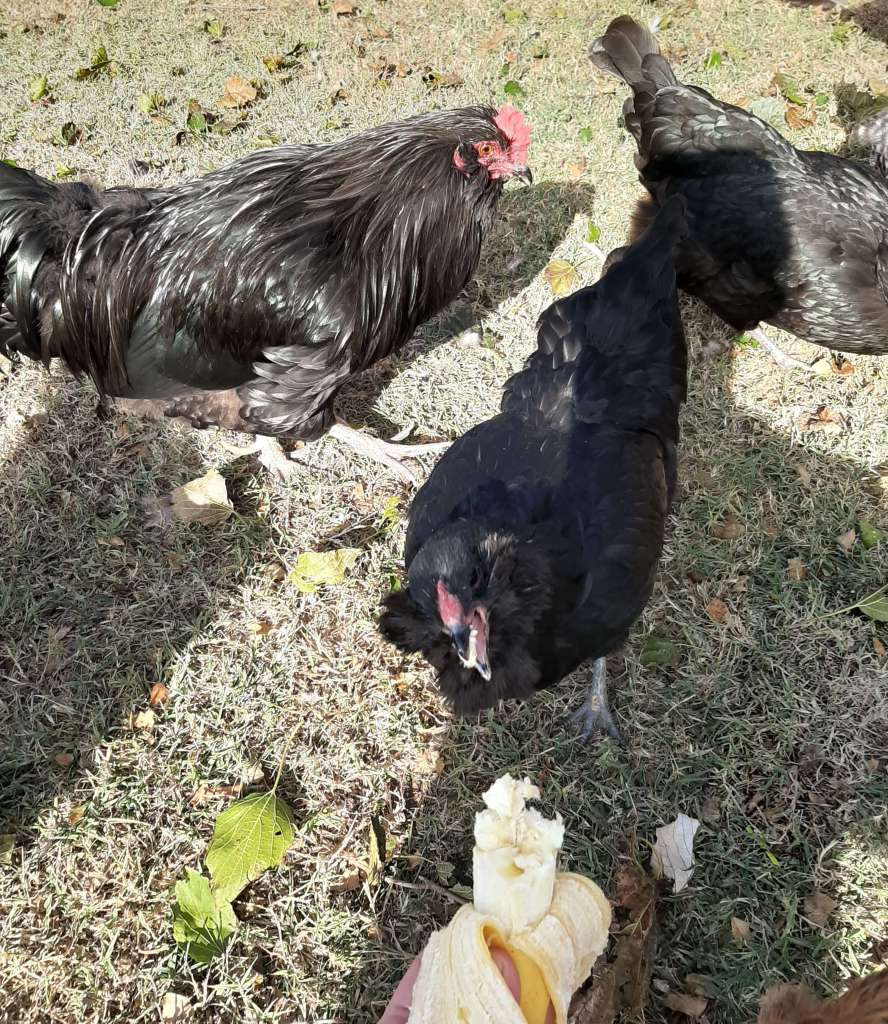
Black Ameraucana hen and rooster eat a banana from person's hand

Ameraucanas are my personal favorite backyard bird. I have black, brown red, and bryngyld varieties. Though, as far as I know, the bryngyld variety hasn’t been approved by the APA. And if hand-raised from chicks, they never forget you. But, even if they weren’t raised from chicks, they learn and adapt quickly. Also, they come in beautiful colors. In addition, they are

  • Dual purpose
  • Lay ~ 200 blue eggs per year
  • Friendly
  • Not generally broody if you get them from a hatchery; although I had one brown red one who did go broody; and the one Black Ameraucana chick she raised goes broody annually
  • Have a pea comb, so they do better in winters and in cool climates

Best Birds for Beginners: Australorp

  • Come in 3 varieties
  • Also dual purpose
  • Lay ~ 300 light brown eggs annually
  • Friendly birds
  • Can go broody, so if you want chicks, this is the best brooder
  • Have a single comb, so better suited for warm climates

Best Chickens for Beginners: Barred Plymouth Rock

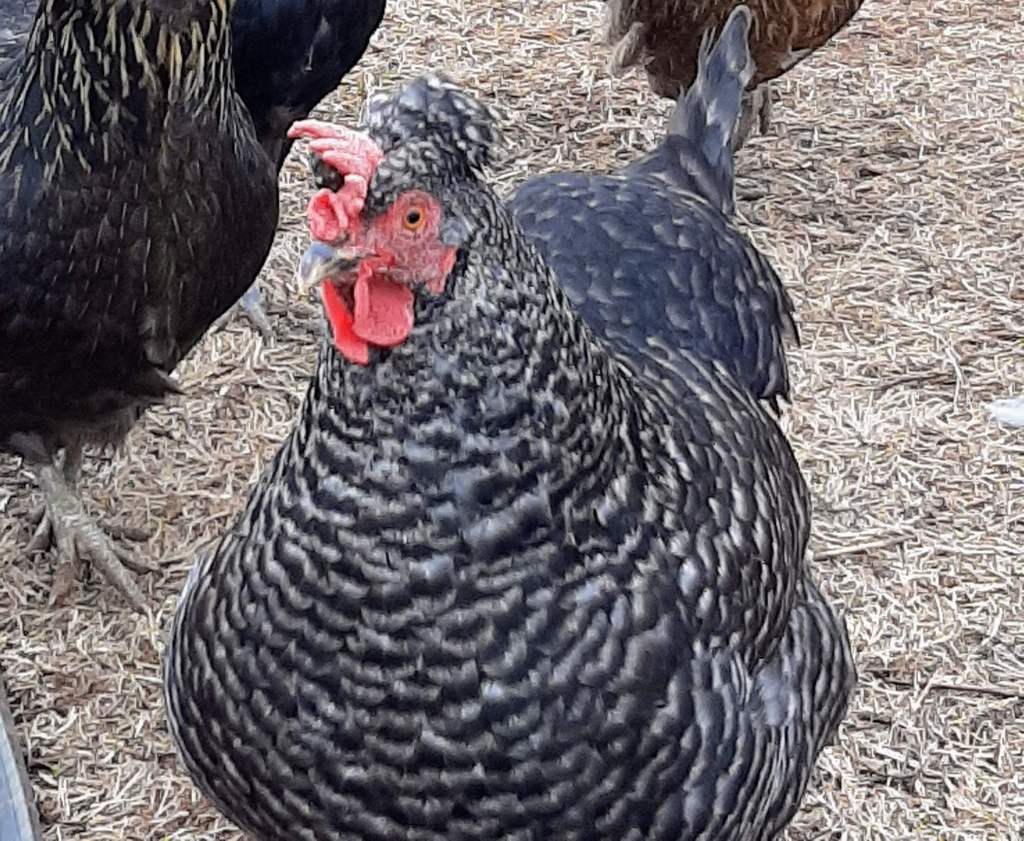
Barred Plymouth Rock hen
  • Dual purpose
  • Tame and good with children
  • Lay ~ 200 light brown eggs each year
  • Can go broody
  • Also have a single comb, so they do better in warm climates

Best Birds for Beginners: Brahma

close up picture of a black and white Brahma chicken
  • Gentle giants, came from China
  • Dual purpose–used to be what we ate before the modern broiler
  • Very well suited to Northern climate with the pea comb
  • Stands confinement well
  • Can go broody
  • Comes in 3 varieties
  • Lays ~ 150 medium brown eggs annually, producing most during the winter

Best Chickens for Beginners: Cochin

  • Also giant and from China
  • Produces eggs during winter
  • Suitable for northern climates
  • Extremely gentle, including even the roosters
  • Broody; roosters will also brood chicks!
  • Comes in 9 varieties
  • Lays ~ 180 brown eggs yearly

Best Birds for Beginners: Easter Eggers

selective focus photo of a black and brown hen
Photo by RODNAE Productions on Pexels.com
  • Dual purpose
  • Can be broody
  • Can come in a variety of looks
  • Lays ~ 250 colored eggs annually
  • Friendly
  • And combs and wattles will determine climate they’re best suited for

Best Chickens for Beginners: Orpingtons

  • Dual purpose
  • Come in 4 varieties
  • Lays ~ 160 brown eggs yearly
  • Calm and gentle
  • Broody
  • Has a single comb, so does better in warm climates

Best Birds for Beginners: Silkies

close up shot of a white Silkie chicken
Photo by Alex Arabagiu on Pexels.com
  • People primarily have Silkies for exhibition, though in Asia, their meat is considered a delicacy
  • Can go broody
  • Come in 6 varieties
  • Not a big egg layer, however they lay ~ 100 tinted eggs yearly
  • Have small walnut or cushion comb, so cold climates are suitable
  • Cuddly, lap chicken

Best Chickens for Beginners: Sussex

brown and white Sussex rooster on concrete surface
Photo by Engin Akyurt on Pexels.com
  • Dual purpose
  • Come in 3 varieties
  • Lays ~ 230 tinted eggs annually
  • Docile, gentle and friendly
  • Can go broody
  • And has a single comb, so warm weather is more suitable

In Summary

So you see there are a number of backyard birds that would be great for first time chicken keepers. Additionally, most of them still produce a lot of eggs. And they’re friendly. Some even look and act like they could be lap pets.

Thanks for stopping by! If you enjoyed this, please like, post a comment, share, and please don’t forget to follow!

Categories
Hens raising happy, healthy chickens Roosters

Types of Combs on Chickens

Backyard chickens are both fun and entertaining. But have you ever wondered about their combs? Like, what their purpose is? Well, the chicken comb is the fleshy bit on top of their heads. Additionally, some are big, while others are small. Interestingly enough, there are 9 recognized types of combs on chickens.

And the chicken comb serves a few purposes. For instance, the comb is an outward signal of chicken wellness. Thus, depending on the color, you’ll know the health of your flock. Also, since chickens don’t sweat, their combs and wattles act as a sort of ventilation system. That’s how they get cooled off. So, the bigger the combs, the better the birds fare in summer. Likewise, the smaller they are, the better they do in harsh winters.

The next function of the chicken comb is to help establish the pecking order. Typically birds with bigger combs are more dominant than ones with smaller combs. However, it also depends on the breed. We have one black Sex-link, one Wyandotte-mix, a Cream Legbar, a few Plymouth Rocks, Cuckoo Marans, and the rest are Ameraucanas. One of our Ameraucana hens is the most aggressive hen out of the bunch since the Wyandotte sisters left. But that’s atypical of the Ameraucana breed.

Black Ameraucana and Maran chickens roosting
4 juvenile roosters and a pullet make up this group. And you can easily differentiate the roosters from the hen by their tail feathers; but also their combs are darker and more pronounced as well.

Furthermore, the last role of the chicken comb is sexual attraction between roosters and hens. There are sites that claim this is the purpose of roosters’ combs in attracting hens; however, hens do not want to mate. Ever. Therefore, it’s been my experience, in watching roosters with chicks, while they’re maturing, the roos are just waiting for the chicks to develop. Maybe they’re waiting for some indication before mating with those birds. Who knows? The chicks change from this fluffy poofball into this creature that the rooster wants to mate with again and again and again.

Types of Combs on Chickens

Warm Climate Comb Types

Large, flamboyant combs are prominent in chickens that do well in warm temperatures. And there are only 3 types that feature for warm, or hot weather. Although, in freezing temperatures, they are more at-risk to frostbite. So, care should be taken in very cold weather with breeds that have the following kinds of combs.

Single red comb on Cream Legbar Rooster in chicken nesting box
Our first rooster, Cass, a Cream Legbar.
  • Single comb: This is generally the comb we picture when we think of chickens. Thus, it’s referred to as the classic comb. It’s bright red, stands upright, and has 5 or 6 points. Leghorns, Rhode Island Reds, and Ayam Cemani have the single comb, though the latter sports a black comb.
digital art of Buttercup comb type on Sicilian Buttercup chicken
Digital Art, Courtesy of Sarah Smith
  • Buttercup comb: The buttercup comb looks like a variation of the single comb. However, it looks like a cup-shaped crown with a circle of regular points. Further, there’s only one breed with this unique comb–the Sicilian Buttercup.
digital art of carnation comb on Empordanesa
Digital Art, Courtesy of Sarah Smith
  • Carnation comb: This comb is another rare comb that mimics the single comb at first. But it has extra points that stick out at right angles at the back of the comb, also giving it the appearance of a crown. In addition, the only 2 breeds with this type of comb are the Penedesenca and Empordanesa.

Types of Combs on Chickens

Cold Climate Comb Types

Smaller combs, that sit lower to the head, usually characterize cold hardy chickens. That’s because these types of combs conserve heat, rather than expelling it. Therefore, if you have any birds with the following types of combs, watch them in hot weather for signs of heat stress.

red pea comb on Black Ameraucana rooster in yard with mixed flock in background
  • Pea comb: This comb can be either small or medium in size, and presents as 3 rows of growths or ‘peas’ that extends in length from the beak. Additionally, the pea comb got its name from the little growths that favor peas. Breeds with pea combs are Araucana and Ameraucana, Brahma, Buckeye, and Sumatra.
rose combs on 2 Wyandotte hens in a yard
Photo by Brandie Robbins on Pexels.com
  • Rose comb: Thick and level, the rose comb is layered in small, round growths. And dependent upon the breed, the comb can have a slender point at the back, extending over the back of the head. In addition, some breeds have rose combs that curve upwards, while others have combs that lay horizontal. Rosecomb Bantams, Wyandottes, Hamburgs, and Sebrights are the breeds with this type of comb.
Digital Art of Strawberry comb on a black hen
Digital Art, Courtesy of Sarah Smith
  • Strawberry comb: Similar to the Pea comb and peas, this comb derived its name from its likeness to strawberries. Additionally, the texture is rough and bumpy. And on some chickens, the comb just barely folds over their beaks. Breeds with this kind of comb are the Malay and Yokohama.
digital art of V-shaped comb on Polish rooster
Digital Art, Courtesy of Sarah Smith
  • V-shaped comb: Due to the thick, obvious, horn-like points reaching left and right from the base of the beak, alternative names for this style include Devil’s Horn, ‘horn comb’, and ‘antler comb’. Crevecoeurs, Houdans, La Flèche, Polish, and Sultans all have the V-shaped comb.
digital art of walnut comb on Silkie rooster
Digital Art, Courtesy of Sarah Smith
  • Walnut comb: Yet another comb that got its name for having a likeness to the item it was named after, this time a walnut. In addition, the comb is usually red, flat, and bumpy. And you can most often see it on Silkie roosters; though the hens have them as well. However, due to their size, it can be more difficult to distinguish the type of comb.
digital art of Cushion type comb on Wyandotte hen
Digital Art, Courtesy of Sarah Smith
  • Cushion comb: This last comb is small, compact, and also sits close to the head. And there are no spikes, points, or serrations on this one. Furthermore, the Chantecler dons this type of comb.

What the Chicken Comb Can Tell You

I already mentioned that, due to the color of your birds’ combs, you can determine the health of your flock. Generally a sexually mature chicken’s comb should be bright red, except for the Ayam Cemani, which is black. Sexually mature means ready to mate for the roos, and ready to lay eggs for the hens. In addition, rooster combs develop faster than hen combs.

The following is a list of things to look out for.

broiler chicken with dark red comb
This was Natalie, our last broiler.
  • Dark red to purplish combs can be a sign of a few different issues, like respiratory or breathing problems, heart issues, or stroke. The last broiler we had, named Natalie, was displaying this kind of comb a few days before she laid her final egg, and ultimately died. She lived to be a year old and was probably every bit of 15 lbs. If you see one of your chickens with this type of comb, consult a vet immediately.
pale pink comb on Ameraucana hen
This is our hen, Rex, after she was attacked by a hawk. She stopped laying eggs for a while.
  • Pale combs most often indicate when hens are going through molt and don’t necessarily mean anything is wrong. However, it’s always a great idea to examine your backyard flock for any kind of sickness, including parasites (internal and external), and dehydration. Both of which can cause pale pink combs. But birds with dehydration will be panting and unresponsive. Therefore, if you have a chicken that’s dehydrated, get it to a cool, dim place; and using a medicine dropper, if the bird is too weak, give it water with electrolytes. On the other hand, if your chickens have parasites, treat them topically with Ivermectin. Click here for further instructions.
black spot on hen's red single comb
This is our hen, Oddball, whose single comb was pecked.
  • Black spots on the comb could either be caused by fowl pox or pecking. And you can tell the difference mainly be looking at the bird’s feet and wattles, because the birds typically don’t get pecked on the latter body parts. Otherwise they look very similar. There is no treatment for fowl pox, except to keep the affected birds separated. Although, you can get a vaccine for your flock to protect them. That’s what I did after 3 of our chickens came down with it.
headshot of cuckoo Maran rooster
Baby Nay’s comb used to be a little bit bigger before he got frostbite on the tip of his comb during the blizzard we had in February 2021.
  • Black tips on the comb is caused by frostbite. And that part of the comb will most likely fall off. But at first the area will appear off-color. Some people apply petroleum jelly to their birds combs during harsh winters; but the best prevention is deep litter in the coop.

Punnett Squares on Comb Types

You may remember learning about dominant and recessive genes and Punnett squares from when you went to school. Well, I’m not going to give you a lesson in that today. But I am going to tell you that Walnut combs are produced by chickens that breed true for Pea combs that are crossed with chickens that breed true for Rose combs.

Additionally, some backyard chicken enthusiasts report that if you cross a dominant Rose comb with a dominant Pea comb, you can even get a Cushion or a Strawberry comb.

In Conclusion

If you show poultry, there are 9 recognized types of combs on chickens. But if your birds are your hobby, pets, supply you with eggs, or all of the above, and you breed them, you could come up with a unique comb on your birds.

Not to mention, the comb is one of the first places we recognize if something is wrong with our birds. Whether dark red, purple, spotted, or pale, the comb won’t lie. And it’s usually easy to see. We just have to pay attention.

Thanks for stopping by! If you enjoyed this post, please like, post a comment, share, and please don’t forget to follow!

Categories
Hens raising happy, healthy chickens Roosters

Best Chickens for Laying Eggs

If you’re thinking about starting a backyard flock, you need to answer some questions first. Is the primary purpose in order to get fresh eggs? Most people cite farm fresh eggs as the main reason for raising chickens. However there are also chickens for show. And some eggs are more esthetically pleasing than others. That’s how I’ve based most of my flock. But if, like most people, you want eggs, then it’s important to know the best chickens for laying eggs. Especially if you have limited space.

For the following list I’ve included backyard birds that lay between 200 and 300 eggs annually.

Leghorn

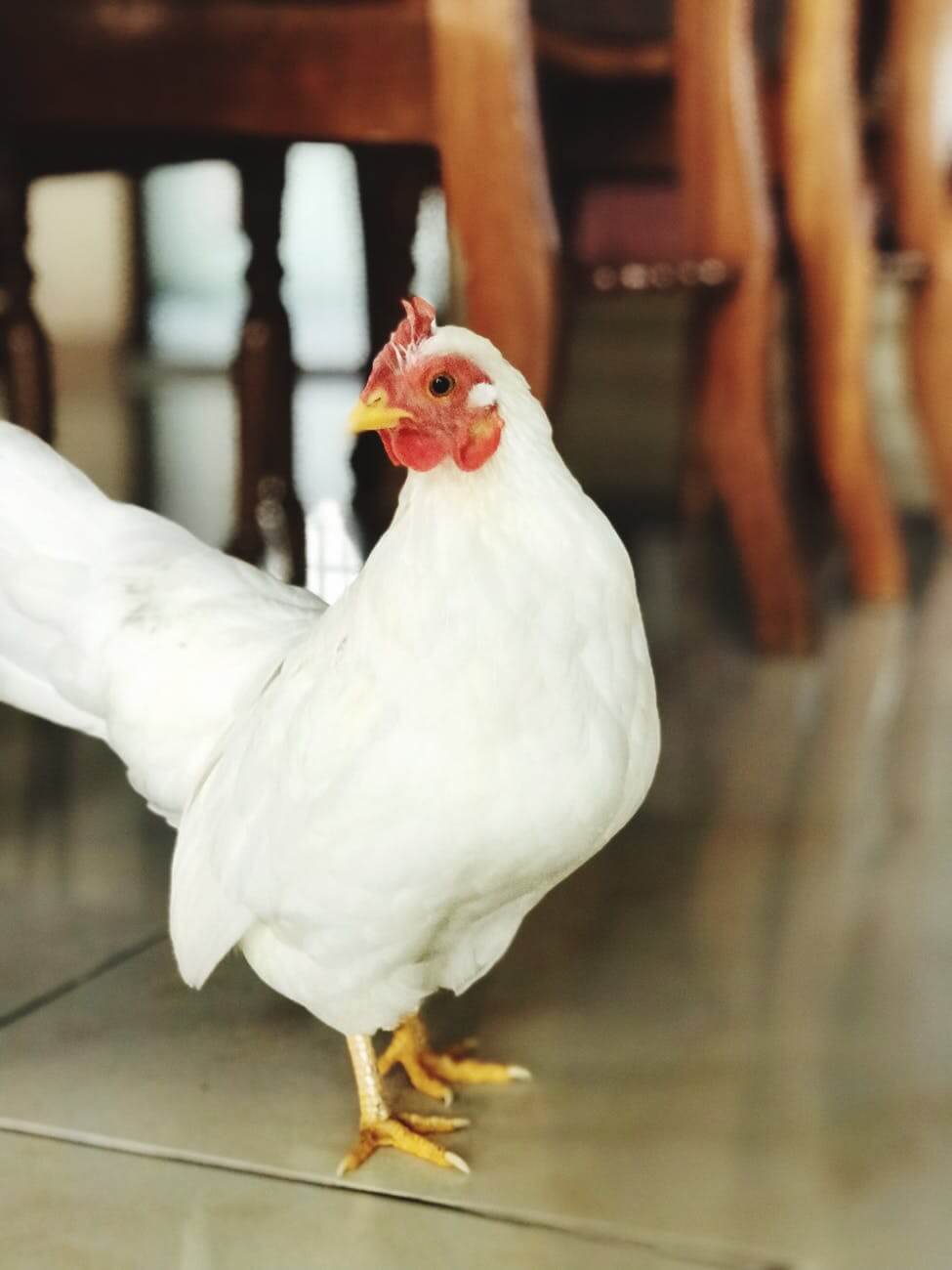
white Leghorn chicken under dining table
Photo by Catherine Sheila on Pexels.com

No “best chickens for eggs” list would be complete without including the Leghorn. And they

  • come in many varieties, but we mainly associate them with white chickens
  • are classified as dual purpose
  • lay medium to large white eggs
  • can lay ~280-300 eggs annually, beginning at 17-20 weeks old
  • are nervous and flighty
  • weigh anywhere from 4-8 lbs
  • also, if they have pea combs, they do better in cold weather than hot; however if they have single combs, they do better in hot weather rather than cold; (freezing, not just cold)
black sex link hen in a yard with coop in the distance
This is our atheist, Sunshine.

The Black Sex-link is a great bird for any backyard addition. Furthermore, they

  • are dual purpose birds
  • are hybrids created by crossing Barred Rock hens with Rhode Island Red roosters or New Hampshire Red roosters
  • lay large light brown eggs
  • are hardy in all weather; however roosters will be more vulnerable to frostbite in freezing weather with his comb and wattles
  • produce ~250 eggs annually, starting at 16-18 weeks old
  • are docile and have a friendly personality
  • weigh anywhere from 6 – 9 lbs
  • and the hens are mostly black with a little bit of brown on their chests and necks; roosters are larger, but appear more like Barred Rocks with hints of red in their feathers

Rhode Island Red

Rhode Island Red hen
Photo by Maxine Novick on Pexels.com

The Rhode Island Red is another bird that completes any “best chicken” list as well. They

  • are America’s most popular breed
  • are the most notable dual purpose bird
  • lay medium to large light brown eggs
  • weigh from 6.5 – 8.5 lbs; feathers on hens range from dark red/brown to light rust; roosters are bigger and will have darker plumage
  • produce 200 – 280 eggs annually, originating from 18 to 22 weeks
  • can be described by some as bossy; while some roosters can be aggressive
  • are on The Livestock Conservancy Watch list
  • and similar to Leghorns, if they have a rose comb, they do better in freezing weather than hot; but if they have a single comb, they fare better in the heat than freezing temperatures

Golden Comet

flock of Golden Comet hens on green field
Photo by Alexas Fotos on Pexels.com

Just like Black Sex-links, Golden Comets are hybrids, and they

  • also are dual purpose
  • lay large light brown eggs
  • weigh 4 lbs – 8 lbs
  • lay 250 -320 eggs yearly, beginning at 16-18 weeks old
  • have light, medium red brown feathers with some white; while roosters are sometimes totally white, or white with some light to dark red feathers splashed on them
  • are gentle and friendly birds
  • have a short lifespan: the cost of high production and maturing quickly cut this breed’s life compared to other breeds
  • and as with all single comb chickens, this backyard bird fares better in hotter temperatures; therefore, they’re more at risk for frostbite in freezing temps

Australorp

close up photo of black Australorp chicken
Photo by Berend de Kort on Pexels.com

This bird is very popular in Australia, where it hales from. Also, they

  • have blue, black, and white varieties, but black Australorp is the most popular color
  • are another dual purpose chicken
  • lay large light brown eggs
  • produce ~300 eggs annually, starting ~5 to 6 months old
  • are described as friendly and shy birds
  • are 6.5 – 8.5 lbs; hens and roosters are all black, but obviously, the roos are bigger with more flair
  • go broody
  • and due to their single combs, frostbite can be an issue; but they should tolerate summers

Sussex

brown and white Sussex rooster on concrete surface
Photo by Engin Akyurt on Pexels.com

This backyard bird is another good layer. Further, they

  • have speckled, red, and light varieties recognized by American Poultry Association, while light is the most popular; brown is also recognized in England. Some breeders have made 4 additional varieties.
  • lay medium to large tinted eggs
  • lay 200 – 250 eggs yearly, from around 20 weeks old
  • weigh 7 – 9 lbs; both the hen and rooster look similar: white bodies with black wing tips, black tail, and neck feathers have a black lacing around them. Again, roosters are bigger with longer, more flamboyant tails.
  • are dual purpose birds
  • are docile, and easy to handle
  • can go broody
  • also have a single comb, so care should be taken in freezing weather

Plymouth Rock

Plymouth Rock hen outside
This is either Dopey or Sakura.

The last dual purpose bird on the list is the Plymouth Rock, and they

  • lay light brown medium to large eggs
  • come in 7 varieties, but the most popular is barred
  • produce ~ 230 eggs annually, starting around 20 weeks
  • can go broody
  • are very calm, friendly and tolerant
  • weigh 7.5 – 9.5 lbs; and again both barred rock roosters and hens look similar, black and white patterning; however the roosters are bigger, and they appear lighter in color than the hens, more gray and white; and their tail feathers are bigger
  • also have a single comb, which is prone to frostbite

To Summarize

I’ve listed 7 backyard birds that lay between 200 and 300 eggs annually. In addition, they’re also classified as dual purpose. Therefore, if you’re interested in having your own flock of birds, you know which ones lay the most eggs. And if you have extra roosters, you could logistically use the meat for a casserole or a soup, etc.

Thanks for stopping by! If you enjoyed this post, please like, comment, share, and please don’t forget to follow!

Categories
Chicks Hens raising happy, healthy chickens Roosters

Reasons to get Chickens

Eggs are the number one reason people get into the backyard chicken-keeping business. And since 2020 more people got into it, though their reasons weren’t necessarily the same. However, there are many reasons to get chickens.

Eggs

multi-colored fresh eggs in nest
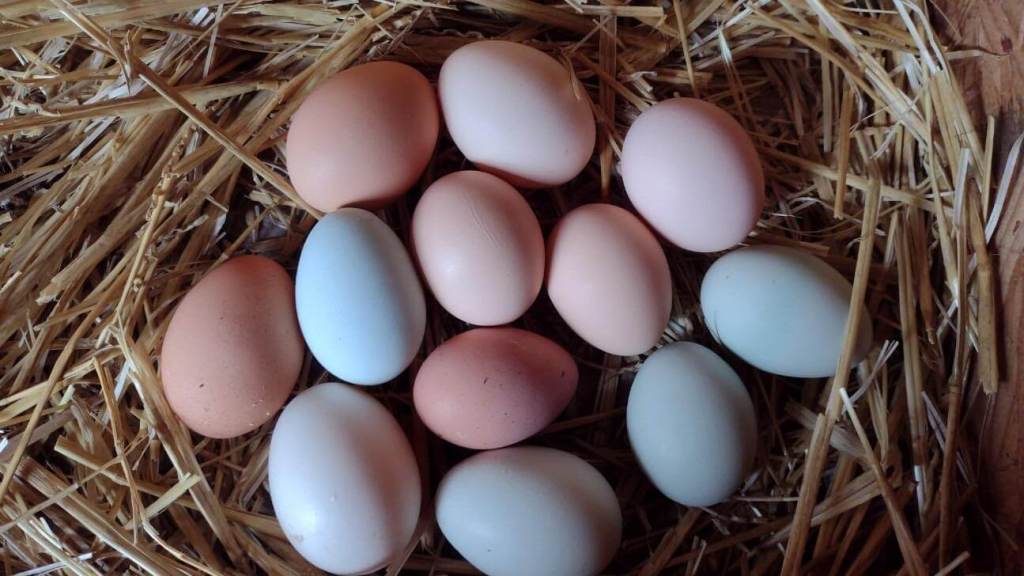
Fresh eggs straight from the nesting box.

Even so, eggs are a great reason to get chickens. And a good egg laying hen will produce ~ one egg per day. So if you want a dozen eggs a week, you need 3 or 4 hens. Which means, you don’t need a whole lot of space for only 3 or 4 backyard birds.

Healthier Living

roasted chicken on a white plate
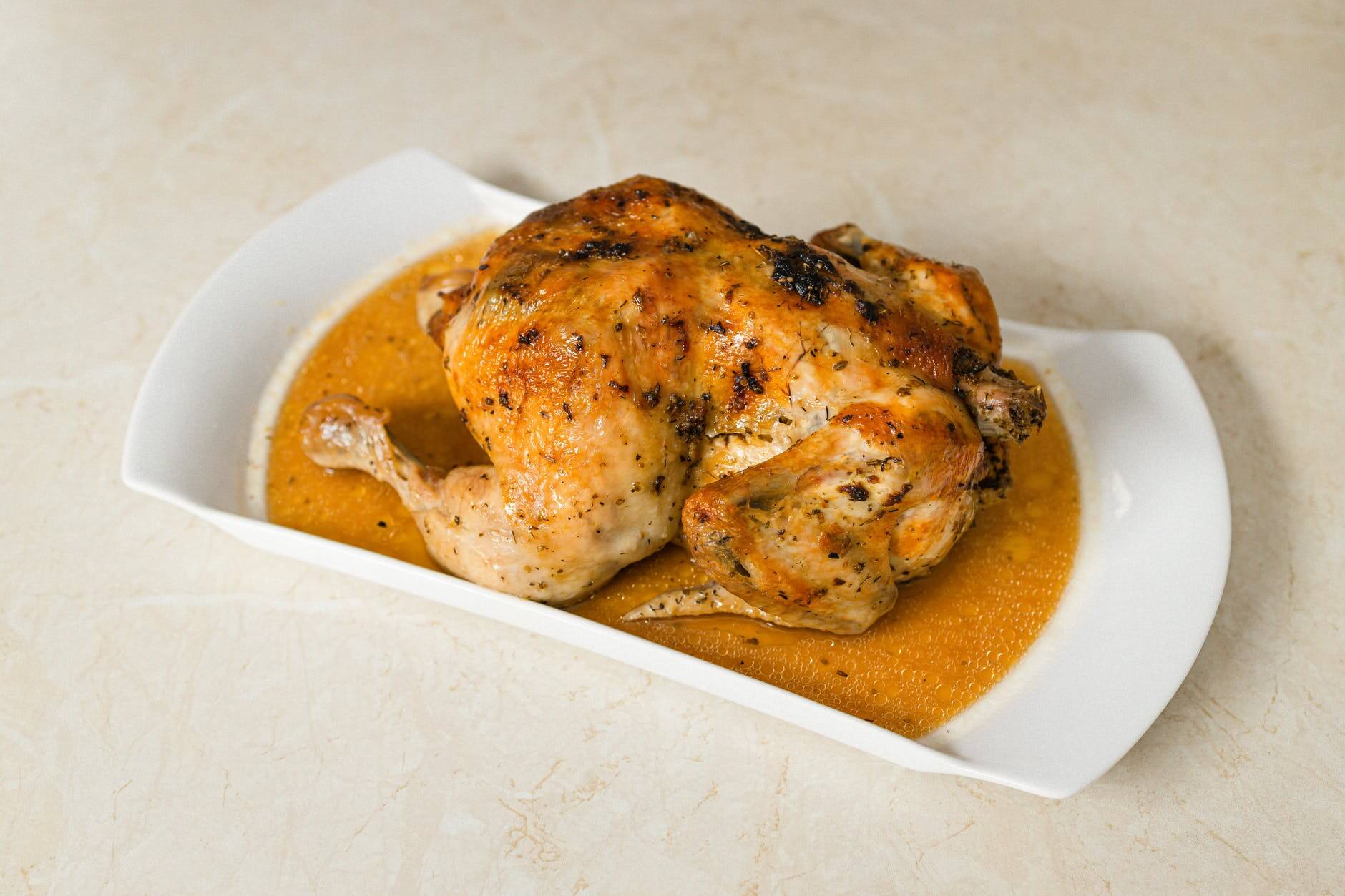
Photo by Maksim Goncharenok on Pexels.com

Due to shelter-in-place restrictions and then supply shortages, many people started raising their own chickens. A lot of backyard birds are dual-purpose birds. That means you can have hens for eggs. And if you have extra roosters, they can make good meals. In addition, knowing where your food is, and what goes into it somehow makes it taste more amazing.

We’re pretty blessed living where we do; however I know that bare shelves prompted a lot of people to buy chickens. And having backyard birds allows people to be somewhat self-sufficient, by providing a fresh source of eggs and chicken.

Sustainable Living

chickens around a raised garden bed with coop in the distance
One of our first raised garden beds that our chickens loved to help eat from and fertilize.

Rather than supporting factory produced eggs and their big carbon footprint, when you raise your own eggs, there’s less manure. So you have less of a carbon footprint.

Also, the chicken manure can be used for fertilizer or composted. Therefore, the result is less carbon emissions. And the birds help you with gardening.

Pets

Black Ameraucana rooster with Pekin duck
My pet rooster, Megatron.

Another reason to get chickens is that they make great pets. And when they’re chicks, they come on the cheap side; no pun intended. Furthermore, they come in many different breeds, colors, and sizes. And you can name them, if you so choose. We’ve named all of ours–after Star Wars, Lord of the Rings, Marvel, Transformers, and anime characters.

Additionally, they all have personality. And they’re mostly easy to take care of: feed and water them, provide good, predator-proof shelter, and remember to clean their coop. Other than that, they do their chicken thing, providing you with food.

Chicken TV

Cream Legbar rooster asleep in person's hands over sketchbook outside
This was our Cream Legbar rooster; he’s asleep in this pic, but he looks like he’s reading.

Have I mentioned chicken TV? Keeping backyard chickens also provides free entertainment without the use of electricity. Just step outside, pull up a chair, and sit a spell. It’ll only take a moment before you see one of the members of your flock doing something adorable or hilarious.

And if you can, I highly recommend getting a rooster to complement any flock of hens, because that’s the best entertainment. You’ll get drama, suspense, romance, and comedy when you add a rooster.

Education

chick hatching from an egg
This was one of our first chicks hatching.

Having chickens is also educating. I can’t express to you how much I’ve learned just in the 7 or so years we’ve kept backyard birds. For most people, this might be considered useless. However, if you have children or grandchildren, it will be fascinating, especially when they see their first egg hatch. And they’ll learn to take care of animals.

Backyard Therapy

mixed flock of backyard chickens
This is one of my favorite things to do with them: just be out there with them.

The biggest benefit I personally receive, from taking care of chickens, is backyard therapy. And I’m not the only person to have experienced this. Other people, who either have kept chickens, or still keep birds, are familiar with this phenomena. I don’t know if it’s just the birds, or a combination of being outdoors, watching the birds, or what. But things that were troubling eventually fade away.

I don’t know that I would say the chickens are empathetic, and that’s the reason having them helps. It’s just that after I’m outside watching them for a while, I start to feel better.

To Conclude

I’ve listed 7 reasons to get chickens, but ultimately the decision is yours. Backyard chickens make amazing pets and are a great supply of food. But I’m sure that whatever the reason you decide to get chickens, you’ll enjoy them.

Thanks for stopping by! If you enjoyed this post, please like, post a comment, share, and don’t forget to follow!

Categories
raising happy, healthy chickens Roosters

Best Way to Cull a Rooster

One of my recent posts was on when to cull roosters. But now you might be wondering about the best way to cull a rooster. I’ve read of many ways, from wringing their heads off to shooting them. However, if your birds are your pets, you want something more humane. Or perhaps you just don’t like to see an animal suffer. I’ll cover both the best way to cull and process roosters.

Although this is the best method to cull a rooster, you will likely still feel remorse. Especially if this is your first time. My husband still feels bad every time a roo needs to go. But it can’t be helped, because the hens come first. However we’ve tried many ways to cull our chickens. And none of them were as humane as this one.

Supplies Needed to Cull and Process a Rooster

sharp fillet knife

Boning knives or fillet knives are great for killing and processing chickens due to their size and sturdiness.

  • Re-purposed milk jug or a metal cone

If you only cull birds once in a blue moon, then you can just use that milk jug you were about to toss out. But, if instead, you regularly process birds, then you might want something more permanent.

  • Paper towels
set of paper towels on wooden background
Photo by Vlada Karpovich on Pexels.com

You’ll need plenty of paper towels to clean up as you go. And to clean up afterwards.

  • Bleach spray

You have to disinfect your work area when you’re finished. So you can use Clorox Clean-up Disinfecting or make your own.

  • Work bench or table

Having a work bench or table to process the bird, after it’s properly culled, is a must.

  • Bucket to collect blood

Rather than letting the blood drain onto the ground, and possibly attract predators, the bucket will collect the blood. And you’ll dispose of it later.

  • 2 Stainless steel bowls to collect the meat

One bowl is for collecting the meat as you process the chicken, while the second bowl is for after you’ve cleaned/washed the meat.

  • Rope or straps to hang bird from tree branch

The rope or straps go around the bird’s legs to suspend him.

  • and a Rooster

You can’t actually process a rooster without the, ahem, rooster.

Instructions for Culling a Rooster

girl outside holding a white chicken
  • First, you choose your rooster.

After you have him, do your deed in a private spot where the other birds can’t see. However, they will likely still know when Joe or Frank don’t return.

  • Next, put your bird upside down, in the metal cone or milk jug.
  • Then tie the rope or straps around his feet and hang him from the tree.

The blood will rush to his head and make him calmer. Perhaps even a little tired.

  • And push back his neck feathers, finding the carotid artery by his pulse. Further, using a fillet or boning knife, gently slice a large enough slit to let the blood drain out.

Or you can cut his head off with pruning shears or an axe. Though, if you’re culling several birds, you will need either several sharp knives for the job, because they’ll soon go dull before you finish.

  • Keep the bird in the cone, because the blood will take 2-5 minutes to drain out. Also, it takes time for the nervous system to calm down, ~ 2-10 minutes.

Best Way to Process a Rooster

Now it’s time to process the meat. If you are so inclined to keep the skin on your chicken, you can visit this site for instructions. But we’ve never processed our birds that way. We’ve never taken the time to de-feather them just to keep the skin. It sounded like way too much work for only a couple of birds.

Rather we de-skinned them, and it was the easiest thing ever. Of course I say that like I had any part in it, other than cheering from the sidelines. Maybe, after all the butchering, Paul was just ready to be done with the whole thing. And so he decided to skin them. But maybe not. Perhaps it was his intention the whole time to skin them. I really don’t know, I never asked.

I did have some friends, who have backyard birds, and they culled some. They tried the boiling method, in order to de-feather them, so they could have skin on their chicken. And they promptly told me that they were never doing that again.

Instructions for Processing Roosters

culling and processing a chicken
  • Leave the bird hanging from the tree

This is in order to process the bird. You don’t want to cut into the intestines or anus, contaminate your knife, and then the rest of the bird. Think of this as surgery.

  • Skin the legs and body

Using a sharp knife, start skinning from the legs. The skin will start to separate from the meat, but you will need to be careful around the rump, lower back, and where the wings attach to the abdomen.

  • Separate the parts

Sever the elbow joints, because there isn’t enough meat there anyway. Then cut through the neck. All that’s left is the meat and legs. Dispose of the neck, tail and oil gland, wing tips, and skin with feathers.

Remove the carcass from the tree and cut off the legs. Next, cut open the bottom cavity to pull out the intestines. Then wash the carcass in a bowl of fresh cold water.

If you like chicken giblets, keep the liver, heart, and gizzard.

  • Clean the bird

This is best done with running water. And be sure to cut away lungs, trachea, testes, and unwanted fat. Also, remove any remaining feathers around the legs and wings.

  • And cut up the bird

Depending on the bird, you might not get much meat except breasts. In which case, you just put the breast down on the cutting board and cut on both sides of the cartilage. Then you slide your fingers along the breast bone until it peels out.

So now you know how to cull and process a rooster. You don’t have to worry about freezing a whole bird, because it’s perfectly cut up, and will fit nicely into your freezer. And you don’t have to worry about all the feathers, or about how inhumane killing chickens can be. Although, you still might feel bad.

Categories
raising happy, healthy chickens Roosters

When to Cull Roosters

We are officially in fall, when typical chicken owners cull their flocks. But at our chicken haven we don’t slaughter our hens, because they are the egg producers. If you have chickens, like we do, maybe you incubate eggs occasionally. Or a hen will go broody and hatch a clutch of eggs, in which case you end up with some surplus roosters. On the other hand, you could be new to backyard chicken keeping and just want to know when to cull roosters.

girl outside holding white chicken

What does ‘culling‘ mean anyway? Well, for the purpose of this post, it means to slaughter or process an animal. However if you don’t want to do that, because it can be difficult emotionally, then you can try to find an animal sanctuary. But if you have a lot of roosters compared to your hens, then you absolutely are going to have to do something. Because, unless you keep them separated, the roosters will end up abusing the hens.

When to Cull Roosters

red leaf trees near the road
Photo by Pixabay on Pexels.com

So when is the best time to cull a rooster? Well, I already mentioned that most chicken caretakers prefer doing this task in the fall. And that’s because they don’t want to spend the money on feed, taking care of them. They know the birds are destined for cooking. With that being said, if you have a troublesome bird, you don’t have to wait until fall to cull it. And that includes bullies and/or sickly birds.

But what is the best age to process a rooster? If you plan on putting your bird in a meal, then the older the bird gets, the gamier and tougher it gets. But if you slaughter too soon, there will hardly be any meat on them. So what do you do? Many sites suggest waiting till they start crowing. However I don’t think that’s the best method. We’ve had roos who started crowing after they were only a month old. And we’ve had roos that only crowed when the last rooster died, and they were about a year old!
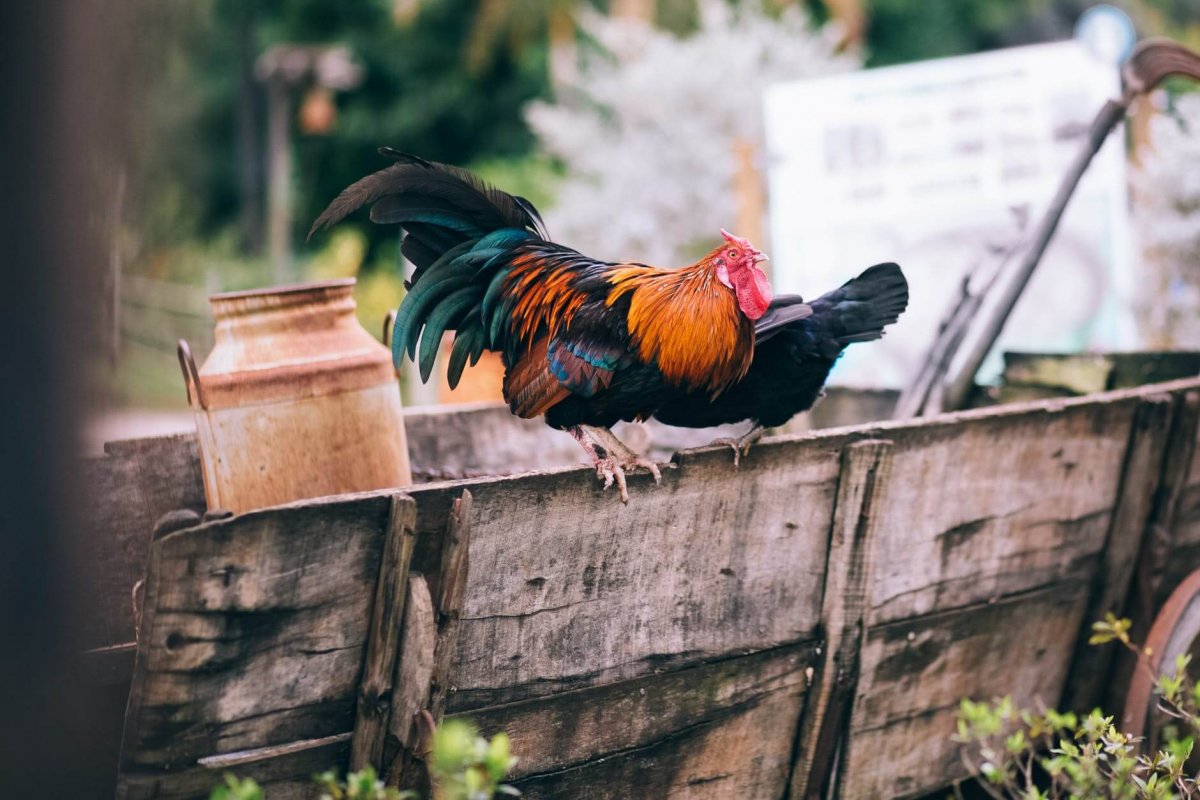
4 roosters and 1 hen roosting in a coop

The tried and true method of knowing when to cull roosters is by their age, not necessarily by crowing. We’ve generally culled our excess roosters when they were around 4 months old. But you can wait even until they’re 6 months old before processing them. The same is true for egg laying hens too. Hens will live anywhere from 6-8 years, but they don’t lay eggs that long. And so, some chicken people cull their hens when they stop laying.

All of our birds are dual purpose, which means they can be used for meat and eggs. Although roosters have no purpose except meat production, unless you fancy him to be the boss of the flock. If after a couple of years, your rooster hasn’t mended his ways and you need to process him, you won’t be able to use his meat. And that’s because it will be too tough. He’s an old bird. You could try though; just don’t get your hopes up.

Thanks for stopping by, and as always, don’t hesitate to leave a comment or ask a question!

Categories
Chicks Hens raising happy, healthy chickens Roosters

What are Easter Egger Chickens

Perhaps you’re familiar with the term ‘Easter Egger’, if you have backyard birds. Or maybe not, if you don’t. No, they don’t lay Easter eggs, in case you’re wondering. However their eggs do resemble those we color for our kids. Which is how they got their name, after all. So, just what are Easter Egger chickens?

Well, in the U.S., really an Easter Egger chicken has come to be recognized as any chicken that has the colorful egg gene, oocyan. Although, traditionally an Easter Egger chicken was, and is, considered a hybrid. Meaning, it’s the result of crossing one breed of chicken with a blue egg-laying breed, like Ameraucana or Araucana chickens. Also, they don’t have a set standard like other breeds. Therefore, Easter Eggers are not recognized as a breed by the American Poultry Association.

History of Easter Egger Chickens

Ameraucana Chicken

Even though there are ~8 blue egg producing chickens around, there are only 2 chicken breeds that are currently accepted in the APA. And one of those is the Araucana. However the ear tuft gene can be lethal, causing few eggs to hatch. Additionally, those that hatch may die within a week. So, Ameraucanas were bred in response to the lethal tuft gene of Araucanas, by breeding Araucanas with other breeds of chickens. Sound a bit like Easter Eggers? It does to me too. Except the only thing that qualifies as a breed is whether the bird fits the standard. And there isn’t one for EEs.

Though there is a standard for Araucana and Ameraucana chickens. Usually the standard is based on color (of the bird), egg color, bird size, legs (whether they’re clean or feathery), the type of comb they have, and in the case of Araucanas, if they have ear tufts and are rumpless. And for the Ameraucana, if they have beards. However, if you have a chicken that matches one of these standards, someone might still claim you have an EE, simply because you got it from a hatchery, rather than a breeder.

So What are Easter Egger Chickens?

Now that we’ve covered what they are not, a breed, we’ll go over what they are. Since they are backyard birds resulting from a cross with a blue egg-laying breed, the hens can lay an assortment of colors. Green, olive, and blue are the most common egg colors that they lay. Although they can also lay pink, brown, and cream eggs. These birds have also been named ‘Rainbow Layers’, and no wonder! Although the hen won’t change what color egg she will lay from day to day. Which means, if she lays a blue egg, she will only ever lay a blue egg. But if you have a number of these birds, you will most likely have a number of different colored eggs.

collection of chicken eggs

Easter Eggers are also docile, which means they’re very laid back. Additionally, the hens are typically good layers, laying ~200-280 eggs per year. And when the hens are fully mature, the eggs will end up being large. Or extra large in some cases. Moreover Easter Eggers are dual purpose, indicating that the birds are also good for meat. Although they tend to run small. Hens might weigh ~4 lbs, while roosters tend to weigh ~5 lbs.

Also, since they have Araucana or Ameraucana in their backgrounds, they can take on some of their traits. Like ear tufts, beards, being rumpless, etc. And they come in a variety of colors. Plus, Easter Eggers don’t spend a whole lot of time being broody. Which is great, because they’ll be laying eggs instead.

Easter Egger rooster
This is our other rooster, Baby Nay. He has crooked beak, but it’s not as evident currently. He must’ve chipped it.

EEs are great for first time backyard bird keepers due to their happy disposition. And they’re a good choice for families with children because of this fact. Also, they aren’t prone to health issues. But they could get run-of-the-mill mites in their beards or tufts, if they have them. And Araucana chickens have a genetic deformity that causes their beaks to grow crooked. Additionally, the condition, scissor beak, can worsen over time, making it difficult for a bird to eat or drink on its own. Although many birds can also live long, healthy lives with the right kind of care. EEs could get this condition as well, though not as frequently.

Typically Easter Eggers do quite well in most environments. And they can cope with heat as long as they have shade and plenty of water. Furthermore, they usually do well in the winter too. And because of their comb size, they don’t ordinarily suffer from frostbite. Also, they do well foraging for themselves, which is a great way to supplement their diet. But they also put up with confinement in the coop well. Although they prefer to free range.

In Conclusion

Easter Eggers are a great all around dual purpose bird, even though they aren’t considered a breed. They’re easy to raise and are good with families. And they’re popular simply because they come in a variety of colors as well as their eggs. They’re sociable, curious, and tolerant. And they lay a lot of eggs. So they are productive and fun, making them a great complement to any flock.

Categories
raising happy, healthy chickens Roosters

How To Remove a Rooster’s Spurs

Both roosters and hens have spurs, though you might only see a nub on the latter. And both the breed of bird you have and their level of growth will determine the size of the rooster’s spurs. So in this post I’m going to discuss how to remove a rooster’s spurs. You’ll find a few “easy” methods out there for doing this. And if you have a backyard flock, you might even have tried them. But the technique I’ll cover, for removing a rooster’s spurs, is both gentle and safe.

young rooster's spur nubs
This is an adolescent rooster. You can’t see his spur nubs in this photo.

A rooster’s spurs are kind of like small appendages on each leg. They’re made up of soft tissue and covered in the same hard substance as his claws and beak.

And when a rooster is a young cockerel, his spurs begin as small bony protuberances. But some are so small, you might not even notice them. Some cockerels may have fully developed spurs as young as 3 months old, while others will take as long as 9 months. However, as he gets bigger and fully develops, the spurs get bigger, start to curve, and form pointy tips. And as long as the spurs are untouched and remain intact, they’ll continue to grow.

Why Remove a Rooster’s Spurs

Roosters have spurs as a defense for themselves (and their harem of hens) from predators. They also have and use their spurs for protection against the competition, aka other roosters. So, if you remove their spurs, they’ll no longer have that natural defense. Therefore, why would you want to remove them?

There are a few reasons that might cause you to de-spur your rooster, such as

  • if he’s aggressive with family members and other pets
  • he’s aggressive and/or hurting the hens
  • or the spurs are getting so long that the rooster is in danger of hurting himself

In the first two options, the roo could be aggressive. There are many sites that claim if you remove a rooster’s spurs, he’ll actually become tame. That makes me want to laugh. Because I haven’t personally witnessed this. And we removed the sheaths (the hard keratinous material that covers the spurs) on our first rooster’s spurs. Twice. Though he continued to attack us as soon as the sheaths grew back.

The only reason Casanova avoided attacking us during that time-frame was because his spurs were unprotected and thus sensitive. It had nothing to do with him being tame all of a sudden. Some people endorse cauterizing a cockerel’s spur nubs so they don’t develop. But I have no experience with this. However I will suggest that the hormones aren’t located in the actual spurs. An aggressive rooster will attack regardless. But if he has no weapon at his disposal, it will just be hot air.

If you have an aggressive rooster and hope to tame him by de-spurring him, you’ll be disappointed. Whether a rooster is aggressive or not is not based on his spurs. However, if he has an aggressive streak, he will most likely utilize them to attack.

So, if you have a belligerent roo, you’ll have to decide whether or not it’s worth it to remove his spurs. This decision should be based on where you live, whether or not you have predators, weighing both the pros and the cons.

The last option where the rooster is in danger of hurting himself can also be combined with him hurting the hens, if he isn’t doing it intentionally. This can be when he’s mating, if his spurs are exceptionally long. In this case the hens will reject him more times than not. But it isn’t his fault, because he just needs some assistance.

Our rooster Megatron has never attacked us. And until Baby Nay, our 1 year old concurrent rooster, he didn’t fight other roosters. In addition, living where we do particularly, the biggest predator threats our birds face are from the sky. Consequently, Megatron’s spurs were getting extremely long, I noticed, a couple of years ago. They were curling inward, and eventually they would pierce his legs. Thus, he was starting to walk funny. And I observed that he was failing more times than succeeding in the love department. Therefore, I concluded that his spurs needed attention.

With our first roo we used the hot potato method. It’s where you basically cook a baked potato. Then, you put the hot potato on the spur. Furthermore, wait a few minutes. And then the sheath will come off after some manipulation. I don’t recommend this method on a rooster with long spurs. Casanova’s spurs, at their longest, were half the size of Megatron’s. And that’s because he frequently used them. As always, we were his targets.

Since Megatron’s were so long, I didn’t want to do that. I knew that he would most likely bleed due to their size. And I didn’t want that to happen. So I recalled that we were given a battery powered pet nail file by a neighbor. Which is very similar to a Dremel. We used it to trim our roo’s spurs. And it did the job without hurting him. Or scaring him.

Now I’m going to go over how to remove a rooster’s spurs by trimming them.

battery powered pet nail file to remove a rooster's spurs

How to Remove a Rooster’s Spurs by Trimming Them

First, you need to gather your supplies. Because, once you get started, you don’t want to have to stop, since it could add more stress to the bird.

Supplies for Removing a Rooster’s Spurs Via Trimming

  • Partner

This is a 2 person job; 1 person needs to hold the rooster. And someone else does the actual trimming. So make sure you have help.

  • Towel

This is to wrap around the rooster to help him feel secure.

  • PPE gear, ie, gloves and masks

You definitely want to wear a mask when the dust from the rooster spurs starts blowing.

  • Battery powered pet nail file or Dremel

You can get these at pet stores, online at any home improvement store, or on Amazon.com.

  • Hydrogen Peroxide

This is to clean the wound just in case you trim too far and cause your rooster to bleed.

container of alum on a counter
  • Styptic Powder

Styptic powder stops bleeding. But, if you don’t have any, you can use alum. It’s found in the spice aisle at the grocery store. However it doesn’t contain any benzocaine to prevent pain. So, if your rooster is bleeding and you use alum, just know that your rooster will probably, at the very least, flinch.

Instructions for Removing a Rooster’s Spurs by Trimming

Once you have your supplies, you’re almost ready to remove your rooster’s spurs. The best time to accomplish this is at night. Some people even wait till their birds are already in the coop for the evening. However, you know your birds’ temperaments better. If you think you can trim his spurs when the sun is down, with just a headlamp, then do that.

We wait until the end of the day at our house. But not when it’s completely dark. So that means we have to catch the rooster. Although, that’s ok, because he’s pretty calm.

So once you have your rooster,

  • You or your partner wrap the roo securely in the towel

Cover his head, but ensure he can breathe.

how to de-spur a rooster
  • While he’s firmly held by one person, the other person uses the battery powered nail file, beginning on one spur

The person who’s trimming needs to hold the roo’s foot. And start away at the tip of the spur like you’re sharpening a pencil.

  • Avoid trimming down to the quick

Rooster spurs have a ‘quick’, just like fingernails, that can be seen as a darker area within the spurs. That said, if you happen to hit the quick, that’s what the peroxide and styptic powder or alum are for. Clean the spot gently. And either dip the spur in the styptic powder or alum, whichever you have.

how to de-spur a rooster
  • Round off the spurs

Don’t make the spurs pointy, so he doesn’t inadvertently hurt the hens or anyone else.

  • Give your rooster a treat

This last part is entirely up to you. But if it’s not completely dark, and you happen to like your roo, then give him a treat for enduring his pedicure.

Categories
Chicks Hens raising happy, healthy chickens Roosters

How to Sex Chickens

Today’s post is about how to sex chickens. Some of you might not have ever had to do that. Especially if you order from a reputable hatchery. But even then sometimes you might get a cockerel you didn’t order. Or you might order a straight run. Also, if you ever incubate your own eggs, or get a broody hen who hatches chicks, then knowing how to sex chickens is a great piece of wisdom to have.

So how do you sex chickens? And is it the same for chicks as it is for juvenile birds? Well, the answer to the second question is . . . kind of. It just depends on the bird. However I’ll get to that soon enough. But first, we’ll cover how to sex baby chickens or chicks.

person holding day old Black Ameraucana chick
How to sex baby chickens

How to Sex Baby Chickens

So, with chickens, a cockerel is a male chicken. And he will become a rooster. Additionally, a pullet is a female chicken, who will be referred to as a hen when an adult. And now let’s discuss how you can determine if the chicks you ordered are in fact pullets. The first method is

  • Vent sexing

Vent sexing is manually examining the reproductive organs of poultry. It’s also the most precise way to determine gender of all domesticated birds. However it is NOT recommended for people unfamiliar and untrained in it. Vent sexing chicks can hurt the chick if done incorrectly. That said, we definitely do not attempt it at our property. Not to mention, it’s quite invasive to the chicks. Although if you’re getting chicks from a recognized hatchery, chances are good that they’re vent sexing.

  • Feather sexing
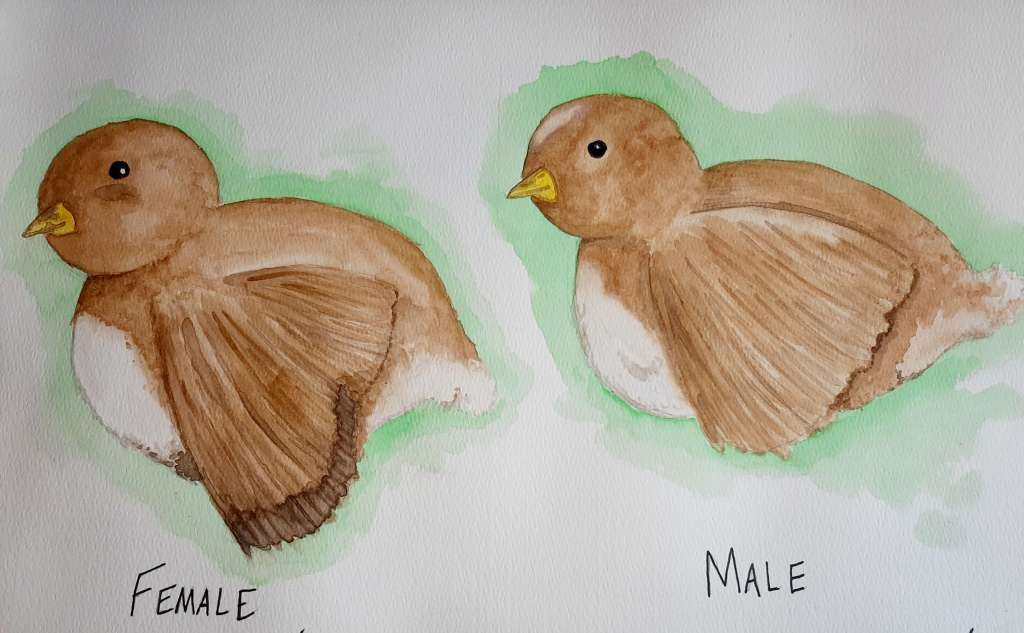
Sketch of 2 chicks with differences pointed out in their wing feathers on how to sex chickens

Feather sexing is a technique to identify the gender of a chick based on the rate of feather growth. However it’s a sex-linked trait, which means the chick’s father has to be bred to grow feathers fast. While the chick’s mother has to be bred to grow feathers slowly. Otherwise trying to feather sex a chick won’t work, because not all chickens can be sexed this way.

I’ve never tried to determine the gender of our chicks using this method. And usually it’s because I’m too caught up with all of the chicks to even think about it.

Another option using a bird’s feathers is by looking at their wings. A pullet will have different lengths while a rooster will have all one length. If you try this method, just remember to be careful with the day old chicks. Also, this practice isn’t foolproof like vent sexing.

  • Sex link chickens
Black Sex Link hen in a yard
This is an example of a sex-link hen, a Black Sex link. However she’s an adult.

Sex link chickens are hybrids that show differences in the colors of their plumage. Or a spot will be present on one sex and not on another, between cockerels and pullets. Which makes sexing them a lot easier. Although you would have to order sex link birds in order for this to happen. But sometimes you can sex link your own birds, if you have a mixed flock, like I’ve done with some of mine.

How NOT to Sex Juvenile Chickens

In a moment we’re going to cover how to sex juvenile chickens. Because there are some differences. A juvenile backyard bird is considered a teenager anywhere from 4-17 weeks old. Whereas chickens from ~16-24 weeks of age are regarded as adults, because they hit sexual maturity, and hens can start laying eggs.

Some of the most common ways people predict chicken gender are also some of the most erroneous ways. And these aren’t limited to backyard chicken owners only. Additionally, they continue to use these flawed methods over and over again. They include determining sex by:

  • Large combs and wattles

The thinking is if the bird in question has a large comb and wattles, they must be a rooster. But I’m here to tell you that is simply wrong. Especially if you have a mixed flock. I have 2 hens that have massive combs that put my rooster to shame. So judging a bird by the size of its comb and wattles is totally unreliable.

  • Crowing

Roosters start crowing generally around 5 months of age. But some crow sooner, while others crow later. Some of the hybrids we’ve had crowed a lot sooner. However crowing alone isn’t the best indicator, since hens also can crow.

  • Size

When chickens are developing, people think that if there’s a bigger bird, it must be a cockerel. And this is a reasonable expectation if the lineages and ages of the birds are the same. When backyard chickens are mature (16-24 weeks), they will be bigger than females of the same breed.

If you have a mixed flock, then your chickens will come in a variety of sizes. So determining gender is more complicated, because you’re no longer comparing apples to apples.

  • Character
adolescent Ameraucana chicken
This is a picture of one of our most aggressive hens when she was younger.

It’s true, roosters can be aggressive, authoritative, and protective of what they consider ‘theirs.’ And a lot of times you can see them demonstrating this behavior as chicks. However it’s faulty to assume, that if you’re witnessing these mannerisms, that you have a cockerel.

Because hens that aspire to reach the top of the pecking order will also display these temperaments. Furthermore, you might notice this behavior with the chicks. There will be one chick that is more aggressive. It could be a cockerel. However it could also be a pullet.

Ok, so how do we sex chickens? Juvenile or otherwise?

The Best Way to Sex Chickens

The first method for determining the gender on your own backyard birds is

  • Be patient
plain white clock on white background
Photo by Ann Nekr on Pexels.com

First, give your birds some time. Unless you have birds that can be sex linked, just give it a few weeks till you can do some real investigating.

  • Then look at their feathers

You’re NOT determining gender by the rate of growth of feathers. You are looking at specific feathers. Around 8-12 weeks old, cockerels will start getting saddle feathers, which are close to their tail feathers. And they’re long, narrow, draping, and pointed. So, if you start seeing those, then you have a cockerel. And that is the absolute best way for backyard chicken owners to sex chickens.

The hackle and sickle feathers won’t come in till the roosters are fully adults. Which by then you will see the tell-tell rooster tail that curves up and down. There definitely won’t be any mistaking that.

And since the saddle feathers are the clearest distinction between hens and roos, and also start to fill out first, this is the preferential point of reference.

On some of my images I’ve mentioned how my hens have tail feathers that resemble sails. Not all hens from every breed will be like that. Hence not all of my hens have sail-shaped tails. But a lot of them do.

The more chickens and chicks you have, the more you will be able to recognize features of a cockerel and pullet. And gain more confidence along the way. I hope I’ve helped you figure out how to sex chickens. Now all you need to do is put it into practice.