Categories
Protecting Your Backyard Birds raising happy, healthy chickens

How To Protect Your Chickens From Predators

In this post, I’m going to go over how to protect your chickens from predators. But first, let’s go over the potential animals of prey.

Predators

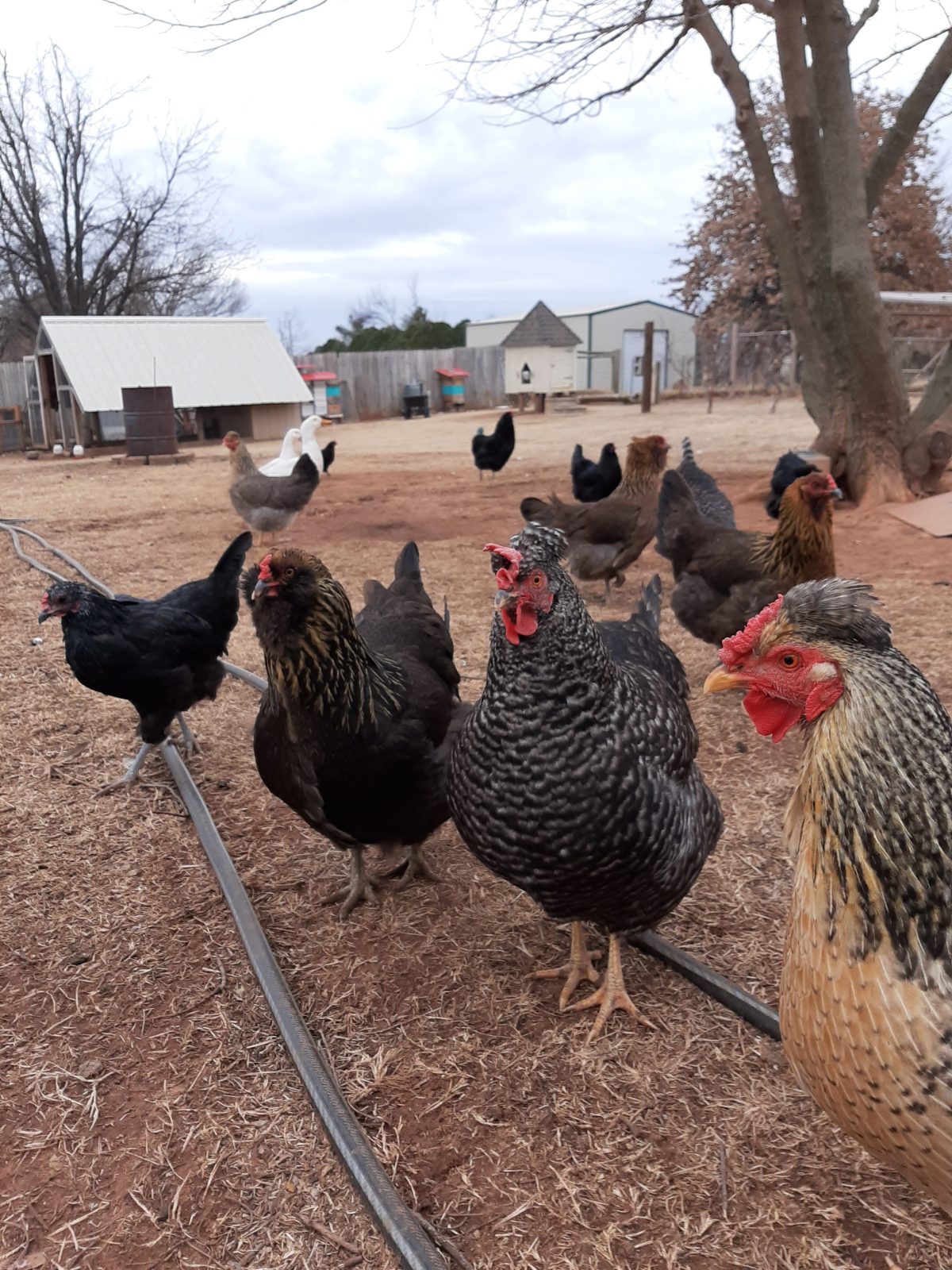
If you live in the country, you’re likely to run into a lot of predators. Or rather, they’re more likely to run into you and your chickens, ducks, or rabbits, whatever you have in your pasture or backyard. We have had all three at one time or another.
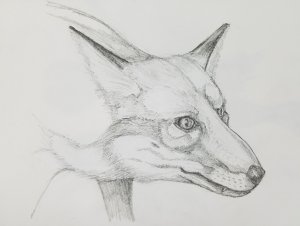
black and white sketch of Fox
Sketch of Fox Courtesy of Paul Smith

Foxes

I’ve seen a fox in our neighborhood once, however none have ever gotten our chickens thankfully. Though, I know they can be a menace; in East Texas where my mother-in-law lives on her 40 acres, foxes have routinely taken her chickens to feed their little ones.

Skunks, opossums, raccoons, and coyotes

Skunks, opossums, raccoons, and coyotes are also a threat. Once again we have been very blessed to live in the neighborhood we live in, which is in the country on only one acre in a neighborhood of 1 to 5 acre lots. We have a neighbor who lives a minute or two away (by car) on 5 acres, and they’ve had coyotes. I recall one time a raccoon came to our neighbor’s house next to us in the 7 years we’ve lived here. And he let us know about it, although it never even came into our yard.

tan and black dogs
Photo by Helena Lopes on Pexels.com

Dogs

There are also dogs, which is probably the biggest threat to our flock. Living where we do, dogs are basically allowed to run free. We even know who owns the dogs that run free. One or two of them even look like they’re starving, but there’s no animal control where we live. It’s really sad.

One of our friend’s and good neighbor’s dog attacked and killed one of our roosters (by digging under our fence where the broilers liked to relax) when we were first starting out. He felt so bad about it that he replaced the bird with another rooster. We have had other dogs get in our backyard; there’s a couple of black labs that know how to lift the latch on our gate and they gave our birds a fright a few years ago. However, the birds jumped the fence before anything else happened. We now put a lock on the gate.

2 children holding a dead snake by a raised garden bed

Snakes

Snakes are another predator, although they are more of a threat to eggs and chicks than adult chickens. In May 2017 we had a 4-ft long chicken snake in our yard. I noticed, from our picture window in our family room, our bunny jumping up in the distance. It looked like she was either getting stung by bees or getting bitten by a snake. I didn’t know for sure what was going on, so my daughter, Hannah, went outside to check the situation out.

In the meantime, all of the chickens were heading in the same direction, strangely concentrated on one thing. I soon followed my daughter. That’s when we knew it was a snake. At the time we still didn’t know what kind of snake it was. Hannah had it pinned to the ground, my husband was at work, and we were just concerned that there was a snake in the yard. Another neighbor came over and took care of the problem for us. It was then that we calmed down and were able to ascertain that it was a chicken snake.

In September 2019 one of our most favorite and least likely hens went broody, and the two eggs successfully hatched. The chicks were only a couple of days old, so Davis wasn’t leaving or prepared to leave the coop yet. Although, the next morning when I went to let the birds out, I saw Davis in the run. I was aware that the mother wouldn’t leave with her chicks for some time, but again this was new, so I wasn’t really sure what was going on.

Chicken Snake that killed a chick
Pinning the snake down.

My husband was outside, as well, and he asked me if I saw both chicks. I thought I had, but he didn’t. So he looked in the coop and saw a snake, which had gotten one of the new chicks. That’s why Davis and the other chick were out in the run. It was a chicken snake, smaller than the first one that got in our yard. We reasoned that it was able to slip in between the run door and frame-the space was just big enough. Our neighbor closest to the coop used to have a barn cat that was pretty good at keeping critters like that away, though Bobby passed away early 2019. Since that incident we installed more hardware cloth on the door so when it’s closed there’s no longer any space for snakes to sneak in.

Hawk in tree near chicken coop, looking for chickens
A hawk on a tree limb of my birds’ favorite tree.

Hawks

The following section contains imagery of graphic animal injury.

The other biggest predator threat that our birds face is from the air: Hawks. When we had our first real flock of chickens we had an Ameraucana we called Cody; she liked to forage by herself. This was back when Paul was building the big coop. Well, one day we went running errands, and when we got back Cody was gone. There weren’t any dog tracks-it had rained the day before, so the ground was still muddy. We looked everywhere, looking for tracks. Nothing. We think she got taken by a hawk, but we can never be entirely sure.

On April 20, 2018 Hannah went outside to collect eggs around midday. Strangely all of the chickens were in the run, so she suspected something was wrong. Especially when she saw all of the feathers in the yard. She went to the other side, the coop side, and looked inside and spotted Rex, Cody’s sister and tried to pick her up. That’s when she realized what happened, without knowing the exact details.
Chicken Injured by Hawk
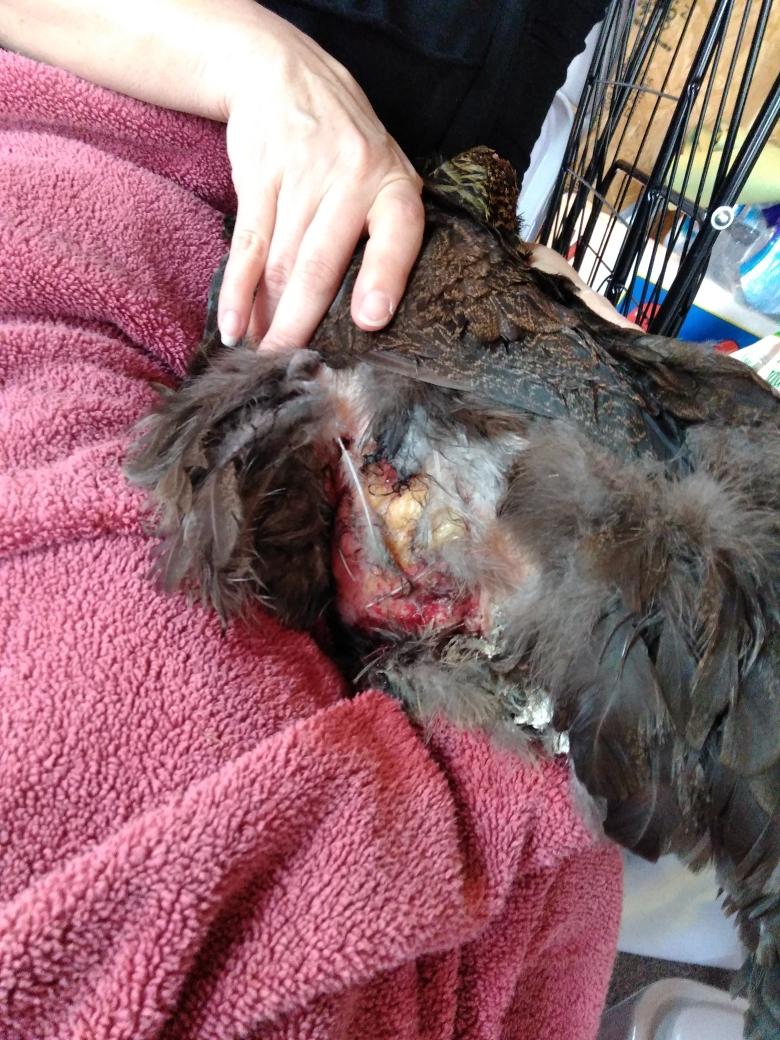
Rex’s injury from the hawk attack.

Rex had been attacked, most of her tail feathers had been pulled out, and she only had a flap of skin left on her backside. We were left trying to figure out who or what the predator was. Was it a dog? The gates were all closed, and we didn’t think it could be a small dog squeezing through the fence. A cat? Possibly, but we couldn’t imagine it. We thought about a hawk, but hawks don’t let go of their prey, so we easily dismissed that.

We put Rex in a cage with water and food, put some medicine on her wound and then talked to my father-in-law who recommended we get an antibiotic. My oldest daughter’s father-in-law is also a veterinarian and he’s local, so we called him. The next day we picked up some antibiotics for our bird. Over the next 10 days, Rex ended up hating us for her treatment, however she was on the mend with the shot in her rear.

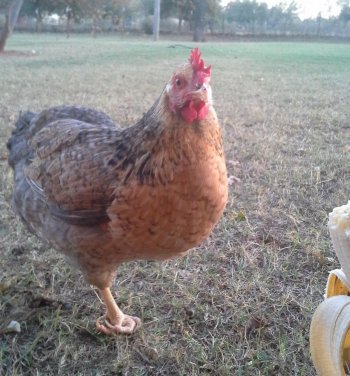
close-up shot of face of an Ameraucana hen

It wasn’t until a couple of days later when we learned the truth of what happened to our bird. Our neighbor across the street was just getting off of work when he saw the hawk dive to attack and pick up one of our hens. But then it unbelievably dropped Rex and flew away. That’s why our bird is still alive today. That and the antibiotics. Consequently she has a reputation and an attitude now. She’s the bird who lived.

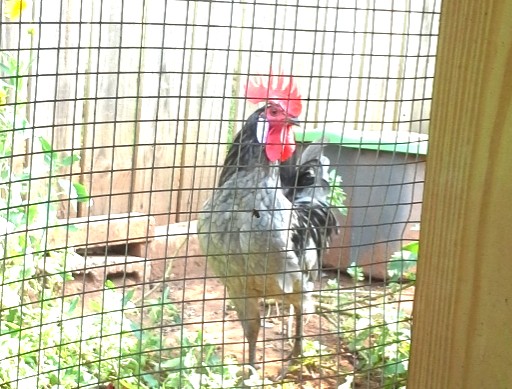
Blue Andalusian Rooster behind coop
This is a close-up of hardware cloth with a rooster in the backgroud.

Protecting Your Flock from Predators

Now that we’ve gone over the list of predators, let’s discuss ways we can protect our flock from them.

A Good Coop Will Help Protect Your Chickens

So how do you protect your flock from predators? The first and foremost recommendation is to lock your birds up at night once it’s dark. I’ve read of friends who don’t lock up their birds, and sooner or later, predators will get them. With a little training, you can get them to go into the coop. Our birds seem to have an instinct to go in the coop now, so they let themselves in at night. Some, the ones on the lowest end of the totem pole, are the last to go to bed. But as soon as it’s dark, I go out to shut the run door. I bring a flashlight with me to make sure everyone’s in the coop, as I do a head count, double checking that the doors are secure before leaving.

Predator-proof Your Coop To Keep Your Birds Safe

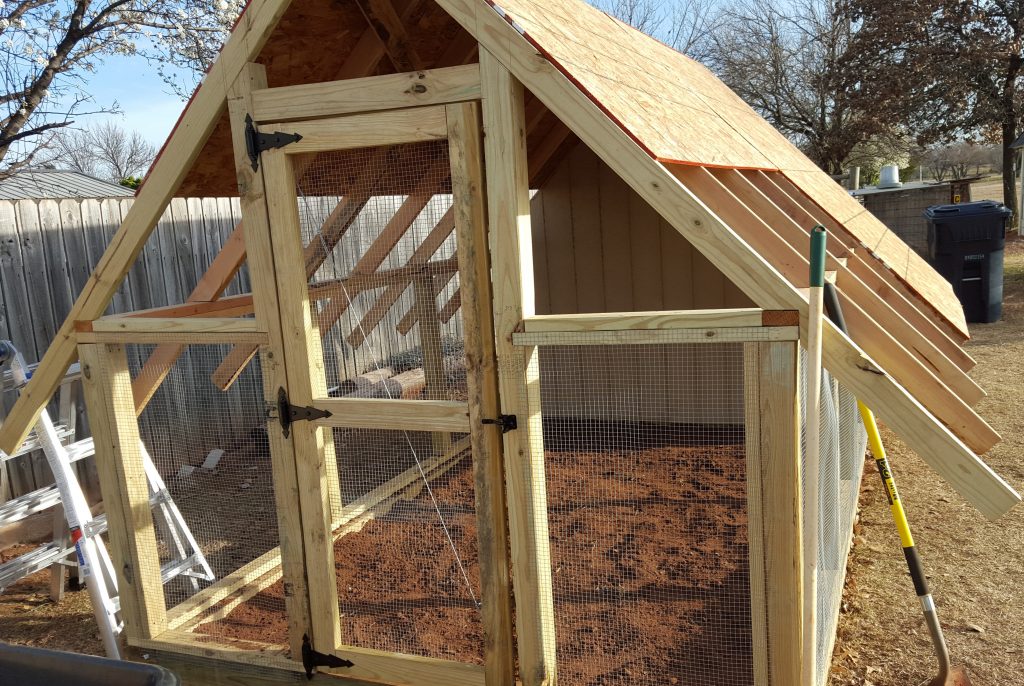
The second most important suggestion is to make sure you have a predator-proof chicken coop and run, since most predators go out at night when the flock goes in. My husband put hardware cloth or wire mesh on the run, which is more sturdy and smaller in diameter than chicken wire. I wrote a post about the types of coops, you can read here.

three dogs outside in the grass

Get a Chicken-Friendly Dog

Invest in a guard dog for the flock-that’s just what my in-laws did. They were tired of the yearly assaults by foxes so they bought a Great Pyrenees mix. Lights and noises are also supposed to be deterrents, and because of the latter, guinea hens might make good alarms to predators due to the odd sounds they make.

When we had our Shetland Sheepdog, Moses, I truly believe his presence helped discourage aerial attacks. Now we have Sophie, and when she’s outside, I think she does the same. I also believe that if the birds tolerate the dog, and the dog warms to the flock and doesn’t hurt them, then utilize dogs for the benefit of everyone. They are possibly the most beneficial resource we have to dissuade predators from our property; we have only to train them properly.

Since Rex, our hen, got attacked by the hawk, any time our flock hears bird sounds, they run for the coop. They either can’t differentiate between a crow, a Mississippi kite, and a hawk, so they take cover just in case. Or they decide to take cover, because they’d rather be safe than sorry.

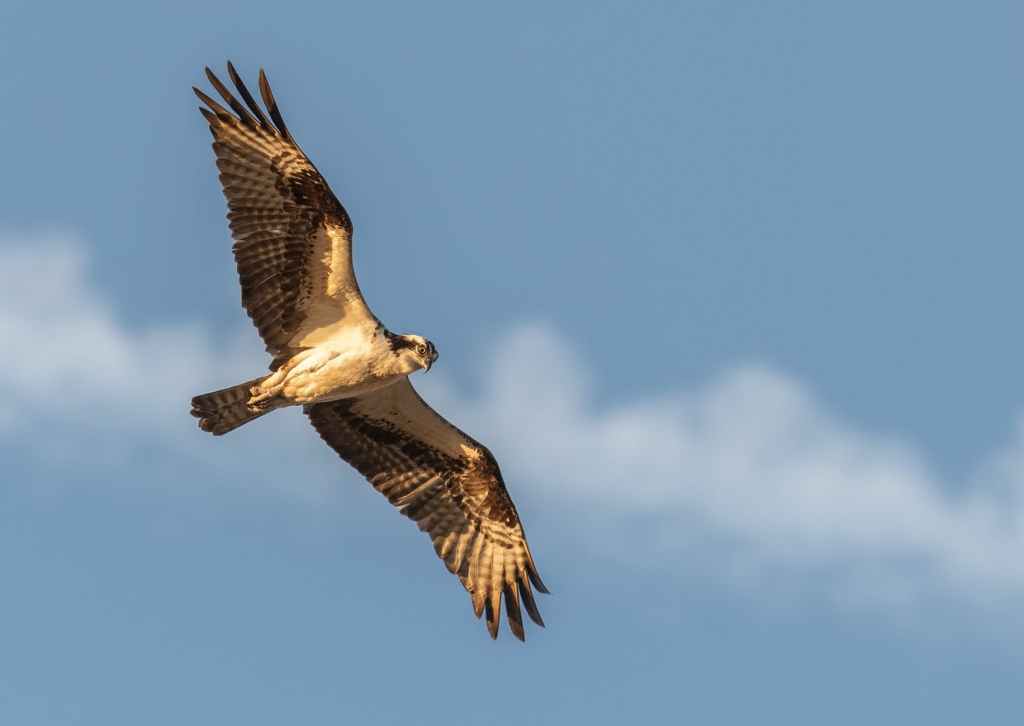
Over the years though, we have discovered that the crows and Mississippi kites have nests in the trees surrounding our property. And sometimes when a hawk has flown over screeching, a family of crows or kites will escort the raptor away to keep their own nests and young safe. We’ve witnessed it, although the hawks soon learn and adapt, and stop screeching in order to go undetected. The crows and kites can keep the raptors away, but we can’t depend upon them.

Invest in Shade Trees

The summer months are safer for our birds, because they’re warmer (or hotter, depending upon where you live), so they seek out shade. When we first moved into our house there were only two trees big enough in our backyard where the birds could sit and keep relatively cool. I soon learned they were far safer from predators under those trees in the summer than out walking around in the winter or autumn in full sunlight where they were exposed. In the Spring of 2016 we planted three fruit trees, and every year since, we’ve planted more, either fruit or ornamental.

What Not to Do

It is illegal in the United States to kill hawks or owls, even if they kill or attack our source of food or income. Raptors are protected, but we have to discourage them from coming to our yards. Roosters don’t always fight predators; a lot of people mistakenly think they do. Casanova, our first rooster, fought us over who was going to be the head roo. Megatron, my current rooster, fights actual roosters, to put them in their place (kinda like Casanova, only he was slightly confused). But the rooster is supposed to warn of danger; that’s the main way he protects the flock. There isn’t any way he can take on a dog, skunk, raccoon, or hawk; it would be futile unless the predator was smaller than him.

The best, proven options are a good coop and making sure the birds are inside at night. And during the day, if you have problems with predators, you may have to get a dog suited to chickens. It will deter the predator by always being a presence. You can click here to find out which dogs are best.

Categories
Hens Protecting Your Backyard Birds raising happy, healthy chickens Roosters

How to Introduce New Chickens to the Flock

If you’re a backyard chicken owner, then it’s likely that with the onset of every spring, you are familiar with the desire to purchase new chicks or chickens. This hobby can be very addictive. So this post is intended to help you know how to introduce new chickens to the flock. Because, otherwise, the new birds can upset the pecking order or bring diseases to your backyard birds.

quarantined chickens for introducing backyard birds

How to Introduce New Adult Chickens to The Existing Flock

When introducing adult chickens

  • Never introduce solo chickens to your flock.

Chickens can be mean. Even if you follow all of the recommendations for introducing new backyard birds, if you only present 1 chicken to your existing flock, that bird will inevitably be abused. It stands a better chance if you at least present it with one or 2 other birds. I don’t recommend adding more than that to a well established flock. This is because, more birds can greatly upset the pecking order, especially dependent upon the breeds you’re introducing. Which could cause stress in your existing hens, possibly making them stop laying eggs.

  • Don’t allow the new birds around your existing members until after you’ve quarantined the newest ones.

This way you can make sure the new birds are disease and parasite free. You don’t want to possibly give the rest of your flock something. Most people recommend keeping the new birds away from your established flock for a month. But I’ve also seen numbers ranging from no less than a week to 30 days. Also, while you are monitoring the new chickens, be sure to wash your hands when going from them to the existing flock.

  • Watch for pale combs and wattles, feather loss, lethargy, and scaly legs on the new members.

If you purchased the new birds from a reputable dealer, it generally isn’t necessary to isolate the birds for so long.

And then, once you’re satisfied that the new members are healthy, put them somewhere the rest of the flock can see them, and vice versa, preferably for a few days. If you can put the newbies in an enclosure, in the run, so the newbies and existing ones can observe each other, this is the ideal way for everyone to start getting to know each other without excessive violence. You want to do this for at least a couple of days. Because it helps to alleviate stress in the pecking order when the birds are finally let loose in the yard and coop.

  • Finally, add the newest members, at night, to the coop.

Chickens can’t see well in the dark, so this makes it the perfect time to sneak in the newbies. Then monitor behaviors in both the new birds and existing flock the next morning.

It would be unusual if you didn’t see members of your established flock peck the newbies. This is perfectly natural and acceptable. They are establishing the pecking order with the newest members. And depending on the breed(s) of chickens you have and then recently acquired, it may be limited to only pecking here and there.

However, there are more aggressive/dominant chicken breeds. And if the newest members happen to be one of those breeds, then you might see more than pecking. That’s because those hens will more than likely want to ascend to the top of the pecking order.

Wyandotte/Cream Legbar Hen

If one of the birds starts bullying, and you know which one it is, then remove that bird from the group. Put her somewhere like in a cage or a separate enclosure, away from the rest of the flock, with food and water. And after a couple of days, reunite her with the group. If her behavior hasn’t changed, purchase Pinless Peepers. They sort of act as blinders for the hen’s eyes, which will prevent her from bullying.

If the whole flock (or the majority) is bullying one hen, first you’ll need to check her over for injuries. You’ll more than likely have to separate the bullied hen from everyone since there’s too many doing the bullying in this case. And usually the bullying is due to an injury or a quirk the hen has, that the rest of the flock sees as a weakness. It will continue in this situation for as long as the hen lives.

juvenile chickens

How to Introduce New Chicks to the Flock

When introducing chicks to the flock

  • They should have their adult feathers. Sooner than that, they could get hypothermia.
  • Most people recommend that the chicks be adult size, (so no longer chicks) before putting them in the general population.

We followed this advise with the first, second, and third set of chicks we purchased and our first set of incubated chicks. However, as we got accustomed to raising chickens and our particular birds, we stopped waiting till the chicks were full size.

I don’t suggest this until you are very familiar with your flock and know their temperament. As I mentioned above, some chicken breeds tend to be more contentious than others. So, this will dictate how and when you introduce new chicks to your existing flock.

chicks
  • After their adult feathers are in, put the new chicks in a cage or an enclosure in the run. This serves the same purpose as when you’re introducing adult birds to the flock; so they can see each other.

With our second set of incubated chicks, we waited till they had their adult feathers and then brought the chicks out, in a pet cage. And then we put it in the run, so that they could see the adults, and the adults could see them. We only had 5 that time, so the cage was big enough for them. They also were protected from the adults (thus the cage), and they were protected from the elements and predators (thus the run). We did this for a few days before letting the chicks free.

We discovered that the adults didn’t pay any attention to the chicks. Because they didn’t deem them a threat to their food or position; they never attacked the chicks. It was only when the chicks got around the same size as the existing birds that the head pecking began. Also, those chicks were some of the smartest chicks we ever had. When it was time to be locked up at night, I would go out there and call them to me, to follow me, and they followed me to the coop to get locked up.

  • Finally, add the chicks to the coop, in the evening. And monitor the existing flock’s behavior the next morning.

Perhaps the most important thing to be careful of when adding chicks to your backyard is predators. You have to watch out for predators for your flock already, however there will be added ones for chicks. Cats, Mississippi Kites, and crows are just a few of the creatures that will not hesitate to attack chicks, but ignore the big girls. And that is merely due to the size difference.

And if you have a rooster, you can’t rely on him to protect the chicks. If he ignores them, he ignores them. Until they get to a certain age and size, they pretty much don’t exist.

introducing chicks to existing flock
Our Ameraucana Maran chicks.

Should You Add a Rooster or Not

Now what do you do when and if you want to add another rooster? I have read other blogs that are adamantly against it, proposing that it’s impossible. Stating and affirming that there will be bloodshed if it’s even attempted. However, I’m here to refute that, because anything is possible. Take most of my roosters, for example, who have not only been introduced but lived together without actual bloodshed.

No one can actually claim that it’s impossible for roosters to get along no matter the situation. And by the same token, I can’t guarantee that all roos will get along. Just, anything is possible. But a good rule to follow is to have 10-12 hens per rooster. And that’s not to be nice to the roos; it’s for the health and safety of the girls.

Since I brought it up, introducing a rooster to the flock is similar to bringing in a new hen:

  • Quarantine him for at least a week or more.
  • Next, have a physical barrier, like a cage, between the flock and the new roo, so they can see each other for a few days before they are thrust together.
  • Introduce the new rooster, in the evening, in the coop.
  • And the following morning, monitor everyone’s behavior.
Cream Legbar Ameracauna Cockerel
Cream Legbar, Ameracauna cockerel.

I’ve mentioned in a previous post here how our Cream Legbar roo was good with his girls relationally, but he was a coward; he’d bring danger to them while opposing us, his benefactors. So, my girls and I wanted to bring someone else in to teach him some manners. That was a joke.

introducing roosters to existing flock
Our Blue Andalusian rooster, Starscream.

We traded a couple of Black Sex-Links for a Blue Andalusian, adolescent rooster we named Starscream. We had a good number of hens, so the girls would be ok, we reasoned. And we wanted our short, scrawny rooster, Casanova, to have someone else to attack instead of us. But that didn’t quite work out the way we wanted it to; they became best buds.

We separated Starscream for the requisite amount of time, then we put him in an enclosure, so the adults could gawk and get accustomed to him. This was the only time Casanova showed true backbone as he made his rooster noises and did his rooster dances for this newcomer.

When we let Starscream out with the other birds, we thought for sure we would have just recompense on our enemy, Casanova; that the Blue Andalusian was going to solve our problems. Boy, were we wrong. Not only did he not solve our original problem, but he created another one.

That he was sexually mature was a fact, but going after the hens was not the issue; we expected that, and once again Casanova proved what a terrible rooster he was, letting this newcomer in and having his way. Yet I have a feeling it was more about self preservation than anything else. If they got into anything at that point, Casanova might win a fight, because of his spurs. And even though they were about the same height, the Blue Andalusian looked weightier than Cass. It would only be a matter of time, I was sure, before Starscream challenged him. We only had to wait, right?

Troubles with Too Many Roosters

We didn’t realize how bad things were with this new roo until one night my husband and I slept without our fan on. Starscream literally screamed (read crowed) all night long. He barely crowed at all during the day; it was like he was being respectful to Cass during the day, in front of him, while at night, he was telling everyone, especially the hens, “I’m the man, I’m the man, I’m the man!” I felt so bad for our neighbors, especially the ones who live closest to the coop.

I’m not exaggerating when I tell you that he crowed all night. All. Night. Long. It kept my husband and me up; I could only imagine the hens couldn’t sleep either. Maybe it was the name we gave him. We were asking for it, right?

We had Starscream for a month and a half to two months before we heard his ‘all-nighter’. That, coupled with the chicks we had brought in over the course of several months (4 introduced as almost adults due to their size, and 5 new adolescent chickens, including Starscream), started having an effect on our established hens and egg production, which I cover in another post. At that point something needed to be done, because he wasn’t serving a good purpose for my girls. I couldn’t continue to wait for him to challenge Casanova and possibly crow all hours of the night, stressing the hens out.

So, if you end up in a situation where your rooster or spare roo is stressing your hens out, you have a few options.

  • You need to cull him. This is the fastest method of solving the problem. Although, sometimes people have a difficult time with that option. It just depends on how serious the issue is. Are your hens actually getting hurt? Because spare roosters can do that too! Is egg production down?
  • Re-home him. This is the best solution. If you can find someone to take the roo off of your hands, everyone wins. Ask around and post something on Facebook; you might get lucky.
  • If you can’t find someone to take him, you can always Google for animal sanctuaries. Sometimes you have to pay a small fee for them to take in the animal. But, it’s worth it.

In Conclusion

Basically introducing roosters, chicks and adult chickens is very similar. You quarantine the adults to make sure they’re not sick. But with chicks, wait until they’re feathered out. And then satisfying the requirements, you place the newbies in an enclosure separate from the established flock, where they can see each other for a few days before combining them in the coop in the evening. Have you ever had any crazy chicken introduction stories? What about chickens bullying other chickens? Your comments are appreciated.

If you enjoyed this post, please like, share, and please don’t forget to follow.

Categories
Protecting Your Backyard Birds raising happy, healthy chickens

Types of Chicken Coops

There are so many things to think about when starting your small backyard flock. Or even your large backyard flock. You get the chicks, the heat lamps, the different feeds. But one of the most important considerations is the coop. What kind should you get? Should you buy pre-made? Or should you build it yourself? And there’s a ton of info on the types of chicken coops out there.

I already mentioned in a previous post that when we had our broilers we only had a temporary shelter. Very temporary, because they were thrust upon us, and we had nothing to work with. We just moved into our house, so we were tight with our money. Buying a pre-made coop wasn’t an option. However, when our daughters brought home 7 chicks from East Texas that summer, my husband had to come up with something better.

Building Your Own Coop

If you have a small flock and don’t have time to build something, buying a pre-fabricated shelter is a great option. Although, if you have a bigger flock, you’ll need to either build the coop yourself or hire someone to build it. Most pre-made shelters are designed with smaller flocks in mind. Think under 7 birds.

My husband has been involved with art, design, and different stages of construction most of his life. He enjoys it, so it was a no brainer for him, deciding to build the coop. The hard part was finding time and coming up with a suitable design. He checked out some books at the library for different designs and got a basic idea before gathering supplies.

Coops Out of Re-Purposed Materials

There are so many different ways to make a chicken coop. All you really need is creativity; you don’t even need money in some cases. Although, you need to make sure predators can’t get into it.

When we were thinking about a chicken coop, there had been a tornado that touched down less than a couple minutes away from us. So there were a lot of fences down. A friend of mine went through her neighborhood and constructed her coop out of old fence.

small chicken coop

My husband didn’t want to do that. He said it’s more difficult to use wood that’s already been used. But due to our budget, we couldn’t afford to get what we wanted. So, he went to the new home subdivision near us and asked the builders if we could take their ‘trash’. They said we could have it, which consisted of the wood we would use to build our first chicken coop. The only reason they threw it out was because they made a mistake with it. Instead of trying to fix their mistakes, they would just throw out the wood and start with new.

We got the shingles from someone else my husband worked with. He just re-roofed his house, and all we had left to do was paint it. I think the hardest part of building that chicken coop was my husband getting the telephone poles into the ground. That’s what the coop stands on.

built small chicken coop
Completion of the first coop with a ramp for the birds.

I have seen coops made out of discarded trampolines. Again, the most important element is making them predator-proof. You can check out some ideas here.

If you plan on starting small or have a small flock, you can find manufactured coops on Amazon. You can also go to your local feed store. One year we even saw some at our Sam’s Warehouse.

foundation being dug and chickens in background
The chickens helping to dig the foundation for our second chicken coop.

When our first batch of incubated eggs started hatching, we didn’t have a coop big enough for 20-something birds. It only had 9 nesting boxes but no run. It was basically just a small shelter from the elements and a place for the birds to lay their eggs. However, with the certainty that we were going to have more birds, we needed a new place for all of them.

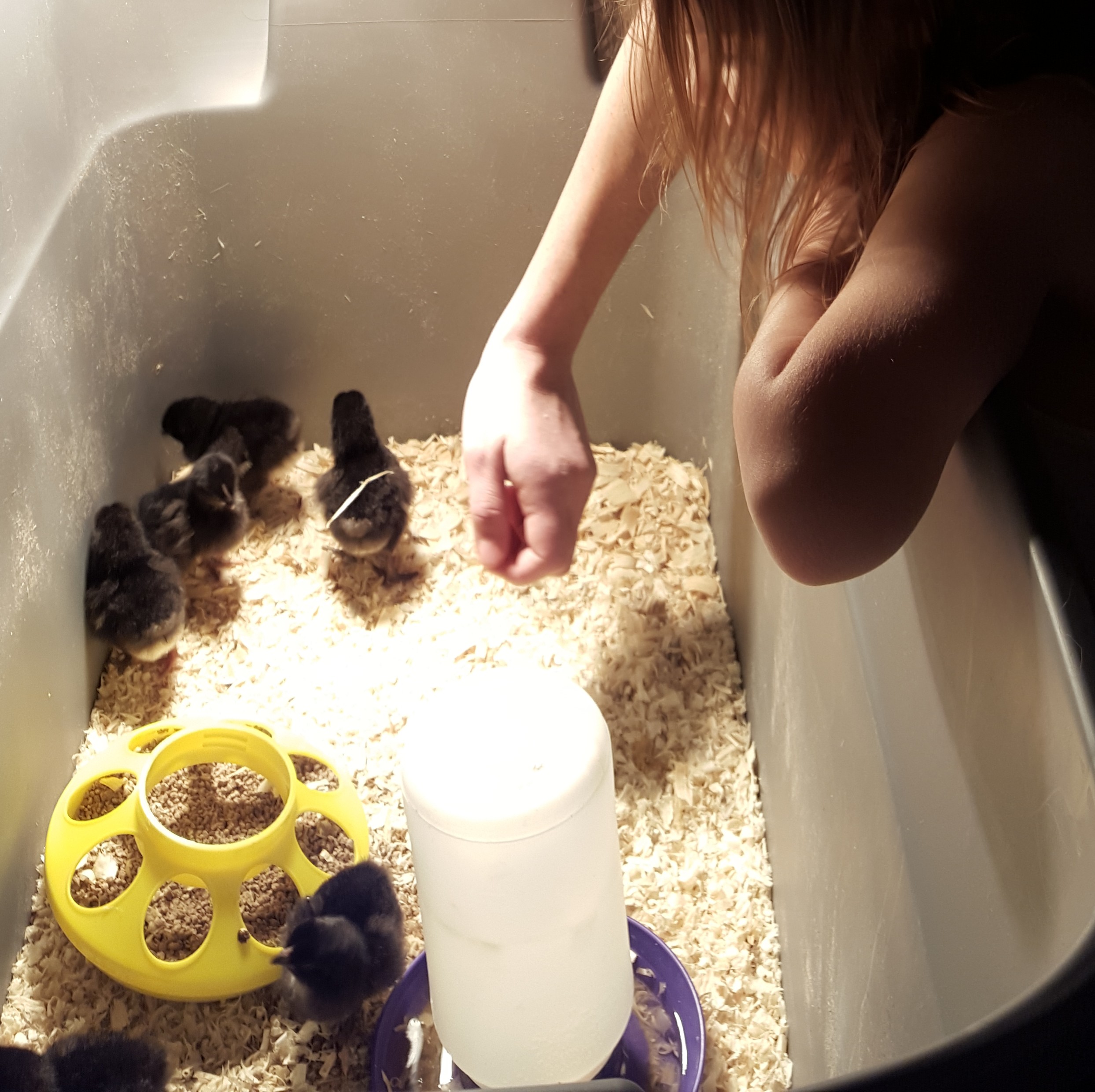
Temporarily we placed the chicks in a big Rubbermaid box with a heat lamp, pine shavings, plastic waterer, and chick-starter. We left them in this setting until the adult chickens had a new home. At that point we could bring the new chicks to the first coop we built; it was the perfect size for bite size birds.

huddled group of adolescent chickens
Our chicks.

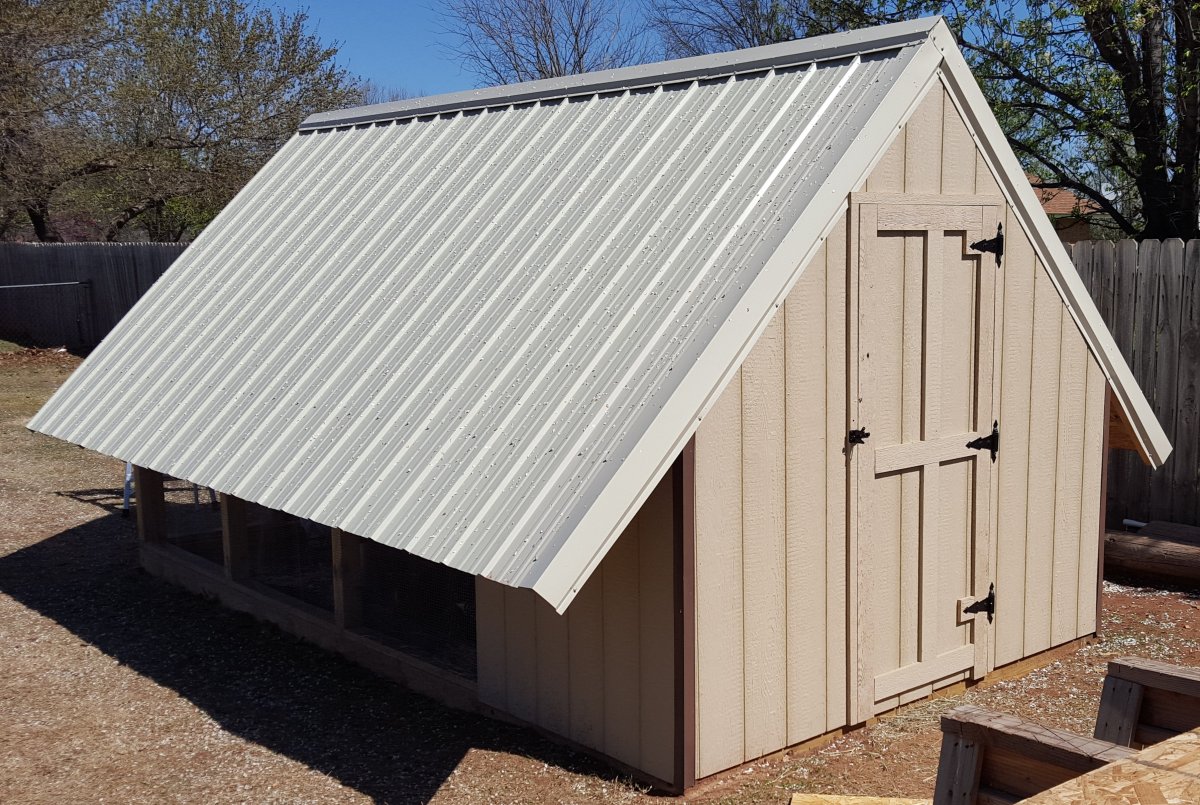
It took my husband and son-in-law 4 or 5 days to build the new coop from start to finish. And when it was completed it was like a penthouse compared to what the birds had before.

mixed flock of chickens in the run of a chicken coop

Whether you purchase a prefabricated coop or build your own, make sure it’s the right size for your flock. The coop is where the birds rest at night, the hens lay their eggs, and where they run to when there’s danger.

Nesting Boxes

Chickens don’t necessarily need an abundance of nesting boxes, unless you have a very large flock. We currently have 29 chickens, 1 guinea, and 4 ducks. And only 2, or at most 3 boxes, get used. Ever. They sleep on a roost, so installing some roosting poles is also important. You would be surprised at how some birds want the whole roost to themselves. Our first roo was like that. He would peck the claws of whoever was next to him, making them jump off. We currently have a hen that’s like that; she doesn’t want anyone next to her on the roost.

Our big coop only has 12 boxes. In our experience the hens usually like to lay their eggs in the same nesting box, so we didn’t figure that would be an issue. And it generally isn’t. They always have plenty of space; they just choose not to use it, preferring the space someone else is occupying instead.

Mixed flock of birds roosting in a chicken coop
The guinea pair, roo, and a couple of hens.

Mobile Coops

We have a run attached to our big coop, but we didn’t with the first one. I have seen some that are detachable; I’ve also seen coops that are mobile. This can be beneficial, because it can be moved around the yard due to its light weight. Also, the birds won’t denude the grass in just one area. It also means less clean up for you, equating to fresh air for the birds and less disease. But if you have one that’s attached or are purchasing/building one that’s attached, it’s not that big of a deal; it’s just another area to clean.

There are pros and cons to having either a permanent or mobile coop and run. Though, probably one of the biggest arguments against the tractor design would be dependent on where one lives. If, like me, you live somewhere where it gets super windy or experience frigid winters, including ice and snow some years, this option wouldn’t be ideal.

Once September rolls around, we can get gusts of up to 40 mph or more. Not to mention the threat of tornadoes in the Spring. The last thing you want is the hen house being knocked over. A few weeks ago we had an early winter storm which downed power lines. Ours didn’t go out, because ours are buried, thankfully. But people were without power in several areas of our state for weeks. Then two weeks ago, we had one of those terribly windy days that we have, and power went out again. What makes the tractor design ideal is also what makes them unsuitable in contrary weather.

white and black opossum on brown rock
Photo by Skyler Ewing on Pexels.com

Something else to consider when designing or buying a coop and run is how to predator proof it. I have had friends that never locked their birds up at night, just letting the chickens fend for themselves. I’ve also had a friend who had a window on their coop for their birds. One friend just had a coop and no run made entirely out of fencing material. In all three instances the birds were killed by predators. Rather than placing chicken wire on the run, my husband placed hardware cloth or wire mesh, which is extremely strong and durable. The only things that can get through, besides bugs, are mice. A lot of people think chicken wire is a good option. But it is very malleable and snakes can fit through the holes. You need something tough and wire mesh is it.

Size

The last thing to take into account when deciding on a chicken coop is the size of your flock. There’s a lot of different material online on how to figure out the size of your coop based on the size of your flock. Are your birds free-range? Or are they going to be in the run all day? When we first built our big coop, we only had 8 birds. Then we expanded to 20 for a long time. And now we have 29, plus ducks, and chicks. But not all the chicks will stay. However we still have our small coop, that we use for broody hens.

A good rule of thumb is 2-4 square feet bird, unless your birds will be confined all day; then more space is better. Since our birds stay out all day until they put themselves in at night, they have enough space. Although, if we ever increase our flock, we’ll need to build an addition.

Do you have a preference for your coop and run? Do you live somewhere that isn’t as windy? I’d love to hear your thoughts.