Categories
All animals cats dogs non-fowl

How Smart are Domestic Cats

When people consider animal intelligence, they probably imagine a dog, a chimpanzee, or a dolphin, but not usually cats. Cats are typically portrayed as uninterested, lazy, and snobby creatures. In medieval times they were even depicted as being associated with the devil. However they weren’t necessarily considered pea-brained. Though, who really knows, right? On the other hand, for fellow cat parents, you know something different. Your cat isn’t a dog, a chimp, or a dolphin, and certainly not demonic. Even if your cat is cunning, they’re still smart in your book. Join me as I attempt to answer the question, “How smart are domestic cats?”

Let’s look at the question for a minute. Who or what are we weighing cats against? Dogs? Humans? Stray cats or wild cats? It would be great to say definitively that domestic cats are smarter than dogs. Regardless, it’s just not that simple. Cats haven’t been studied as extensively as certain other species. At first, scientists spent all their time researching mice, rats, and pigeons. But then in the 1990s, dog cognition started to be studied. Some scientists attempted to study cats at the same time, though without much success. So it wasn’t until the past decade that any significant headway into feline research came about.

How Intelligence is Measured

team of 3 scientists in white scrubs working together around a computer and monitor
Photo by Mikhail Nilov on Pexels.com

Before we can answer how smart cats are, it’s important to understand how intelligence is measured. Equally as relevant is how one defines cat intelligence. You’ll likely find different definitions. But basically they all amount to the same thing: Cat intelligence is a series of events that guide behavior, such as sensing, perceiving, recalling, and reasoning. Moreover, human intelligence can be measured by IQ tests, such as the Wechsler Adult Intelligence Scale, whereas most animal cognition tests involve

  • gauging an animal’s problem solving potential

An animal’s problem solving ability would be whether they can work with groups, use tools, etc.

  • measuring the size of an animal’s brain and complexity

Encephalization quotient (EQ) predicts cognition via comparing one animal’s brain to an animal of similar size.

  • evaluating the animal’s sense of self awareness

This type of test is called a mirror test. For instance, a spot or mark, like a red dot, is placed on the animal’s forehead. If the animal recognizes its own reflection, by touching its face, then the animal passes the test.

  • studying an animal’s self control and capability to act on new info

The self control or pointing test instructs an animal to anticipate food in a specific place. Then the location changes and the human points to a new spot. Domestic animals, like dogs, excel at these tests. And human babies pass these tests around age 1 year.

  • and assessing memory

Usually memory tests include novel object recognition and a maze of some sort.

When writing this post, it became obvious that analyzing animal intelligence is ongoing and not simple to answer. As a result of being measured by human standards, those very studies are questioned by some people.

Comparing Cats to Humans

strand of DNA with red streams going out from it on a black background
Digital Art, Courtesy of Sarah Smith

Believe it or not, cats have similarities to humans. If you’re a cat parent, you already sense this. And I’m not talking about character traits here. But seriously, humans and cats share 90% of the same DNA. With that in mind, the human brain contains ~86 billion neurons while a cat’s brain has ~ 1.2 billion. Also, the surface area of a cat’s cerebral cortex is 83 cm2️⃣ compared to 2400 cm2️⃣ in humans. And their cerebral cortices contain ~250 million nerve cells in contrast to our 16 billion. Since cats are smaller, it makes sense, right, because their brains are smaller than ours? However, intelligence isn’t all about brain size. In reality, it’s about number, size, and complexity of nerve cells.

Not only are cats 90% genetically similar to us, their smaller brains are also nearly 90% identical to our own. A cat’s brain has a cerebrum, cerebellum, brainstem, 2 cerebral cortices, and surface folding, just like ours. Moreover, like a human brain, a cat’s is divided into areas. And each has a unique job to carry out. Plus, like ours, a cat’s brain is created to have good memory, both short-term and long-term. Though, a cat’s brain takes up only ~ 0.9% of their body mass in comparison to ~ 2% in the average human.

Traits of a Socially Smart Domestic Cat

one adult calico cat standing behind and looking at a black and white tuxedo kitten sitting down on a dining room table
Just a month ago before Itty and Pickles made friends.

Recently social intelligence has been the most common subgroup to be studied. Additionally, there are some basic features socially smart cats possess, including

This detail of feline cognition reveals that a cat can recognize that just because an object disappears out of sight it continues to exist.

Simply put, associative learning for animals is the process by which an animal connects (or associates) stimuli with certain behavior.  For example, my cat, Itty, knows that if she scratches my mattress (the stimulus) every night, I’ll wake up to feed her (the behavior). She memorized her particular action produced my reaction of rewards. (And now I’m stuck waking up in the middle of the night each night.)

  • social referencing

Social referencing tests whether a cat will pick up on their owner’s emotional cues regarding certain things. Not long ago I wrote a post on Itty being stressed. However, now I believe she was reflecting what I was feeling about my new work schedule. Moreover, I think I contributed to her anxiety with Pickles, our new cat. And she doesn’t like being around certain people based on how I think she feels around them.

  • secure attachment style

Cats, like dogs and humans, have attachment styles. While humans have 4 attachment styles, cats only have 2, and dogs 3. Additionally, a cat will have either a secure or insecure attachment style. And a secure attachment style is associated with emotional intelligence. Plus, research has found that cats are more securely attached to their people than not.

  • staying responsive to human cues

These type of tests can involve pointing, following an owner’s gaze, and responding to their owner’s voice as well.

There are many examples of people who’ve trained their cats. Every cat has their own personality. While one may be a piece of cake to train, another might not be as easy.

Should We Compare Cat IQ
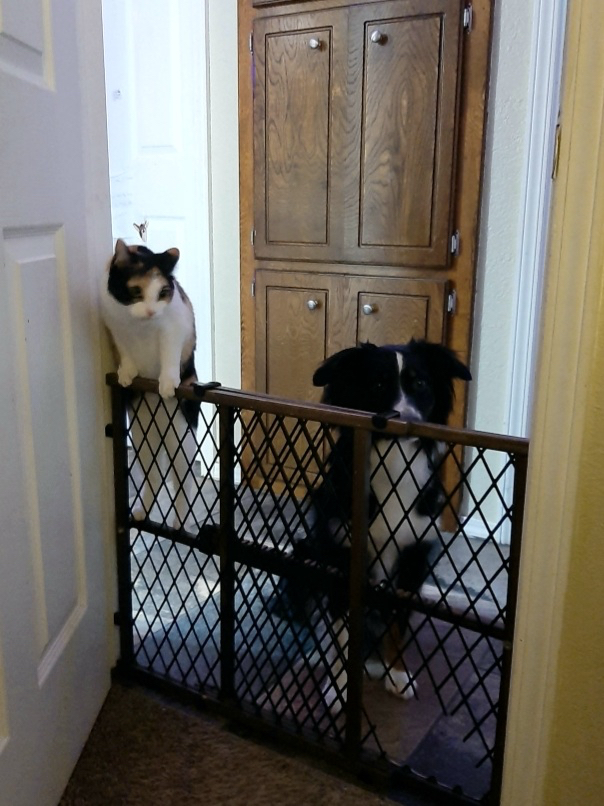
calico cat standing on pet gate next to black and white Australian Shepherd dog behind the gate looking into a room on the other side of the gate
This was a few years ago, and they both wanted to be in the room with us.

When studying for this post, several websites claimed that many animal behaviorists thought cats had the same intelligence as a 2 year old human child. However, every single website failed to mention which study or animal behaviorist did the research substantiating those claims. On the contrary, the few verifiable sites and scientists who’ve actually studied cats never mentioned human ages. And very few compared cat intelligence to any other animal. In addition, it’s important not to compare a cat’s intelligence to that of really any other species, given that a cat is still a cat, rather than a dog, a human, or any other animal. Cats excel at hunting while dogs work great with groups. We all have our different strengths, what we were essentially built for. Thus, when evaluating a domestic cat’s intelligence, it should only be analyzed against another domestic cat.

At our house we have 3 different domestic cats: a 4 month old tuxedo kitten, an adult calico cat, and an adult Russian Blue cat. And they all have distinct levels of brainpower and energy. However, the cats with more energy appear smarter, at first glance, than the one with less energy. If we go by some of the tests found on the internet, the less energetic cat would hardly pass any of them. Though I’m hesitant to say the more relaxed cat is deficient in the brains category. She just might not care enough about that particular thing at any given moment. Or perhaps she’s not sufficiently motivated to give a crap.

Then take Sophie, our Aussie, who not only is known for her mega energy needs, but is also highly intelligent. Not every family or person out there is like us, I’m aware. Most people are in the great divide: dog people or cat people. Instead we have the benefit of observing several species of animals on our property. And I can tell you that both Sophie and Itty have my morning routine down to a T. While one of them is up my butt, barking to hurry me, the other one is quietly watching and anxiously waiting to see when I’ll be ready to take them outside. Both of them know just before I take them out, I put my shoes on, make my tea, and then I put my sunglasses on. Even though Itty and Sophie are completely different creatures, they share the same expectant look in their eyes.

How Smart are Domestic Cats: Through the Eyes of History

white ceramic japanese lucky coin cat
Photo by Miguel u00c1. Padriu00f1u00e1n on Pexels.com

If you Google how smart are domestic cats, your browser will inevitably display a contrast between dog and cat intelligence. Plus, ways dogs have joined humans in the workforce throughout history are usually listed as well. Conversely, the same cannot be said for felines. Alternatively, you just need to go about your search in a different manner. Despite people in the Middle Ages having both bad and very wrong associations about cats, the rest of history casts a favorable light on these cute furballs. Besides being excellent mousers, other jobs cats have held include

  • pest control for snakes, rats, mice, etc, and companions in Egypt thousands of years ago. And when cats died, their owners mummified their cats and dressed them in jewels to signify the owners’ status.
  • mascots and companions to Roman soldiers in 5th century BCE.
  • custodians of precious books and manuscripts in Buddhist temples starting around the mid 6th century CE. Then cats began to symbolize good luck and fortune dating back to the 17th century with the creation of Maneki-neko, “beckoning cat”.
  • war heroes, such as Crimean Tom during the Crimean War (1854). Plus, 500,000 cats were deployed during WWI (1914-1918). Also, Simon throughout the Chinese Civil War (1949).
  • and lastly therapists. Actually, it’s cat therapy, like pet therapy. So, whether for first responders, soldiers overseas, or patients, cats have proven to comfort those in need.

But How to Test Cat Smarts

digital art of an indistinct brown animal in clothes working on a laptop
Digital art, courtesy of Sarah Smith

If you have one or more cats, and you’re interested in assessing their brainpower, there are some simple tests you can try. However, you may have observed some giftedness in your pets before now. Some of the studies that Vitale and others have done with cats, I’ve observed with Itty. I’ve already mentioned Itty taking cues from my emotions (social referencing), memory, associative learning, pointing and following my gaze. But Itty also has distinct meows for different things she wants. And she makes sure I follow her to help her out with whatever she needs, like going outside or getting past the dog unmolested, which, to me, indicates problem solving. Although, I had no idea any of those things categorically had to do with smarts until researching cat intelligence.

I won’t include any cat intelligence tests on this post, because I feel there are too many factors involved. And the intelligence tests that I’ve seen aren’t really able to capture how intelligent one cat is. For instance, anything that has to do with toys, Itty isn’t interested in. Ever since she was spayed, her energy levels plummeted. So playtime isn’t her thing anymore. Also, she looks like she can’t imagine the toy being prey. She’ll look from the toy to the string up to the wand to my arm and hand. But, if we go outside, she’s a different cat. She’ll chase birds and bugs to her heart’s content. However I will post a link to a test. Don’t worry if your cat doesn’t do so well, especially if you’ve observed your cat being super brainy. Just remember, cats are really quite smart. It’s just tough to test them.

How Smart are Domestic Cats

fluffy gray cat lying on a striped rug in front of a multi-coloredn board game called "Sorry"
Cake playing a board game.

The intelligence of domestic cats has been compared to dogs and human children countless times. But since intelligence for each species is unique, it isn’t something that really should be compared cross-species. Every species excels at something peculiar to them. Also, cats haven’t been studied as much, because they haven’t been bred for as long as dogs. That means they’ve retained their wild nature. Moreover, there are tests you can use to measure your pet’s intelligence. Though, observing their behavior is much easier, if you have the time. But no matter how their intelligence rates, remember to love your pets.

Do you have a super smart cat? How do you know they’re brainy? I’d love to hear your stories. Thank you for stopping by! Please like, share, and if you don’t already follow, please do so now.

Categories
All animals Chicks ducks Extras guineas Hens non-fowl other fowl Roosters

Bullying in the Animal Kingdom

Any time we hatch a new chick, duckling, or keet, or maybe get a new cat, fur and feathers get ruffled. No matter the steps and how long we take to introduce a new pet, some type of aggression ensues. And at times it feels like it won’t end. Further, the aggression that occurs at my home is typically intraspecies, which is the same species ganging up on each other. Though, I know others have interspecies aggression. So, I wanted to explore bullying in the animal kingdom.

According to Oxford dictionary, one definition of bully is a person who uses their strength or power to frighten or hurt weaker people. But the legal system doesn’t consider non-human animals as legal persons. Thus, according to the law, backyard birds, dogs, cats, etc are not people. Therefore, our pets can’t be regarded as bullies from these parameters, even though their behavior screams bullying to us.

Nevertheless, if you Google pet bullying, you’ll doubtless find endless examples of exactly this, no matter what the law may say. As a result, it’s apparently quite common among pet parents and animal behaviorists alike to see bullying activity. What is it exactly about these behaviors that look like bullying? Is it normal, and does it serve a purpose. How can we help inter and intraspecies relationships? And do we humans behave the same way?

Why Animals Bully Each Other

multi-colored rooster mating on top of a dark hen on the grass

A couple of years ago I wrote an article on the chicken pecking order. Even if the term was originally in reference to chickens, most, if not all, animals observe some sort of dominance hierarchy. In biology, dominance hierarchy is basically a ranking system in animal groups. Some animals are more dominant, like the alpha, whereas others are more submissive. Consequently, dominance is one of the major reasons animals bully each other. The dominant animal is effectively trying to reinforce their class system or hierarchy.

For instance, if you follow me on Facebook or Instagram, you might know we have a new kitten named Pickles. Initially my cat, Itty, did NOT like Pickles. At all. And I know why. Pickles is ~ 4 months old, eats Itty’s food, goes into Itty’s room, chases Itty, gets on Itty’s bed, and sits on Itty’s chair. Basically Pickles does NOT respect the hierarchy.

On the other hand, when Itty first came to live with us at 5 weeks old, Cake and Meow Meow, our then resident cats, laid the law down for her. And Itty respected them and the law. Even though Meow is no longer with us, Itty still respects Cake, because she knows her place. However, at the same time, Itty knows she herself is a princess. Pickles is a bottom feeder and should be licking Itty’s paws. But Pickles doesn’t seem to know her kitty place. It appears she doesn’t care about hierarchy; she just does what she does. Moreover, she’s certainly not submissive, and it was annoying the hell out of my cat. So, on various occasions I’d hear noises that sounded like cats killing each other. Thankfully they weren’t actually killing each other. Although, it was Itty, cursing Pickles in meows and caterwauling.

Besides dominance, other reasons animals bully each other include

  • mating

Several examples of bullying-type behavior exist in the animal kingdom concerning females during mating. For example, male on female bullying during mating. Or it can happen with any other members of the same species just because it’s mating season. Ducks are a prime example of this. Our first drake killed a female due to his crazy hormones during mating season.

  • boredom

Some animals appear to pick on other animals if they’re stuck together for a bit of time. Think chickens cooped up during inclement weather for days upon days with nothing to occupy them. Alternatively, picture any smart, high energy dog with nothing to do, locked in a small room (or house) with a small, scared pet. An animal in either or both of these situations will pick on or bully another when they have nothing to do, or any way to expend their energy.

  • illness/injury

Chickens mercilessly abuse sick and injured birds. But there could be cases where an ill, injured, or hurting animal lashes out at other animals. For instance, dogs have been known to attack sick or hurt dogs. And they can also attack if they are sick or injured themselves.

  • resource guarding

I’ve mentioned resource guarding before. And generally, bullying in regards to this could be for space, food, water, breeding, etc. An animal is just claiming all of the above as their own, thus, picking on anyone who transgresses.

  • inadequate early socialization

A lack of early socialization, at least for dogs and cats, can easily turn playtime into a fight.

  • space/territory

Many animals will attack and pick on other animals, including members of the same species, if there isn’t enough space for everyone.

  • and stress

Our pets are sensitive to us and their environments. And all of them seem to love routines. (Kinda like us.) Therefore, any changes to their routines can lead to aggression. Be it change in feed, living arrangements, friends, family, schedules, and/or adding or subtracting any other pets all have an effect on them. Not to mention possible life or death situations they may face themselves.

What Does Bullying Look Like in the Animal Kingdom

Now I’ll go through some of the pets I have, and find out what picking on each other might look like in dogs, cats, and chickens.

Signs of Dog Bullying

black and white kitten hiding behind recliner from black and white dog lying on wood floor
  • Being overly pushy with other dogs or with the cats. For example, a bullying dog pushes other dogs out of the way. Or, like at our house, your dog might push the cats or other pets out of the way when they want attention instead of letting anyone else have any.
  • Doesn’t follow commands once very excited
  • Playing rough or harassing non-consenting dogs and/or cats
  • Disrespecting boundaries of other dogs, people, and/or cats
  • Growling, nipping, biting, and pinning playmates to the ground
  • Steals food, treats, and/or toys
  • Ignores signals from other dogs and/or cats
  • Pesters dogs and/or cats who don’t want to play
  • “All in your face”
  • Puts paws on head or shoulders of other dogs most often
  • and Engages in mounting behavior

Symptoms Your Dog is Bullied

  • Tucking tail between their legs
  • Yawning or licking their lips
  • Hiding or avoiding other dogs
  • Rolling over in submissive manner
  • Barking while backing away from another dog
  • Urinating in inappropriate places/indoors
  • Your dog is always being chased by another dog but never the one doing the chasing
  • Always getting mounted
  • and Getting food, water, and toys stolen

Cat Bullying Signs

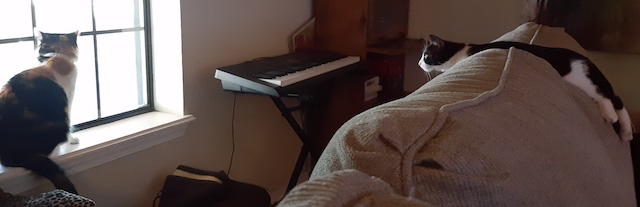
black and white cat lying over cushions of a gray couch, watching a calico cat sitting on a windowsill that's looking out the window
Pickles is on the right, just staring at Itty while she looks out the window.
  • Either passive or overt
  • Denies access to resources: food and water, litter box, toys, and owners
  • Blocks access to the best sun spots
  • Body language of bully: Never backing away, staring, stalking, and emitting low growl when other cat gets close
  • Aggressive posture: arched back, puffed out tail, flat ears, dilated pupils
  • Clawing, biting, and hissing
  • Lowers head while raising hind end as it approaches other cat
  • and Pinning the victim to the ground

By contrast, the bullied cat may spend most of the time hiding or away from the family. They also avoid eye contact with their bully and surrender resources to them. In addition, they might crouch in ambush, but then run off when their bully shows up. Furthermore, they’ll have a puffed out tail, flat ears, and hiss as well, especially if their bully gets too close. This is also how a cat reacts to their dog bully.

Chicken Bullying Evidence

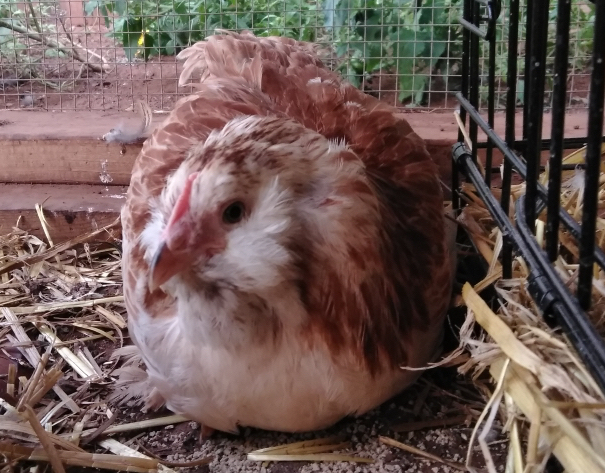
cream and reddish brown chicken sitting on a dirt floor next to a crate with straw and feed around it
This is a picture of Ratchet, a Salmon Faverolle we had around 4 years ago.
  • Chickens missing feathers
  • Other chickens pecking at the bullied chicken, removing feathers, and keeping that one from food
  • Scared chickens or scared ducks
  • Rooster mounting behavior toward other species
  • and Injured chickens

With cats and dogs you might not be sure if they’re playing or being a bully. However, you’ll know in your gut whether or not they’re playing based on the reaction of the other pet. If your cat or dog is bullying, the victim will hide, act scared, or simply not want to be around your bullying pet. But, if it’s simply play, then everyone will enjoy the experience. And they’ll hang out and cuddle together. Trust me, you’ll just know. In addition, according to this article from Care.com, if one cat starts the aggressive act more, and there’s growling and hissing, then in all probability it’s fighting. Basically it’s similar to one dog always doing the chasing while the other is being chased.

On the other hand, chickens are different. No chicken enjoys being pecked or having aggressive acts directed at them. Those birds will either just walk away. Or, if they’re a victim of actual bullying, they will hide. Chickens peck each other, particularly those higher up in the hierarchy, though it doesn’t necessarily mean they’re bullying. They’re just reenforcing their pecking order. And sometimes they’re constantly reenforcing it. Take, for example, the 4 different generations of roosters we have: we have the boss, Megatron, Ravage, the 2nd oldest, Mystogan, his younger brother, and now we have a juvenile roo. Megs runs a tight ship keeping all of those boys in their places. In similar manner, Ravage keeps Mystogan in his place while Mystogan pecks at and runs after the juvenile. And the juvenile roo harries all the other babies. It looks like bullying, but it isn’t really. Since none of the antagonists continue to harass the others, it’s just normal chicken pecking and enforcing of their hierarchy.

Now you may be scratching your head on the rooster mounting behavior one. That’s what Ravage did when we had over 10 roos in our flock at one time. He mounted Squirt, the drake. At first I was wondering if he was actually trying to mate with the drake. But then I figured he didn’t have his spurs yet. So he had to be exerting some sort of dominance out of frustration for space issues and females. Well, after we slaughtered the extra roos, Ravage calmed down. Although, the drake still gives Ravage a wide berth. And the roo now has started mounting Bakugo, our Pekin. Though, I’m not sure if he’s trying to mate her due to stupidity, or if he’s still acting out of dominance.

Stopping a Bully Dog at Home

black and white dog catching a blue frisbee in its mouth outside in a fenced yard

If, after getting this far, you realize, like me, that your dog could be a bully, don’t worry, because there are solutions. Trust me, I know what you’re thinking. At first, you didn’t want to admit your dog might be mean and pick on anyone else. But then, the more you thought about it, the more you just couldn’t ignore the signs. Although, the first thing to do for your bullying dog is to spay or neuter them if they’re still intact, which Sophie most definitely is. (Her surgery is scheduled for September.) Aside from fixing your dog, you can

  • put the bully in time-out

With a negative marker before bullying gets too far, your dog will eventually make the connection between what they’re doing and why they’re in time-out. For instance, when you want your dog to do something else, use a word or sound, like the word no.

  • be picky about who your bully plays with

Choose dogs to hang out with your dog that can handle and actually enjoy your dog and their pushy behavior.

  • intervene as necessary

Using positive interrupters before any bullying occurs, this will replace time-outs when your dog is learning better behavior. A positive marker would be something like the word yes.

  • find a trainer with a really good, patient teaching dog

This type of dog can put up with your dog and effectively communicate with them.

  • teach impulse control in the house

For example, if you’re paying attention to one pet in your house, and your bully pushes in between, ignore the bully and move away. Don’t reinforce bullying behaviors with attention. Rather train your bully dog to sit and wait his turn. And do the same with treats. But reward your non-bully pet with treats first, assuming they’re not a resource guarder.

  • and make sure exercise and mental stimulation demands are met

I truly think that’s what’s going on with Sophie. She requires so much due to her breed, that she gets bored at times, especially if it’s been rainy or extremely hot that we forego our outside fun. But if she does get exercised, she really does do better with the cats.

Curbing the Cat Bully

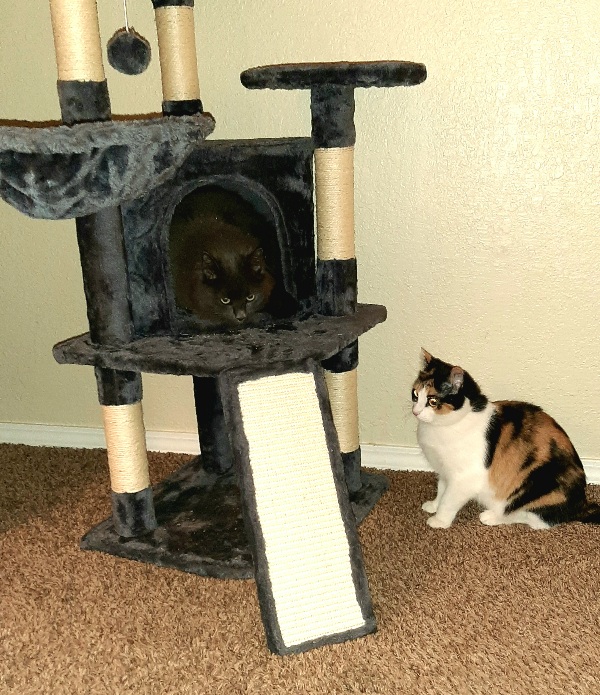
calico cat and gray cat playing around a cat tree

Just as with dogs, the first and best way to put an end to the bullying cat is to spay and neuter the offender, if they’re still intact. However, if they’re already fixed, try the following:

  • Don’t assume cats will work it out

They won’t, because they’re not people. Cats will continue to fight if they perceive a threat to their resources. But don’t get in the middle of their fight either. You don’t want to get hurt. Rather, the best option is to make a loud noise to distract them.

  • Also, don’t separate the resources

Instead of separating all of the resources, see where the cats prefer to congregate. Then make sure there are plenty of resources for all of them. That way the bully has a choice and won’t feel threatened.

  • Make playtime the same time everyday

Because cats are so schedule-oriented, keep playtime on a schedule as well.

  • Play at least 15 minutes with each cat per day

Further, cats get bored easily, so be sure to cycle through the toys. And the more you can play with each cat, the better.

  • Get pheromone diffusers for every room the cats spend together in

I asked our vet about the issue the cats were having, and he recommended the diffusers.

  • If there’s still bullying, see the veterinarian

Your cat might have a health issue that the vet can rule out. Or they can refer you to a pet behaviorist to help out.

  • Re-introduce cats that need to be separate

If cats are at-risk of hurting each other, separating for short-term is a good idea. Flying fur, bloodshed, or urine are all signs a cat’s in danger. And if it’s occurring every time the cats see each other, they need to be separated. And then re-introduce them as if they never met. Jackson Galaxy recommends re-introducing fighting cats with food. You can find the article here.

Ending Chicken Bullying

black chicken pecking the straw in bottom of a large rectangular container
This box serves as a time-out and broody box, depending on the situation.

Unlike cats and dogs, chickens don’t get spayed or neutered. Though, you can

  • make sure your chickens have enough space

Inside the coop, each chicken needs approximately 4 sq ft, while they need around 10 sq ft each in the run. But that’s assuming they stay cooped up all the time. If they get to go out, they can have 5-10 sq ft each in the run.

  • have the proper ratio of hens to roos

If you have roosters, be sure to have at least 10 hens per rooster. Otherwise, as I’ve pointed out elsewhere, the roosters will tear up the hens’ backs.

  • provide enough feed and water stations

I can’t tell you how many feed and watering areas I have. It seems like each bird wants her own, the prima donnas.

  • and if bullying continues, separate the bully for a couple of days

Since their pecking order is all important to them, you want to separate the bully from the flock for a few days. Once the bully is back with the group, sometimes they have to re-establish the pecking order. Thus, it’s better for the bullied hen or roo.

Hints of Bullying in Human Children

girl in denim sitting alone crying in a doorway
Photo by Pixabay on Pexels.com

In order to have a comparison with the previous sections, the last animal I’m going to cover is the human child. Therefore, some signs a child is bullied include

  • bruises, cuts, and scratches
  • torn clothes
  • missing property
  • poor eating or sleeping
  • bed wetting
  • complaints of headaches or stomachaches
  • changes in the child’s mood: sad, anxious, upset, unhappy, or angry
  • spending time alone or doesn’t want to go out or to school
  • having trouble with schoolwork
  • and/or withdrawn

As you can see from the bullied human indicators, they reflect a combination of all of the bullied animal signs. However, reasons people bully aren’t exactly the same as animal bullying. According to a study by Ditch the Label, people are more likely to bully if they’ve suffered stress and trauma. To me that sounded like cats and chickens. If they perceive their resources are threatened, they’ll fight and generally have conflict. Additionally, according to the same study, 66% were male.

Compared to my pet household, which are mostly female, it doesn’t track. But, in the wild animal kingdom, bullying is more male dominant. Further, I didn’t include guineas in this post, which are true bullies in the yard. Every single male guinea is a bully for no reason that I can fathom, irrespective of species. Plus, it can’t have anything to do with the pecking order, given that chickens, ducks, and guineas aren’t the same species. And they don’t interact with each other, except when the male guinea attacks the other species.

In Summary

Maybe bullying serves a purpose in the animal kingdom, particularly in the wild. Nevertheless, living as we do with our pets, often in close proximity, we can’t afford to just let them be. Since allowing them to figure it out would be risking them injury. Regardless of our personal feelings toward animals, that would be costly at the very best, and inhumane at the worst. Consequently, it’s in everyone’s best interest to find out quickly why a pet is getting picked on and remedy it.

I’m happy to report that Itty and Pickles never had any bloodshed with their differences. They would both take turns chasing each other. Though there would be growling, screaming, and hissing. Itty would puff up so big to warn Pickles, who just ignored her signals. Moreover, they would both smack each other. However, their claws were evidently sheathed, since no one got injured. Regardless, currently they’re having less noisy days than before. They still chase each other, but it resembles play now more than ever. We got pheromone diffusers, gave equal attention to both of them, and rewarded play time.

Do you have any experiences where one pet bullies another one? How did you handle it?

Thanks for stopping by! Please share, and if you don’t follow me already, you can do so now.

Categories
dogs non-fowl

Why Dogs Get the Zoomies

I think we were living in Oklahoma when the term zoomies gained popularity. Though, according to Dictionary.com, the word was in use in the early 2000s. That was when I was first married, and we had two different dogs at the time. But it’s likely my family wasn’t using it then. It was only after we got Sophie and Itty that zoomies became a regular household word for us. So, today I’ll explain what it is exactly. And we’ll look at why dogs get the zoomies.

First, What are Zoomies

Zoomies is a slang term for a sudden burst of hyperactivity by a dog, cat, or other animal, such as rapidly running back and forth . . .

SLANG DICTIONARY

Technically speaking, your dog’s behavior is frenetic random activity periods, or FRAPs for short. And FRAPs are a completely natural release of bottled up energy. Plus, they typically only last for a few minutes.

Signs of Dog Zoomies

FRAPs are normal and usually indicate one heck of an excited and happy dog. Moreover, you can easily spot the differences between the zoomies and anything but the zoomies. The following signs suggest your dog definitely is FRAPping.

  • Repetitive behavior like running around in circles
  • Taking laps around the yard
  • Or circling around inside the house
  • Vigorously shaking a toy
  • Chasing tails
  • They can be contagious
  • And your dog can’t seem to hear you when you give them commands

Why Dogs Get the Zoomies

black, white, and brown dog with blue frisbee in its mouth on grass outside

As I’ve mentioned, zoomies are a common and natural way for dogs to let out some built up energy. Additionally, it can relieve stress. Although, some other reasons dogs get the zoomies include

  • age

Puppies and younger dogs are more likely to have FRAPs than older dogs. Though, FRAPs can occur at any age. Also, puppies have more energy to burn, while older dogs’ zoomies won’t be as intense or last as long.

  • breed

Hyper-energy breeds like Aussies may get the zoomies more often than other breeds, since they’re specifically bred to work. Therefore, if you have one of those high energy breeds that aren’t getting a enough work, then your dog just might get more zoomies. That could be the reason we never witnessed this phenomenon in any of our dogs before Sophie.

When do Zoomies Occur

Since zoomies, or FRAPs, are a way for pups to release suppressed energy, they can happen

  • first thing in the morning
  • or in the evening, if your fur baby has been restricted to a crate or hasn’t been walked
  • just before bedtime
  • after a grooming or bathing session
  • following a meal
  • during training
  • subsequent to a veterinarian visit
  • or when your pooch is excited, like when they see you, or they’re playing, eating, or even training

How to Keep Dog Zoomies Safe

When your pooch is in the zoomies zone, they’re in their own world. And it’s like they can’t hear you. Or they choose not to, because they’re finally expending all that energy. That said, if you have a high-energy breed, the safest way for them to zoom is in a fenced yard. Then they can zoom to their (and your) heart’s delight without any worries. However, you can also keep them confined to a room, until the FRAPs pass, where they won’t get hurt.

When to See a Vet

close-up of a chihuahua
Photo by Pixabay on Pexels.com

Even though FRAP is normal, constant zoomies is not. According to the AKC, it could mean a behavior issue. Moreover, if you have one of the high energy breeds, your dog may be trying to tell you something. You’ll recall we have an almost 3 year old Aussie we relieved from a much older couple. We know she demands activity. So, I try to play with her twice a day, throwing tennis balls for her to catch. Plus, my husband and daughter play with her too. Though, she still FRAPs a few times a week.

Takeaway

When they help your fur baby release pent-up energy, the zoomies are perfectly normal and harmless. And how often your pooch gets them relates to breed and age. But, if your pup is having the zoomies around the clock, they may need more mental and physical stimulation. Get your pup puzzle feeders and include more playtime. However, keep a log about your dog’s zoomies, what they’re like, when they have them, and how often, etc. And as always, if you’re concerned about your pet, contact your veterinarian.

How often does your dog get the zoomies? And what precipitates the release of energy?

Thank you for visiting my blog. Please feel free to share. And if you don’t follow me already, please do so now.
Categories
All animals cats dogs non-fowl

Keeping Pets Safe in the Heat

Last summer we had a heat wave and triple digits to deal with. And this July 3rd marked the hottest recorded day on earth. When we’re outside having fun with our fur babies, things can quickly go downhill for them, if it’s hot. It doesn’t take Sophie long to tire out and start panting after chasing her tennis balls. I already explained about taking care of chickens in the heat last year. So, today I’ll cover keeping your other pets safe in the heat.

Because cats and dogs don’t sweat like us, their pet parents, they’re more sensitive to the heat than us. Thus, what’s warm to us may be hot to them. And what may be hot to us could be deadly to them. Both dogs and cats release heat through their paw pads and by panting. However, whereas dogs also use their noses, cats will fastidiously groom themselves. But what they’re in truth doing is evaporative cooling, much like sweating. Plus, if they can, both animals will move to a cooler area, like a stone or tile floor to cool off.

Normal body temperature for cats is around 100.5°F – 102.5° F, while normal temperature for dogs is 99.5°F to 102.5°F. Therefore, if your pet’s core temperature is higher than that, and they’re unable to cool themselves, they can suffer from heat-related illness or hyperthermia. Additionally, there are 3 different types, and they differ in degree of danger: heat stress, heat exhaustion, and heat stroke. Heat related illnesses are not as common in cats as they are in dogs, since cats aren’t as at risk of being locked in hot areas. However, that doesn’t suggest cats aren’t vulnerable to the heat. Below are some signs to look out for.

Signs of Heat Stress in Pets

brown lab on the carpet in a house near a Christmas tree
Photo by Josh Sorenson on Pexels.com

Dogs

  • Excessive thirst
  • Increased panting
  • Appears tired
  • Looks for cool or shady spots to rest

Cats

  • Restless Behavior
  • Panting
  • and Seeks cool spots or shade

If you notice your cat or dog displaying any of the above symptoms, then simply move them to a cooler area. And offer them cool, fresh water. Both your cat and dog will most likely stop to rest until they feel better. Although, in the event your dog doesn’t realize they’re overheating, just keep them from any other activity until their symptoms improve. Cats don’t generally have an issue with resting; just be sure to get them into a cooler environment. And offer them fresh water.

Symptoms of Heat Exhaustion in Pets

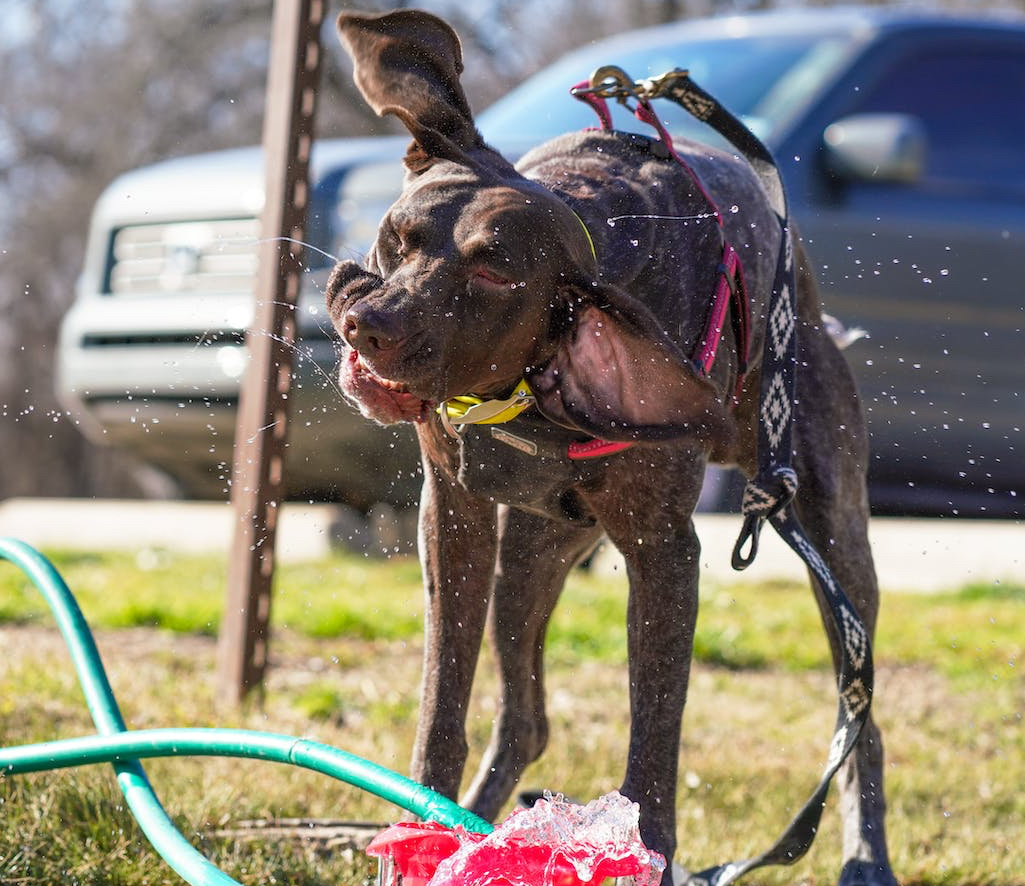
brown dog shaking itself near water and a hose
Photo by Gabe on Pexels.com

Dogs

  • Severe panting
  • Rapid or difficulty breathing
  • Anxiety
  • Excessive drooling
  • Drinking water often, or looking for water
  • Lethargy
  • If on a walk or run, taking frequent breaks

Cats

  • Excessive panting
  • Rapid heart rate
  • Sunken eyes
  • and Dehydrated (Gently pinch skin between neck and shoulders. Does skin stay ‘tented’? Or is it slow to smooth down? If so, your cat is likely dehydrated.)

In the event your pet has any of the symptoms of heat exhaustion, move them to a shady spot or an air-conditioned space at once. Next, offer them small amounts of water, but don’t force them to drink. In addition, you can place your pet on a wet towel, and gently pour cool, NOT cold, water over your pet’s groin, armpits, and neck. Or you can immerse them in a tub of cool water. Don’t use cold water or ice, because that would over-cool your pet, causing them to shiver. Also, using cold water and ice causes vasoconstriction and reduces your pet’s ability to cool down.

If your fur baby isn’t treated for heat exhaustion, then in all likelihood, the symptoms will move on to heat stroke. Heat stroke can occur when a pet’s internal body temperature gets above 104°F -105°F. And it damages organs and cells in the body, and might also result in death. Moreover, heat stroke is an emergency in any animal. Contact your pet’s veterinarian immediately if you think your dog or cat is overheated.

Signs of Heat Stroke in Pets

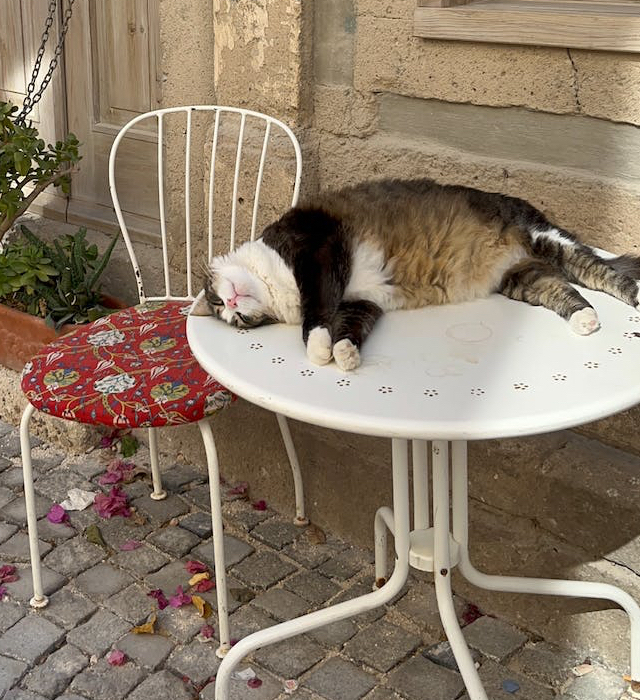
big black, gray and white cat lying on a table outside of a building
Photo by elene karenashvili on Pexels.com

Dogs

  • Excessive drooling
  • Confused or disoriented
  • Increased sleepiness
  • Gums either bright red or pale
  • Elevated heart and respiratory rate
  • Muscle tremors and/or seizures
  • GI issues (vomiting or diarrhea)
  • and They may appear to be unresponsive

Cats

  • Panting
  • Fast breathing or respiratory distress
  • Anxiety and uneasiness
  • Sleepiness and weakness
  • Confusion
  • Dark gums and tongue
  • Rapid heart rate
  • Sweaty paws
  • Salivating excessively
  • Seizures
  • GI issues (vomiting or diarrhea)

What to do with a Pet with Heat Stroke

a pomeranian over the diagnostic table inside a clinic
Photo by Tima Miroshnichenko on Pexels.com

Treating a pet with heat stroke is similar to heat exhaustion. You quickly remove your pet from the heat into a shady or air-conditioned area. If you can, check their temperature rectally: 104°F indicates an emergency for a cat, while 105°F for a dog. Also, if they’re alert, then offer COOL water to drink, but don’t force them. Again, place them on a wet towel, and pour COOL water on their groin, armpits, and neck. DON’T wrap them in wet towels, as that will trap the heat. And notify your veterinarian immediately. Or go to the closest open veterinary clinic at once. You want to keep checking their temperature, so it doesn’t fall too suddenly, or get below 103°F.

After starting the recommended first aid care for your pet, and seeking medical attention, your vet will observe your pet’s temperature and administer a number of assessments to diagnose your pet’s condition. And treatment may include

  • IV fluids
  • Mild sedation
  • O2 therapy
  • and Continued monitoring

Recovery depends on how quickly pets are treated. According to NIH, one of the main risk factors for heat strokes resulting in death for dogs was prolonged time-lag from heat insult to veterinarian visit.

Risk Factors for Pet Heat Stroke

gray British Shorthair cat looking at the camera
Photo by Kostiantyn Klymovets on Pexels.com

Dogs

  • Obesity
  • Very old or very young
  • Underlying health issues
  • High body weight or large breed dogs
  • Certain breeds, like Labrador retriever
  • Lack of acclimation to heat stress
  • Lacking physical fitness and exposure to hot, humid environments
  • Brachycephalic (flat faced) dogs
  • and Exercise induced malignant hyperthermia

Cats

  • Elderly cats or kittens
  • Being overweight
  • Pre-existing conditions, like kidney or heart disease, or cats with lung conditions
  • and flat faced cats

Preventing Heat Stress before it’s an Emergency

young curly haired woman training shetland sheepdog on sports field
Photo by Blue Bird on Pexels.com
  • Either keep your pet indoors and out of the sun during the hottest and most humid part of the day.
  • Or make sure they have access to cool, shady spots outside at all times.
  • Do NOT leave your pet in cars or hot rooms, like the garage.
  • Make sure your pet has access to plenty of water throughout the day, and add ice to keep it cool.
  • Plan exercise at cooler times of the day, morning and evening.
  • Groom your pet if it’s advised for their breed. And trim long hair, but never shave double coated breeds, like Shelties and Aussies, because it can have the opposite effect of cooling them off.
  • Ask your vet if your pet would benefit from sunscreen.
  • Bring extra water bottles on walks.
  • Hot pavements can burn paws! If it’s too hot for you, it’s too hot for your pet to walk on.
  • If you don’t have A/C, leave ceiling fans on, and get your pet cooling mats.
  • Even with A/C on, if your pet stays inside, don’t set the temperature higher than 80°F.
  • and Buy or make frozen treats for your pet; and dispense them on the super yucky days.

Keeping Your Pets Safe in the Heat

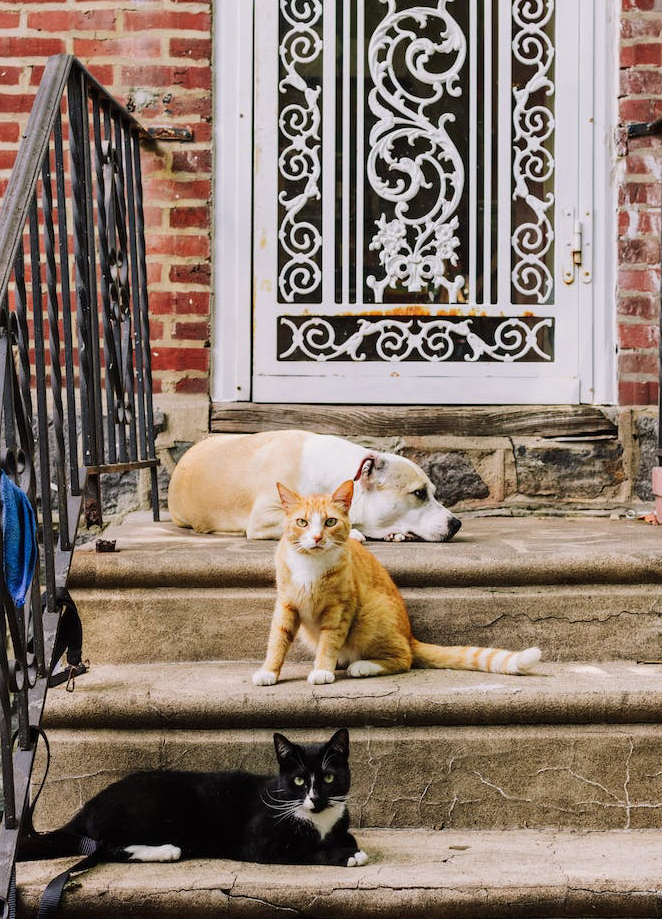
one black and white cat lying on a step with one orange cat on another step, and one white and tan dog lying on a step above that cat in front of a white decorative screen door outside
Photo by Michael on Pexels.com

Flat-faced, obese, large breed, and exercise, heat, and humidity deficient dogs are more at risk for having trouble with the heat. Likewise, cats that are flat-faced, very old or very young, or with pre-existing conditions have more difficulty with the heat. While, it’s been suggested that some dogs can be properly acclimated to the heat and humidity, nothing indicates the same for cats. Though cats aren’t as susceptible to heat stroke as dogs are, neither should ever be locked in a hot room or vehicle.

Signs to watch out for include drooling, disorientation, vomiting, diarrhea, panting, racing heart, respiratory distress, and seizures. And if you suspect your pet is overheating, immediately contact your veterinarian. The sooner they get treated, the better the outcome. Furthermore, when it’s 80°F out with high humidity, if you leave your pet outside, make sure they have plenty of water and shade. And save physical exertion for mornings and evenings.

When I was ~ 8 and 9, we lived in Tennessee, and we had an outside dog and 2 outside cats. One summer, one of the cats died from heat stroke. Back then, obviously I didn’t know why or what caused heat stroke. It’s more common for a dog to get heat stroke, but here was one of our cats that died from it. The cat wasn’t one of the flat faced breeds. And it was around 2 years old, so not old or young. However, I have no idea if it had an underlying condition. Have any of your pets overheated or almost overheated? If so, how did you treat them?

Thank you for visiting. Please share, and if you don’t already follow, you can do so now. Also, if you live in the Oklahoma City Metroplex and need chicken, duck, or any other pet sitting needs, feel free to visit my contact page.

Categories
All animals cats dogs non-fowl

What Does Cat Grass do for Your Cat

Most cat parents know cats are obligate carnivores. That means cats depend on meat for survival. Although, you’ve probably witnessed your kitty munching on some grass at least once or twice. In fact, some places actually sell cat grass growing kits. But what does cat grass do for you cat? And what is it exactly?

First, What is Cat Grass

calico cat sitting behind black pot of tall green grass on raised planter

Cat grass is absolutely distinct from the grass on your lawn. Rather, it’s the sprouts from cereal grass seeds, commonly rye, barley, oat, or wheat. What’s more, it can be grown indoors or out. Though, wait to plant till after the threat of frost has passed.

Below is a list of vitamins and minerals in cat grass beneficial to your cat, including

  • folate

Vitamin B9, or folate, aids digestion and cell growth.

Studies suggest chlorophyll may be an antioxidant. And it’s touted to be a deodorizer and immune system booster.

  • vitamin A

Beta carotene is essential for good eyesight and a healthy coat.

  • vitamin C

This awesome vitamin is an antioxidant, anti-inflammatory, and aids the immune system.

  • vitamin E

Labeled essential for optimal health, vitamin E can be used to treat mites, eczema, and allergic dermatitis. But it’s also an antioxidant, necessary for healthy circulation and immune systems.

  • vitamin K

This vitamin is necessary to prevent bleeding issues. In addition, it’s essential for liver function.

  • vitamin B5

Pantothenic acid, or vitamin B5, metabolizes carbohydrates, fats, and some amino acids.

Lecithin is a group of fats that attract both water and fats. But usually water and oil don’t mix. That’s where lecithin comes in. Because lecithin is a fat emulsifier, it blends the fat binding hairballs, which allows your kitty to pass them.

Both are important for the development of bones and teeth.

Iron is responsible for the production of hemoglobin, a protein that allows red blood cells to carry oxygen.

However, cats don’t need to eat cat grass, if they’re being fed a well balanced diet. Despite that, it doesn’t mean cat grass isn’t good for them in other ways. Especially if you notice your cat trying to nibble regular grass or plants, it’s better to provide them cat grass and be safe.

So, What Does Cat Grass do for Your Cat

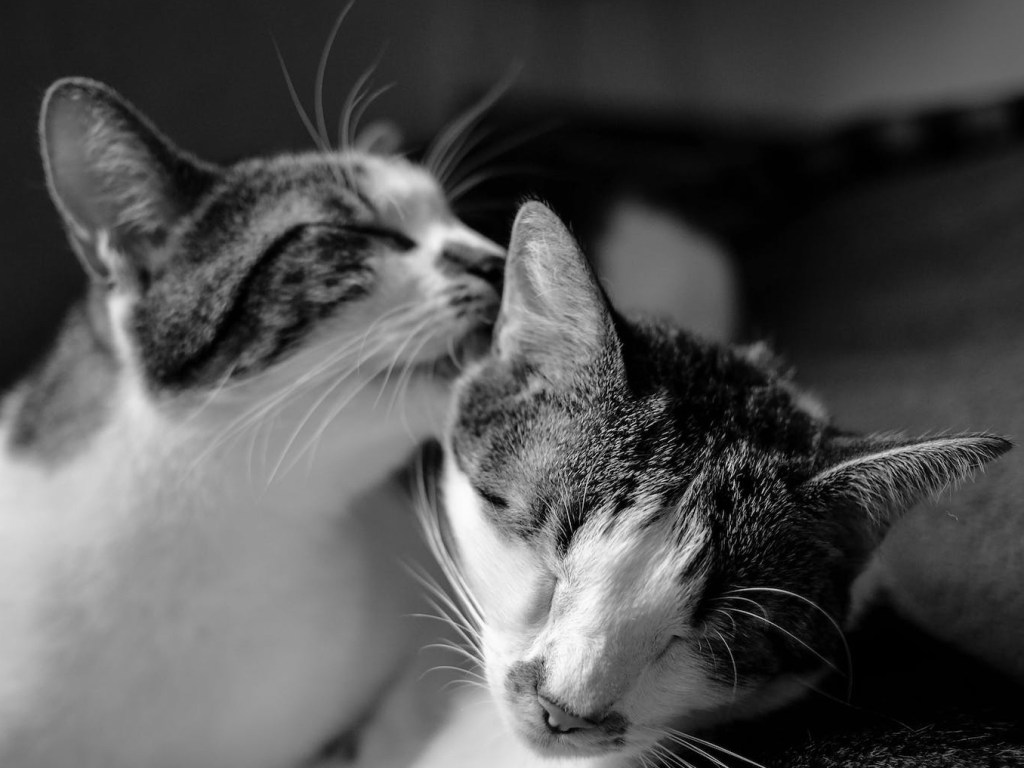
black and white picture of 2 cats bathing each other
Photo by Francesco Ungaro on Pexels.com

Anyone who’s ever had a cat has witnessed their curiosity. Plus, most animals examine things with their mouths, cats included. But why do cats like cat grass? And what is so appealing about it? Continue reading for the following theories.

  • It helps indigestion.

The most popular belief is that cats consume cat grass, because it helps upset tummies. Due to regurgitation that follows at times, it’s thought cats purposely eat grass to help them throw up. I’ve witnessed my own cat eat cat grass to try (to no avail) to vomit after I gave her medicine. Personally, I think she’s a medicine cat, and knew I drugged her. Thus, she wanted to get back to normal.

  • Cat grass is a laxative.

At times your cat may eat food that gets stuck in their GI tract. So, if they eat cat grass, they might be trying to loosen things up.

  • Great for hairballs.

Cats are meticulous in their grooming. In fact, bathing herself is Itty’s most favorite pastime. Additionally, some cats get terrible hairballs, particularly long-haired cats. Similar with the first two items, cat grass can ease the issue of hairballs.

  • Cat grass can prevent or expel internal parasites.

Scientists believe younger cats eat cat grass, because their immune systems aren’t as good at keeping parasites away. And researchers have speculated that house cats eat grass based on an instinct to expel intestinal parasites. Not that these cats actually have any parasites; it’s just in their genetic makeup to munch on grass to prevent the parasites.

  • Lastly, it provides mental stimulation.

This is one of the most important reasons to have cat grass available for your cat. Since foraging is instinctual, it’s a great way to develop your cat’s cognition. In addition, indoor cats tend to get bored. So, it provides that necessary means for their inquisitiveness.

Also, not every cat that partakes of cat grass is sick. Most of the time when Itty eats her greens, she doesn’t throw up afterward. She’s simply enjoying herself in her own little world.

How Safe is Cat Grass

calico cat in the loaf position on a carpeted floor

Whether your cat shares a home with a dog or a bunny, cat grass is safe for all of them as well as chickens. However, wheatgrass seems to be preferred for pets other than cats. Additionally, you have control over it since you plant and take care of it. And so long as you keep it chemical-free, it will remain safe for your pets.

That said, the first time you offer your feline friend some cat grass, don’t overdo it. Even though it isn’t toxic, you might have a big mess to clean up. Moreover, keep the cat grass in a completely separate area from your other plants, given that many are toxic to cats. And cats don’t know the difference between what they can or can’t eat, especially when it comes to greens.

Signs to Watch for Regarding Cat Grass Dining

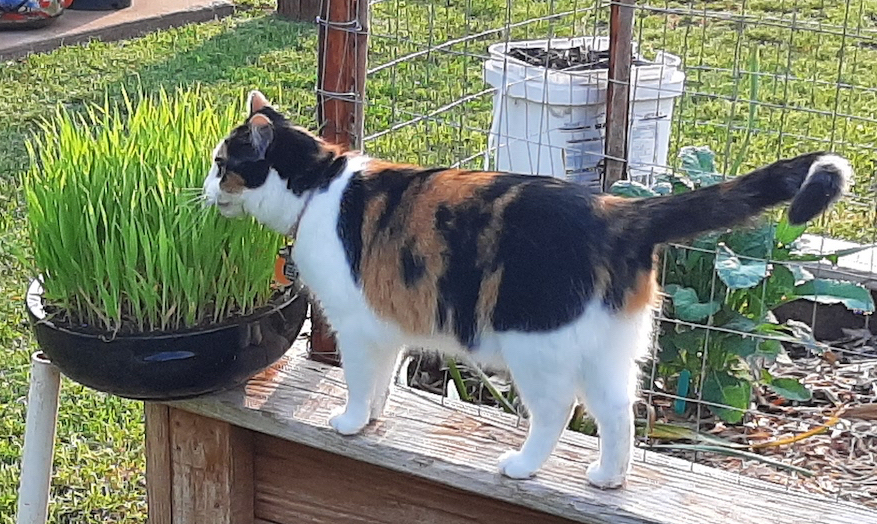
calico cat eating cat grass in black planter on raised garden

Whereas eating cat grass is safe, cats instinctively will puke to relieve digestion issues. But, if your cat eats cat grass and doesn’t vomit, that’s not a problem. However, if your cat vomits every time they eat cat grass, call your veterinarian. According to Chewy, it could be a GI issue. Or if they’re puking blood, it might signal they’ve ingested a toxin. Regardless, your vet needs to be contacted immediately.

How to Plant Cat Grass

two kids planting seeds in a white pot
Photo by Anna Shvets on Pexels.com

When our daughter, Hannah, worked at a plant nursery, she brought us home some cat grass seeds. Though, it wasn’t till this Spring that my husband planted them.

First, he filled a pot with Miracle-gro potting soil. Next, he spread the seed. Then he covered it with an inch more of Miracle-gro potting soil. And after he watered it, he placed it in the greenhouse, in direct sunlight. Also, he watered it a few times a week. But he didn’t soak it. And it started sprouting within a couple of days.

Cat grass is ready for your cat to munch on 10-14 days after sprouting, or once it’s ~ 4 inches tall or higher. Furthermore, it will last about 3 weeks. Let your cat eat directly from the pot. And water with a spray bottle. When the grass begins to wilt, most sites recommend planting new seeds. And that’s usually around 3 weeks. Though, some places advise that with regular care and trimming, you can get more life out of your cat grass.

To Summarize

calico cat standing very close to cat grass in a black pot on a raised planter

Cat grass is from cereal grass seeds, and can be grown both inside and outside. Even though house cats don’t need it, cat grass still contains vitamins and minerals essential to their diet. Theories about why cats eat grass abound: it’s an emetic, a laxative, and it provides mental stimulation for bored cats. Moreover, it’s safe for all your pets as long as you keep it chemical-free. And don’t forget to keep it away from other plants, so your cat won’t get confused. Further, if your cat eats it and pukes more than once a week, call your vet to make sure your cat doesn’t have a blockage or underlying health issue.

Does your cat eat cat grass? And if you have other pets, have they tried any?

As always, thank you for reading my posts. And I appreciate your comments. Please share, and if you don’t already follow me, please do so now.

Categories
All animals cats dogs non-fowl

What is Socialization for Dogs

Recently I wrote an article about dog attacks while walking. And in it, and several posts, I’ve mentioned the word socialization. Additionally, we hear that term a lot regarding animals like cats, dogs, and even people. But just what is socialization for dogs? We’ll explore the answer to that question and why it’s important. Plus, I’ll explain how to socialize your dog, including how to recognize poor socialization.

What is Socialization for Dogs

According to Wikipedia, socialization is the process of training animals, so they can be kept in close relationship to people and other animals. Similarly, socialization for dogs is teaching them to like contact and be easygoing with other people, animals, places, and situations.

Benefits of Socialization for Dogs and Pet Parents

cat playing with a black and white dog on dirt road
Photo by Tehmasip Khan on Pexels.com

Socialization for dogs is equally as important for dogs as it is for people. But the reasons of significance aren’t necessarily the same. Below you’ll find the advantages to socializing your dog, such as

  • fear and anxiety are greatly reduced

If your dog is well socialized, then they usually aren’t afraid of people, animals, situations and/or activities, making them a calmer and more confident dog.

  • better physical and mental health

Good socialization is better for overall health. Also, with proper socialization, dogs aren’t as prone to issues like Cushing’s disease, depression, upset tummies, skin problems, and diabetes that occur from continual fear and worry. In addition, if stress and anxiety are managed, then dogs will live longer, healthier lives.

  • traveling and grooming are easier
  • non-aggressive to people and other pets/animals
  • alleviates unacceptable behavior

When your dog is adequately socialized, they don’t use the bathroom in the house, chew on your clothes, walls, furniture, or baseboards. And they don’t bark non-stop. It’s almost like they’re a member of the household. I don’t know; maybe because we’re treating them like one.

  • and playful, positive, lifelong relationship between pet-parent and man’s best friend

When and How to Socialize Your Dog

white and brown puppies on wooden board
Photo by Caio on Pexels.com

Experts say the best time to socialize a dog is when they’re 3 to 14 weeks old. But the socialization process doesn’t end at 14 weeks. It’s ongoing and lifelong. So that means, if you rescued a dog from a shelter, you can still socialize them. However, just keep in mind, they possibly have trauma, and it may take longer. Therefore, go slowly and be patient with them and yourself.

As I’ve pointed out elsewhere, we got Sophie from a couple nearly twice our age when she was 8 months old, way past the magical socialization period. And we’ve had to deal with her incessant barking, recent aggression, and chewing on clothes, etc. Though, it’s not a reflection on the previous owners. In some cases it can be, but not all the time.

Most situations where a dog or cat isn’t socialized, I believe it’s similar to this couple. They mean well and love their pet, but they’re busy and tired. Or they’re much older, so don’t socialize or go out as much themselves. Then again, they may not know they’re creating an issue for their pet and themselves, or any of a number of things.

That said, when adopting a puppy, ask for any pre and post-socialization plans. Then take the following steps.

  • First, without delay, gently handle your young charge.

As soon as you have them carefully start handling your puppy. And don’t forget to include other members of your nuclear family. There’s always an opportunity to teach your little fur baby what’s acceptable and what’s not, in a safe manner.

  • Further, utilize positive reinforcement.

Never scold or harm your pet if they don’t meet your expectations. They won’t understand why you’re yelling at them anyway. Plus, your negativity will further stress them out.

  • In addition, steadily introduce your promising pooch to new and diverse people, animals, places, and experiences.

Begin small, and work your way up in difficulty. For example, one of your first public outings with your pup should be to the vet, if they haven’t had any vaccinations yet. Depending on where you live, this should be just the right experience too. Avoid public parks and dogs that haven’t had their shots until your pooch is caught up on vaccines. Also, don’t forget to bring a treat!

  • But, don’t overdo it.

While you’re acquainting your fur baby with being a respectable member of your family, try not to overwhelm them. Moreover, be aware of any indications they’re afraid, anxious or stressed. If you see any clues your puppy is uncomfortable around other people or pets, back off and review the situation. Maybe revisit another time with more rewards. Although, don’t push your dog, if they’re clearly stressed out.

  • Also, sign your pup up for a class.

Dog socialization classes can be a huge help during this formative period.

  • And be dedicated.

Given that socialization is forever, don’t ever stop working on it. Like I said, there will always be an opportunity to teach your fur baby.

  • Lastly, get help when needed.

In the event you’re having trouble training your pooch, or there are specific behavior problems, reach out to a certified dog trainer.

What About Adult Dogs

brown and white dog lying down with black framed glasses sitting on its nose
Photo by Lisa Fotios on Pexels.com

Socializing adult dogs looks very similar to socializing puppies. However, adult dogs may not be as eager with the process, depending upon the particular dog’s history. As such, if you have an adult dog that requires some socialization, try the steps below.

  • First, go slow

Since you don’t want to distress your furry friend, take this step first. Just don’t rush the process.

  • Next, use a reward system

Like positive reinforcement, a reward system depends upon treats, praise, playtime, etc. And you reward your dog for good behavior.

  • Take your pooch for a walk

Walking is as good for socialization as it is for exercise. Although, if you get into a stressful encounter, just stop for the day. And go home. But don’t forget to bring the treats to reinforce the positive contacts for the day.

  • Then acquaint your dog with an adult dog

Get together with a friend and their dog for a walk. Make sure there’s abundant space between the dogs. And if your dog stays calm, reward them. Moreover, when the walk is finished and both dogs appear calm, let them approach each other, leashes on. Additionally, reward the positive interactions. In this instance, you both might be finished socializing for the day. Or, if you both feel good about the other dog, you could go to a fenced-off area and attempt allowing both dogs to get to know each other. Start from a distance and on leash to off leash, reinforcing good behavior. If your dog had a good time, continue meeting up with this dog for regular visits.

  • Time to meet another adult person

Some dogs do better with people than their own kind, and vice versa. Thus, if your dog has trouble with people skills, invite a friend to your house, sans any dogs. Ask your friend to ignore your dog, and if your fur baby is at ease, then give them a treat. Then allow your friend and dog to get more comfortable with each other, by allowing your friend to give your pooch a treat. Eventually invite more friends over to meet your dog, one at a time. And go through the same process, working your way up to a group.

  • Introduce your dog to pups and kids

Don’t forget to be certain the puppies you introduce are fully vaccinated. Also, be sure everyone (puppy, your dog, and child) is in a good mood and peaceful. I strongly advise against presenting hyper puppies and very hyper children to your dog if you know your dog suffered trauma. Since both puppies and kids can be impulsive, definitely do this only one at a time. And manage each move, and don’t permit any touching or contact until everyone is very familiar with each other.

  • Enroll your dog in an obedience class

With the aid of obedience classes, your pooch can go much further. Socialization prepares your dog for being & behaving like a dog with other pets and people. Though, obedience training offers help with basic commands. However, there are a number of other things that can be learned with obedience training.

  • Consistency is key

On par with socializing puppies, if you quit working on it, both you and your dog will suffer the consequences. Just remember to continue to take your dog on outings. And reward positive interactions.

  • and Finally, enlist professional assistance

If you have trouble with any of the steps, or you don’t feel equipped with something, consult an animal behaviorist.

Signs Your Dog Needs Socialization Training

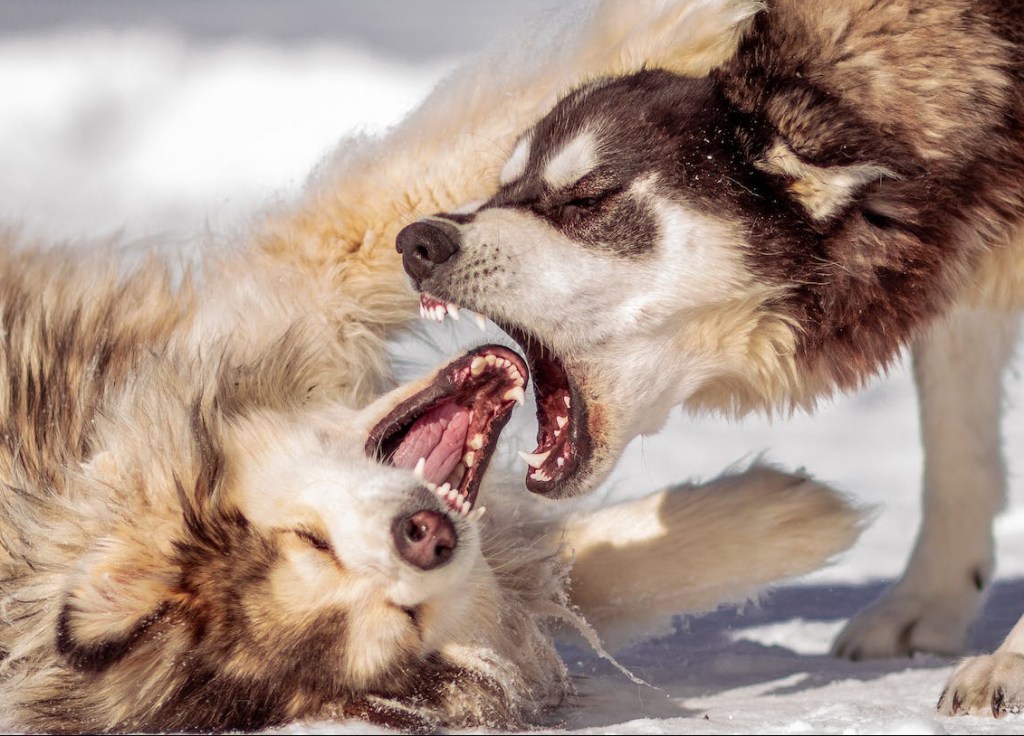
huskies fighting with and biting each other
Photo by u041fu0430u0432u0435u043b u0413u0430u0432u0440u0438u043au043eu0432 on Pexels.com

All puppies need socialization. So, if you adopt a puppy, begin training. And adult dogs still require consistency, no matter what training they had. But below you’ll find signs that indicate your dog needs socialization.

  • Fear

One of the major consequences of not socializing your dog is fear. It can be a generalized fear of anything and everything new, like meeting someone for the first time. Furthermore, it can look like shyness or skittishness around others, difficulty being handled at the groomer, reactivity, and/or sound intolerance. Plus, it leads us to the next issue.

  • Aggression

Fear and anxiety can cause aggression in dogs. In addition, raised hackles or growling are just 2 examples of aggression that could signal a dog lacks socialization.

  • Very spirited around other people and pets

Hyper-excitability can look like your dog is happy and having a good time. However, in truth, your dog can be stressed. Moreover, a dog that acts overly excited can get out of control. And if you’re around other dogs, your dog could invade another dog’s space, and the situation could deteriorate quickly.

So, What is Socialization for Dogs

tricolor Shetland sheepdog sitting on stone floor

Dog socialization is training puppies and dogs how to confidently navigate their world. Even though the optimal time for this is 3 to 14 weeks of age, it’s never too late to start. And remember, training needs to be consistent, lifelong, and rewarding. Also, there are many benefits to dog socialization, including improved health and behavior. Moreover, the biggest signs a dog lacks socialization are fear and aggression.

In my opinion, I believe pet socialization can be achieved much easier with other socialized animals of the same species. For example, when we lived in Dallas, Paul had a Sheltie named Kirby when we first married. Soon we got another Sheltie we named Roxy, who was the runt of her litter. She was skittish and clearly lacked socialization. But Kirby was perfectly socialized. He was 8 years old when we got Roxy, and taught her how to be a dog. We had very little to do with her actual training. She was potty trained and trained to wipe her feet off at the door in a matter of a couple of months, if that.

What do you think? Is it easier to socialize pets when you have a well socialized pet of the same species already, or not? As always, thank you for reading my post. I look forward to your comments. Please share, and if you don’t already do so, you can follow me now.

Categories
All animals cats dogs non-fowl

How to Protect Yourself from a Dog Attack While Walking

Recently my youngest daughter and I started walking mornings. And we typically take the same route each time. But, there are a lot of dogs any way we choose to go. Unfortunately for us, none of the dogs are confined to their yards. In the US, 4.5 million people become victims of dog bites. Of those, half are children. If you live in the city limits, you’re likely in a safer walking environment than where we live. However, if not, do you know how to protect yourself from a dog attack while walking?

City limits require dogs to be on the owner’s property. That’s how it is here in Oklahoma. And I’m sure it’s no different elsewhere. Though, when you get outside city limits, the laws are extremely loose. Or at best, they’re murky. So, when walking, you have to be very cautious. And if you have children with you, be extra vigilant.

First, the Statistics

woman in white suit discussing stock market data to her colleagues
Photo by Kampus Production on Pexels.com

As I said, there are a ton of dogs just where we live. In fact, a dog we’ve never seen before nearly attacked Sarah on our walk a few days ago. Below you’ll find facts on dog attacks, such as

  • ~ 65 million dog owners currently live in the US
  • 47.7% of dog owners live in Oklahoma
  • 1 out of 5 victims need medical treatment
  • 70% of dog bites are from un-neutered or intact male dogs
  • 25% of fatal dog bites are from chained dogs
  • and US insurance companies paid over $1 billion on dog-related injuries in 2022

Reasons Dogs Attack While You’re Out Walking

The following are the most commonly believed reasons why dogs attack, including

  • fear & surprise
photo of small black and brown dog sitting on pillow
Photo by Lucas Pezeta on Pexels.com

Any dog can attack and bite when afraid or surprised. But fear aggression is a behavior that some dogs develop or are predisposed to have. Often it can happen when a dog has experienced trauma, such as abuse, or wasn’t adequately socialized while young.

Also, being surprised has its roots in anxiety, which is linked to fear. In addition, dogs who are startled awake can be bewildered and disoriented. Moreover, this is especially characteristic of older dogs, if eyesight and hearing are failing. So, if you’re out walking and a dog comes out of nowhere, looking like they’re about to attack, your approach might’ve startled them.

  • pain & illness

No one likes to be sick or in pain. Not even our canine friends. Plus, being sick and hurt can be very stressful for dogs. Thus, if an ill or injured dog is approached, they’re more likely to attack, because of fear of more pain. This situation is more probable in the home environment, with your own dog. Or it could happen when you visit someone you know.

  • possessiveness

This is also called resource guarding. Additionally, it happens when your dog acts aggressively over items they perceive as their own. Food, toys, furniture, your own clothing, and even you are all examples of things dogs guard as their own.

Sophie, our Aussie, has gotten more possessive since having 3 heat cycles. She’s possessive of her food, a hoodie of Paul’s, and most recently, a crate we used while on our trip to South Dakota. When Paul tries to take his hoodie back, she gives all kinds of indications she’ll attack.

  • protective

In the wild, dogs live in packs and naturally protect one another. With domestic dogs, the pack might consist of the dog’s owner, other family members, especially helpless family members, and other house pets. 

Generally, protective dogs are inherently prone to being protective. Or they’ve been trained to be protective. In addition, they have the socialization to understand an actual threat properly.

  • and predatory

Predatory behavior is usually hereditary and not fear based.  What is more, it’s commonly related to dogs chasing small animals or other pets like cats or ferrets. For instance, our last dog, Moses, used to chase wild bunnies and birds when we lived in Dallas. However, he never killed anything, and he’d stop chasing when we’d call him. Further, when we moved here, he helped us keep the chickens in their yard.

But, this is why some dogs chase bicyclists, cars, skaters, and even running children as well.

Signs Dogs Will Attack While You’re Out Walking

black and white dog behind a wire fence outside baring her teeth

Now that I’ve covered some statistics and reasons dogs attack, we’ll look at signs to watch for while out walking. Furthermore, quite possibly the first signs to heed will be a running and barking dog. And if you see any of the signs below, be on your guard.

  • growling
  • snapping
  • snarling
  • baring teeth
  • lunging
  • hackles raised
  • ears flat against head
  • lips compressed together
  • yawning
  • showing whites of eyes
  • pacing
  • panting
  • tail tucked under
  • cowering
  • staring at you
  • again barking
  • and running up to or at you

When I was looking up information to prevent dog attacks, of course everything was the same. Besides that, none of the information seemed proven, like it would actually work if you were about to be attacked by a dog. So, it made me wonder if somebody pulled the ideas out of their hat.

And one of the suggestions meant I could no longer go walking: avoid houses where there are dogs. That’s almost every single house here. Didn’t I tell you practically all of our neighbor’s have dogs, and they’re not confined? Plus, I know that’s the case in similarly rural areas. Therefore, we’ll skip preventative measures, and go straight to the next step.

Protecting Yourself from Dog Attacks While Walking

german shepherd attacking a dog trainer
Photo by manu mangalassery on Pexels.com

Again, because a dog attack happens so quickly when you’re out walking. you don’t have the luxury to think about what to look for. Thus, when going out, take the following on your walks:

  • a good stout walking stick
  • and treats

If you see a dog rushing your way, do the following

  • First, stay calm and avoid eye contact with the dog.

It’s been proven that dogs can sense fear and anxiety. And that is more likely to get you attacked if that’s what you’re giving off. Plus, if you’re dealing with an aggressive dog, and you make eye contact, the dog will take your eye contact as a challenge.

  • Next, get something between you and the dog, preferably that good stout walking stick.

Most other sites don’t have a preference regarding what you put between you and the dog, just something. However, my partiality to the walking stick is that it has greater reach between you and the dog’s jaws. Thereby, my hopes are that the walking stick will keep any chomping teeth away from you.

But if you’re not going on a walk, except to your car, then by all means, use whatever you have on hand: an umbrella, purse, briefcase, etc.

  • Then firmly, command the dog or dogs to go home. Use words like No. Down. Back. Home. etc.
  • Don’t yell at it and don’t scream or run away.

Yelling, screaming or running away can get the dog’s arousal further stimulated and escalate the situation. Moreover, if you run away, the dog may very likely see you as prey and try to run you down.

  • Now the treats.

Multiple sites and people I know recommend carrying treats for stray dogs while out walking. The idea is to toss any strays some treats, so they don’t find you threatening. Eventually they may find you their personal treat bringer.

Therefore, if the commands don’t work, toss milk bones at the dog’s feet, before they reach you. Thus, you have to act fast. Then move diagonally away from the dog till you are beyond them.

What to do if a Dog Attacks You Anyway

headshot of black and white dog trying to nip person's hand

Say you’ve done all of the above, but a dog lunges for you anyway. What do you do then? If the dog lunges at you, be sure to cover your vitals: one knee up to protect your stomach and abdomen. Though, if the dog jumps toward your face, quickly cross your arms over your face and hold them there.

Or you can drop to the ground and curl into a tight fetal position. Also, put your hands behind your neck, with your head down, and your knees up, as close to your face as you can. It’s better to be bitten on the arm than on the face or neck. And be as still as you can until the dog goes away. And don’t pull away if and/or when you get bit. Don’t reach out toward the dog; and don’t stick any fingers out, because you just might lose them.

When the dog leaves, assess your injuries and call for help. Based on the severity of your wounds, either call 911, or immediately go to the ER to get checked out. Not only is rabies a concern with dog bites, but infection is also a serious risk. Next, as soon as you’re able, you need to identify the dog’s owner. Check this site out for more info on what to do in the event a dog bites you.

So, How do You Protect Yourself from a Dog Attack While Walking

stick in yellow Labrador retriever's mouth
Photo by mali maeder on Pexels.com

When you’re out walking, don’t forget to bring your trusty walking stick and dog treats. And if you meet an aggressive dog on your walk, be calm, don’t go toward it, and avoid eye contact. Also, put your walking stick between you and the dog. Then if it starts toward you, say, “No, go back,” in your commanding voice. However, if it ignores your commands, toss it a milk bone to distract it. But, if that fails, and the dog attacks anyway, protect your vitals and be still until it leaves.

The dog that almost attacked Sarah was a pug mix. And it came from out of nowhere. Plus, it’s either a new dog the homeowners got or a houseguest. We’ve seen the other dogs there before, because they’ve barked at us many times. But they’ve never attacked. When the dog was on top of us, (our legs) I had the walking stick. Although, it didn’t do much good, since the dog was already at our feet. Regardless, in my commanding voice, I said, “No. Down. Get back.” At which point, the owner came outside and called the dog back.

Most of the dogs that accost us on walks are Maremma sheepdogs. Though, they’re nice. And the only thing I worry about for them is that they’ll get hit by a car. I hope none of you have ever been attacked by a dog. Although, have any of you almost been attacked by dogs while walking? If so, what did you do to protect yourself?

Thank you for taking the time to read this post. I appreciate your comments. Please share, and if you don’t already follow, you can do so now.

Since we’re no longer moving to Dallas, “I’ve finally decided what I wanted to do when I grow up.” I recognized a need based on our own whenever we want to go on vacation, or just need to go out of town. So, if you live in the Oklahoma City Metroplex and have chickens, ducks, and/or farm animals that make it difficult for you to travel, then give me a call. Further, I’ve added the details to my About page for more info, if you’re interested.

Categories
All animals Hens non-fowl raising happy, healthy chickens

My Pets on Vacation

Many of you know that I was going to take my pets on vacation last week. In fact, we went to South Dakota with our dog and cat. And just like last year, I’m going to share some highlights of this trip. The plan was to pick up the rental car Tuesday night around 5pm. But, unfortunately, the rental car company changed the time to 7pm. Sarah has martial arts Mondays and Tuesdays. So, by the time her class was done, and we picked up the car, it was ~ 8pm when we got home. Thus, it was too late to get Itty and Sophie accustomed to a different vehicle.

It would have been nice to let our fur babies explore the rental car. Though, that wasn’t an option. Therefore, when we left early last Wednesday morning, they were both super anxious. So, I pulled out all the guns: ThunderJackets, calming chews, Rescue Remedy, etc. However, nothing was helping. Sophie was barking non-stop, while trembling Itty was crawling over everything incessantly. We were maybe 30 minutes to an hour into our drive when we administered the sedatives to them both.

calico cat and black and white dog on person's lap in vehicle
This is after the sedatives took effect.

The sedatives took around half an hour to kick in. Although, after that, the drive was more peaceful for everybody. However, our pets weren’t completely knocked out, which was great. Sophie and Itty were simply much calmer and more relaxed. Regardless, every time we’d pull in to get gas or stop for food, Sophie would still bark. And then Itty would get up to look around. Nevertheless, I haven’t been able to cuddle my kitty so much since she was an itty bitty kitten. I have to admit, it was really special.

The medicine wore off after ~ 12 hours for both Itty and Sophie. Though, we didn’t bother giving them anymore. We just carried on, because there were only a few hours remaining till we made it to our destination. With all the potty breaks and snacks, it took 15-16 hours total to arrive in Hill City. Plus, Itty and Sophie didn’t get sick. However, I didn’t feel that great. I hypothesize it was a combination of sitting in the back, being a bumpy drive, and also the winding roads.

Our Airbnb was a cozy 2 bedroom 1 bath basement rental on 8 acres. Unfortunately it rained the entire time we were there. Thus, we didn’t get to do any hiking. And yes, I said 1 bathroom for 5 people. Yes, somehow we survived.

6 people posing for a picture in front of Mount Rushmore

Regrettably, it had been wet, gray, and cool our entire stay. As a result, the conditions were definitely not ideal to take Itty and Sophie on any outings. Pets aside, we visited Mount Rushmore in Keystone. And did a lot of shopping in Custer in the rain. Plus, we had wonderful food everywhere we went. In addition, we even toured a museum in Hill City. But the best part of this vacation was getting to spend time with my daughter, Rebekah.

I wouldn’t say Sophie and Itty were exactly comfortable in this home away from home setting. Sophie kept trying to simultaneously herd us and play with us. And after Itty smelled her surroundings, she mainly stayed hidden the whole time. Therefore, my thoughts never strayed too far from them. But especially so when we had to leave them in the Airbnb. I tried not worry, though it was difficult.

calico cat and black and white dog on a brown couch
This is when they were much younger.

For those of you new to my blog, you may be wondering why we don’t just board them. Or you might be asking why we brought them in the first place. When we had our last dog, Moses, we could, and did board him. Also, due to his temperament, our neighbors could watch him. Hence, he was never an issue to leave at home. Although, now we have around 40 birds, 2 cats, and a dog. But both Itty and Sophie were abandoned as babies. That’s how they came to us as well. As a result, they have major separation anxiety. While Sophie doesn’t like being separated from any of us, Itty has separation anxiety only with me. On account of this, we simply don’t board them.

Additionally, most of our neighbors are much older than Paul and me. Plus, there aren’t any kids older than Sarah; she’s 12. Otherwise I could hire a teenager to help out. Regardless, Itty got locked in a bedroom for 3 days without food, water, and her litter box last year. Furthermore, our neighbor who watched them last year, who also took care of our birds and Cake this time, fell and had to go to the ER twice. Thankfully, he didn’t fall at our house. And it was unrelated to us completely. Other than having to get stitches, he’s doing well. Though, for a time, our birds and Cake were on their own. FYI, the reason we didn’t take Cake with us is because she detests all other animals. She doesn’t mind people. In fact, she loves the people. But put her around another animal, and she’ll start a fight.

calico cat sleeping on a blanket

Given that we had another 15-16 hour drive back, we left at 6am Sunday morning. Prior to loading the car, we dispensed the sedatives to our fur babies. No use going through the struggle, only to have to do it anyway. Sadly, the ThunderJackets didn’t help. The Rescue Remedy did, but only in conjunction with the sedatives. Hopefully, over time, the Rescue Remedy will be enough on its own. However, the drive back was much better than the drive to South Dakota. And once we walked in the door of our house, both Sophie and Itty were totally at peace.

During our vacation, we were kept abreast of the home weather situation via our neighbors. As many of you know, we live in Oklahoma, tornado headquarters. Though, the last tornado to hit Blanchard was in 2011. Nevertheless, the homes in our neighborhood are ~30 years old or older. Despite this, there was still a ton of water. For instance, our coop was flooded. And that’s never happened. Plus, we lost a duck. We don’t know if she died; she’s just gone. Although, everyone else is accounted for.

5 people dressed up, posing for a picture in front of a yellow backdrop with one person wearing a cap and gown
So proud of my kids!

All in all we had a good time in South Dakota. We enjoyed visiting with family and seeing cool places. And I would love to say it wasn’t stressful at all with Sophie and Itty. But I would be lying. It just shows me we need to do more conditioning with them both. And we’ll do that by taking them on more short car trips till we build up to longer ones. Though, there is a silver lining to all of the stress on both parts. I feel like Itty and I are closer than we were before. For example, she sleeps closer to me than she did before, even during naps. Moreover, Paul feels like he and Sophie have a stronger bond than before. I know our pets were anxious about the trip, because I could see it in their behaviors. But I also know that they would much rather be with us than be left on their own.

Thank you for taking the time to read this. I hope you enjoyed it. Do you take your fur baby on vacation with you? Or do you have someone you trust to watch them? Any advice on taking pets on vacation? I’d love it if you shared. I told my husband that the next vacation I wanted it to just be him and me; that the kids could watch all the pets. Plus, I’d love to go somewhere warmer. Maybe another beach trip. Please share this post. And if you don’t already, you can follow now. Thanks again!

Categories
All animals non-fowl

Can I Sedate My Dog for Travel

If you have a very anxious pet, you know what it’s like. For example, they might act terrified of strangers or situations. However, it could seem like aggression to others. Further, taking them to the vet may feel like a huge ordeal. Or taking them on any kind of outing, even one that’s fun, can be challenging. But what if you want to take them with on vacation, or you’re moving? So, you might have wondered at one time or another, Can I sedate my dog for travel? Or my cat? We’ll explore these questions and some possible alternatives for traveling with your pet.

Not long ago I mentioned that my family and I were making a trip to South Dakota. Plus, we’re taking Itty and Sophie, our house pets. And we’re renting a vehicle. Thus, to prepare, I had both of them seen by their veterinarian. Since Sophie is super nervous in car trips, even short ones, the vet prescribed a sedative for her. But there are different thoughts on the issue.

What’s the Problem

Most mammals, including cats and dogs, can suffer anxiety. Moreover, sometimes the anxiety and fear is so bad, it affects both pets and pet parents.

Though, for our purposes, we’ll focus more on travel anxiety. Yes, travel anxiety is a real issue. And not just for pets. It also affects people. And travel anxiety has some of the same symptoms as generalized anxiety. Below you’ll find signs that your cat or dog might have travel anxiety.

Travel Anxiety Symptoms

Dog Travel Anxiety Signs

picture of a black and white dog
Photo by Kat Smith on Pexels.com
  • unwillingness to get in the car
  • whining, panting, and/or barking
  • restlessness or pacing
  • drooling
  • yawning
  • lip licking or smacking
  • shaking or trembling
  • urinating or defecating
  • wide open eyes
  • trying to hide or escape
  • and attempts to sit with you or on you (if not in pet crate)

Cat Travel Anxiety Symptoms

Yawning cat
Photo by Noemi Ji on Pexels.com
  • excessive meowing or howling
  • pacing or restlessness
  • lip licking or smacking
  • diarrhea or vomiting
  • and trembling or shaking

Causes of Travel Anxiety

So, what causes travel anxiety in pets? Well, it’s possible your pet is afraid of your car or strange situations if they lack good socialization. Or they could associate the car with anything scary or traumatic. For example, your cat might have travel anxiety, because she associates your car with the vet. Or your dog might have travel anxiety, because his first pet parents abandoned him at your house.

But both cats and dogs can experience motion sickness. Although, it occurs more often when they’re babies. And they can outgrow it when adults. Thus, that can be the issue as well. Or the memory of motion sickness can be the problem, if your pet is an adult.

How to Prevent Pet Travel Anxiety

Artistic design showing reputation
Photo by Frank Cone on Pexels.com

Obviously preventing cat and dog travel anxiety is preferable to sedating our beloved fur babies. Therefore, if you have a kitten or a puppy, use what’s referred to as desensitization. When they’re little, start training them for car rides. That’s similar to socialization. Anyway, desensitization is basically just getting your pet comfortable with your car. Taking small, extremely small steps, while giving praise and treats to your pet along the way. But, over the course of some time, you will, eventually, take your cat or dog on a short drive. You can read more about desensitization in detail here.

However, if, like me, your pet already has travel anxiety, you still need a solution. And you can’t travel back in time to change the past. Thankfully there are options. People in the know refer to this option as counter-conditioning. This assumes you have time to put this into practice. Though, if you do, counter-conditioning teaches your pet that your car, and thus traveling is super fun. As I mentioned, it takes time, particularly if your pet already associates your car with something absurdly un-fun.

Counter-conditioning uses some of the same techniques as desensitization. Although, along with car rides, you take your pooch somewhere fun, like the dog park. For example, if you’re flying with your pet, you would take either your cat or dog to the airport to get used to the airport sounds and smells. But after the session at the airport, take your dog somewhere fun. However, counter-conditioning looks different for cats. Since cats get scared easily, it resembles desensitization more. Rather than taking your cat anywhere else, offer more rewards, like added treats and playtime.

OTC Calming Aids

Say you’ve tried the suggestions above, but your pet is still nervous. Or maybe you don’t have the time to work with them. What do you do in that case? Don’t worry. You don’t have to cancel your trip or board your pet.

First of all, there are over-the-counter and homeopathic aids available, such as

black and white Australian Shepherd wearing a pink ThunderShirt inside on tiled floor

According to their website, ThunderShirts or -Jackets are similar to swaddling a baby, by applying a gentle, constant pressure to your pet’s torso. And research suggests that this type of pressure can release a calming hormone like oxytocin or endorphins.

  • cat or dog pheromones

Both cats and dogs release pheromones after giving birth, to calm their babies. Plus, these pheromones have been copied synthetically, And both are available in a variety of forms: diffusers, sprays, or collars.

  • Rescue Remedy specifically for pets
yellow and white container of Rescue Remedy for Pets, a homeopathic remedy for anxiety

For years people have been using Rescue Remedy for anxiety. It’s a homeopathic remedy, made from the essence of plants and flowers. But make sure you get the one that’s alcohol-free.

  • and playing pet-specific music

Species-specific music has been going on, at least, since 2009. And animals like their own music simply, because they can hear it and feel it. Unlike with our music, they have no idea what’s going on. Also, there’s cat-specific and dog-specific music. I guess when we go on our trip, we’ll just have to take turns playing each.

Prescription Medication

prescription bottle with illegible writing on it

If you still observe any of the signs listed above in your pet, then notify your vet. As I mentioned, car sickness is one of the main reasons why pets dislike cars and traveling. Additionally, motion sickness and travel anxiety share symptoms. Thus, if your pet shows signs of travel anxiety, call and discuss the symptoms with your vet. And the veterinarian will be able to confirm if your pet has motion sickness. Plus, if necessary, they can prescribe medicine to help.

Sometimes your pet may still need, or even benefit from a prescription sedative. However, it’s important to discuss this with your veterinarian. Moreover, if they prescribe something, do a trial run before your trip. For instance, give your pet the recommended dosage while at home to make sure there are no side effects. While some pets won’t experience any effect, including sedation, others will have the opposite effect. Therefore, it’s essential to try it in a safe place first. You absolutely don’t want your dog to be super hyper while on a long drive.

Experts like the AVMA discourage veterinarians from prescribing sedatives to pets for travel by air. They argue that pets that have been given sedatives or tranquilizers are at a higher risk of respiratory and cardiovascular problems at high altitudes, especially snub-nosed breeds. Plus, most airlines won’t allow pets that are sedated.

Pointers for Traveling with Pets

close up shot of scrabble tiles on a blue surface
Photo by Ann H on Pexels.com
  • Make time to train your pet for travel

Over the long-haul, counter-condition your dog or cat to travel with treats, playtime and praise. And continue to expose them to airports, cars, and pet carriers. Also, leave their carrier or crate out several days to weeks till they get used to it, and get in it on their own. This will make traveling with your fur baby much easier to manage.

  • Tire your fur baby out before travel

Because exercise helps dispel nervous energy, take your dog for a walk. Or play hard with your cat the night before your trip.

  • Limit food consumption

By limiting your pet’s access to food, it’s less likely they’ll have motion sickness or need to use the bathroom. Also, a pet that needs to use the bathroom might be more distressed when traveling. This is particularly important while traveling by plane.

What to Pack

person wearing brown pants standing beside a green suitcase
Photo by Kindel Media on Pexels.com

Your fur baby’s necessities are important for a happy and successful trip. So, depending on whether you have a cat or dog, you want to bring

  • collapsible food and water bowls or their own
  • your pet’s food
  • leash
  • halter
  • favorite toy
  • treats
  • toy or bone that’s safe for chewing (for dog)
  • blanket that smells like you, that you don’t mind getting dirty
  • litter box, litter, plastic bags, unscented baby wipes
  • and hand cleaner

Take Away

english bulldog inside vehicle
Photo by Tim Gouw on Pexels.com

Pet travel anxiety and generalized anxiety look a lot alike. Plus, the causes for both are very similar. However, there are both ways to prevent and treat travel anxiety in your fur baby. By using desensitization when they’re little, you can teach your pet that traveling is fun. Though, if your pet is currently suffering from travel anxiety, then use counter-conditioning.

Additionally, there are over-the-counter remedies to help you and your pet. From anxiety wraps and essential oils to pheromones and species-specific music, there’s something for every pet. And lastly, there are a number of prescription medications available, including actual sedatives, in the event your pet needs one. But that is best discussed with your pet’s veterinarian and under their guidance.

Our Experience So Far

calico cat and Australian Shepherd lying beside each other on a bed
Sophie and Itty are best friends.

I’ve been concerned about both Sophie and Itty regarding our upcoming trip. Itty absolutely does not like the car, crate, or her backpack, I think, because she associates all with the vet. But both Sophie and Itty were abandoned before they came to us. So, our vet prescribed Acepromazine, which is the most commonly prescribed pet sedative. I gave them each their appropriate dose a couple of weeks ago.

I wanted to make sure it wasn’t going to make Sophie even more hyper than she already is. But it wasn’t until everyone else left the house that they both started showing the effects of sedation. And it didn’t knock them out. It just made them a little wobbly. However, after a few hours, Itty ate some cat-grass to make herself throw up. She definitely didn’t like being drugged. Additionally, the days following that, she didn’t trust that I wouldn’t drug her food again.

For our trip, I’ve invested a ton on just Sophie and Itty. I’m trying to make sure they’ll both be comfortable and stress-free. We have their prescriptions as the absolute last option. But I also have Rescue Remedy, ThunderShirts for both of them, their toys, so many treats, pet pheromones, etc. Something is bound to work, right? I’ll keep you guys updated.

Thanks for stopping by! Do your pets get anxious when traveling? What are your go-to methods? Please post a comment and share. And if you don’t already, please don’t forget to follow!

Categories
All animals Extras

Can Cats Have Anxiety and Depression

Six weeks ago I started working full-time to help out my office. But it will only be about 2 more weeks. Plus, my husband and I made a big decision somewhat recently. It’s something he’s brought up almost yearly. However, it was never the right time. So, due to various reasons, we put our house on the market. Therefore, soon we’re moving to East Texas. Thus, in the midst of all these changes, I wondered, can cats have anxiety and depression.

small brick house on land with Maple tree in front yard
Our house for sale

Once we put our house on the market, we had to clean our house on a daily basis, in case the realtor wanted to show it. I don’t think our house has ever been as immaculate as it is. Furthermore, there couldn’t be any signs of pets: no toys, no food or water bowls, and no pet toilets, aka litter boxes. And there could be absolutely no pet smells.

In addition to all of these daily adjustments to the pet accoutrements, my schedule altered from part-time to full-time. Whereas I once was home every afternoon, now I work everyday, all day long. And there was no slow transition. One day was normal, like any other. The next was something quite different; and it stayed different. Moreover, I haven’t had enough energy to give all of my time and attention to my fur baby.

Symptoms of an Anxious Cat

black and white photograph of a cat meowing
Photo by Lucas Pezeta on Pexels.com

The majority of animals, including cats, most certainly can suffer from anxiety and depression. Though, they don’t always present exactly the same way. You might have an anxious cat if they are

  • More aggressive than usual
  • Hissing more
  • More vocal, ie meowing more
  • Pacing
  • Have excessive mood changes
  • Perhaps fearful of leaving your side
  • Trembling or shaking
  • Failing to use the litter box
  • Hiding
  • Trying to escape
  • Lethargic
  • Experiencing a change in appetite and possibly weight as well
  • Having digestive issues like diarrhea
  • Over-grooming, which would end up in bald spots or sores
  • and are Vomiting

Symptoms of Depression in Cats

orange tabby sleeping on its paws
Photo by Pixabay on Pexels.com

Depression in cats isn’t due to a chemical change in their brains. But it’s usually a sign of a deeper problem. And some of the signs of depression in cats are similar to anxiety, as you’ll see. Signs of depression in cats include

  • Decreased appetite and no interest in treats
  • Loss of interest in playing with toys
  • Less interest in interacting with housemates or family members
  • Meowing more
  • Less interest in going outdoors, if allowed outside
  • Grooming less
  • Urinating more
  • Failure to use litter box
  • Excessive scratching
  • Crouched position with tail tucked and ears back
  • and Withdrawn: no head butting or kneading your lap

Elements that Influence Anxiety in Cats

Can Cats Have Anxiety and Depression
Photo by Helen on Pexels.com

There are a variety of things that can cause anxiety in cats, just as with people. In addition, some cats are more likely to have anxiety than others. For example, cats that weren’t socialized much are more likely to have anxiety as are traumatized kitties. Other possible causes of anxiety in cats include

  • Sickness or trauma
  • Separation anxiety
  • A traumatic experience, such as history of abuse, abandonment and natural disaster
  • Loud noises
  • Changes in the household, ie new members or change in a member of the household’s schedule
  • Unfamiliar people, animals, or environment
  • Cruelty from people
  • Being bullied by other pets
  • Car or plane rides
  • Being confined in a crate or a carrier
  • Not being socialized when young
  • Moving to a new home
  • Change to their routine
  • Boredom
  • and Dirty litter box

Factors that Contribute to Depression in Cats

black and white cat sitting on the floor with a pet recovery collar on its head
Photo by Dominika Roseclay on Pexels.com

Most of the causes of depression in cats are physical. Although, there are also some causes similar to anxiety in cats. And they deal with environmental stressors. Possible causes of depression in cats include

  • Environmental Stress

For example, grieving the loss of a loved one, either animal or human is an environmental stress. Or a change in the home environment, like being bullied by other cats or another pet is another instance of environmental stressors.

Moving is another example of environmental stress.

And change in the family’s schedule is also an example of environmental stress.

  • Change in Physical Health

Pain is an example of change in physical health. And many of the signs of pain in cats are similar to signs of depression and anxiety.

Another example of change in physical health is old age. Plus, it can go along with pain, because older cats tend to groom less.

Chronic illness is my last example of change in physical health. Just as with people, cats get depressed with chronic illness and pain. Just some of the chronic issues cats can get are asthma, cancer, IBD, diabetes, and kidney disease.

  • and Inadequate Nutrition

Both cats who are underweight and overweight are at risk for sickness and pain. And we already saw that chronic illness and pain lead to depression. So a nutritious diet is essential for a happy, healthy cat.

What You Can do for an Anxious Cat

two children playing with a white cat while sitting on a bed
Photo by cottonbro studio on Pexels.com

If your cat is showing symptoms of anxiety, they need to feel safe. So, it’s essential that you

  • don’t punish your kitty for being aggressive, or for any other unwanted actions.

All punishing your fur baby will do is exacerbate their anxiety and the undesirable behavior. In addition, you should think of your kitty as a baby.

  • talk baby-talk to your feline friend

Studies have demonstrated that cats like it when their owners use pet-directed speech, or what we would call baby-talk. Plus, utilizing pet-directed speech with your kitty nurtures your special bond with them.

  • keep a routine with feeding and playtime

Because cats are very prone to routine, any change on our end regarding their care could make them sick. A different study, published in the AVMA Journals, revealed that healthy cats exhibited ill health after familiar habits were altered. If you’re interested, you can find the study here.

  • include plenty of mental stimulation

Indoor cats can get bored easily. Thus, if they don’t have much mental stimulation, they’re susceptible to boredom-related and stress-relieving behaviors. But to avoid those unwanted actions, have lots of toys, perches, and cat scratching posts for your kitty. And don’t forget to make time to play with your cat.

  • clean the litter box daily

Most cats like a clean toilet, aka litter box. So, it’s ideal to clean it at least once a day. Additionally, refrain from moving your cat’s litter box, which would put added stress on your cat!

  • try calming cat pheromone products

I’ve tried the diffusers in the past when we got Cake, and I never noticed a difference. Meow Meow and Cake still didn’t like each other; and the diffusers didn’t seem to chill them out. But when Itty started displaying anxious and depressed symptoms, I decided to give the collars a try. And they work very well. However, that’s in addition to all of the other things I’m doing.

  • and reduce competition if you have multiple cats

The main ways to lessen competition between cats is to have multiple feeding and drinking stations, extra litter trays, extra hiding places, and plenty of toys. And be sure to space all of these items throughout your house.

What to do for a Depressed Cat

woman in white t-shirt holding a gray and white cat
Photo by Sam Lion on Pexels.com

First of all, I just want to say, this isn’t meant to take the place of veterinary advice. If you know your fur baby has a medical condition, if you suspect one, or have seen evidence of one, call the veterinarian. The following things are what I tried, since I know Itty’s symptoms were environmental–they began after I started working full-time and we put the house on the market. In addition, after a lot of effort on my part, she’s doing much better. Therefore, if your cat is depressed due to a change in his or her environment, you can

  • spend time with them

Research has shown that cats would much rather spend time with their owners than get treats or play alone with a toy.

When Itty first presented with symptoms, I still tried to play with her. Sometimes she was receptive. But it never lasted for long.

  • get a new toy

If your cat’s depression is due to boredom, getting a new interactive toy could be just the trick.

Again, I got Itty some new toys, a cat tree and scratching post, and more fuzz balls. While she loves a couple of the things I got her, she has yet to even approach the other.

  • offer new types of food

Sometimes even changing your cat’s food or litter could make them depressed. And if they aren’t eating as much, or no longer eating, try offering them wet food in tuna flavor. It has added moisture, and is generally better than kibble. I advise tuna simply because our cats love tuna flavor. But even the above mentioned research included food. And tuna was the favorite among felines.

Not too long ago classical music was the go-to choice when playing music for your pets. However, now, as more studies have been done, it makes sense that cats respond better to cat vocalizations.

I admit I hadn’t tried the music until a few weeks ago. When Itty and I started playing, it was how it’s been when she first had symptoms of anxiety and depression. She wasn’t all into it. But she amused me, because she loves me. However, when I put the cat-specific music on, it’s like she woke up. At first, she ran to my phone and sniffed it. She was clearly checking it out. And then she played with more energy than I’ve seen her play in a long time.

  • and offer calming pheromones

There are different ways the pheromones can be delivered: diffuser, spray, chews, or collars. I got the collar and the chews. Though, I waited until a couple weeks ago to try the chews. Itty was not impressed with the smell. At least she’s no longer wanting to eat anything and everything. So, we’ll most likely forego the chews, since she won’t touch them.

When to See the Vet

white cat being held by two people, while one person is using a stethoscope on the cat
Photo by Gustavo Fring on Pexels.com

Obviously any time our fur babies are acting out of the ordinary is a cause for concern. And it’s recommended that you call your vet. You absolutely want to rule out any physical causes for anxiety and depression.

Itty had her check-up a couple of weeks ago for vaccinations. Plus, I asked him about her panting when running across the room; not doing heavy play or exercise. Furthermore, I discussed the 13 hour trip we’re making to South Dakota with both her and Sophie in May. On our last vacation, we decided they were going with us on our next trip, since Itty got locked in a bedroom for 3 days. May will be busy. After about 5 or 6 weeks of all that I tried and suggested, Itty was back to herself. Though, not necessarily weight-wise.

Can Other Pets Get Anxiety and Depression

close up shot of black and white dog's nose

Yes, absolutely, other pets can get anxiety and depression. In fact, dogs get anxiety and depression for similar reasons as cats. Also, some breeds are more prone to anxiety, such as Australian Shepherds. Additionally, some signs are alike as well. Plus, chickens get anxious too. But for different reasons, like predators or overcrowding.

It seems like Itty and Sophie are a pet-match made in heaven. I’m so cued into Itty’s moods, because she’s my baby. Although, during Itty’s funk, I noticed Sophie seemed out of sorts. I’ve been at work most of the time the house was shown. Therefore, the pets had to be vacated as well as the people from our comfy abode. Hence, none of the pets enjoyed the days the house had to be shown to potential buyers. But especially Itty and Sophie. Whereas Itty showed symptoms of both anxiety and depression, I only saw symptoms of anxiety in Sophie. Though, Sophie would still play and eat. They just express themselves differently. While one is an introvert, the other is an extrovert.

I’m happy to say that our house got sold in only 2 weeks. Therefore, our babies didn’t have to deal with the craziness for too long. However, I’m still working full-time until May 1st. Then we go on a 5 or 6 day vacation before packing and moving. And the chickens have absolutely no idea what’s going on.

Can Cats have Anxiety and Depression?

person petting gray and white cat's face
Photo by Cats Coming on Pexels.com

We saw that cats can have anxiety and depression. Additionally, we learned that many things can trigger anxiety in cats, from moving their litter boxes to changing schedules. Plus, depression in cats has similar causes to anxiety in cats. However, it can also be caused by illness and pain. Besides ruling out a physical cause for anxiety and depression, there are many ways of helping our fur babies. The main one being spending time with them.

I appreciate you taking the time to read this post. Please comment and share. If you don’t already follow, please do so now.