Providing helpful information regarding our feathered, feline, and canine friends while also sharing fun stories. And locally we provide pet sitting services.
In July of this year (2021) we got a new member of our household. She’s an Australian Shepherd Mix. The ‘mix’ is part miniature Aussie. And she’s about 7 1/2 months old. I briefly mentioned her before, however not in any detail. So, without further ado, I want you to meet our newest pet: Sophie!
Not that we didn’t have enough animals to keep us busy. But there was still a hole to be filled for my husband and middle daughter, because our last dog passed away around the beginning of last year (2020).
For the longest time the only kind of animal we had was a dog. And it was usually the same kind of dog for the past 20 years. But obviously not the same dog. And since our Sheltie, Moses, died last year, Paul and Hannah have wanted another one. Even though we have enough animals to go around.
At first Hannah looked through ads or Googled similar animals to Moses. However that soon proved to be cost prohibitive. Think thousands of dollars.
When Paul and I first married, he already had a Sheltie. So we got another one, which was the runt of the litter. But she only cost us ~$350. Then when both of them passed away, (due to old age and an accident), we got Moses. Again he was the last of the litter. And we got him for the swinging deal of $200. That was in 2006.
Fast forward to present day, and we realized quickly that the cost of dogs is definitely not the same. It seemed like every dog we were interested in or called about had AKC papers. Although we could care less about such things. Because we would’ve been interested in another runt without papers. What do breeders do with those dogs?
We toyed with the idea of getting one from a shelter. However we weren’t certain we’d be able to find a dog that would match our home: We have chickens, ducks, 3 cats, and an 11 year old. And we also had a bunny at the time.
Several months and a scam later, one of our neighbor’s connected us to an older couple. They had Sophie originally and very likely realized they couldn’t take care of her or meet her energy requirements. So they asked our neighbor, their friend, if they knew anyone who wanted a dog.
And that’s how we acquired Sophie. The only stipulation her previous owners charged us with was that we kept her name the same. Thus we left her name untouched.
Being an Aussie, she has boundless energy, from 5 am till 9 pm or later. She’s definitely rarin’ to go before the sun rises. And she can outrun any of us. Additionally she’s an exceptional acrobat.
Also, she likes to scare the birds, including my chickens and ducks. But her best friend, other than Hannah, is my kitty, Itty Bitty. They play with each other. And often times they can be seen napping near one another.
Sophie is easily trained when food is at stake. So far she has learned to beg and dance for her dinner. No, just kidding. But seriously, she can walk across the room on 2 paws. All for food. And she’s also house broken.
Though there are other things she picks up on. For example, when my kids play with her: They’ll end up playing hide and seek after they throw her ball or toy. And after a couple of throws, Sophie realizes the kids are disappearing. Which makes her hesitate to run after her toy. Or she tries to keep an eye on them.
She’s certainly a lot of fun to watch. But she has way more energy than I do. Since she’s supposed to be a work animal, I’ve joked that Paul should put her to work. Then she’d be worn out by bedtime. And he said he was going to make a comic out of that. One where she’s mowing the lawn.
Thanks for stopping by! And if you liked this post, please click like or leave a comment and share!
If you have cats, or have had cats, you’re probably familiar with their behaviors. They typically don’t like big groups, unlike dogs. But that doesn’t make them loners. And they often get a bad rap as being nasty. Again, compared to dogs. However I have yet to meet an unfriendly feline. Also cats do some pretty amazing things. And some pretty strange things. For instance, have you ever asked, why is my cat eating my hair? Well, today I explore some possible reasons, while also suggesting ways to discourage this behavior.
We added a new cat to our household around the end of May. Yet at the time I didn’t know she was going to end up being ours. A neighbor found her in the road and brought her to us. And I even included her in one of my cute animal posts. Since raising this kitten, I’ve learned so much more about cats. Some I already knew about, but others I’m just sort of learning at each stage. For example, my newest feline nibbles my hair when I sleep.
Certainly a hair-eating cat was something I had not witnessed before. I have two other cats, one that is much older, so she moves around a lot less. And the other one is ~ 2 years old. Otherwise Cake and Meow Meow act pretty alike. But no hair eating habits between them.
This is Poppy, the hair eating, aka grooming, culprit.
Reasons Why My Cat is Eating My Hair
Stress
The first possible explanation that your kitty is chewing on your hair is due to stress. Especially if it just started, (it’s new), or the frequency has increased. Cats, like people, will try different methods to calm themselves down. And eating or chewing on your hair could be a coping strategy.
Oral fixations
Another possibility is that your cat is self-soothing, not unlike thumb sucking in infants. It’s believed that cats that were weaned early start this behavior. If it’s an oral fixation, then it begins as self-soothing until it becomes a habit.
This is especially true for kittens, who make playtime out of anything. And long hair is no exception. But your cat may also just want your attention.
Attraction
If your feline friend licks or chews your hair when you get out of the shower, then they might like your shampoo. Or whatever else you put on your hair. Like mousse or gel.
Medical condition
Additionally there are some medical conditions, like pica or thyroid issues, that could make cats eat or chew on human hair.
In most cases your cat will simply be grooming you, because he or she considers you special. They’re marking you in one more way to let others know you belong to them. In the wild cats groom each other; typically this is a close family group. So when your cat eats your hair, it’s a sign of affection.
How to Discourage Your Cat from Eating Your Hair
First, determine why your kitten is eating your hair.
Is stress the culprit? Did you recently move? Or possibly get a new pet? There are tons of reasons a cat could get stressed. Even though they’re considered predators, they’re small, and they know it. And they know there are threats out in the world to them. This is a great article to find out more about stress in cats if you’re not sure.
If you do find that stress is the factor, then depending on what’s causing the stress, will determine how you deal with it. So if you recently got a new animal, introduce them to each other slowly. Petsmart usually has great info on that. But if you moved recently, then make sure you have some toys from your old place. They need their familiar smells around them.
Now suppose your cat is attracted to the types of products you put in your hair, then switch to something citrus-y.
It’s believed that cats don’t like citrus, so you might try something with orange or lemon scent.
For self soothing, grooming, and play, you would pretty much do the same thing: either move away or redirect.
The only thing you can do in any of those 3 situations is move away from your kitty or re-direct or distract her. Self soothing is going to become a habit, so it needs to be stopped. And unless you want your cat playing or grooming your hair, you need to keep moving away from or getting a toy for your cat, until they get the idea. Which they will.
Another option, for if your cat is grooming your hair, (especially if it’s at night), is wearing a cap to sleep. I know, this doesn’t sound like a great idea! However it will save your hair while also allowing you to sleep. And in the long run, your kitten will learn he can’t get to your hair through the hair cap. Which means, he’ll eventually leave your hair alone. At least at night.
If, on the other hand, your cat eats your hair off the floor, this could indicate pica. Which is where cats eat non-food items. And it’s very dangerous. So if that’s what’s going on, or you’re not sure, then get an appointment with a veterinarian.
Most of the time cats will eat or chew hair out of affection. But there are definitely times they will get stressed, which could also trigger a hair eating episode. All that being said, I know my newest cat did it out of that pack mentality. She sleeps on my pillow. And after she grooms herself, she proceeds to eat my hair. AKA grooming.
My hair that came out when I started combing it.
Initially I thought she just wanted to play with my ponytail, because every time I wore it to bed, she would start chewing on it. Or my hair. However a few weeks ago, when I pulled the ponytail out in the morning, some hair fell out. I started combing my hair, and 2 inch chunks of hair came out. (Thankfully I don’t have any bald spots.) And then I thought she just wanted my hair down, like a hairdresser. But now I’m really honored that she loves me so much to groom me. Although what is proper cat etiquette? Does she expect me to return the favor?
In Summary
To sum up, there are a few reasons your cat would eat or chew on your hair. But the most common reason is he or she considers you one of them. (A cat.) So he/she is grooming you. Though if you’re not sure, you could always take your kitty to the vet for a check-up.
Thanks so much for stopping by! And please don’t hesitate to ask a question or leave a comment!
This post is about how to help abandoned animals and how to help stop animal abandonment. It’s something I feel especially passionate about. It might have something to do with the number of animals I personally own. And maybe even how much I love animals and have always loved them.
But regardless, I think it’s important. Because I’ve heard of at least 4 separate kittens, all under 5 weeks old, who’ve been rescued recently. (Including the one we now have as of 5 weeks ago.) All of the kittens I’ve heard about were found either in the middle of the road or under bridges on the highway. Which means they were most likely thrown out of moving vehicles. At least the ones found on the highways were.
HOW TO DETERMINE IF AN ANIMAL IS ABANDONED
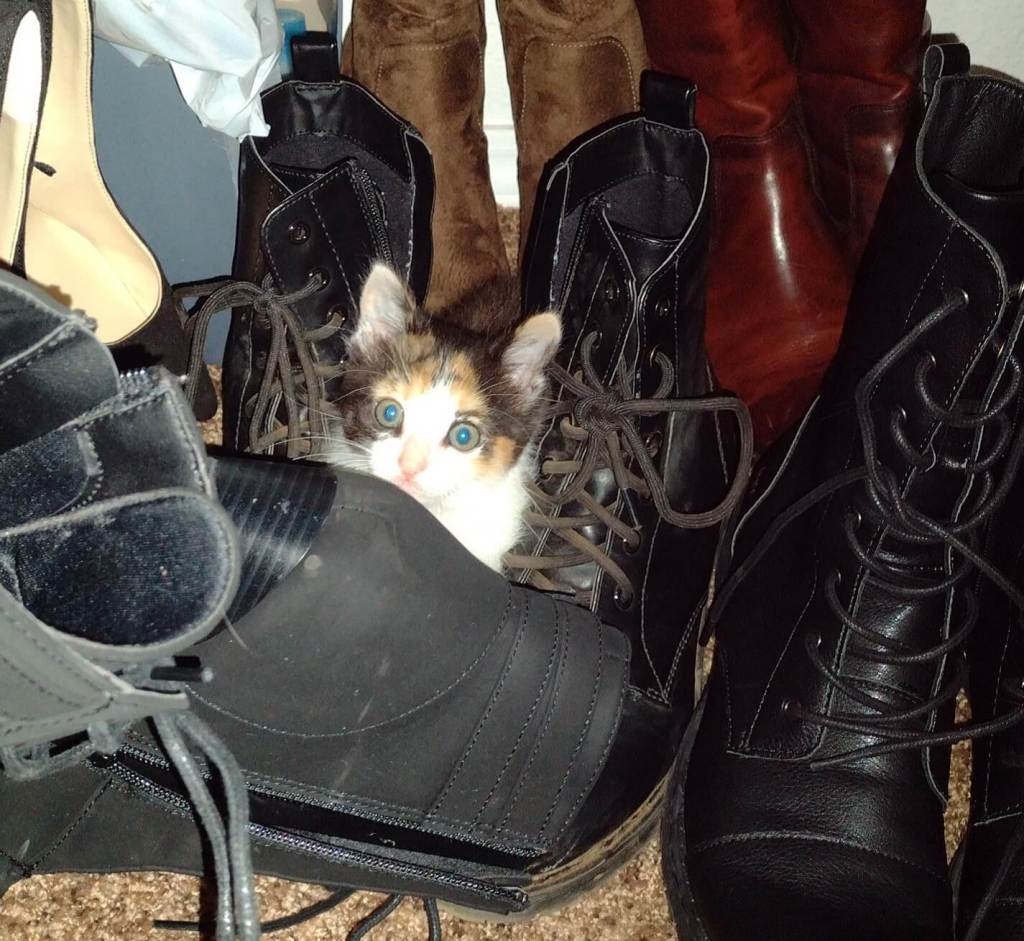
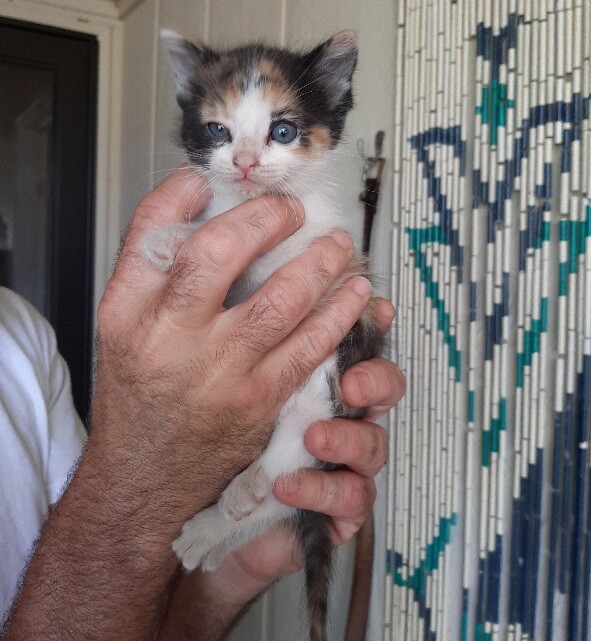
This is the kitten a neighbor found in the middle of a major road, and subsequently brought her to us.
First, let’s go over how to know if an animal you’ve found is actually abandoned. How do you recognize animal abandonment and cruelty? Well, in the cases of the 4 kittens I listed above, it was easy to identify. The kittens were all without their mothers, too young to be on their own, and in the middle of the road or highways.
However, if the animal or animals are still living in a home or a yard, most animal abandonment or cruelty, is in the manner of neglect. Though, other things to look out for include
Animal negligence, which is a lack of veterinary care, food and water, and/or shelter. A pet might have open wounds and appear malnourished.
Also, you might witness direct acts of abuse against an animal. Such as the owner throws objects or strikes their pet in any way that is violent.
Or hoarding–there are too many animals on the property for the owner to properly take care of them all.
Chained or tethered animals. Animals that are tethered or chained non-stop experience a lot of pain and isolation. And if they don’t have adequate shelter, they’re subjected to all of the hazards of the weather and predators. They could also get infections around the chains or tethers.
And finally, animals abandoned by their owners. The homeowners left or vacated their house, leaving behind their pets. You might hear meowing or howling, indicating animals have been left behind.
HOW TO HELP ABANDONED OR ORPHANED ANIMALS
Hopefully you’ll never see any of the above things in your neighborhood. But if you were to observe any or all of them, for the most part, you have the law on your side, since every state has laws prohibiting animal abuse. So, if you know of animals or have seen animals abandoned by their owners or neglected, call animal control. Although, if you live somewhere that doesn’t have animal control, like me, then contact the humane society on this page.
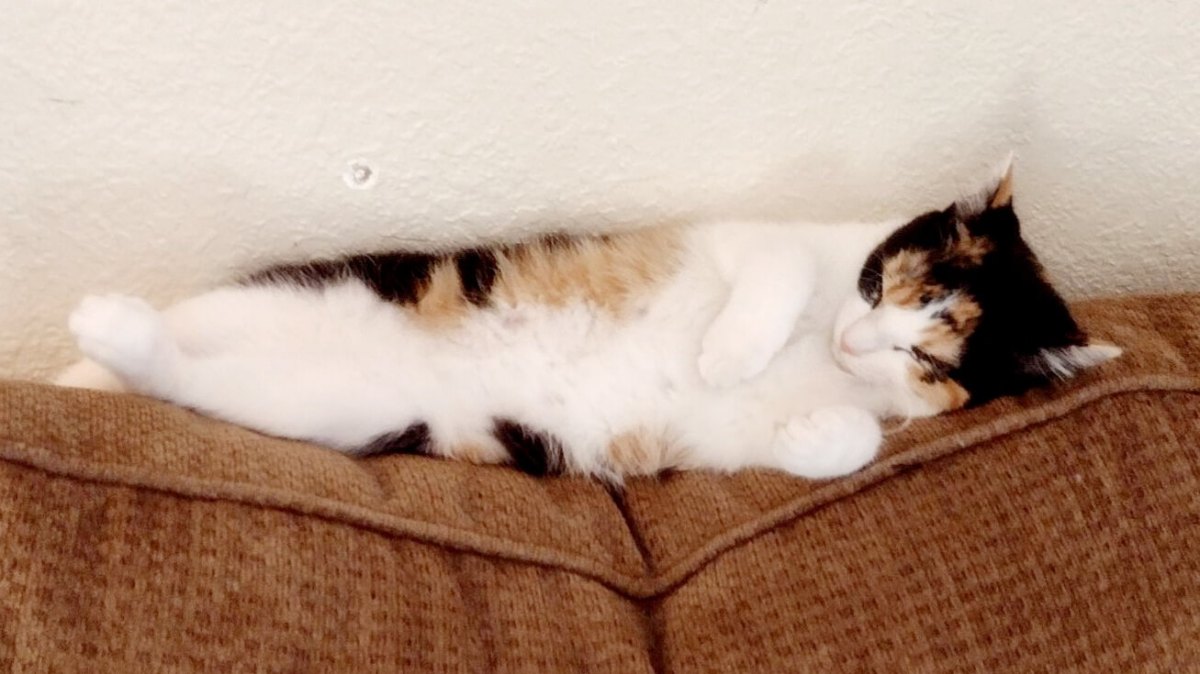
This cat was found and rescued from a trash dumpster.
HOW TO HELP AN ANIMAL YOU FOUND
Now, if you find a stray kitten or dog on the road or in your yard:
Try using food to coax the animal to you.
And for securing a dog, you need a leash. Or something similar.
But since cats typically don’t like being held, you should have a crate or a pet carrier.
Don’t put yourself in unnecessary danger. Older cats, especially if they’ve been on their own for a while, could be feral. So, be cautious and alert.
WARNING: If the animal runs off, appears ill, foaming at the mouth, or is showing signs of aggression, call animal control. And give them the street address where the animal was seen last. And don’t go near the animal.
Once you have the animal secured, check for a pet ID tag. If the animal is wearing a tag, contact the owner, so they can be reunited.
However, if you can’t reach the owner, or have to leave a message, file a found report with your local animal shelter. This is in case the owner goes there to look for their pet.
The pet might have a microchip and, if taken to an animal shelter, could get scanned there. And then it would quickly be reunited with its owner.
If you live somewhere that doesn’t have an animal shelter, consider taking the dog or cat to a local vet. The veterinarian would then be able to scan the animal for a microchip.
Finally, post fliers with the animal’s picture, description, and where you found it. You can also look up info and place ads on Craigslist, Nextdoor, and Petfinder about the animal.
Supposing you live in a rural area and don’t have animal control or even an animal shelter, you might decide to just keep the cat or dog. And even after all of your other efforts and still no one has collected it, these are the steps to take.
If you already have your own pets, keep the stray cat or dog quarantined. It could have worms, illnesses, fleas, or ticks. Not to mention, it and your current pets would have to meet over a period of time to get used to each other.
It’s generally not a good idea to just throw a new pet into your mix of current pets. It’s stressful to both sets of animals. Which produces fear in cats and possibly urinary tract infections.
Until you get the stray dog or cat seen by a veterinarian, be sure to wash your hands each time you handle it.
Next, make sure you inform people in your neighborhood about finding a lost or stray animal. And post fliers.
The law favors the owner if you fail to do this. There’s a holding period for strays that varies by state before anyone else can own that pet. Also, it could be difficult on the dog or cat, if years down the road, they get uprooted to go back to their original owners for your failure to tell people and post the required info.
After covering your bases, make a veterinary appointment for the animal, if you haven’t already. Get it seen and make sure it’s healthy. It might need vaccines or de-worming.
Sometimes this step is in conjunction with the step above. If the pet is staying in an animal shelter, you might have to provide veterinary care until you can own it. But if you don’t have an animal shelter where you live, there’s more leeway. However, there’s still a time-frame before you can legally own someone else’s pet. Especially if you haven’t made any attempts to reunite them.
And provide the appropriate food for your new pet, along with clean, fresh water, and bedding. If your new pet is a cat, provide a litter box as well.
how to help abandoned animals
A COUPLE OF FACTS ABOUT ANIMAL ABANDONMENT
Somewhere ~ 1.5 million healthy cats and dogs are euthanized each year in the United States. And statistics from animal shelters from 2020 indicate that ~70 million strays are living on the streets at any moment. However, just ~6.5 million cats and dogs combined enter shelters. While the rest survive the best they can, some suffer heat exhaustion in the summer. And others freeze during winter.
U.S. citizens pay ~$2 billion annually for the cost of maintaining animal shelters. While pet owners make up ~30% of the animals left behind in those shelters. And only approximately 10% of the animals in shelters are spayed or neutered.
So one of the primary ways you can help stop animal abandonment is to spay or neuter your pet, if you have one. Pets that aren’t spayed or neutered quickly overpopulate shelters. And also the streets.
HOW TO STOP ANIMAL ABANDONMENT
In addition to fixing your pets, you can also
Be an advocate for lost pets. Rather than dropping that lost animal you found off at animal control, try locating the owner first.
Avoid buying animals from pet stores and puppy mills. Instead, adopt a pet!
~ 3.2 million cats and dogs are adopted from shelters each year. And during the Pandemic we just experienced, adoptions for dogs were on the rise. However, on average, the Covid-19 pandemic affected pet adoptions last year. And the percentage of adopted cats was rising until the pandemic occurred.
Donate to a reputable animal rescue group. There are animal shelters, but there are also many different animal rescue groups.
They can cater to specific animals, types, breeds, etc. Helping these groups financially is necessary to keeping them operational. But also to provide veterinary care and other essentials for the animals.
Another way you can help stop animal abandonment and help abandoned animals is to volunteer at a local animal shelter. Not only will you see firsthand the ins and outs of shelter-life for unwanted or stray animals. But you can spend time with them. And oftentimes help them not feel so lonely.
Be a foster parent to a pet. Foster parents allow for less animals to be euthanized, which gives those pets more time to find permanent homes. Because, as a foster parent, your home is a temporary refuge for that pet as you help socialize and care for it.
Speak up or report animal abuse and neglect.
Lastly, be a responsible pet owner. Microchip your pets, update their tags, spay or neuter them, and only adopt another one if you’re in it for the long-haul.










 Chicken Girl