Categories
All animals non-fowl

Can I Sedate My Dog for Travel

If you have a very anxious pet, you know what it’s like. For example, they might act terrified of strangers or situations. However, it could seem like aggression to others. Further, taking them to the vet may feel like a huge ordeal. Or taking them on any kind of outing, even one that’s fun, can be challenging. But what if you want to take them with on vacation, or you’re moving? So, you might have wondered at one time or another, Can I sedate my dog for travel? Or my cat? We’ll explore these questions and some possible alternatives for traveling with your pet.

Not long ago I mentioned that my family and I were making a trip to South Dakota. Plus, we’re taking Itty and Sophie, our house pets. And we’re renting a vehicle. Thus, to prepare, I had both of them seen by their veterinarian. Since Sophie is super nervous in car trips, even short ones, the vet prescribed a sedative for her. But there are different thoughts on the issue.

What’s the Problem

Most mammals, including cats and dogs, can suffer anxiety. Moreover, sometimes the anxiety and fear is so bad, it affects both pets and pet parents.

Though, for our purposes, we’ll focus more on travel anxiety. Yes, travel anxiety is a real issue. And not just for pets. It also affects people. And travel anxiety has some of the same symptoms as generalized anxiety. Below you’ll find signs that your cat or dog might have travel anxiety.

Travel Anxiety Symptoms

Dog Travel Anxiety Signs

picture of a black and white dog
Photo by Kat Smith on Pexels.com
  • unwillingness to get in the car
  • whining, panting, and/or barking
  • restlessness or pacing
  • drooling
  • yawning
  • lip licking or smacking
  • shaking or trembling
  • urinating or defecating
  • wide open eyes
  • trying to hide or escape
  • and attempts to sit with you or on you (if not in pet crate)

Cat Travel Anxiety Symptoms

Yawning cat
Photo by Noemi Ji on Pexels.com
  • excessive meowing or howling
  • pacing or restlessness
  • lip licking or smacking
  • diarrhea or vomiting
  • and trembling or shaking

Causes of Travel Anxiety

So, what causes travel anxiety in pets? Well, it’s possible your pet is afraid of your car or strange situations if they lack good socialization. Or they could associate the car with anything scary or traumatic. For example, your cat might have travel anxiety, because she associates your car with the vet. Or your dog might have travel anxiety, because his first pet parents abandoned him at your house.

But both cats and dogs can experience motion sickness. Although, it occurs more often when they’re babies. And they can outgrow it when adults. Thus, that can be the issue as well. Or the memory of motion sickness can be the problem, if your pet is an adult.

How to Prevent Pet Travel Anxiety

Artistic design showing reputation
Photo by Frank Cone on Pexels.com

Obviously preventing cat and dog travel anxiety is preferable to sedating our beloved fur babies. Therefore, if you have a kitten or a puppy, use what’s referred to as desensitization. When they’re little, start training them for car rides. That’s similar to socialization. Anyway, desensitization is basically just getting your pet comfortable with your car. Taking small, extremely small steps, while giving praise and treats to your pet along the way. But, over the course of some time, you will, eventually, take your cat or dog on a short drive. You can read more about desensitization in detail here.

However, if, like me, your pet already has travel anxiety, you still need a solution. And you can’t travel back in time to change the past. Thankfully there are options. People in the know refer to this option as counter-conditioning. This assumes you have time to put this into practice. Though, if you do, counter-conditioning teaches your pet that your car, and thus traveling is super fun. As I mentioned, it takes time, particularly if your pet already associates your car with something absurdly un-fun.

Counter-conditioning uses some of the same techniques as desensitization. Although, along with car rides, you take your pooch somewhere fun, like the dog park. For example, if you’re flying with your pet, you would take either your cat or dog to the airport to get used to the airport sounds and smells. But after the session at the airport, take your dog somewhere fun. However, counter-conditioning looks different for cats. Since cats get scared easily, it resembles desensitization more. Rather than taking your cat anywhere else, offer more rewards, like added treats and playtime.

OTC Calming Aids

Say you’ve tried the suggestions above, but your pet is still nervous. Or maybe you don’t have the time to work with them. What do you do in that case? Don’t worry. You don’t have to cancel your trip or board your pet.

First of all, there are over-the-counter and homeopathic aids available, such as

black and white Australian Shepherd wearing a pink ThunderShirt inside on tiled floor

According to their website, ThunderShirts or -Jackets are similar to swaddling a baby, by applying a gentle, constant pressure to your pet’s torso. And research suggests that this type of pressure can release a calming hormone like oxytocin or endorphins.

  • cat or dog pheromones

Both cats and dogs release pheromones after giving birth, to calm their babies. Plus, these pheromones have been copied synthetically, And both are available in a variety of forms: diffusers, sprays, or collars.

  • Rescue Remedy specifically for pets
yellow and white container of Rescue Remedy for Pets, a homeopathic remedy for anxiety

For years people have been using Rescue Remedy for anxiety. It’s a homeopathic remedy, made from the essence of plants and flowers. But make sure you get the one that’s alcohol-free.

  • and playing pet-specific music

Species-specific music has been going on, at least, since 2009. And animals like their own music simply, because they can hear it and feel it. Unlike with our music, they have no idea what’s going on. Also, there’s cat-specific and dog-specific music. I guess when we go on our trip, we’ll just have to take turns playing each.

Prescription Medication
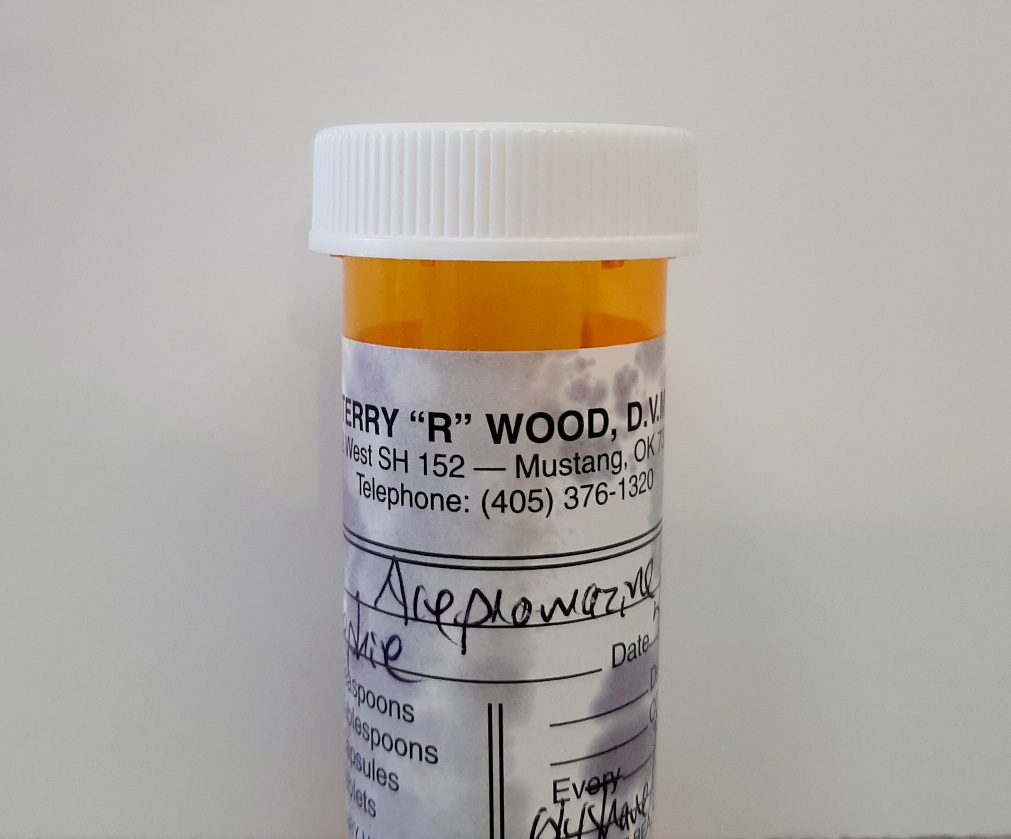
prescription bottle with illegible writing on it

If you still observe any of the signs listed above in your pet, then notify your vet. As I mentioned, car sickness is one of the main reasons why pets dislike cars and traveling. Additionally, motion sickness and travel anxiety share symptoms. Thus, if your pet shows signs of travel anxiety, call and discuss the symptoms with your vet. And the veterinarian will be able to confirm if your pet has motion sickness. Plus, if necessary, they can prescribe medicine to help.

Sometimes your pet may still need, or even benefit from a prescription sedative. However, it’s important to discuss this with your veterinarian. Moreover, if they prescribe something, do a trial run before your trip. For instance, give your pet the recommended dosage while at home to make sure there are no side effects. While some pets won’t experience any effect, including sedation, others will have the opposite effect. Therefore, it’s essential to try it in a safe place first. You absolutely don’t want your dog to be super hyper while on a long drive.

Experts like the AVMA discourage veterinarians from prescribing sedatives to pets for travel by air. They argue that pets that have been given sedatives or tranquilizers are at a higher risk of respiratory and cardiovascular problems at high altitudes, especially snub-nosed breeds. Plus, most airlines won’t allow pets that are sedated.

Pointers for Traveling with Pets

close up shot of scrabble tiles on a blue surface
Photo by Ann H on Pexels.com
  • Make time to train your pet for travel

Over the long-haul, counter-condition your dog or cat to travel with treats, playtime and praise. And continue to expose them to airports, cars, and pet carriers. Also, leave their carrier or crate out several days to weeks till they get used to it, and get in it on their own. This will make traveling with your fur baby much easier to manage.

  • Tire your fur baby out before travel

Because exercise helps dispel nervous energy, take your dog for a walk. Or play hard with your cat the night before your trip.

  • Limit food consumption

By limiting your pet’s access to food, it’s less likely they’ll have motion sickness or need to use the bathroom. Also, a pet that needs to use the bathroom might be more distressed when traveling. This is particularly important while traveling by plane.

What to Pack

person wearing brown pants standing beside a green suitcase
Photo by Kindel Media on Pexels.com

Your fur baby’s necessities are important for a happy and successful trip. So, depending on whether you have a cat or dog, you want to bring

  • collapsible food and water bowls or their own
  • your pet’s food
  • leash
  • halter
  • favorite toy
  • treats
  • toy or bone that’s safe for chewing (for dog)
  • blanket that smells like you, that you don’t mind getting dirty
  • litter box, litter, plastic bags, unscented baby wipes
  • and hand cleaner

Take Away

english bulldog inside vehicle
Photo by Tim Gouw on Pexels.com

Pet travel anxiety and generalized anxiety look a lot alike. Plus, the causes for both are very similar. However, there are both ways to prevent and treat travel anxiety in your fur baby. By using desensitization when they’re little, you can teach your pet that traveling is fun. Though, if your pet is currently suffering from travel anxiety, then use counter-conditioning.

Additionally, there are over-the-counter remedies to help you and your pet. From anxiety wraps and essential oils to pheromones and species-specific music, there’s something for every pet. And lastly, there are a number of prescription medications available, including actual sedatives, in the event your pet needs one. But that is best discussed with your pet’s veterinarian and under their guidance.

Our Experience So Far
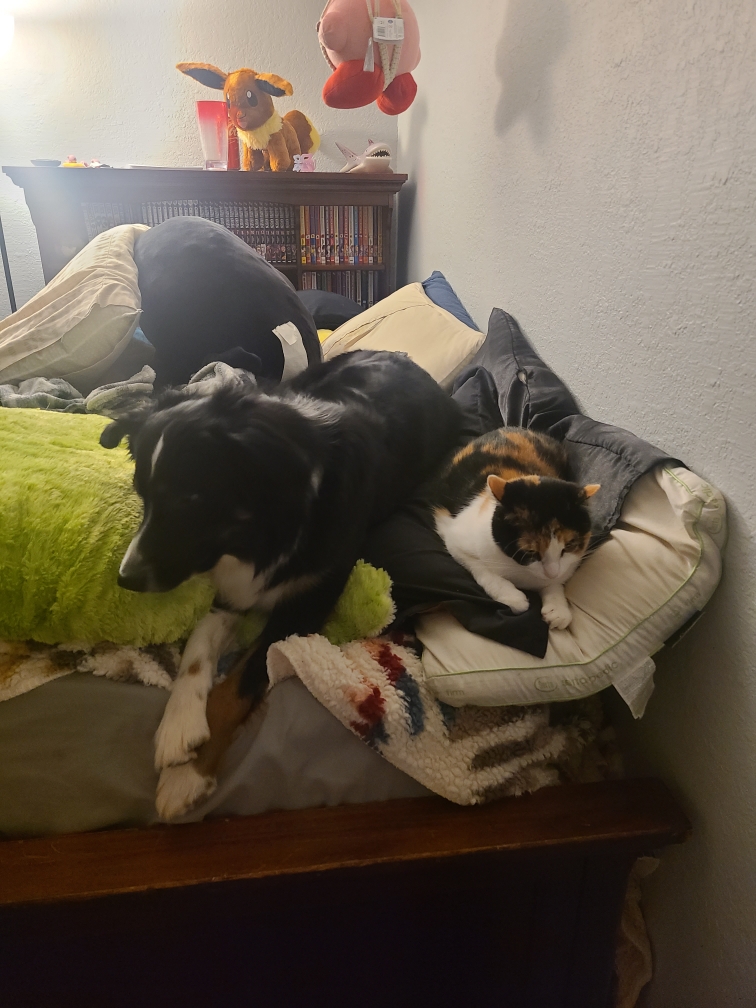
calico cat and Australian Shepherd lying beside each other on a bed
Sophie and Itty are best friends.

I’ve been concerned about both Sophie and Itty regarding our upcoming trip. Itty absolutely does not like the car, crate, or her backpack, I think, because she associates all with the vet. But both Sophie and Itty were abandoned before they came to us. So, our vet prescribed Acepromazine, which is the most commonly prescribed pet sedative. I gave them each their appropriate dose a couple of weeks ago.

I wanted to make sure it wasn’t going to make Sophie even more hyper than she already is. But it wasn’t until everyone else left the house that they both started showing the effects of sedation. And it didn’t knock them out. It just made them a little wobbly. However, after a few hours, Itty ate some cat-grass to make herself throw up. She definitely didn’t like being drugged. Additionally, the days following that, she didn’t trust that I wouldn’t drug her food again.

For our trip, I’ve invested a ton on just Sophie and Itty. I’m trying to make sure they’ll both be comfortable and stress-free. We have their prescriptions as the absolute last option. But I also have Rescue Remedy, ThunderShirts for both of them, their toys, so many treats, pet pheromones, etc. Something is bound to work, right? I’ll keep you guys updated.

Thanks for stopping by! Do your pets get anxious when traveling? What are your go-to methods? Please post a comment and share. And if you don’t already, please don’t forget to follow!

Categories
All animals Extras

Can Cats Have Anxiety and Depression

Six weeks ago I started working full-time to help out my office. But it will only be about 2 more weeks. Plus, my husband and I made a big decision somewhat recently. It’s something he’s brought up almost yearly. However, it was never the right time. So, due to various reasons, we put our house on the market. Therefore, soon we’re moving to East Texas. Thus, in the midst of all these changes, I wondered, can cats have anxiety and depression.

small brick house on land with Maple tree in front yard
Our house for sale

Once we put our house on the market, we had to clean our house on a daily basis, in case the realtor wanted to show it. I don’t think our house has ever been as immaculate as it is. Furthermore, there couldn’t be any signs of pets: no toys, no food or water bowls, and no pet toilets, aka litter boxes. And there could be absolutely no pet smells.

In addition to all of these daily adjustments to the pet accoutrements, my schedule altered from part-time to full-time. Whereas I once was home every afternoon, now I work everyday, all day long. And there was no slow transition. One day was normal, like any other. The next was something quite different; and it stayed different. Moreover, I haven’t had enough energy to give all of my time and attention to my fur baby.

Symptoms of an Anxious Cat

black and white photograph of a cat meowing
Photo by Lucas Pezeta on Pexels.com

The majority of animals, including cats, most certainly can suffer from anxiety and depression. Though, they don’t always present exactly the same way. You might have an anxious cat if they are

  • More aggressive than usual
  • Hissing more
  • More vocal, ie meowing more
  • Pacing
  • Have excessive mood changes
  • Perhaps fearful of leaving your side
  • Trembling or shaking
  • Failing to use the litter box
  • Hiding
  • Trying to escape
  • Lethargic
  • Experiencing a change in appetite and possibly weight as well
  • Having digestive issues like diarrhea
  • Over-grooming, which would end up in bald spots or sores
  • and are Vomiting

Symptoms of Depression in Cats

orange tabby sleeping on its paws
Photo by Pixabay on Pexels.com

Depression in cats isn’t due to a chemical change in their brains. But it’s usually a sign of a deeper problem. And some of the signs of depression in cats are similar to anxiety, as you’ll see. Signs of depression in cats include

  • Decreased appetite and no interest in treats
  • Loss of interest in playing with toys
  • Less interest in interacting with housemates or family members
  • Meowing more
  • Less interest in going outdoors, if allowed outside
  • Grooming less
  • Urinating more
  • Failure to use litter box
  • Excessive scratching
  • Crouched position with tail tucked and ears back
  • and Withdrawn: no head butting or kneading your lap

Elements that Influence Anxiety in Cats

Can Cats Have Anxiety and Depression
Photo by Helen on Pexels.com

There are a variety of things that can cause anxiety in cats, just as with people. In addition, some cats are more likely to have anxiety than others. For example, cats that weren’t socialized much are more likely to have anxiety as are traumatized kitties. Other possible causes of anxiety in cats include

  • Sickness or trauma
  • Separation anxiety
  • A traumatic experience, such as history of abuse, abandonment and natural disaster
  • Loud noises
  • Changes in the household, ie new members or change in a member of the household’s schedule
  • Unfamiliar people, animals, or environment
  • Cruelty from people
  • Being bullied by other pets
  • Car or plane rides
  • Being confined in a crate or a carrier
  • Not being socialized when young
  • Moving to a new home
  • Change to their routine
  • Boredom
  • and Dirty litter box

Factors that Contribute to Depression in Cats

black and white cat sitting on the floor with a pet recovery collar on its head
Photo by Dominika Roseclay on Pexels.com

Most of the causes of depression in cats are physical. Although, there are also some causes similar to anxiety in cats. And they deal with environmental stressors. Possible causes of depression in cats include

  • Environmental Stress

For example, grieving the loss of a loved one, either animal or human is an environmental stress. Or a change in the home environment, like being bullied by other cats or another pet is another instance of environmental stressors.

Moving is another example of environmental stress.

And change in the family’s schedule is also an example of environmental stress.

  • Change in Physical Health

Pain is an example of change in physical health. And many of the signs of pain in cats are similar to signs of depression and anxiety.

Another example of change in physical health is old age. Plus, it can go along with pain, because older cats tend to groom less.

Chronic illness is my last example of change in physical health. Just as with people, cats get depressed with chronic illness and pain. Just some of the chronic issues cats can get are asthma, cancer, IBD, diabetes, and kidney disease.

  • and Inadequate Nutrition

Both cats who are underweight and overweight are at risk for sickness and pain. And we already saw that chronic illness and pain lead to depression. So a nutritious diet is essential for a happy, healthy cat.

What You Can do for an Anxious Cat

two children playing with a white cat while sitting on a bed
Photo by cottonbro studio on Pexels.com

If your cat is showing symptoms of anxiety, they need to feel safe. So, it’s essential that you

  • don’t punish your kitty for being aggressive, or for any other unwanted actions.

All punishing your fur baby will do is exacerbate their anxiety and the undesirable behavior. In addition, you should think of your kitty as a baby.

  • talk baby-talk to your feline friend

Studies have demonstrated that cats like it when their owners use pet-directed speech, or what we would call baby-talk. Plus, utilizing pet-directed speech with your kitty nurtures your special bond with them.

  • keep a routine with feeding and playtime

Because cats are very prone to routine, any change on our end regarding their care could make them sick. A different study, published in the AVMA Journals, revealed that healthy cats exhibited ill health after familiar habits were altered. If you’re interested, you can find the study here.

  • include plenty of mental stimulation

Indoor cats can get bored easily. Thus, if they don’t have much mental stimulation, they’re susceptible to boredom-related and stress-relieving behaviors. But to avoid those unwanted actions, have lots of toys, perches, and cat scratching posts for your kitty. And don’t forget to make time to play with your cat.

  • clean the litter box daily

Most cats like a clean toilet, aka litter box. So, it’s ideal to clean it at least once a day. Additionally, refrain from moving your cat’s litter box, which would put added stress on your cat!

  • try calming cat pheromone products

I’ve tried the diffusers in the past when we got Cake, and I never noticed a difference. Meow Meow and Cake still didn’t like each other; and the diffusers didn’t seem to chill them out. But when Itty started displaying anxious and depressed symptoms, I decided to give the collars a try. And they work very well. However, that’s in addition to all of the other things I’m doing.

  • and reduce competition if you have multiple cats

The main ways to lessen competition between cats is to have multiple feeding and drinking stations, extra litter trays, extra hiding places, and plenty of toys. And be sure to space all of these items throughout your house.

What to do for a Depressed Cat

woman in white t-shirt holding a gray and white cat
Photo by Sam Lion on Pexels.com

First of all, I just want to say, this isn’t meant to take the place of veterinary advice. If you know your fur baby has a medical condition, if you suspect one, or have seen evidence of one, call the veterinarian. The following things are what I tried, since I know Itty’s symptoms were environmental–they began after I started working full-time and we put the house on the market. In addition, after a lot of effort on my part, she’s doing much better. Therefore, if your cat is depressed due to a change in his or her environment, you can

  • spend time with them

Research has shown that cats would much rather spend time with their owners than get treats or play alone with a toy.

When Itty first presented with symptoms, I still tried to play with her. Sometimes she was receptive. But it never lasted for long.

  • get a new toy

If your cat’s depression is due to boredom, getting a new interactive toy could be just the trick.

Again, I got Itty some new toys, a cat tree and scratching post, and more fuzz balls. While she loves a couple of the things I got her, she has yet to even approach the other.

  • offer new types of food

Sometimes even changing your cat’s food or litter could make them depressed. And if they aren’t eating as much, or no longer eating, try offering them wet food in tuna flavor. It has added moisture, and is generally better than kibble. I advise tuna simply because our cats love tuna flavor. But even the above mentioned research included food. And tuna was the favorite among felines.

Not too long ago classical music was the go-to choice when playing music for your pets. However, now, as more studies have been done, it makes sense that cats respond better to cat vocalizations.

I admit I hadn’t tried the music until a few weeks ago. When Itty and I started playing, it was how it’s been when she first had symptoms of anxiety and depression. She wasn’t all into it. But she amused me, because she loves me. However, when I put the cat-specific music on, it’s like she woke up. At first, she ran to my phone and sniffed it. She was clearly checking it out. And then she played with more energy than I’ve seen her play in a long time.

  • and offer calming pheromones

There are different ways the pheromones can be delivered: diffuser, spray, chews, or collars. I got the collar and the chews. Though, I waited until a couple weeks ago to try the chews. Itty was not impressed with the smell. At least she’s no longer wanting to eat anything and everything. So, we’ll most likely forego the chews, since she won’t touch them.

When to See the Vet

white cat being held by two people, while one person is using a stethoscope on the cat
Photo by Gustavo Fring on Pexels.com

Obviously any time our fur babies are acting out of the ordinary is a cause for concern. And it’s recommended that you call your vet. You absolutely want to rule out any physical causes for anxiety and depression.

Itty had her check-up a couple of weeks ago for vaccinations. Plus, I asked him about her panting when running across the room; not doing heavy play or exercise. Furthermore, I discussed the 13 hour trip we’re making to South Dakota with both her and Sophie in May. On our last vacation, we decided they were going with us on our next trip, since Itty got locked in a bedroom for 3 days. May will be busy. After about 5 or 6 weeks of all that I tried and suggested, Itty was back to herself. Though, not necessarily weight-wise.

Can Other Pets Get Anxiety and Depression

close up shot of black and white dog's nose

Yes, absolutely, other pets can get anxiety and depression. In fact, dogs get anxiety and depression for similar reasons as cats. Also, some breeds are more prone to anxiety, such as Australian Shepherds. Additionally, some signs are alike as well. Plus, chickens get anxious too. But for different reasons, like predators or overcrowding.

It seems like Itty and Sophie are a pet-match made in heaven. I’m so cued into Itty’s moods, because she’s my baby. Although, during Itty’s funk, I noticed Sophie seemed out of sorts. I’ve been at work most of the time the house was shown. Therefore, the pets had to be vacated as well as the people from our comfy abode. Hence, none of the pets enjoyed the days the house had to be shown to potential buyers. But especially Itty and Sophie. Whereas Itty showed symptoms of both anxiety and depression, I only saw symptoms of anxiety in Sophie. Though, Sophie would still play and eat. They just express themselves differently. While one is an introvert, the other is an extrovert.

I’m happy to say that our house got sold in only 2 weeks. Therefore, our babies didn’t have to deal with the craziness for too long. However, I’m still working full-time until May 1st. Then we go on a 5 or 6 day vacation before packing and moving. And the chickens have absolutely no idea what’s going on.

Can Cats have Anxiety and Depression?

person petting gray and white cat's face
Photo by Cats Coming on Pexels.com

We saw that cats can have anxiety and depression. Additionally, we learned that many things can trigger anxiety in cats, from moving their litter boxes to changing schedules. Plus, depression in cats has similar causes to anxiety in cats. However, it can also be caused by illness and pain. Besides ruling out a physical cause for anxiety and depression, there are many ways of helping our fur babies. The main one being spending time with them.

I appreciate you taking the time to read this post. Please comment and share. If you don’t already follow, please do so now.

Categories
All animals non-fowl

What is Saddle Thrombus

A couple of weeks ago, I mentioned that Meow Meow suffered from a complication of heart disease called saddle thrombus or FATE. Further, due to her condition, we decided to put her to sleep. But what is saddle thrombus? What are the signs? Does it affect dogs too? And can it be prevented? Continue reading as I answer these questions and more.

Distal aortic trifurcation thromboembolism, aortic thromboembolism, and saddle thrombus are all similar. And you’ll usually see them used interchangeably as well. Moreover, aortic thromboembolism or ATE is a deadly illness. Plus, when a blood clot or thrombus gets established in the aortic trifurcation, it extends down into the external iliac arteries. At that point, it ends up resembling a saddle. Thus, the term saddle thrombus.

Causes of Saddle Thrombus

black and white picture of close-up of a black pug
Photo by Charles on Pexels.com

You already know that saddle thrombus occurs in cats. In fact, it’s more common in male cats than females. And although it’s rare for dogs, it does happen. Additionally, just as with cats, saddle thrombus is more prevalent in male dogs than females. However, saddle thrombus is usually caused by heart disease in cats, typically HCM. Though, with dogs, a variety of conditions can produce saddle thrombus, including

  • sepsis
  • cancer
  • cardiomyopathy aka heart disease
  • damage to the lining of a blood vessel
  • enlarged left atrium
  • heartworm
  • hyperthyroidism
  • iron deficiency
  • blood clotting issues
  • weakly performing heart
  • protein losing nephropathy (PLN)
  • and splenectomy

And according to this study, PLN was the most commonly diagnosed issue recognized to induce a hypercoagulable state. Therefore, it’s presumed there might be a connection between an increased tendency to develop blood clots caused by PLN and saddle thrombus formation.

Signs of Saddle Thrombus

Traits like unexpected paralysis, pain, respiratory distress, and sudden death can take place in both cats and dogs with acute onset of saddle thrombus. Despite that, it’s still rare for dogs to experience acute onset. Rather, canines are more likely to manifest symptoms of chronic onset of saddle thrombus compared to cats.

Signs of Acute Onset Saddle Thrombus in Cats and Dogs

calico cat and black and white dog sniffing each other on a brown couch

Since blood supply to hindquarters is blocked, both cats and dogs can experience

  • paralysis in one or both hind legs (cats)
  • back legs will be cold to touch
  • foot pads and nail beds may appear pale
  • cats will cry out or meow more
  • hypothermia
  • vomiting
  • possible respiratory distress
  • and sudden death
  • paralysis in one or both hind legs (dogs)
  • back legs will be cold to touch
  • foot pads and nail beds may appear pale
  • dogs bark and appear anxious
  • hypothermia
  • vomiting
  • possible respiratory distress
  • and sudden death

Symptoms of Chronic Onset Saddle Thrombus in Dogs

Chronic symptoms are more subtle and may only appear as weakness or limping. However, over time your dog may also present with

  • anxiety
  • coughing
  • trouble getting up or jumping
  • reduced ability to exercise or stamina
  • hypothryroidism
  • a limp due to weakness in back legs
  • lowered body temperature
  • toe wounds
  • sudden paralysis and pain
  • respiratory distress
  • weakness
  • and sudden death

How Saddle Thrombus is Diagnosed

man and woman looking at an ultrasound machine while Pomeranian is on a table
Photo by Tima Miroshnichenko on Pexels.com

Including the above signs, upon examination, femoral pulses on the inner upper back legs are typically absent on cats. And sometimes they’ll be absent on dogs. Therefore, a diagnosis of saddle thrombus can be made largely on symptoms alone. Given the gravity of the situation, most pet parents opt to euthanize their pets.

Otherwise, if treatment is still desired, more tests and diagnostics are required, such as

  • Xray
  • Ultrasound
  • Urinalysis (dogs)
  • ECG
  • and blood tests

Several factors should be considered when determining to pursue treatment rather than euthanasia. Issues that negatively impact survival with cats include

  • decreased heart rate
  • absence of motor function
  • having more than one leg affected
  • hypothermia
  • and a confirmed diagnosis of congestive heart failure (CHF)

And the main factor affecting survival with dogs is ambulatory status. For instance, dogs with aortic thromboembolism usually fare better if they are still walking compared to dogs who are paralyzed due to the same condition.

How to Treat Cats with Saddle Thrombus

tortoiseshell cat being treated at a veterinarian's office

Often cats need to be hospitalized for a week or two with saddle thrombus until stable. Additionally, they may be referred to a kitty cardiologist But, initially, treatment may consist of

  • pain medications
  • oxygen, if and when necessary, for CHF or respiratory distress
  • IV fluids for dehydrated cats
  • antithrombotic therapy, ie heparin
  • as soon as oral medicines are tolerated, then Plavix is started
  • next, when patient is stabilized and pain is under control, physical therapy of affected limbs is started

However, loss of blood flow to the hind leg can lead to tissue death. So, if only one leg is affected, amputation is an option. Though, there are some contingent aspects.

  • after patient is stable and comfortable, any necessary diagnostics for treating the underlying cause of saddle thrombus are carried out
  • and monitoring patient closely

How to Treat Dogs with Saddle Thrombus

veterinarian giving tan pit bull terrier injection of some medicine
Photo by Pranidchakan Boonrom on Pexels.com

As you’ll notice, much of the therapy offered to cats with saddle thrombus is similar for dogs as well. Nevertheless, there are a couple of differences, as you’ll see. In addition, treatment is not universal, which means it depends upon the veterinarian and their expertise. Therefore, if your dog has saddle thrombus, medical care might include

  • hospitalization, depending upon the severity of the patient’s condition
  • pain medications
  • oxygen therapy, if necessary
  • antithrombotic medication, such as heparin
  • aspirin and/or Plavix will also be started
  • although, if clotting isn’t broken up, then the patient may be referred to a specialist, or the veterinarian may opt to surgically remove the clot
  • and finally, treat the underlying cause of saddle thrombus

Outcomes with Cats and Dogs with Saddle Thrombus

black and grey cat with short hair on a white surface
Photo by Burak The Weekender on Pexels.com

Once cats and dogs have a saddle thrombus, the prognosis is very poor. Despite the effort, they’ll either end up not making it, or more than likely have another episode. Thus, most pet parents choose euthanasia for their pets as the most humane option of relieving their suffering. However, you will undoubtedly find instances online of pets who were discharged from the hospital or survived ATE. Though, from everything I’ve read, those examples are considered outliers.

For instance, this study, involving 250 cats that had FATE, revealed that over 150 of the cats were initially euthanized. The study followed the therapy, hospitalizations, deaths, and etc over a period of several months. Then, depending upon certain conditions, some of the cats survived up to a week. But, due to severity and other factors I’ve listed, many still didn’t make it. And others had 2 or even 3 additional occurrences of FATE. In the end, only 6 of the 250 cats survived.

And this one, regarding dogs with saddle thrombus, is similar, yet not as grim. It included 100 dogs at the beginning. But again, because of different issues, only 16 of the original 100 were still living half a year later.

Preventing Saddle Thrombus

a veterinarian checking a sick dog using a stethoscope
Photo by Tima Miroshnichenko on Pexels.com

Plavix is the recommended preventative treatment for saddle thrombus in at-risk cats. Though, many pet parents don’t know that anything is wrong with their cats until it’s too late. But that’s why vaccinations are a great time to see the vet. Moreover, if your pet has chronic issues, such as heart disease, CHF, or kidney disease, keeping up with visits is a necessity.

Although, there are things you can look out for as well, to be proactive. Since I know you care about your pets as much as I care about my own, I like to share the things I’ve hopefully learned. With Meow Meow dying, I look back on things I feel I should’ve noticed; things that make me question whether she was sick almost 2 years ago. But then I tell myself, Of course she was, silly! She had heart disease. Indications your cat might have an issue with their heart or be at-risk for saddle thrombus would be

  • water intake (drinking more than ~1 cup a day for an adult cat)
  • activity level has dropped significantly
  • appetite has changed as well or doesn’t eat as much.
  • losing weight
  • using the bathroom in places other than the litter box
  • panting or shallow breathing
  • stopped grooming themselves, ie. claws need trimming and they have dandruff
  • and/or periodic lameness in different limbs

Since I don’t know much about dogs with saddle thrombus, there wasn’t anything different online than what’s already listed. Yet, I feel like they would also present in some ways similar to a cat such as

  • activity level has changed, ie not doing as much or can’t do as much
  • appetite has changed, ie, doesn’t eat as much or eats more than before for an adult dog
  • weight gain or weight loss
  • panting or shallow breathing when not doing much exercise
  • periodic lameness in different limbs
  • low urine output compared to water intake
  • weakness
  • vomiting
  • and/or abnormal behavior

I based these symptoms on the conditions listed above that can cause saddle thrombus in dogs. Furthermore, if you’re concerned about your pet’s health, contact your veterinarian. The best prevention is early detection and treatment.

So, What is Saddle Thrombus

tortoiseshell shorthair cat asleep on a blue jacket next to window

Saddle thrombus can affect both cats and dogs. Although, it’s not as common with dogs as it is with cats. And while heart disease is the main culprit behind ATE in cats, there can be any of a number of issues in dogs. Moreover, dogs generally manifest chronic onset symptoms, whereas cats will have acute symptoms. Also, both cats and dogs are diagnosed and treated pretty similarly. However, veterinarians no longer surgically remove blood clots in cats.

In addition, both kinds of pets have a poor prognosis, depending on motor function. Furthermore, if cats have hypothermia, more than one limb affected, and CHF, that affects the outlook as well. But keep your pets’ annual visits with the veterinarian, so they can detect any changes. And if you notice anything out of the ordinary, please call the vet. I hope you never have to experience anything like that with your fur babies.

Thank you for taking the time to read this post. Please comment, share, and please don’t forget to follow.

Categories
All animals Chicks Hens non-fowl Protecting Your Backyard Birds raising happy, healthy chickens Roosters

Bird Flu and Chickens

A couple of weeks ago, I wrote a post on factors, such as bird flu, affecting the cost of eggs. Even as egg prices have decreased slightly where I live, HPAI still abounds. What is it? How is it spread? And are people at risk? These are just some of the questions I’ll answer as we discuss bird flu and chickens.

What is HPAI

person with blue latex gloves on holding Petri dish
Photo by Anna Shvets on Pexels.com

While there are 4 types of influenza viruses (A-D), type A viruses are the main ones identified in causing worldwide flu epidemics. Further, whereas types B, C, and D have been detected in other species, including humans, only type A has been recognized to infect birds. Also, avian influenza, a subtype of type A, is labeled as either high or low pathogenicity in relation to genetic features. Thus, HPAI, or highly pathogenic avian influenza is a severely contagious illness caused by influenza type A virus.

History of Bird Flu

headshot of brown goose on lake water
Photo by Simon Reza on Pexels.com

According to the CDC, bird flu was first documented in 1878 in Northern Italy. Fowl plague, its moniker, was characterized by high mortality. And by 1901, it was concluded that fowl plague was caused by a filterable virus. But it wasn’t until 1955 that fowl plague was revealed to be a type A influenza virus. Moreover, in 1981, the term fowl plague was replaced by highly pathogenic avian influenza (HPAI) at the First International Symposium on Avian Influenza.

Then, in 1996, HPAI H5N1 was first observed in domestic waterfowl in Southern China. Additionally, bird flu was subsequently detected in people in 1997, something previously not thought possible.

More recently, as of 2021-2022, a new H5N1 virus with a wild bird adapted gene popped up. Furthermore, it’s caused the biggest outbreak Europe and the US have seen to date.

How does Bird Flu Spread

black and white digital sketch of a chicken sneezing on another chicken with a sign advising them to stay 6 feet apart if ill
Digital Art, Courtesy of Sarah Smith

Given that avian flu is so infectious, how does it spread? Well, based on the USDA website, bird flu spreads directly from bird to bird. However, it can also spread indirectly by coming into contact with something that’s infected. For instance, suppose someone tracks feces from a contaminated farm back to their own farm, and then their chickens walk and peck the ground where said person tracked contaminated feces, picking up the virus. That’s just one example of how bird flu can spread to birds.

Bird flu has caused over 200 million poultry deaths in a host of countries so far.  Additionally, an unprecedented number of non-poultry birds, including wild birds, have died due to the disease. Plus, because of migration patterns of wild birds, they help the virus circulate. Thus, wild birds, rodents, and people are all possible sources of presenting the disease to domestic birds. But what about other vectors?

What are Vectors

multiple flies hovering around faces of 2 cows
Photo by Maurice Engelen on Pexels.com

vector noun

2 a: an organism (such as an insect) that transmits a pathogen from one organism or source to another

“Vector.” Merriam-Webster.com Dictionary, Merriam-Webster, https://www.merriam-webster.com/dictionary/vector. Accessed 19 Feb. 2023.

Over 2 decades ago my father-in-law was asked to assist veterinarians in Great Britain as they were dealing with foot and mouth disease. While he was there, he remarked on how there were a ton of flies on the dead and diseased cattle. He finally mentioned it to someone in charge, even asking what they were doing about the vectors. Unfortunately his observations were not well received, as he was told to keep his mouth shut.

I found this memory poignant, especially in light of all the affected birds from this latest outbreak of HPAI. What are we doing about other vectors? We’re aware of animal, human, and bird vectors that spread the disease. Though, I could only find a couple of examples online, in the US, that even hinted that flies might be vectors. However, this study done over a decade ago didn’t come right out and say that flies spread bird flu. It advised that the flies carried it in the study, so it was possible. But, more tests would be needed.

Though, in the event you want evidence that flies spread diseases, check this site out. It details HPAI outbreak in Japan during 2003-2004, and was linked to the blow fly, a relative of the common house fly. Also, according to the same study above, flies were listed as mechanical vectors. But what’s the difference between mechanical and biological vectors? And what are wild birds and mammals when they spread avian flu to chickens?

Mechanical and Biological Vectors

close up shot of a mosquito on human skin
Photo by Jimmy Chan on Pexels.com

Mechanical vectors, such as flies, pick up an infectious agent and physically transmit it in a passive way. And a biological vector is one in whose body the pathogen develops and multiplies before passing on to another host. Mosquitos are biological vectors for West Nile virus.

Honestly I couldn’t find what wild birds were, whether biological or mechanical. However, since we’re told that birds spread the disease from bird to bird, it would seem they are also mechanical. Although, we’re told as well that wild aquatic birds are natural reservoirs for the virus. Plus, in the intervening years we don’t see the disease before it resurfaces, and it’s mutated, indicates a biological vector is at work. Interestingly enough, birds are reservoir hosts for West Nile virus.

Wildlife, especially mammals, are reservoirs for an enormous diversity of viruses.

1Faculty of Health Sciences, Curtin University, Perth, Western Australia, Australia
2Burnet Institute, Melbourne, Australia
3CSIRO Australian Animal Health Laboratory, Private Bag 24, Geelong, Victoria 3220, Australia
John S Mackenzie: ua.ude.nitruc@eiznekcaM.J
4Address: 20A Silver Street, Malvern, Vic 3144, Australia.

And according to the CDC, aquatic birds, including shore birds and wild waterfowl like ducks are considered reservoirs, or natural hosts, for bird flu viruses.

Symptoms of H5N1 HPAI in Poultry

dead orange and brown colored chicken on grass

Birds infected with the virus may show one or more of the following:

  • sudden death
  • lack of energy
  • reduction in egg production
  • soft-shelled or misshapen eggs
  • swelling around head, neck, and eyes
  • purple discoloration on head and legs
  • gasping for air (difficulty breathing)
  • nasal discharge, coughing, and sneezing
  • incoordination (stumbling or falling down)
  • twisting of the head or neck
  • and/or diarrhea

What You Can Do

Biosecurity is currently the best policy if you have backyard birds. Read below for recommendations:

person washing hands
Photo by Ron Lach on Pexels.com
  • Disinfect clothes, shoes, egg trays, vehicles, crates, etc.
  • Don’t expose cleaned and disinfected tools and equipment to wild birds.
  • Wash hands and shoes before and after entering chicken yard (area).
  • Buy birds from reputable sources; and isolate for at least 30 days to observe for any signs of illness before mixing with the rest of your flock.
  • Restrict visitors on and off of your property, especially from having contact with your flock.
  • Don’t visit other poultry farms, and avoid visitors that have poultry.
  • Keep wild birds and rodents out of the coop and poultry areas.
  • Don’t let your birds have contact with migratory waterfowl or other wild birds.
  • Secure feed and water to guard against contamination.
  • And have a written biosecurity plan.
  • Finally, if you’re working around sick birds, wear PPE; and visit the CDC site for more info.

In the past, simply culling birds and the heat from summer seemed to keep the virus in check. However, with this latest outbreak, it hung around. And now, some countries are even considering poultry vaccines for H5N1. It’s a measure of desperation. Costs and the need to have a vaccine for all of the strains are just a couple of reasons vaccines haven’t been used before.

Are People at Risk

a person holding pen and paper with graphs
Photo by Karolina Grabowska on Pexels.com

Poultry and wild birds aren’t the only animals being affected by avian flu since 2021. Thus far, several mammals in both Europe and the US have been infected by H5N1. Red fox, opossum, raccoons, a coyote, striped skunks, harbor and grey seals, a bottlenose dolphin, a fisher, 3 types of bears, a mountain lion, a bobcat, an Amur tiger and an Amur leopard all have been found positive for the H5N1 virus in the US.

Likewise, seals in Scotland, sea lions in Peru, and lastly, mink in Spain have also been identified with the virus. Given that mink seemed to pass the virus between themselves gave virologists concern. Furthermore, past studies have revealed mink to be vulnerable to avian and human influenza A viruses.

The high seroprevalence of combined avian and human influenza viruses suggests a strong likelihood of co-infections and thus farmed mink could serve as “mixing vessels”…. 

aKey Laboratory of Animal Epidemiology and Zoonosis, Ministry of Agriculture, College of Veterinary Medicine, China Agricultural University, Beijing, People’s Republic of China
bDepartment of Biostatistics, University of Michigan, Ann Arbor, Michigan, USA
cChinese Academy of Sciences (CAS) Key Laboratory of Pathogenic Microbiology and Immunology, Center for Influenza Research and Early-Warning (CASCIRE), Institute of Microbiology, Beijing, People’s Republic of China
dSchool of Public Health (Shenzhen), Sun Yat-sen University, Guangdong, People’s Republic of China
eSchool of Veterinary Medicine and Science, University of Nottingham, Nottingham, UK
CONTACT Jinhua Liu nc.ude.uac@hjl
*Honglei Sun and Fangtao Li contributed equally to this work.

Nevertheless, the CDC advised that humans lack the type of cell receptor in the upper respiratory tract that H5N1 viruses use to cause the disease. Plus, according to WHO, this current strain of H5N1 has caused less than 10 infections worldwide. And only 1 was in the US. In addition, it mainly affects those who have close contact with sick birds. Moreover, there have been no known human-to-human transmissions of the H5N1 virus that’s presently spreading globally among birds.

In Summary

green rotary telephone
Photo by u5e7bu5f71u591au5a92u4f53 3D on Pexels.com

Bird flu has been around a long time. And each time it returns, it’s changed a little bit more. Further, there are a number of ways bird flu can spread to poultry. Additionally, even though it’s been identified in some mammals, the threat to humans is still considered low.

However, if you see any of the symptoms listed above in your birds, you are encouraged to contact your agricultural extension office/agent, local veterinarian, local animal health diagnostic laboratory, or the State veterinarian; or call USDA toll free at 1-866-536-7593.

Thank you for taking the time to read this. Please comment, share, and follow.

Categories
All animals non-fowl

HCM Heart Disease in Cats

HCM heart disease in cats is a condition that causes the heart muscles to thicken. Further, it can affect kittens and adults alike, as well as any breed and gender. In addition, it’s estimated that anywhere from 15% to 30% of cats have HCM. However, most cats with HCM show no signs of disease. On top of that, we had to put Meow Meow to sleep recently due to complications related to HCM. As a result, it’s my sincere hope to prevent other pet parents from losing their cats in like manner.

Typical for me, when we or our pets go through an illness or injury, I scour the web for as much information as I possibly can to understand, and to hopefully prevent or find a solution to the issue. What started as a limp in Meow Meow rapidly progressed to lameness in only a matter of a couple of days. At prior vet visits, we were never told she had heart disease; never heard the words heart murmur, mitral valve dysplasia, or arrhythmia.

What caused Meow Meow’s lameness was feline aortic thromboembolism, otherwise known as FATE or saddle thrombus. And once cats are diagnosed with FATE, such as Meow Meow was, there is rarely good news. Therefore, even though saddle thrombus essentially brought about Meow Meow’s death, HCM heart disease was at the root of it.

What Causes HCM Heart Disease in Cats

bengal cat lying on the floor
Photo by u7426 u5218 on Pexels.com

Genetic predisposition of HCM is the prevailing cause in many cat breeds, including Ragdoll, Sphinx, and Maine Coon. But HCM is also readily recognized in other purebred cats, including Bengal, Shorthair, Norwegian Forest, and Persian. So heredity is thought to be a determining factor with those breeds as well.

Although, other cat breeds, including mixed breeds, are speculated to have similar genetic causes to their HCM, work directed toward finding those remains unfruitful as of yet. Plus, mixed breed cats generally either don’t have well-documented family history or no family history of HCM. Thus, scientists believe there are also other, unknown causes of HCM.

Though, according to Cornell Feline Health Center, both hypertension and hyperthyroidism lead to HCM. Lastly, chronic kidney disease (CKD) and heart disease are often linked together in humans and cats; either one can provoke the other.

Symptoms of HCM in Cats

close up photo of dark gray British shorthair cat
Photo by Marianna OLE on Pexels.com

First of all, since cat owners don’t regularly exercise cats, unlike their dog counterparts, there might seem to be no symptoms of HCM heart disease in cats. Often dubbed the silent killer, because pet parents aren’t aware their fur baby has it until heart failure, FATE, or even sudden death.

But that doesn’t mean changes aren’t occurring. Even as the heart becomes less effective, your cat’s body makes up for the disease, concealing symptoms.  Think of small adjustments their body makes over time, ones we don’t register. Sadly, extended activation of such compensatory mechanisms damages the heart muscle and other organs in the end stages of the disease. Therefore, for clarity, I’ll divide the symptoms into 2 distinct medical conditions.

Congestive Heart Failure (CHF)

orange tabby cat wrapped in gray and white blanket
Photo by Tatiana u0410zatskaya on Pexels.com

CHF occurs if your cat’s heart isn’t pumping enough blood to other parts of their body, causing fluid to back up in the lungs.  Humans with CHF often compare it to drowning. And according to BMC Veterinary Research, cats affected with HCM have been shown to carry a 23.8% risk of developing congestive heart failure. Furthermore, symptoms of CHF in cats include:

  • Heart murmur
  • Abnormal heart rate or rhythm
  • Increased time spent sleeping while less time being active or playing
  • Weight loss, including decreased appetite and vomiting
  • Elevated breathing rate and/or effort
  • Pale or blue gums and cold extremities
  • Fainting or loss of consciousness
  • Open-mouth breathing or panting
  • Ungroomed appearance–upon close inspection, they might have dandruff in their fur, and/or long claws
  • And sudden death

Thromboembolism

diagram of heart, aorta and saddle area on cat
Digital Art, Courtesy of Sarah Smith

A thromboembolism is a blood clot that breaks off and causes a blockage.  And based on Purdue College of Veterinary Medicine, as of 2003, thromboembolism was observed in around 50% of cats with HCM. In addition, where the clot breaks off and settles determines the symptoms.

  • Stroke – a blood clot that blocks blood flow in the brain.  And signs consist of seizures, weakness, blindness, falling, muscle spasms, and coma.
  • Pulmonary embolism – a blockage that occurs in the lungs. And the signs are labored and rapid breathing. But the cat can also cough, have blue-tinged gums, faint, and/or go into shock. In addition, sudden death is also possible.
  • Aortic thromboembolism, aka saddle thrombus. 89% of cats with saddle thrombus have some form of heart disease. However, HCM is the one most often to blame. And saddle thrombus appears because a blood clot travels from the aorta and settles in the saddle, cutting off ALL circulation to one or both back legs. Additionally, it generates extreme pain and paralysis, and is often fatal.

Furthermore, in some cats, the strain of FATE deteriorates their cardiomyopathy leading to acute congestive heart failure.  So you see, a cat can have both saddle thrombus and CHF with cardiomyopathy. Though, it’s not common. And if it happens at all, it’s usually later in the disease.

How HCM Heart Disease in Cats is Diagnosed

2 vials of blood samples
Photo by Karolina Grabowska on Pexels.com

Unfortunately a DNA test is not how heart disease in cats is definitively diagnosed. Seeing that some cats that are predisposed to it don’t fall ill with HCM, even as other cats aren’t do. However, your pet’s veterinarian might hear a heart murmur at a routine office visit. Or another symptom might pop up, in which case the vet may recommend

  • proBNP blood test that measures the NT-proBNP hormone that’s released by stretched or stressed muscle cells in the heart. Despite being reported to have a 90% accuracy rate, there are other issues that can influence the test results.
  • echocardiogram is considered the gold standard when assessing the heart. This feline echo shows an image of the heart so veterinarians can then evaluate the heart size, shape, and the way it functions. Moreover, the veterinarian will be able to measure wall thickness, examine heart valves, and check blood flow. Echocardiograms can also be used to detect some heartworm infections.

Depending on your pet’s symptoms, your veterinarian may recommend a chest X-ray and/or an electrocardiogram (ECG) besides. The X-ray would look for fluid on the lungs. And the ECG would reveal any heart rhythm abnormalities.

Just be aware that if your cat doesn’t have HCM heart disease now doesn’t mean they won’t at some later time. Thus, if you have a high-risk breed, like one listed above, you should get them regularly tested.

Treatment for HCM in Cats

4 different pill bottles and 3 packets of medications next to blood pressure cough on wooden boards
Photo by Towfiqu barbhuiya on Pexels.com

Fortunately, many medications formulated for people are also prescribed for cats with similar issues, as you’ll see below. However, don’t give any medicines to your pets until clearing it with your veterinarian first. Obviously dosages are completely different. In addition, disease progression will dictate treatment. But overall, the veterinarian may want to

  • slow your cat’s heart rate, correct arrhythmias, and lower blood pressure

Beta blockers like atenolol can slow heart rate and lower blood pressure. And calcium-channel blockers, such as Cardizem, are used for cardiac arrhythmias.

  • minimize clot formation

Plavix is usually better than aspirin at preventing further clots, according to Morris Animal Foundation. .

  • alleviate fluid build-up with CHF and change your cat’s diet

Diuretics like furosemide are used to drain excess fluid from the heart and/or lungs. Plus, oxygen therapy and needle aspiration are additional options if congestive heart failure is severe.

Also, your cat’s veterinarian likely won’t recommend changing any diet UNLESS your fur baby has congestive heart failure. That’s because unrestricted sodium intake for cats with CHF causes fluid retention. Talk to your veterinarian, or look here for ideas on what to feed your cat if they have CHF.

  • and lastly, give your cat pain medicine if needed

Prognosis of HCM Heart Disease in Cats

orange tabby cat lying on a green surface
Photo by Du01b0u01a1ng Nhu00e2n on Pexels.com

There are many variables involved when evaluating the prognosis for HCM in cats, like your cat’s age and how advanced the heart disease is. In addition, how well your cat responds to treatment affects the outlook as well. However, generally HCM heart disease is a progressive disease. Usually once symptoms appear, unless the first one is a blood clot, cats live about ~ 2 years. Otherwise, the odds are less than that.

Moreover, it’s vital to understand that heart medications don’t cure HCM. Although, they can prevent the disease from getting worse, and/or from causing secondary issues. Nevertheless, the best plan is to get cats diagnosed early, before any symptoms start.

HCM Heart Disease in Cats

close up of tortoiseshell cat sitting on a couch
Meow Meow Kitty Kitty

As I’ve learned about hypertrophic cardiomyopathy, and all of the resulting symptoms and complications, I realized why we didn’t notice the subtle signs in Meow Meow. She was a middle-aged cat when she came to live with us. Perhaps if she was kitten or a year old back then, things might have been different. But when Meow Meow came to us, she was already deep in her habits of sleeping all day. Therefore, we had nothing with which to compare her behavior.

Again, HCM is a degenerative disease, especially once symptoms start showing up. But it doesn’t have to be a death sentence. Even something as simple as excessive sleeping or an unkempt appearance should be taken as a sign that something is off. Because the sooner treatment can be started, the better your cat’s fighting chances are.

Thank you for taking the time to read this post. I hope you enjoyed it. Please post a comment, share, and don’t forget to follow.

Categories
All animals non-fowl

Cats Gain Weight after Spaying

About 80% of American household cats are spayed or neutered, which is invaluable for the many health and social benefits. However, most studies have found that cats gain weight after spaying. But it’s possible you didn’t notice many changes if your cat was spayed when she was a kitten, since she was still growing. Though, if you had your cat spayed as an adult, you might have discovered that she’s heavier than she once was.

Even if you have a cat that put on some extra pounds post-spay, nevertheless, with your help, they aren’t destined to become obese. Continue reading for ways to combat the weight gain, and to keep obesity at bay.

Why Cats Gain Weight After being Spayed

tortoiseshell shorthair cat trying to drink out of fountain outside
Meow Meow is too heavy to lift herself up enough to drink out of the fountain!

I never experienced a cat in heat before Itty. But just to recap feline estrous: female cats are in heat every few days for at least 10 solid months of the year! Plus, their hormones are raging, which includes estrogen being released, on and off, during this 10 month long period.

Thus, when Itty was in heat, she had no time for food. Because she was distracted. And it wasn’t until she was out of heat that she would finally eat food. However, a few days later she would be back into her heat cycle. Until she was spayed. Since she no longer has all those hormones driving her other needs, I have theories about what caused her starvation after surgery, then over-eating, and therefore, weight gain.

Regardless of my theories, multiple studies have revealed that cats gain weight after being spayed because:

  • they lose estrogen, which decreases metabolic rate
  • metabolic rate is decreased, thus their energy needs are decreased
  • plus, spayed cats need about 20-25% less food than intact cats for ideal weight
  • in addition, appetites can increase because estrogen has been shown to decrease appetite
  • and finally, some spayed cats are under-exercised and over-fed.

Age Cat is Spayed is a Factor in Weight Gain Post-Spay

person in scrubs performs surgery on sedated cat
Photo by Pranidchakan Boonrom on Pexels.com

This might actually surprise you, but adult cats are more at-risk for gaining weight, resulting in obesity, post-spay than kittens. Although, depending on which site you look at, you might get a totally different answer. But I was suspicious of this myself, after witnessing the effects of hormones during Itty’s estrous cycles. And considering that spaying a cat is similar to a human hysterectomy, it has to be such a shock to their systems.

In any case, this study published in 2017, involved only kittens (15-52 weeks). And the purpose was to determine their total energy needs by inspecting the significance of spaying, age when spayed on intake, and body weight. Given the study only included kittens, half were spayed/neutered early compared to the rest, which was conventional. Or they were spayed/neutered at a later date, when they hit puberty.

The results revealed that the kittens spayed/neutered early, before reaching sexual maturity and their first heat cycle, gradually gained weight through normal growth. Whereas the kittens spayed/neutered after sexual maturity showed sudden increases in feeding, hence gaining weight more quickly, and becoming overweight. 

A Word About Hyperphagia and Leptin Resistance

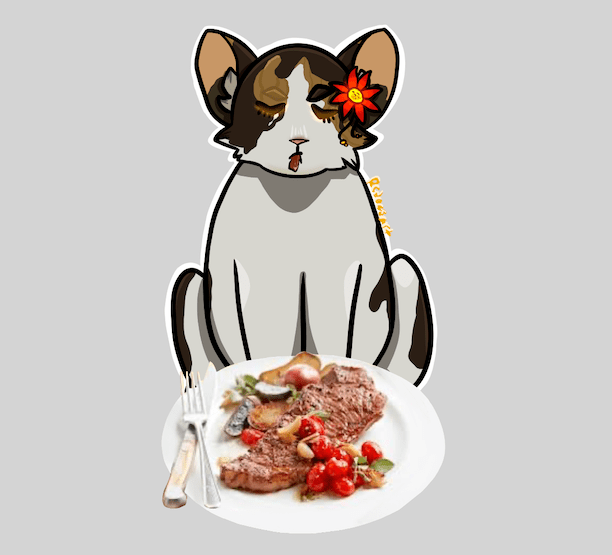
Digital image of calico cat eating a big steak dinner
Digital Art, Courtesy of Sarah Smith

Hyper-what? Well, up till now I’ve just been referring to Itty’s need for food post-spay starvation. Though, it turns out there’s an actual word for the condition. Also, it appears that other pet parents are unaware of this term as well. Because when I looked up this issue about starving cat post surgery, there were tons of others with the same problem. They just didn’t have a word for it either. However, it is most commonly associated with injury to the hypothalamus.

But there’s also leptin, which is a hormone that helps our bodies maintain normal weight on a long-term basis. While normally leptin increases when food is eaten, signaling the hypothalamus to tell the brain that we and our pets are satisfied, mammals with too much or too little leptin don’t get those signals. Additionally, those with higher levels of leptin, who eat more and gain more weight, indicate leptin resistance. Therefore, from what I’ve read, there’s obviously a connection between spaying/neutering and leptin resistance. For instance, this 2002 article from The Journal of Endocrinology and Metabolism says:

One means through which estrogen may affect energy balance is through influencing synthesis of the hormone leptin. Leptin is a hormone produced by adipocytes (10) that is thought to affect energy intake and expenditure (1113). 

Leptin in Postmenopausal Women: Influence of Hormone Therapy, Insulin, and Fat Distribution* 
B. A. Gower,  T. R. Nagy,  M. I. Goran,  A. Smith,  E. Kent

Scientists used to think it was just cats eating too much. Or that their owners were too lazy to play with them. However, with more research done on leptin and its function, it makes more sense that something else is going on. For example, all the starving cats post-spay. It’s the classic chicken or egg question: which came first, the eating disorder or the starving cat? Since I’ve experienced this firsthand, and I know how small Itty was prior to spaying, I can tell you how off the charts hungry she has been. She has no idea that she’s full. Thus, once cats hit puberty and are then spayed, hormonally something happens. Or doesn’t happen like it’s supposed to. And so cats eat. And eat, because they don’t know they’re full.

What You can do to Prevent Obesity Post-Spay

white cat eating from crystal bowl on fully furnished table
Photo by cottonbro studio on Pexels.com

If your cat was spayed recently, or is going to be, just know that she is going to gain some weight. It’s a given, at least with everything I’ve read. Despite that, to prevent obesity

Instead figure out your cat’s daily caloric needs using this site. And then adjust their food intake by giving your cat several smaller, measured meals throughout the day.

  • Also, avoid feeding your fur baby table scraps or treats

Most of the time cats seem finicky. Until they get spayed. Next, they appear starving. And then any type of food is fair game to them then. Be strong, my friend. Be strong.

  • And promote physical activity.

Get some toys and play with your cat. Or even explore your backyard together. But do something that distracts them from wanting to eat all the time.

Before Itty went into her very first heat cycle, she and I would play together all the time. However, once she hit puberty, she was no longer herself due to those crazy hormones. While Itty is now spayed and no longer distracted, she’s up to playing and exploring again.

  • Lastly, make an appointment with the vet.

If after all of these steps and you’re still fighting the daily hyperphagia, or starvation, then it’s time to see the vet. You can’t do this on your own; you need some help.

In fact, I’m planning on making an appointment for Itty as well. Because I’ve already changed her diet. Though, I’m not sure how much fat content I’m supposed to cut out of her diet, since fat is vital to their diet. And I suspect she has leptin resistance. The good news on that is there is treatment to reverse leptin resistance. But the vet probably needs blood work before starting any treatment.

In Conclusion

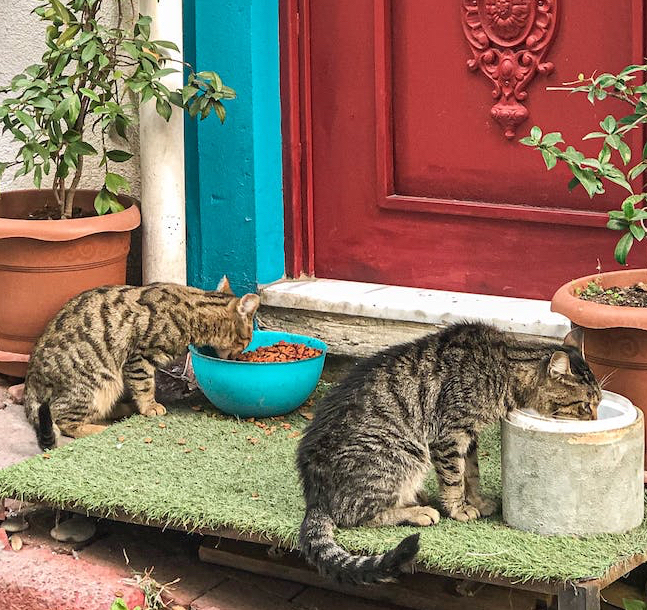
2 cats eating out of huge bowls outside by red door
Photo by Arzum Kaya on Pexels.com

Most cats gain weight after being spayed due to the loss of estrogen. And the hormone leptin experiences resistance after spay as well, which leads cats to eating more, and thus, gaining more weight. However, there’s things we can do to help our cats from becoming obese: providing smaller meals, encouraging exercise, and talking with the veterinarian.

If you’ve already had your cat spayed for some time, did your cat experience hyperphagia? Also, did she gain weight? And how did you handle the changes?

If you enjoyed this post, please like, share, and please don’t forget to follow!
Categories
All animals non-fowl

Benefits of Spaying Your Cat

Just as there are reasons to spay bunnies and dogs, there are also benefits of spaying your cat. Furthermore, there are more opportune times to have your cat spayed than others. But first, let’s discuss what spaying is.

Spaying is the common word for ovariohysterectomy. And it’s a surgical procedure removing the ovaries and uterus, thereby sterilizing the female cat. Therefore, she won’t be able to produce any offspring. So, unless you are a breeder, it’s recommended to spay your cat for the reasons below.

Also, I’m dividing this into two parts, medical and behavioral benefits. First, we’ll look at the medical benefits to spaying cats. And then go over the behavior advantages.

Medical Benefits of Spaying Your Cat

a veterinarian holding an injection for a cat
Photo by Gustavo Fring on Pexels.com

Spaying your cat

  • removes the threat of ovarian and uterine cancers
  • before her first heat cycle, greatly reduces her risk of getting breast cancer

Mammary tumors are the most common tumors in cats. And ~85% of them are malignant. Also, cats who are not spayed have a higher incidence of mammary cancer.

The risk of UTIs won’t completely go away if your cat is spayed. Although the threat of them is reduced.

  • and it eliminates the chances of her getting a serious and fatal uterine infection called pyometra

Pyometra is a secondary infection of the cat’s uterus, occurring within weeks of her being in heat.

Behavioral Benefits to Spaying Your Cat

close up photo of yawning cat
Photo by Serena Koi on Pexels.com

If you spay your cat

  • she’ll no longer go into her heat cycle

No more yowling, meowing, or cat calling at all hours of the night. And no more of her trying to get her freak on with any of the other pets.

  • and she’ll no longer spray urine, if she did that during her heat cycles

Other Benefits of Spaying Your Cat

woman sitting on a bench outside feeding many cats
Photo by Canan YAu015eAR on Pexels.com
  • No extra mouths to feed or kittens to find homes for

Cats can mate and get pregnant quickly. And shelters are already overcrowded. Thus, by spaying your cat, you don’t have to worry about any of those issues.

Best Time to Spay Your Cat

As you can see, there are a lot of advantages to spaying your cat. But when is the best time to have it done? Most veterinarians agree that spaying your cat before their first heat cycle is the preferred time. And this is primarily to reduce any mammary cancer risks.

In a previous post I explained that cats can have their first heat cycle as young as 4 months old. Therefore, whether you have a cat that’s already had her first heat cycle, or you have a kitten, discuss spaying her with your veterinarian.

Weight Gain After Spaying

calico cat sitting on a dining table with food on it
Photo by cottonbro studio on Pexels.com

One reason pet parents cite for not wanting to spay their cats is the belief they will get fat. Well, those pet parents aren’t wrong. This co-relation has been studied: sterilized pets, including dogs, were 3 times as likely to be overweight than non-sterile pets.

The reason cats gain weight after being spayed is mainly due to hormonal imbalance. They lose certain hormones that not only control reproduction, but also affect metabolism and food intake. So they might roam less, have less physical activity, and eat more.

What You Can Do

cats playing on their wooden play house mount on wall
Photo by Arina Krasnikova on Pexels.com

After your cat is spayed,

  • talk to your veterinarian about how much food you should feed her, because her caloric intake needs to be adjusted
  • since she’ll feel hungrier, adjust her feeding schedule by giving her smaller, more frequent, meals throughout the day
  • don’t give her any table scraps
  • and play with your cat; wand toys, laser pens and fuzz balls are all great!

We have 2 cats that are spayed, and one that will be by October. Unfortunately none of our cats were spayed before their first heat cycle. But 2 were given to us as adults. And I tried to get Itty in before her subsequent heat cycles. However none of the offices I talked to would spay her unless she was done with her heat cycle completely. So this was the next best thing; waiting till it slowed down. (July didn’t work, because by the time her surgery would come up, each week she’d be back in heat.)

Meow Meow definitely is overweight. But I think it’s due to no activity. Cake is a good weight. And that’s because she’s still active. If you have cats, are they spayed? Did they gain weight after being spayed? Your comments are appreciated.

If you enjoyed this post, please like, share, and please don’t forget to follow!

Categories
All animals non-fowl

How to Tell if Your Cat is in Heat

Cats have their first reproductive, or heat cycle when they reach sexual maturity. And for some breeds that can be as early as 4 months old. While for others, that could be as late as 18 months. However the average age is typically ~ 6 months old. (Itty was 10 months old when she had her first heat.) And cats display some signs that they are in season, so you will notice them acting differently. Continue reading to find out how to tell if your cat is in heat and how you can help her.

Cats are seasonally polyestrous, which means they’ll have multiple heat cycles during breeding season. Thus, in the US, February through October is considered the perfect breeding season. Therefore, your cat will likely cycle every 14-21 days from February to October if they aren’t already spayed or pregnant.

But how long does a cycle last? Each heat cycle lasts several days. Also, if the queen, or intact female cat, is not mated during the heat cycle, then she’ll go out of heat. For example, when Itty had her first heat, it lasted about a week. Or so I thought, because 3 or 4 days later it returned with a vengeance.

calico cat treading her hind paws next to an Australian shepherd lying on the floor

Signs Your Cat is in Heat

  • She’s extremely vocal

This is one of the signs many pet parents notice first. Whether it’s yowling, caterwauling, or meowing when there was barely a mew before, cats in heat make all kinds of new noises.

Take Itty, for example, who, 2 days before we realized she was in heat, started meowing at me in the middle of the night. Full on meowing, while most of the time she only has little mews, that don’t even qualify as meowing. I thought she wanted to play with me or needed something. Or just loved me. Then the other signs started showing up.

  • She’s more loving than the dog

The second clue your cat’s in heat is that she’s more loving than your dog, if you have one.

For instance, she lets you pet her, she rubs against you, and wants your attention and affection, whereas before maybe she was elusive. If your cat isn’t spayed, and she’s now extremely affectionate, it could just be she’s in heat.

  • Change in eating habits

She may eat less when she first starts her heat cycle than she was before. However she might return to her normal feeding schedule in time; that’s how it’s been for Itty.

  • A lot of floor action; ie, her tail and rear seem to always be up in the air. Plus, she rolls around on the floor more than she used to

Female cats in the first position, called lordosis, are signaling that they are ready to mate. And by rolling on the floor, she’s releasing her pheromones all over the place. She’s just hoping it will catch some cat’s fancy.

  • Moving her hind end and treading her hind feet when her back is petted

At this stage of her heat cycle, she’s very receptive to being mated, and might try anything to achieve her ends.

  • Begging to go outside (if an indoor cat)

Or she’ll try to sneak out if you’re not careful. And you might even start seeing toms, or male cats, gathering around your home in search of your cat.

Some queens will either urinate more often or spray urine on objects. Since cat urine contains both pheromones and hormones, this signals to other cats that they are in heat.

However this isn’t the only way that cats mark their territory; the other way is by scent rubbing against objects. (I’m thankful that Itty doesn’t spray.)

  • Another sign your cat is in heat is if she’s even more of a fastidious groomer than before

If you notice your fur baby grooming her lady bits round the clock, chances are pretty high that she’s in heat.

  • And the last sign your cat is in heat, is that she flirts with your other pet(s)

Rather than just reserving all of her lovey dovey behavior for you, your cat may treat the dog or rabbit the same way; maybe even more so. You’ve caught them almost having inter-species relations! (Gasp!)

That’s what Itty does with Sophie, in spite of the dog’s protests.

What You can do for Your Cat

kids on a bed playing with white cat
Photo by cottonbro on Pexels.com

Even though they make a lot of noise and act like they’re suffering, the feline cycle is different to human women. Typically cats in heat don’t bleed; that’s because they reabsorb the uterine lining instead of bleeding it out. And experts believe cats in heat aren’t in pain when they make all their racket; it’s just their mating calls.

Although, what you can do is have a heating pad out for your cat, and see if she uses it. Itty didn’t use ours. But the trick that always seems to help her is when I play with her. And she’s good at trying to distract herself too.

Also, definitely keep your cat away from male cats if you don’t want her to get pregnant. And

  • try giving your fur baby some catnip
  • use Feliway or other cat pheromones throughout your home
  • and keep the litter box(es) clean

If your cat isn’t spayed and she hasn’t had her first heat cycle, talk to your vet about the best time to get her spayed. Some sites claim that veterinarians can still perform the surgery even while cats are in heat. However, just because they can do something doesn’t mean they will. For instance, we had to postpone Itty’s spay until mid-summer to see whether her heat cycle is waning. It should be a lot better than when it first started. But we’ll see.

Assuming you have a cat, did you get her spayed before she started her heat cycle? Or did you wait until she already started it? If you waited, did she have any or all of the signs I listed? Alternatively, did she exhibit extra ones? Your comments are appreciated.

Thank you for taking the time to read this. And if you enjoyed it, please like, share, and don’t forget to follow!

Categories
All animals non-fowl

Who Keeps the Pet in a Breakup

Let’s face it, we pet parents are attached to our pets. Maybe they remind us of little kids in some ways? They’re small, cute, and seem needy. And since nearly 70% of US families have at least one fur or feather baby, perhaps they agree with me. But if those adult, romantic relationships go south, then who keeps the pet in a breakup?

365 Pet Insurance polled over 1500 American pet parents in January 2022 to answer that question. They wanted to discover how we handle our pets in a breakup or divorce. However this isn’t a new issue.

For example, in 2013, a lower court judge agreed to a hearing regarding a miniature dachshund in the midst of a couple’s divorce. The reason for the hearing, the judge explained,

“Although Joey the miniature dachshund is not a human being and cannot be treated as such, he is decidedly more than a piece of property.”

The Detroit News

Evolution of the Family Pet

selective focus of an orange tabby cat
Photo by Nandhu Kumar on Pexels.com

Ancient Egyptians were the first to keep cats as pets, recognizing their abilities as mousers. But, in Europe, cats didn’t get popular with the wealthy until the 1700s. And then, by the 1800s, all of the social classes started adopting cats. Also, cats made the journey when the Americas were discovered. Although, they were only viewed as valuable assets to protect the food.

But by the mid-19th century, in the US, the ASPCA formed, followed by the first anti-cruelty laws. And cat stardom only continued with works by artists such as Louis Wain.

In 1897, the US Supreme Court ruled that citizen-owned dogs were personal property. Though at the time, people only kept dogs to make money. However that changed, because our society became more urbanized. So, eventually dogs became man’s best friend.

And lastly, keeping backyard birds became a movement during both World Wars, when it was Americans’ patriotic duty to keep chickens. Unfortunately, after World War II, many backyard chicken farms dissolved. Since ~ 2000 going forward, backyard chicken keeping is regarded more as a hobby. Further, there are so many sites and blogs dedicated to chicken keeping, that you know the authors view their birds as pets.

Pets as Family

two people with rings on ring fingers and a dog paw on top of their hands
Photo by Anastasiya Lobanovskaya on Pexels.com

As our societies transformed, so too have our pets. Or rather how we view them. We no longer need them to work alongside us as our property, or even for us. Though that doesn’t mean your cats won’t bring you something they caught. Or that your chickens won’t lay eggs. However, it means that we keep our pets for the emotional bonds we share with them.

According to a study in 2015, 95% of those surveyed thought of their pets as family members. But, given the Pandemic, SIP and/or stay-at-home orders, inflation, food scarcity, and resultant uncertainties, the percentage could be even higher now. So it’s no wonder that when couples split up, their pets are often caught in the crossfire.

Some Results of the Survey

woman brushing her pet cat
Photo by cottonbro on Pexels.com

Among the respondents surveyed with 365 Pet Insurance, only 19% have won a pet custody battle, while 12% have lost custody of their pets. Of those who won, most were women. In addition, 55% of participants feel that pet custody should be treated similar to child custody arrangements between divorcing parents.

Regarding a hypothetical split-up, the majority of respondents indicated they would rather share custody of their pets. Also hypothetically, in the event of a split-up, the majority of participants would prefer losing everything, friends and material goods, compared to losing their pets.

Pet Custody

map of the US with 6 states colored in red
Digital art, courtesy of Sarah Smith

Currently there are six states that have laws on pet custody, whereas Rhode Island has pending legislation. Furthermore, both Texas and Alaska have made visitation schedules between previous spouses. Though the majority of states still regard pets as property.

And disgruntled, hurt, and angry former partners or spouses oftentimes take their frustration out on their pet by trying to take the pet away from the other pet parent. Therefore, that person is not only hurting their former partner, but they’re hurting their pet as well.

When determining pet custody or even “property”, depending on where you live, the courts rely upon sales or adoption records, AKC records, veterinary and vaccination records, and insurance.

  • Who purchased or adopted the pet?
  • Who registered the pet?
  • Whose name is on the vaccination and medical records?
  • Who micro-chipped the pet?
  • And who took out insurance on the pet?

Check this site out for more details on what courts will look at to establish pet custody. And for complete results of the survey, go here.

Thank you for taking the time to read this. Have you ever had a custody battle over one of your pets? Your comments are appreciated. And if you enjoyed this post, please like, share, and please don’t forget to follow!

Categories
All animals Chicks Hens non-fowl raising happy, healthy chickens Roosters

Signs You’re a Crazy Pet Parent

We spend a lot on our pets. Not just in money, but also in time. Americans reportedly spend ~$2300 annually just on their cats and dogs alone. And that doesn’t even take into account chicken, rabbit, and reptile lovers. But there are more signs you’re a crazy pet parent than spending money on your pet.

While there are plenty of “crazy lady” memes, I use the term crazy a bit more endearing. Additionally, I don’t single out just women, because I’ve found that men can be just as fond of their pets. However, what does “pet parent” even mean?

The term pet parent is considered by some people concerned with the rights of animals to be more acceptable than owner .

Collins English Dictionary

But it’s really just someone who looks after and cares for their pet.

Now I’ve broken this up into three sections. And the first set of signs you’re a crazy pet parent that we’re going to examine is the cat lover. Cats are mysterious. And they can be elusive or playful. Maybe you’re guilty of being crazy for cats. Or you know someone who’s heading down that path? Just continue reading to find out.

Signs You’re a Crazy Pet Parent: for Cats

tortoiseshell cat lying on a person's lap while they're asleep
This is Meow Meow, when she still lived in the house and there was only Moses to deal with. She liked to sleep on me.

You might be a crazy cat person if you

  • hardly go on vacation, because…what would happen to your cats?
  • may even read fiction books about cats with your kids
  • talk to your cats, and reply to them when they meow
  • have more than a couple of cats
  • gladly make room for your cat to be comfortable on your bed; BUT if some human tries the same, you push back
  • buy your cats presents
  • don’t get mad if your cat steps on your laptop keyboard, because she wanted to be near you and get your attention; however, now you just anticipate her and close your laptop to prevent any mess-ups
  • sleep with cat food on the nightstand so the kitty knows where it is; cats are creatures of habit, right?
  • don’t mind if the cat scratches the furniture
  • get them special treats
  • have cat themed items
  • FaceTime your cat in the event you’re ever away
  • celebrate your cat’s birthday
  • sing to your cat or make up songs about your cat
  • and if your cat takes your chair when you vacate it, it’s ok; you just take another one and move all of your stuff over

The second set of signs you’re a crazy pet parent that we’re going to investigate is the chicken lover. Chicken popularity has been going strong since Covid. So that means more crazy chicken parents. And the newer parents you are, the crazier you are. Trust me, I know. But that doesn’t mean that old chicken parents stop being crazy for their backyard birds. We just share our joys with fellow crazies.

Signs You’re a Crazy Chicken Parent

person wearing a purple and pink chicken t-shirt

You might be a crazy chicken person if you

  • talk to your chickens
  • don’t run the chickens out of the garden even if you’re spouse tells you to
  • make special treats for them
  • cook oatmeal for your family; and then make extra for your chickens, because they love it
  • thank the chickens after they eat the treats
  • name all of your chickens
  • have chicken t-shirts and wear them proudly
  • read chicken blogs
  • have chicken themed items in and out of your house
  • save food for your birds, and ask others to do so as well
  • encourage the rooster; and believe that he actually listens
  • are happier seeing and watching your chickens than TV; and they think you’re pretty darn special too
  • talk about your chickens to anyone who will listen, but you’re starting to notice their eyes glaze over
  • might have even let a weak baby chick sleep in your bed, snuggled in a hand towel
  • and when you go outside, your backyard birds flock to you

Finally, the last signs that you’re a crazy pet parent we’re going to consider is the dog lover. Dogs have been man’s best friend since, what seems, the beginning of time. They’re faithful, loving, and trustworthy. What’s not to like?

Signs You’re a Crazy Pet Parent: for Dogs

a dog lying on the floor chewing on a toy, surrounded by toys
Photo by Mathew Coulton on Pexels.com

You might be a crazy dog person if you

  • set up play dates with your friends’ dogs
  • FaceTime with your dog when you’re ever away
  • leave TV or music on for your dog when you’re ever away
  • buy your dog toys
  • flavor your dog’s food, because they don’t like plain dog food
  • take your dog on outings
  • let your dog sleep on your bed, even if they take up most of the bed
  • spell words out so your dog won’t understand
  • don’t mind dog hair on your clothes, furniture, or the occasional fur in your food
  • baby-talk to your dog, no matter their age
  • love giving your dog belly rubs, and your dog loves it too
  • let your dog chew on you, because it’s how they say, “I love you”
  • have birthday parties for your dog
  • usually don’t go out of town for long, or go far
  • ignore anything your dog does that could be construed as bad behavior, because you love your dog; and “they’re such a good dog,” you say in the baby voice
  • and if you’ve ever stayed at a non dog-friendly hotel before, you might’ve snuck your dog in. Don’t worry. I won’t tell, if you won’t

There are some common traits all of these pet parents have in common that I have yet to list. Therefore, if you have cats, dogs, and chickens, please keep reading.

You Might be a Crazy Pet Parent if

person's hand holding white picture frame that's sitting on end table with 2 other white picture frames with photos of different cats
Photo by cottonbro on Pexels.com
  • On occasion, you’ve been known to spend more on pet food, bedding, litter, etc, than on your own groceries.
  • Furthermore, you have more pictures of your pets than your children.
  • And you talk more about your pets than your kids. In addition, you’re more animated when you share about your pets.
  • Additionally, you post more on social media regarding your pets.
  • Also, going out of town for any type of vacation is difficult, because of all of your pets. So you don’t even know what a vacation is anymore. But it’s worth it, because who will love your pets like you do?
  • And you admit that the word “fret” is in your vocabulary regarding your pets occasionally.
  • Finally, you might be a crazy pet parent if your neighbors are constantly trying to bring you strays.

Conclusion

This concludes the signs you’re a crazy pet parent. And I confess that I’m guilty of 98% of them. But it’s ok, because I love my pets. And if it turns out that you’re a crazy pet parent, it’s perfectly ok. Because, you’re accepted.

Also, I’m going on vacation next week for 10 days. So I might not post. We haven’t had a real vacation in 4 years. But back then we didn’t have the extra cats and our dog that we have now. We had Moses, but he was allowed to come on vacation with us then.

In addition, the place where we’re going now is not pet-friendly. Although, that hardly matters, because Sophie would need tranquilizers to go on vacation. Anyway, this will be the first time that we left Sophie and Poppy for an extended time. So we have some anxiety about that. Therefore, if you think of it, please pray for our pets and neighbors. We have a lot of pets. Over 30, and some chicks that we’ll eventually sell. Thus, it’s a huge responsibility, however we have great neighbors.

Are you a fellow crazy pet parent? Do you struggle with going out of town because of your fur or feather babies? Or do you have awesome neighbors who help you out? Let me know how you handle these issues in a comment. And thanks for taking the time to read this post. Also, if you enjoyed this piece, please like, and follow for more.