Providing helpful information regarding our feathered, feline, and canine friends while also sharing fun stories. And locally we provide pet sitting services.
Author:KS
I breed Black Ameraucana chickens and Easter Eggers that are Black Ameraucana mixed with either Cuckoo Maran or Barred Rock. And I donate eggs to people or organizations in need. Further, I've started chicken and other pet sitting in my area. Details are on my About page.
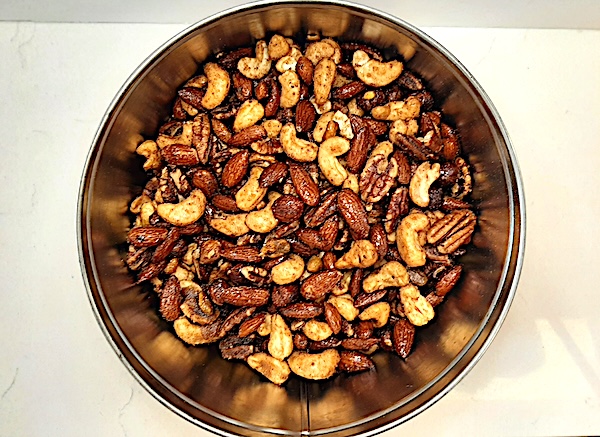
This flavorful Christmas spiced mixed nuts recipe perfectly captures the season. Plus, it’s extremely easy to make with only 5 ingredients. But if you want to add more to it, you can. And there’s no oven involved. In addition, it makes a great gift in a tin. However, after you taste them, you just might want to keep them all to yourself.
Recipe for Christmas Spiced Mixed Nuts Instructions
First, line a cookie sheet with parchment paper or aluminum foil. If using foil, spray with non-stick cooking spray.
Next, put all the ingredients in a microwave-safe bowl and stir before heating in the microwave for 1 minute. Stir again, and microwave 1 to 2 minutes more.
Then spread onto the cookie sheet and allow them to cool completely. It only took ~ 30 minutes in my kitchen.
Finally, pass around and enjoy!
These didn’t last long at my house. I didn’t get to pass any out, because we ate them all. They were just that delicious. Did you make any? What did you think?
Thanks for reading. Please like and share, and if you don’t follow me already, you can do so now.
Holiday season and making sweets go hand in hand. There’s cookies and breads to be baked. And candies and trash to pass out. Wait, what? Trash? Well, that’s what this easy holiday Chex mix recipe was called when I lived in Texas. Plus, some people make them hot and spicy, while others, like me, make them sweet and salty.
Originally I used to add mini marshmallows to this. However, they would get stale in no time. Therefore, I cut them out. Moreover, you can swap out the almond bark for white chocolate if you want.
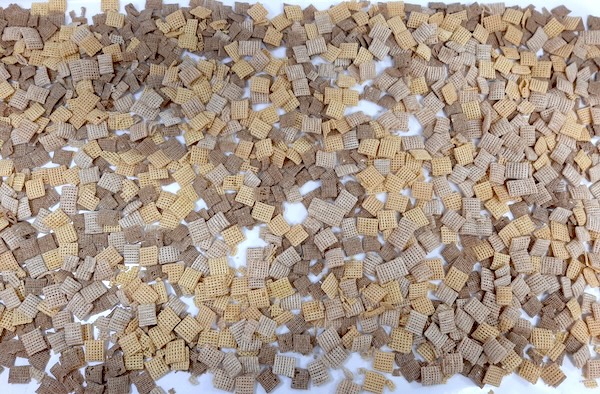
Just the Chex cereal layers here.
Ingredients for Easy Holiday Chex Mix
24 oz almond bark
7 – 7 1/2 c mini pretzel twists or pretzel sticks (I used pretzels twists)
and 5 c each of rice, wheat, and corn Chex cereals
Drizzle the chocolate on the cereals here prior to adding the pretzels.
Easy Holiday Chex Mix Instructions
First, line your counter space with either parchment paper or wax paper.
Next, with a measuring cup, pour out each of the 3 cereals evenly mixed over the paper.
Then melt some of the chocolate according to the package instructions. And, once melted, drip evenly over the cereal mix. (I used a spoon to do this.)
After the first chocolate layer, spread the pretzels evenly. And melt more chocolate to drip over the pretzels.
Allow to cool. Then store in an airtight container or enjoy immediately.
Add the pretzels and more chocolate.
Did you make this recipe? What did you think? Thanks for stopping by! Please like, share, and if you haven’t already done so, you can follow me now.
I use affiliate links to support my content at no extra cost to you.
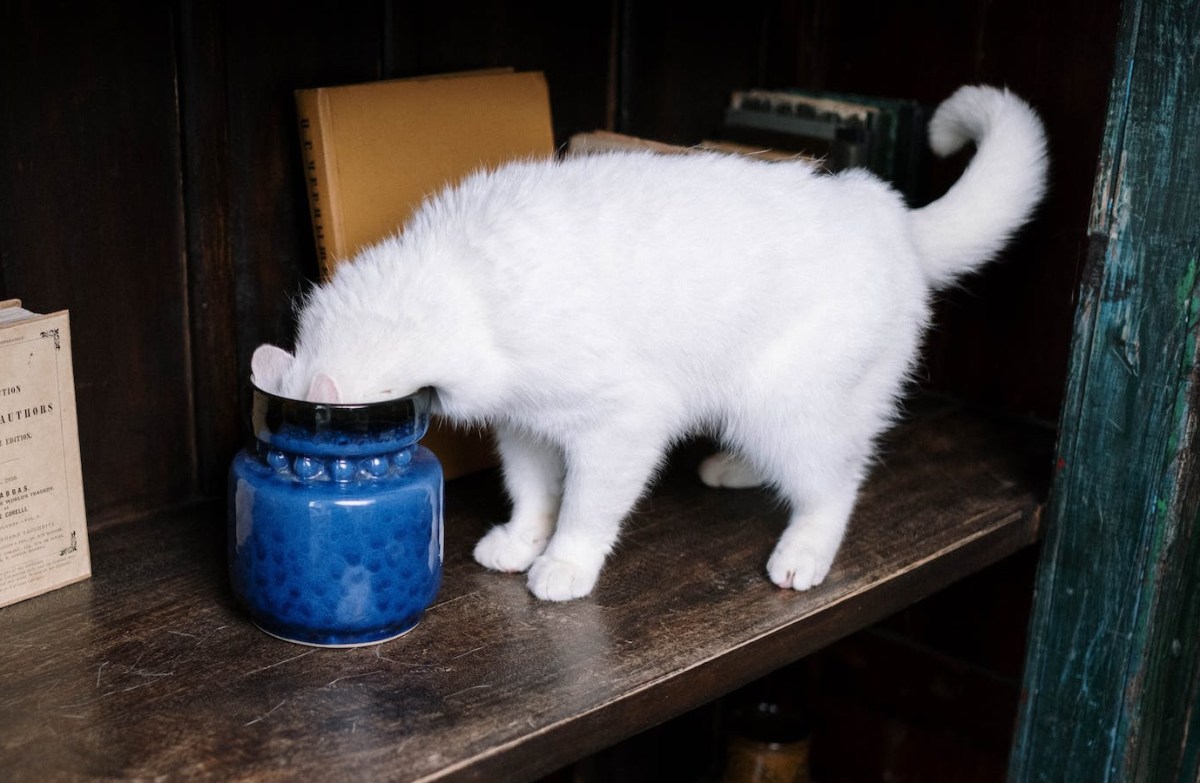
Most animals are curious to one degree or another. Although some animals, like dolphins and apes, are exceptionally curious. Of course you’ve likely witnessed your cat or dog being snoopy at times as well. Besides cats and curiosity go hand in hand. But why are they so nosy?
Well, for one, their senses of smell, hearing, and touch are superior to our own. Not only that, cats also see better than we do in the dark. So, that’s four out of five senses that outperform ours. All of this encourages cats to explore. They smell and scent (through their mouths) the floor, grass, chairs, and everything. And they prefer heights to ground level. Therefore, just expect them to climb. Plus, they can fit into tight spaces. However, other than their better senses, why are cats so curious?
Besides their senses, a major reason your cat is so nosy is due to instinct, inherited from their wild ancestors. In fact, wild cats today are just as curious. And curiosity helps wild cats for survival, not only to hunt, but also to watch out for predators.
Consequently, when your cat sits on the counter or a chest of drawers, you witness their inherited hunting reflexes. Cats prefer heights for protection and hunting.
Intelligence
In a previous post, I mentioned that a cat’s brain is 90% genetically similar to our brains. And according to the Institute of Electrical and Electronic Engineers, curiosity and intelligence are closely connected among higher animal species. Further, in order for a cat to be able to open a door, they have to have intelligence, which demonstrates problem solving and curiosity.
Age
Young cats, aka kittens, usually have more curiosity and energy than adult cats, since everything is brand new. Cats don’t necessarily lose their curiosity. It’s just that they could grow to be more wary as they age.
Attention
Just like with children, cats can get into things to get your attention. It may not start that way intentionally. However, it could develop into a fun activity for your cat.
Can Curiosity Kill a Cat
The old proverb originally said, “care or worry will kill a cat.” Although, both nature and science teach us that curiosity is good for humans. Therefore, it’s logical that it’s also beneficial for all animals, including cats. Be that as it may, your cat’s curiosity could still get them into trouble if steps haven’t been taken.
For instance, household cleaners, bleach, and disinfectants are obvious dangers your cat’s curiosity could get them into. However, the trash could contain small bones that are tempting to a small predator. And they can fracture and perforate the digestive tract or get caught in your cat’s stomach. Don’t forget chocolate is toxic to cats as are many plants. Medications, prescription or OTC, creams, lotions, sunscreen, and etc are all bad for your cat. Whatever chemicals you keep in your garage are harmful as well. Moreover, if you let your cat go outside, there are feral cats, dogs, and other predators to think of.
To keep your fur baby safe, make sure your cat can’t get into any cabinets that contain poisonous chemicals or medications. And keep a lid on the trash or empty it frequently. Further, if you let your cat out, don’t let them out unsupervised, in the event they’re like my cat. She’s kinda slow when it comes to climbing due to her weight and unused muscles. She can climb, just not as fast as the other two resident cats.
Itty climbed a telephone pole.
Cats and Curiosity
Since this past May, Itty has been getting me up at different hours of the night by scritching and scratching my side of the bed with her claws. (It’s no longer for food.) Because I’m no longer working outside of the house, I entertain her wishes. At first it was just once a night. Then it moved up to twice a night. Now I’m up at all hours. She has me follow her around, checking out the perimeter of the house, like a night guardsman or something. I guess she’s making sure everything is ok. But sometimes I think she’s hunting.
And then she’ll have me take her outside when it’s dark. That’s definitely to hunt. Her curiosity is certainly hitting full peak. She’s started going over to the chicken side, so I have to chaperone her. I don’t want her getting loose to the front, and then getting killed by a dog. She goes through everything, and I mean everything of those chickens’. If they had a lingerie drawer, she would be going through that. Highly nose cat.
Do you have a curious cat? How do you allow them to safely engage their curiosity? Thanks for reading my blog! Please like and share, and if you don’t do so already, you can follow me now.
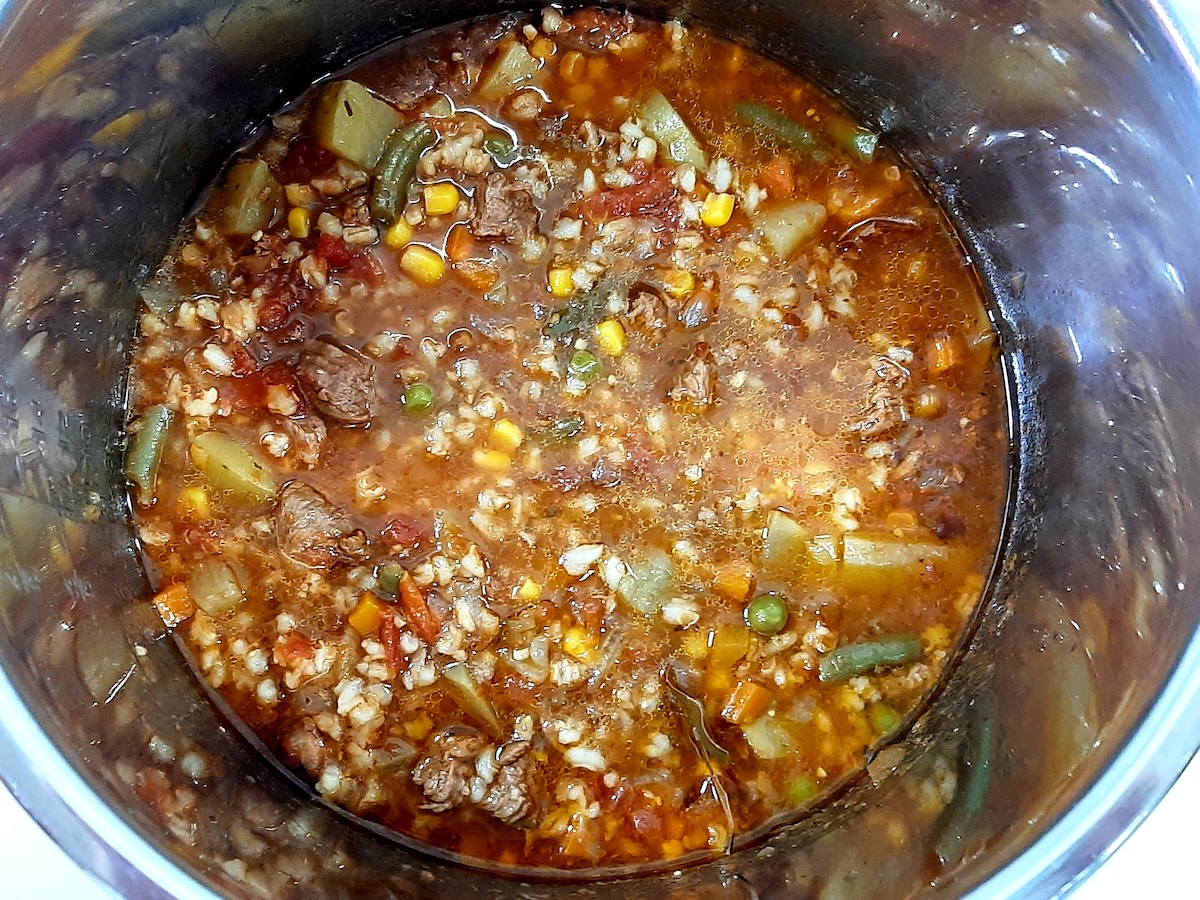
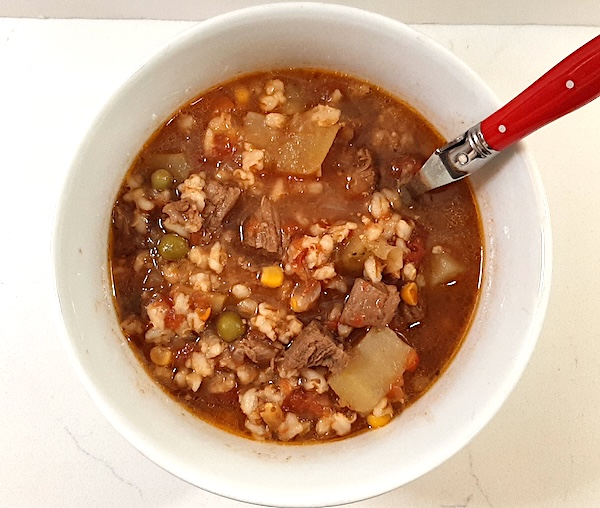
Fall and winter are the perfect times to make soups and stews. They’re hearty with meats, vegetables, and grains. Plus, they warm you up when it’s chilly out. Recently I made this beef and barley soup in the Instant Pot. However, you can make it on the stove. Also, it only serves 4 people. So, if you want leftovers or you’re serving more people, just double the recipe.
Ingredients for Beef and Barley Soup in the Instant Pot
~ 12 oz beef stew meat, cut into 1 inch pieces
2 tbsp extra virgin olive oil
4 c water
1 of each, onion and celery, chopped
4 tsp beef bouillon
1 tbsp fresh minced garlic
1 c frozen mixed vegetables
14 1/2 oz can diced tomatoes, undrained
1 medium potato, washed and cut into 1/2 inch pieces
1 bay leaf
2 tbsp Worcestershire sauce
1/4 tsp black pepper
1 tsp dried oregano
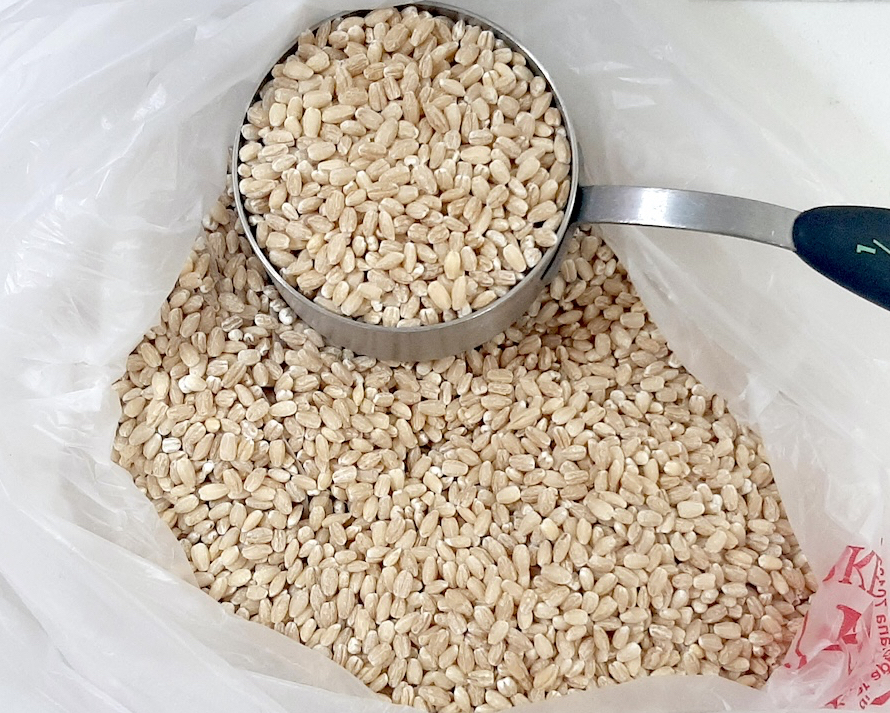
and 1/2 c quick cooking barley
Beef and Barley Soup in the Instant Pot Instructions
First, add the oil to your Instant Pot, press the Sauté function, and add your garlic. After a couple of minutes add the beef, onion, and celery. And sauté for ~ 5 minutes, stirring occasionally.
Next, add the remaining ingredients. Then secure the lid, moving the valve to the sealing position. Further, hit Cancel and either hit Manual or Pressure Cook for 20 minutes. When it’s finished, allow Instant Pot a 15-minute natural release, (meaning you do nothing for 15 minutes) followed by a quick release.
And finally, serve immediately.
The original recipe came from Better Homes and Gardens New Cookbook 12th edition, I think from 2002. But I’m not exactly sure on the date, since the copyright page is missing from my book. And it’s not online. Though, if you’re interested, you can get the cookbook on Amazon or another online bookstore.
I don’t use barley much. Truthfully I forget about it. However, I enjoy it in soup when I do remember it. What’s your favorite soup during winter?
Thank you for reading my post. Please like, share, and if you don’t already do so, you can follow me now.
As the eggs decrease and chickens molt, you might be concerned about your birds and the weather. But did you know that chickens are better equipped for the cold? It’s summer heat they have more difficulty with. Regardless, below are tips on how to care for chickens in cold weather.
I’ve known that chickens are very hardy birds since having them for over 8 years. And I’m also aware that certain birds are better suited for cold weather, while others are suited for hot weather. What I didn’t know was that there’s really no minimum temperature for keeping chickens. That’s because chickens can acclimate to the weather conditions where they live.
How to Care for Chickens in Cold Weather
Water Responsibly
Since you want the coop to stay as dry as possible, don’t leave food or water in the coop. Plus, if it’s freezing outside, their water will freeze too. And then your birds will be cold. Not only is water essential to a chicken’s diet, it also helps with digestion. In fact, studies found that chickens down 1.5 to 2 times as much water as feed. In addition, if their water is frozen and they can’t drink, they will get dehydrated.
I would love to have electricity to my coop. It would help with many things, especially frozen water. Though, that’s just not feasible at this time. Here are options regarding managing your chickens’ wintry water. Some tips assume you have electricity in your coop, whereas others don’t.
Control Moisture in the Coop
Again, don’t leave water in the coop, especially overnight, because your birds will be sleeping anyway. Just keep the water in the run. And depending on the litter method you use, check your run and coop floor if your chickens are pasture raised. For instance, as it gets colder and there’s any sort of precipitation, your birds might track in mud or leaves. That will cause moisture in the coop.
Moreover, use dropping boards, which are shelves that collect chicken droppings. Then scrape them each morning and remove the poop from the coop. Since chicken waste contains ~75% moisture, the less poop in the coop, the less moisture. Further, ammonia is generated by bird droppings. Therefore, if allowed to get out of hand, it can create a health issue for you and your chickens.
Also, if you have windows in your coop and notice condensation on them in the mornings, you have a moisture and humidity problem. Even if you don’t have windows, inspect the walls and ceiling carefully for condensation. If you see any, it could be due to neglected bird waste, waterers in the coop, absolutely no ventilation, or unsatisfactory litter type. Just go through each of those items and eliminate their possibility.
Use Sand for Litter
Many chicken keepers have been using sand as a litter material as opposed to straw, hay, or pine shavings. Think of a giant cat litter box but for chickens. Without getting into too much detail, it is said to have better absorbency. So, the idea is it keeps the coop drier, which is vital to keeping your birds warm during winter.
After reading all of the literature out there on it, we definitely plan on changing over to sand.
Eliminate Drafts
First, examine the coop for any needed repairs, like holes or broken seals in doors and windows. Block any drafts in the coop, especially where your birds roost. Actually stand in there, if you can, and try to see if you can feel any drafts yourself. However, still make sure you have ventilation at the top of the coop for moisture and ammonia to escape. Don’t seal up the coop completely. Your birds will still make moisture: through respiration and their waste. Therefore, if it’s sealed completely, the moisture will just be trapped in the coop. And it will make the litter wet and condensation will build up, making your birds cold, and then sick.
Next, depending upon the snowfall amounts in your area, add a roof to your run and plastic sheeting to the sides. Or, if you can’t do a roof, cover your entire run with plastic sheeting to create wind breaks. Although, if you get a lot of high winds on your property, you might need something stronger, like a tarp.
Relieve Boredom
If your birds are going to be cooped up due to inclement weather, provide enrichment activities. Add roosts in the run. And fill a kiddie pool with potting soil to let your chooks dust bathe. Plus, if your run has a roof, hang a cabbage from the ceiling for them to eat. It’s a healthy treat while stimulating their foraging instincts.
Feed
Continue providing the appropriate commercial feed. And offer free-choice grit, since foraging may be hindered. Moreover, digestion of scratch grains produces heat. Usually I refer to scratch as crack cocaine, thus, I don’t recommend it. Although, if it keeps the chooks warm, let them have some in the evening during winter. But moderate amounts.
To Heat or not to Heat
Recall that I said, “chickens can acclimate to the weather conditions where they live.” If you add a heater, your birds will never acclimate to the cold. Besides, there are some issues with adding a heat source to a chicken coop.
First of all, heaters are a fire hazard. It’s just not worth the risk of setting fire to my coop or house, and losing everything. Secondly, having a power outage will kill chickens. If they haven’t acclimated to the weather, chickens can die from quick, severe drops in temperature.
There are very few instances where a chicken might need supplemental heat. But by and large, most do not. You’ll find those few cases further down. Regardless, monitor every bird for signs of weakness, inactivity, or frostbite. Some sites refer to cold stress as birds huddling together or standing with one foot up. However, some of my birds do that on days when it’s 40°F out. One of my roosters was crowing on one foot like a diva the other day.
Eggs
Collecting eggs frequently not only prevents egg-eating, but it also prevents the eggs from freezing. However, to further protect your eggs, line your nesting boxes with organic material in the event your hens peck test the bedding. And replace weekly as it becomes used, old and/or lacking. I don’t recommend blankets or similar, due to moisture retention. In addition, always inspect the eggs you collect. And throw out any with cracked shells to prevent food-related illness.
Snow or Ice
Chickens don’t like inclement weather. Most of my chickens, and all of my ducks, will go out when the snow starts melting. They’ll walk around and eat the snow. Though, if yours aren’t like mine, you may have to shovel a path for your birds. But don’t force them to go out in the snow. This is where a roof or tarp for your run comes in handy.
Frostbite
Be aware that when winter weather is bad and temperatures are below freezing, even cold hardy birds are at-risk for frostbite. But birds with single combs are at even greater risk. So a preventative measure is to spread Vaseline on their combs and wattles.
Additionally, if there’s condensation in your coop or you smell ammonia, your birds are in danger of frostbite. Low temperatures plus high humidity spells trouble.
Exceptions to these Cold Weather Tips
Smaller breeds, like Silkies, those that are molting or have large combs and wattles may need more care to stay warm, maintain body weight and remain healthy during extreme weather. Generally speaking any bird can get into trouble if left in the cold long enough. However, if your birds are healthy, you’re following the above tips and don’t leave your birds out in inclement weather, they should be fine.
The only precautions would be if you have smaller breeds, birds that have large, single combs or sick birds already. Then assuming you have a barn, put your at-risk birds in there, so they’ll be warmer. But if you have an ill bird, you want to quarantine them anyway. Therefore, maybe bring them inside the garage so they’ll be warm. Though, once they’re well, don’t suddenly bring them outside to severe temperatures to die. You have to get them acclimated to the weather again slowly. So, you might bring them back out when it’s sunny out.
Chicks and caring for chicks are completely different. They shouldn’t be outside, since they’re not feathered out yet. And without a heat source, chicks will die. See here for caring for chicks.
Have your chickens ever had issues during winter? What happened, and what did you do? Thanks for reading this. Please like, share, and if you don’t follow me already, you can do so now.
I use affiliate links to support my content at no extra cost to you.
A couple weeks ago, my daughter Hannah told me that she heard calico cats tend to have spicy personalities. Not all, mind you. Apparently, there’s a spicy scale. So, that got me thinking whether there were different cat personalities based on color. Like coat color.
Human personality tests have been studied since at least the late 18th century. And according to the BBC, there are around 2500 personality tests in the US alone. Plus, there are even some personality tests for pets. However, our pets can’t answer for themselves. So, it isn’t quite the same. I guess the given personality would depend on the person answering for the pet, wouldn’t it? More on that later. First, let’s take a look at some of these stereotypes. And then see what science has to say.
Even though there are ~ 73 recognized cat breeds internationally, with a variety of patterns and colors, there are actually only 2 base coat colors: black and orange. Naturally I was skeptical when I too found that out. Therefore, I examined my two indoor cats and discovered that Pickles has black skin under her pelt, while Itty is orange. So, according to Nature’s Advantage, all the different coat colors result from genes that basically dilute the OC colors. Further, as reported by Hawthorne Hills Veterinary Hospital, cat coat colors are connected to their sex chromosomes.
White cats tend to be the exception. There are albino white cats that have a disorder preventing their bodies from producing pigment. Thus, these cats can literally be any color combo or pattern. But, due to this disorder, nothing gets printed. Then there are non-albino white cats. These cats have white fur due to masking genes, that I won’t get into right now. However, the main way to tell the 2 types apart is that true albinos will have pink eyes and pink skin. Also, if a white cat has any type of spot on them, no matter how minuscule, even if on a toe bean, then they’re simply a white cat.
Now that you have an idea about coat colors, we’ll move onto stereotypical personalities.
What are the Different Cat Personalities Based on Color
When I was ~18/19 years old I had a black male cat named Mr Kitty. And he was a very good boy. The only thing I could say negatively is that he had genetic urinary issues since he was ~ 2 or 3 years old. I don’t know about having any good luck because of him. But I didn’t have any bad luck.
Orange cats
thought to be more affectionate and riskier
easy going and gentle temperament
some stereotypes I’ve seen indicate that orange cats are crazy, like they do crazy things. Maybe the risky behavior?
Ok, I never had an orange cat. However, Mr Kitty had a sister named Cinnamon, who, just by her name, you can tell she was a ginger. And she lived in the same house with us. As a result, I was pretty familiar with her and her personality. She definitely was easy going and affectionate to her family.
On the other hand, I’ve seen videos of crazy orange cats. I don’t know if those are male cats or what. Consequently, maybe it’s just a case by case basis. And we shouldn’t take stereotypes so seriously.
Grey cats
said to be calm
shy
and soft-spoken
Cake is our grey furred cat. Although she tends to be calm, she isn’t shy at all.
White cats
aloof
shy
and lazy
I can’t say anything about white cats, because I have no personal experience with them.
Tabby cats
playful
and outgoing
When I was a young mother, we had a male tabby. He was a rescue, and I don’t know how old he was when we got him. Even though he wasn’t playful, he was outgoing, at least to me.
Tuxedo cats
friendly
playful
and very affectionate
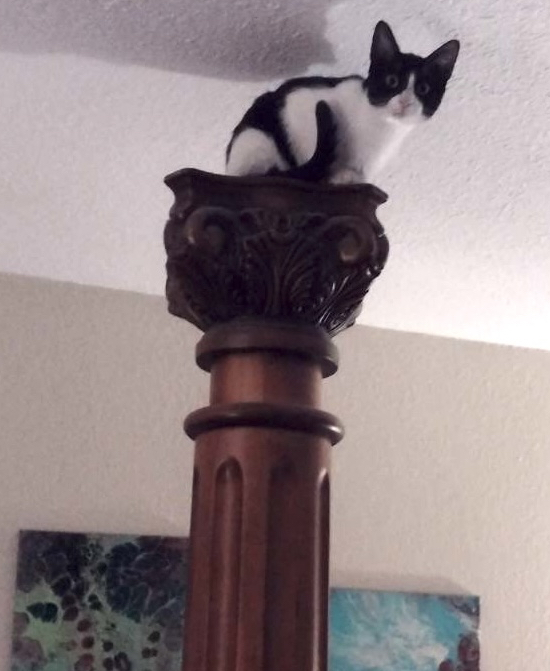
We currently have a tuxedo kitten, and she certainly fits the description well.
Tortoiseshell cats
supposed to be divas
and can get cattitude with owners
The only tortoiseshell cat I’m familiar with is Meow Meow. She was a middle-aged cat when we took her in. Hence, I’m not sure if that did or didn’t have anything to do with her attitude or lack thereof. She was a happy and loving cat; she even let us pet her belly.
It makes me sad to think that her original family let her go because they couldn’t handle a little bit of cattitude. Clearly some people aren’t meant to be cat people.
Calico cats
considered to be divas like torties
also, said to be more intolerant compared to other cat colors
I don’t know what people are talking about. Itty is a princess; I’ve told her since she began living with us. Of course she’s going to act the part. And I don’t think there’s anything wrong with her attitude. She doesn’t treat me bad or anything. In fact, she loves me. And maybe only me. But I’m fine with that.
Due to these stereotypical personalities, science stepped in to find out whether they were true. Because, just like human stereotypes, pet and animal stereotypes are harmful. Since potential owners have weird ideas about them, it prevents black cats from getting adopted. Therefore, how did science figure out if the stereotypes were true or not? Well, by asking cat owners, of course.
One study looked at cat surveys only from Mexico, while 2 others were from the University of California, Berkeley and the University of California, Davis, respectively. Further, the first 2 studies were relatively small samples; less than 211 in each. But the third sample involved almost 1300 surveys.
According to the first study, gray cats had the highest scores for timidity, independence, and intolerance. Orange cats were found to be more trainable, friendly, and calm, whereas tabbies were bolder and more active. Tricolor cats, like calicos, were more stubborn. And bicolor cats, such as tortoiseshell and tuxedo cats, were more tolerant.
Since the second study was reexamined by the University of California, Davis at a later date and by more participants, that’s the one we’ll concentrate on. In that study, the respondents were asked to rate their cats’ level of aggression at home, while being handled, and at the vet.
In those 3 backgrounds, the most aggressive cats were mostly female gray and white, black and white, orange, and calico cats. Also, gray and white cats were most aggressive during vet visits. And black and white cats were most likely to react negatively when handled, whereas calico cats were more likely to become discontented. Moreover, black, white, gray, and tabby cats had the lowest level of aggression.
Is Your Cat’s Personality Based on Coat Color
Itty’s hanging on the back of the chair, chillin’.
Remember when I hypothesized above that cat personalities would depend on which person was taking the test for the cat? Everyone in my house thinks my cat Itty is a bit of a prima donna, except me, of course. I readily admit, however, that she detests being handled. And, as such, I respect her boundaries, whereas no one else does. Thus, they feel her wrath on occasion. But I don’t. That doesn’t mean I don’t pet her; I certainly do. Although, as soon as I sense her irritation, I back off, while the rest of my family persists with the petting and picking her up, etc.
Therefore, if I were to take a cat personality test for Itty, she would not fit the standard profile. Though, if anyone else in my house took a cat personality test for her, they would answer based on how she treats them, and how they don’t respect her. And voila, you have a cat coat personality stereotype. I hope that makes sense.
As a result, it’s my opinion that it’s entirely how we view our cats that affects their personality. Consequently, if you know your cats very well, their likes and dislikes, you probably are very familiar with their personalities, regardless of any stereotypes. Kittens act like infants, while cats who’ve been hurt may act like a hurting human.
What do you think? Do you notice any cat coat color stereotypes in your cat or cats? Have you ever heard of these coat color stereotypes before? I hope they don’t discourage you from ever adopting a certain color cat in the future. Thank you for stopping by! Please like, share, and if you don’t already do so, you can follow me now.
After looking for a particular recipe online a few years ago, I started getting tons of recipe emails from Southern Living. Unfortunately I don’t have time to go through every recipe email I receive. But, because I’m always looking for something new, I still go through the holiday emails. Well, it was 2 years ago that I tried a recipe for cranberry fruit salad during Thanksgiving. And it was all thanks to Southern Living that it’s now part of our Thanksgiving meal.
However, it can be part of really anymeal, or served as dessert. But, because it’s cranberry-themed, you might choose to just have it around the holidays. Plus, it tastes absolutely delicious. And I’m sure it will become one of your family’s favorites as well.
Ingredients for Cranberry Fruit Salad:
32 oz fresh cranberries
3/4 c Truvia
1 c fresh orange juice
1 c drained maraschino cherries
4 Bartlett pears, peeled and chopped
1 can each drained mandarin oranges and pineapple tidbits
Instructions for Cranberry Fruit Salad:
Bring the first 3 ingredients and 1 c water to a boil in a large pot over med-hi heat. And stir often. Then reduce heat to medium, and simmer.
Continue to stir occasionally, 20-25 minutes or until cranberries pop and mixture thickens.
Next, remove from heat, and allow mixture to stand for ~ 15 minutes. Then stir in the cherries and the rest of the ingredients. Transfer to a bowl. Finally, cover and chill 2-12 hours.
Regrettably, when I went back through my food emails, to link to the original recipe, I could no longer find said recipe on Southern Living. It literally says “page not found” on the Southern Living website. Regardless, it was published November 2020. However, I think the recipe was called Old School Cranberry Salad, since I found a similar recipe on this site. Moreover, here are more cranberry salad options to choose from.
What’s your favorite recipe for cranberry sauce? Thanks for stopping by! Please like and share, and if you don’t already follow, you can do so now.
My favorite type of sauce to make is a white sauce. You can add shrimp, chicken, or sausage to it. And you can mix in different types of vegetables and seasonings. The same is true for a red sauce. However, it just doesn’t come together the same, at least to me. Most pasta with spinach and white sauce recipes are made with penne pasta. Though, the recipe below is made with elbow macaroni. However, you can substitute any pasta you want.
Ingredients for Pasta with Spinach and White Sauce
1 1/2 lbs elbow macaroni
2 (12.5 oz) cans of canned chicken breast, drained
1 (6 0z) package of microwavable frozen spinach, cooked according to instructions
2 cups heavy whipping cream
1 cup half n half
1 cup grated Parmesan cheese
3 cloves of fresh garlic, minced
2 tbsp dried oregano
1 tbsp dried basil
4 Roma tomatoes, seeded and chopped
1 tsp granulated garlic powder
and salt and pepper to taste
Pasta, Spinach and White Sauce Instructions
First, fill a pot with water, and follow package instructions for cooking elbow macaroni. Since the rest of the recipe doesn’t take long to cook, get the noodles started.
Next, in a medium saucepan, add whipping cream, chicken breast, and seasonings; stir over med-heat for a couple of minutes.
Then stir in tomatoes, spinach, and cheese, stirring occasionally. Check seasoning, and adjust if needed.
After ~ 5 minutes, adjust temperature to low, until pasta is finished.
When elbow macaroni is done, drain the water. And place noodles back into pot.
Further, pour all of the sauce over the pasta, gently combining them together.
Finally, serve immediately.
What is your favorite sauce for pasta? Did you make this sauce, and what did you think?
Thanks for reading my post. Please share, and if you don’t already follow, you can do so now.
I use affiliate links to support my content at no extra cost to you.
Recently I wrote a post on how to tell if a chicken is sick. In the article I pointed out some of the most common chicken ailments I’ve seen. And one of the issues is sour crop. But just what is sour crop in birds? What are the symptoms? And is it the same as impacted or pendulous crop? I’ll cover these questions as we take a deep dive into sour crop.
My first experience with sour crop and impacted crop occurred after we hatched some chicks over a year ago. By this point they were already moved outside, in a section behind our big coop. When hand-raising chickens, if we lost any, which happens, it would happen early on. Like day 1 or 2 post hatch. Plus, we wouldn’t have multiple losses. But by the time the birds are fully feathered, they’re obviously more hardy. However, that doesn’t mean a predator couldn’t get one. Though, I never lost a young bird to something I felt could have been prevented. Until then.
We had 2 experiences back-to-back with those juveniles. And they were both pullets. With the first one, my husband brought me this juvenile hen that wasn’t eating, was fluffed out, and her crop was ballooned out. And when my youngest pushed on the crop, liquid just poured out, like she threw up. However, if you Google that, you’ll be told, chickens don’t throw up. Which I suppose is true, since the pullet didn’t regurgitate on her own. The 2nd pullet had the exact same symptoms. And I treated according to online recommendations. But instead of recovering, they got worse. The first one died in a matter of a few short days, while the 2nd one hung on a little longer. However, in the end, she developed an impacted crop.
First, What is a Crop in Birds
The crop is the primary organ for the brief storage of food prior to digestion. And chickens, including a lot of other birds, possess this unique pouch. This is different than the gizzard, which actually grinds up the food that’s eaten. Since chickens lack teeth, they need grit to help digest their food. Some birds actually store pebbles or stones in the gizzard to help digest seeds and nuts. Plus, a chicken’s crop is located around the front of their breast.
While a full crop in the evening is normal, a full crop in the morning is not. Assuming feed and water aren’t housed with the birds, you can check their crops in the morning. Therefore, take a healthy hen in the morning and gently massage her crop. It should feel flat. And it might even be difficult to locate, but not necessarily impossible. That’s normal. So when a chicken eats throughout the day and gets full, the crop will communicate to the chicken to stop eating. And if you examine your bird’s crop at that moment, it will feel firm but is somewhat pliable.
Conversely, if on occasion, you give your chickens treats, they’ll likely gorge themselves. Then the crops will immediately get full. Sometimes it will even appear a chicken is choking. That’s because they’re stuffing their crop so full like it’s their last meal on earth. In fact, all of my hens do that if there are treats. And I suppose that’s normal too.
What Causes Sour Crop in Birds
Because the primary symptom of sour crop is the sour smell emanating from the chicken’s beak, Candidiasis, a fungal infection, is the root cause of sour crop. Moreover, feeding chickens old or moldy feed has been associated with sour crop as well. Likewise, overfilling of the crop, as mentioned above with treats, can also contribute to sour crop in birds.
Signs of Sour Crop in Birds
As I stated, sour crop is most easily determined by the sour smell coming from your chicken’s beak. Though, other typical signs your chicken has sour crop include
a full, squishy crop in the morning
liquid exiting the beak if you gently massage or push on their crop
your chicken is fluffed up, lethargic, and isolated from the flock
and lastly, she may not be eating or drinking
Interestingly,
Candidiasis is more common in young and growing chickens with undeveloped immune systems, although any age of chicken with a weakened immune system can fall victim to it.
Typically you can diagnose sour crop in your chickens based on symptoms alone. However, if you have a chicken vet, they may do a culture by swabbing the crop. Or they may do a microscopic exam of the crop tissue, plus blood tests and x-rays.
How is Sour Crop Treated
This is the mixed bluestone copper sulfate solution. I had to administer this to my juvenile hen with a dropper.
As with pretty much anything involving health, prevention is key. It’s easier to provide the correct feed, clean water, grit, etc than to try and fix a problem after it’s settled in. Because chickens stop eating with these issues, they’re no longer getting needed nutrients. Or they may eat for a little while, but the food can’t digest since the crop hasn’t emptied. And the result is still the same. Therefore, sour crop is an emergency. So if you have a bird or chicken veterinarian, seek treatment. I would prefer taking my birds to a knowledgeable vet than practice on them myself. On the other hand, due to the lack of bird vets in my area, sometimes that’s exactly what I’ve had to do. Either that or lose a valued pet.
To treat sour crop
Mix 1 tsp Epson salt and 1/2 cup of water. Then, using a syringe dropper, flush the bird’s crop with this mixture. Be careful not to get water down the chicken’s airway!
Next, treat the fungal infection: Most vet offices use Nystatin. However, I’ve also read of others using Monistat 7. You can purchase this over the counter. Then, with a syringe, administer 50cc orally to your bird once daily for 7 days.
Alternatively, if you have bluestone copper sulfate, mix 4 oz with 1/4 c apple cider vinegar and 32 oz of water. Then add 1 tbsp of this solution to each gallon of the ill chicken’s water. But do NOT put this solution in a metal waterer. Do NOT use this bluestone copper sulfate and Monistat together. It’s an either or, not both.
Also, withhold food during this time. However, you can provide some water. But the general idea is to get the crop to go down and food to empty.
What is Impacted and Pendulous Crop
Impacted crop is where the bird’s crop is nearly rock hard, since there’s something indigestible stuck in it. Again, the bird with an impacted crop won’t eat or drink. And this is definitely an emergency. Furthermore, an impacted crop can be caused by sour crop, as my 2nd juvenile hen’s case was. Though, sour crop and impacted crop are still 2 distinct issues.
Pendulous crop happens due to previously impacted crops. And they appear large and will flop from side to side as the bird moves. In addition, chickens can live years with pendulous crops. However, there are crop support bras available.
Well, the name in itself gives the definition of sour crop. Plus, it involves a bird’s crop, which is the first part of digestion. And if you’ve ever had a chicken with sour crop, the smell is unforgettable. Further, the cause of the sour smell, and hence, the issue, is candidiasis, a fungal infection. But what causes the infection in the first place? Old, moldy feed, and overfilling or overstuffing of the crop. However, a crop that hasn’t completely emptied before the bird continues to eat can also cause sour crop.
So, what caused my juvenile birds’ sour crops when I never saw it before? I was feeding the same type of feed. And no, it wasn’t old or moldy. Moreover, I wasn’t giving them any treats. But, in my gut, I was convinced their environment played a huge part, if not the only part. You see, the back part was added onto to the big coop. And the floor wasn’t really a floor. So, when it rained, it got muddy. Thus, the straw would get swallowed up by the mud. Besides we had some ducklings mixed in with the juveniles. And if you’ve ever raised ducks, you know what a mess ducks make with water.
When I release new chicks and ducklings into the group, I enclose them for a week, until the adults can see and acknowledge them. However, that’s not what my husband did. He was afraid they would get eaten by a predator or bullied by the adults. Therefore, he kept them locked up on the backside of the coop for weeks. After these 2 incidents, I pointed this out to him: that we can’t keep the juveniles locked up on that back side, unless he builds an actual floor, and we provide grit. We’ve never had to provide grit before, since our birds are all pasture-raised. They pick up stuff when they forage. But if he was going to keep the juveniles penned up till kingdom come, they would need grit. Do I have proof that I’m right? No, except we haven’t had sour crop since. My guess is it was the ducks befouling the water, even though we changed it. The area was just always muddy. And there was no grit. Plus, they were young. A perfect combination for trouble.
Have you ever experienced sour crop in any of your chickens? What did you do? Thanks for reading my post. Please like, share, and if you don’t already do so, you can follow me now.
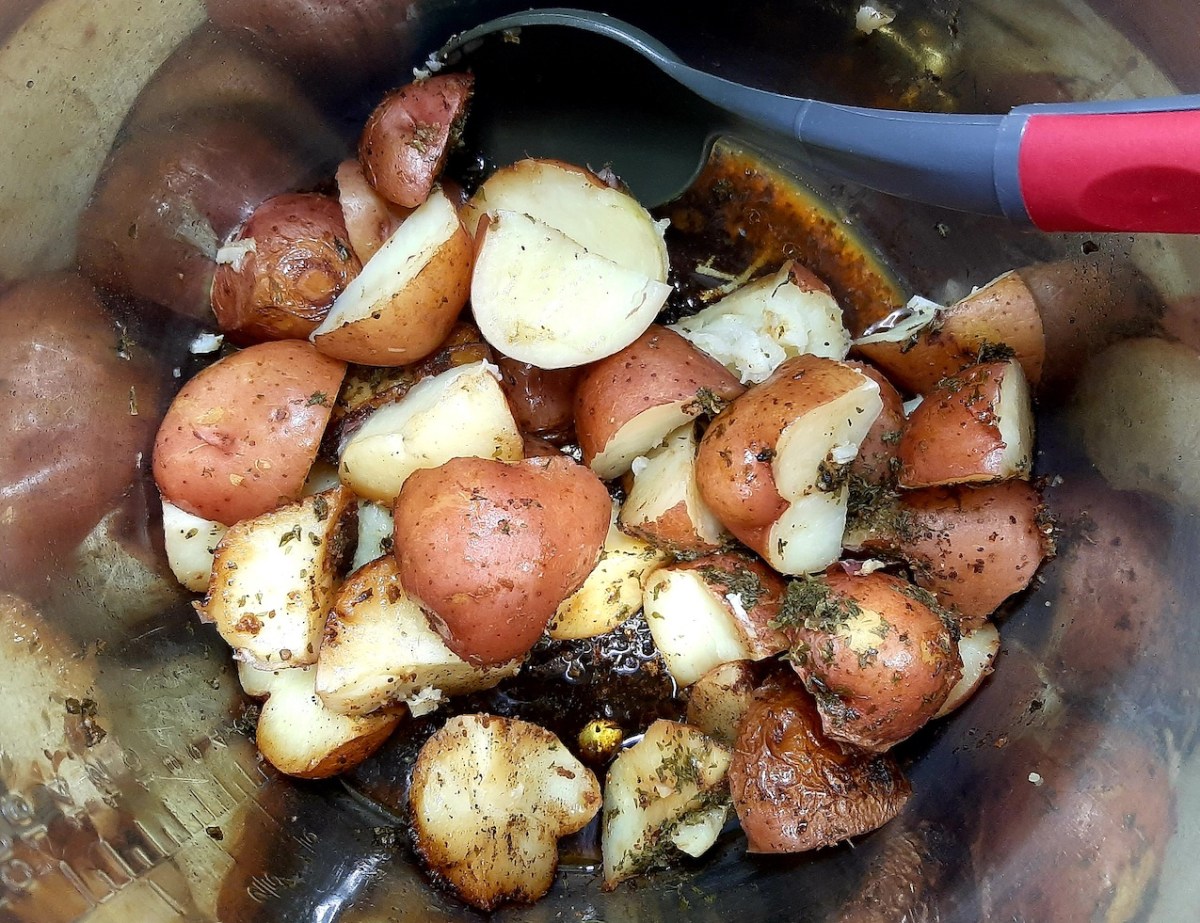
Because we had another hot summer this year, I didn’t use my stove nearly as much. And I don’t think I used my oven at all. Thus, my favorite kitchen appliances are those that don’t put out as much heat. My electric pressure cooker, aka instant pot, is the first one that comes to mind. When we first received our instant pot from a neighbor, my husband was the only one who used it. But when I realized how efficient it was, gone were my days of sweating at the stove. Below is one of my family’s favorite side dishes. Originally this Southern Living recipe was meant for the stove. However, it easily converts to use in an electric pressure cooker. Plus, I’ve found that cooking new potatoes in the instant pot is much easier than on the stove. Especially the standard recipe.
Instant Pot New Potatoes Ingredients
2 1/2 lbs of new potatoes
7 tbsp butter
1 1/2 tbsp each of dried parsley and lemon juice
3/4 tsp salt
1 1/2 tsp lemon rind
1/2 tsp pepper
and 1/8 tsp nutmeg
Instructions for New Potatoes in the Instant Pot
First, scrub and quarter the new potatoes.
Next, put the potatoes in the instant pot. Then add the remaining ingredients.
Cook on high pressure for 7 – 12 minutes.
And finally, serve with chicken or pork and a green vegetable.
Even though I have the original recipe, it’s in hardcover format. And unfortunately, I couldn’t find it online to share. In addition, it was printed ~ 20 years ago. Although, if you want the original, you can order the book on Amazon or elsewhere. The cookbook is Southern Living: 30 Years of Our Best Recipes. And the recipe is called “Lemon-Buttered New Potatoes”.
Do you have an instant pot? Did you made the most out of it this past summer as well? And what’s your favorite recipe to cook in it? Thank you for stopping by! Please share, post a comment, and if don’t already do so, you can follow me now.















 Maurice Pitesky


 Chicken Girl